
Urgency needed in infrastructure

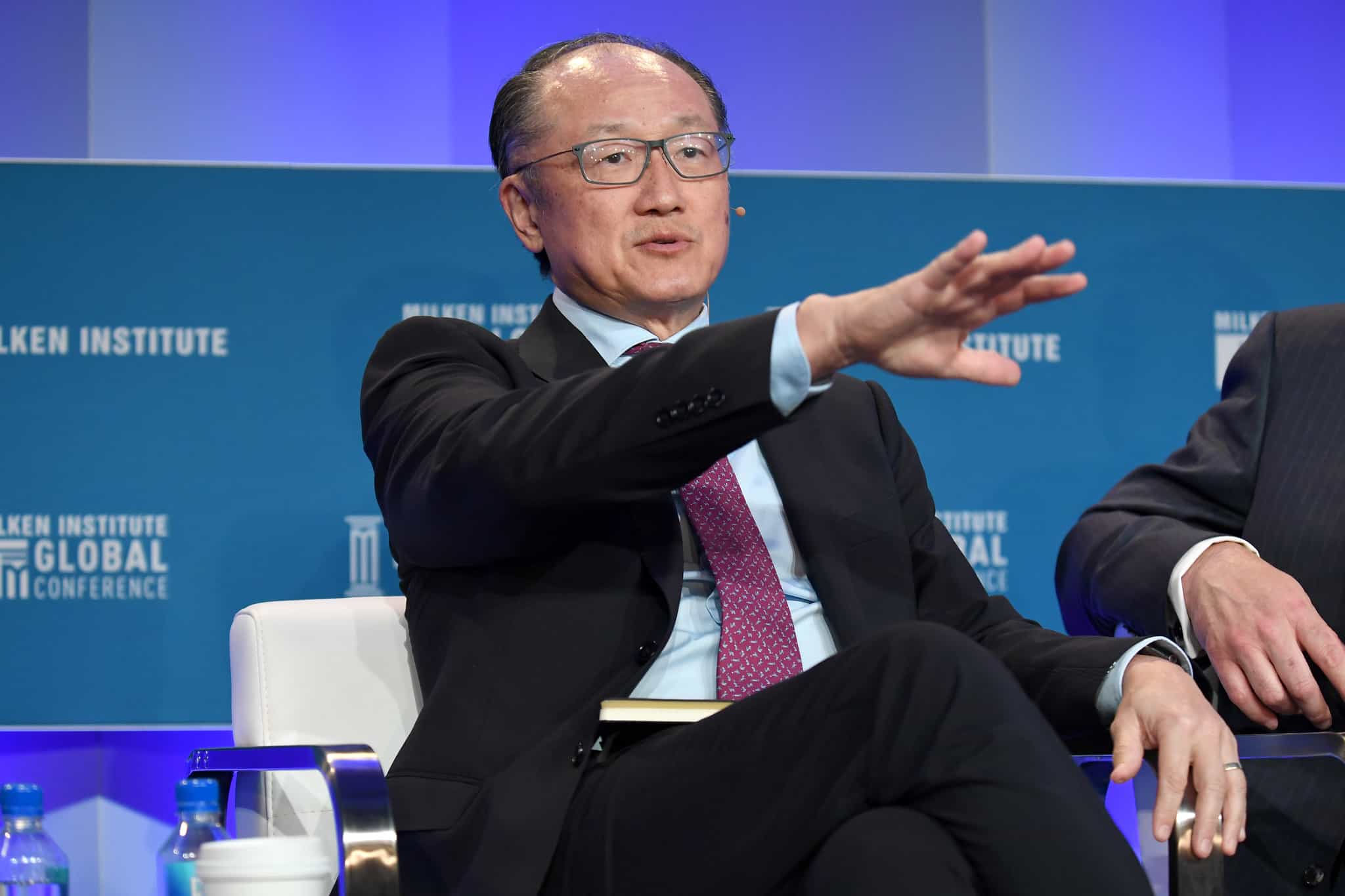
There is an urgent need for infrastructure investment that cannot wait, according to Jim Yong Kim, former president of the World Bank and now partner and vice president of Global Infrastructure Partners.

In emerging markets around $2.7 trillion a year is needed in infrastructure investment, he told the Milken Global Conference in April.

“People say money is not the issue but now I’m in this new role I see it is as I have to convince people they can get the return,” he said. “There is a lot of interest in emerging markets infrastructure but there is a huge mismatch in the understanding of the countries and the way managers and owners are thinking. I think we can fill the gap.”

He said that investors needed to consider the bigger picture, for instance the lack of development in Africa will have a huge impact on European life.

“People in Africa will need jobs and they can see on their iphones how the rest of the world lives. I think pension funds in Europe would be interested in investing in infrastructure in Africa because it is meeting such a critical need for the long term.”

Kim said the problem of instability in Africa and problems of climate change, which are not way into the future but happening now, meant urgency was required for investment in infrastructure.

Sponsored Content

“We can’t wait, we have to invest now,” he said.

Hiro Mizuno, chief investment officer of the $1.6 trillion Government Pension Investment Fund of Japan, said the sustainable development goals were difficult to invest in, but the risk of not doing so is too high.

“If we fail to meet the SDGs by 2030 then what type of risks will our portfolio be facing?”

Mizuno said infrastructure should be at the top of the list of the finance ministers meeting at the G20, which Japan is hosting in June.

Angela Rodell, chief executive of Alaska Permanent Fund questioned how to get creative and find mechanisms to invest in.

“We need to figure out how to capture the economic value in the return equation and add it into the bottom line of whether to invest in things that are vitally important,” she said pointing by way of example to the third tunnel between New York City and New Jersey.

“It is too expensive, but the cost of not doing it is too high,” she said.

The argument that the risk of not doing something is too high was a compelling argument at the World Bank, Kim said, but for investors it is different.

“One of the reasons I’m doing what I’m doing now is we just have to put the deals together,” he said. “There’s no point saying there’s a need without having the real deals to invest in.”

Different investors have different purposes for investing in infrastructure.  For instance for GPIF, which started investing in infrastructure about five years ago, the decision was driven by the need to diversify fixed income given the low interest environment.

“The need came as we were in a low interest rate environment and can’t rely on fixed income. Core infrastructure has a stable cash flow, and we were attracted to it as a good alternative to the fixed income portfolio,” Mizuno said.

“We think infrastructure is very important and we are trying to expand our approach to invest in emerging markets and greenfield projects.”

But the problem of investing in emerging markets according to Mizuno was there was no comparability.

“We don’t know what we expect in returns because all projects are so different,” he said. “Investors can’t get their head around risk/return tradeoff in emerging markets because there is nothing to compare it to. None of our peers have the answer to what return we require to make an infrastructure investment in emerging markets.”

Mizuno said asset allocators always compare investments so lack of comparability is a big challenge


Leave a Comment

The twin forces rewriting the rules of investing

The twin forces rewriting the rules of investing

Portfolios built for the old world will be severely tested as emerging forces rewrite the rules of investing. The Fiduciary Investors Symposium heard that geopolitical and macroeconomic upheaval, together with the disruption wrought by AI, should force asset owners to rethink the structure and composition of portfolios.

Sort content by

China tech rivalry is ‘existential’ for the US – and diversification

Decades of US economic and financial supremacy have made diversification away from it a drag on returns for many investors, but the forces that have underpinned that supremacy may now be coming to an end.

AustralianSuper built scale – now its new CIO needs to make it work

The $295 billion AustralianSuper has spent two decades building scale, but Shaun Manuell's task as the fund's new chief investment officer is to ensure Australia's largest pension fund can operate effectively with it. As short-term performance pressure mounts on the fund and its assets set to hit A$1 trillion ($718 billion) by 2035, the local equities boss-turned-CIO will see his legacy defined by whether he can transform AustralianSuper from a domestic giant to a global leader.

Why Asian equities’ growth will outlast the AI-driven semiconductor cycle

In the latest episode of the Fiduciary Investors Series, Liao spoke with Top1000funds.com Asia Pacific correspondent Darcy Song on why the convergence of innovation, demographics and improving shareholder returns makes Asian equities an increasingly compelling diversification trade for asset owners navigating a geopolitically fractured world.

How CPP is evolving risk management for a faster, more interconnected world

In an environment where multiple risks are emerging and their effects are compounding on the portfolio, CPP Investments' chief risk officer Priti Singh says the $572 billion fund is rethinking risk management from the ground up, shifting from reaction to preparation and embedding risk thinking earlier in investment decisions. She speaks to Amanda White about the fund's risk approach.

Pension funds confront the question of who owns AI

As the use of AI within asset owners evolves, organisations are grappling with the governance question of where the strategy and accountability sit. Darcy Song looks at the treatment of AI organisationally within a number of high-profile funds, including OTPP, AustralianSuper, CPP and Norges Bank.

URS bets on nuclear to power AI and lower emissions

Next-generation nuclear energy, and the money pouring into it, will truly change the world, according to CIO of Utah Retirement System John Skjervem. It’s a lonely position as the CIO of a public pension fund but one Utah is embracing as it builds out early-stage investments in nuclear energy as part of its alternative energy portfolio. He speaks to Sarah Rundell in an exclusive interview about how investing in transformational energy technologies can be part of prudent investment management.



