
Under-priced climate risk plagues pension portfolios

Climate risk remains systematically under-priced, the world isn’t on course to meet net zero and investors must prepare for the risks of climate and environmental change.

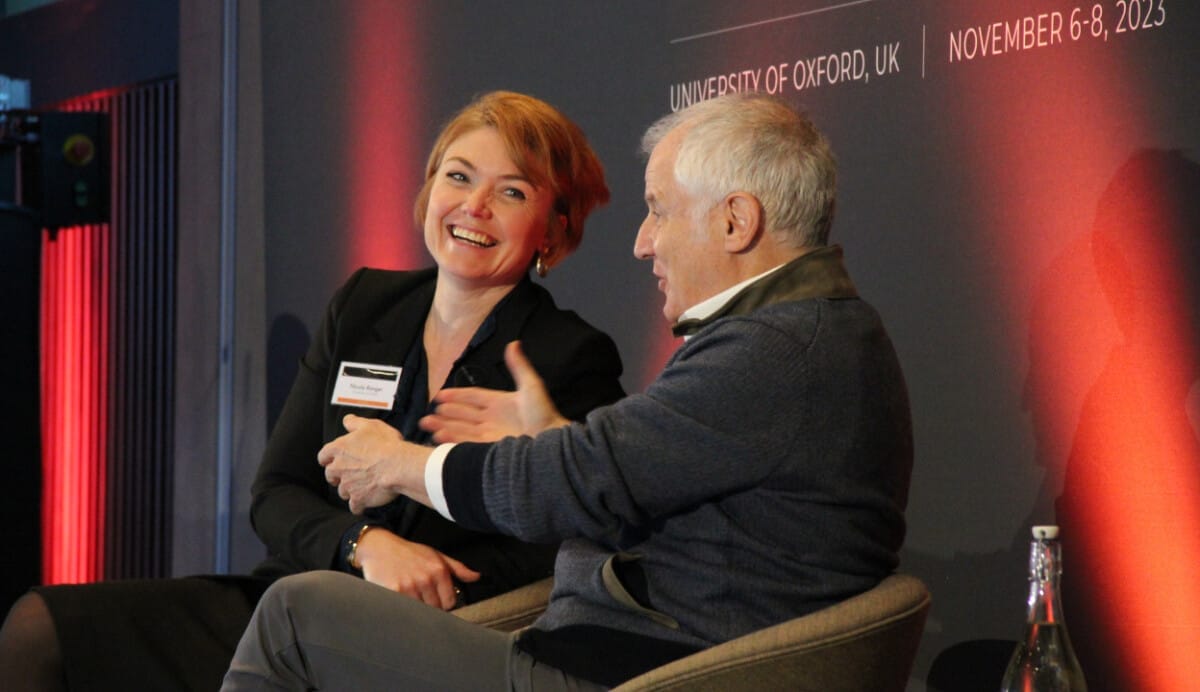
So warned Nicola Ranger, executive director of the Oxford Martin Programme on Systemic Resilience and a senior research fellow at the Institute for New Economic Thinking at Oxford Martin School, opening the second day of Sustainability in Practice at the University of Oxford. She said that climate risks are coming thick and fast, with a direct impact on assets, labour productivity, patterns in demand, supply chains and markets.

Ranger urged asset owners to re-evaluate climate risk and bring this analysis into their decision-making. For example, few asset owners report on the physical risk of climate change in their portfolio.

“Not managing this risk means the wider economy is not getting the economic signals it needs to create changes. Financial institutions need to price risk properly, and signal to the wider economy that it needs to adapt.”

If governments and countries meet all their pledges, she predicted global warming could be capped at 1.8 degrees, below the threshold for catastrophic tipping points. But she also described a much more pessimistic view based on progress to date and the fact global emissions keep climbing and still haven’t peaked. “We are not on course.”

The risks of climate change are already visible. For example, high temperatures is causing deaths, disrupting transport networks and leading to floods and drought as rainfall patterns change, impacting agricultural systems. She flagged implications for water-dependent industries and big increases in volatility of commodity prices. “Sixty percent of our food comes from five countries,” she said, predicting shocks to supply chains and impact on sovereign credit ratings.

Sponsored Content

Investors have a role to mobilize finance across geographies, countries, sectors, infrastructure and agriculture. But she warned that many investment decisions are not building resilience. For example, new infrastructure investment doesn’t always consider climate-related risk. “We are still building physical infrastructure that economies depend on, but we are not doing it in a way that is considering climate risk, risking both investors and society,” she said. Similarly, she flagged the much of the estimated annual $6 trillion invested in agriculture doesn’t consider future climate risks.

Ranger urged asset owners to take a holistic approach to managing risk and align their portfolios with resilience. They should ensure they “do no harm” and manage risk in their own portfolio to ensure it doesn’t create risks for society. For example, she said water companies have a significant impact on water scarcity.  Elsewhere she noted that data centres are exposed to climate risk like heat, and they are also water dependent. Adaption can bring returns from investing in new technology, but adaptation also incurs long term costs. For example, retrofitting buildings requires upfront investment.

“We, as a society, are mismanaging climate risk. We are putting insufficient emphasis on our safety and not properly valuing the impact of climate change or logging or exploitation of the soil. Many things doing that are impacting environment that are impacting on us.”

Leave a Comment

The ‘space economy’ is a legal and literal vacuum for investors

The ‘space economy’ is a legal and literal vacuum for investors

The looming SpaceX IPO has put the spotlight firmly on the so-called ‘space economy’, but asset owners have been urged to exercise caution about investing in a sector that still resembles the wild west, with no legal or governance framework to protect capital. That’s not to say money will not be made, but it might not be in the areas investors first expect.

Sort content by

GIC: Geopolitical risks rewire asset allocation ‘operating system’

Some investors are “missing the point” of geopolitical risks by equating them to the disruptions from conflicts and wars, according to GIC chief economist Prakash Kannan, but in reality, geopolitical risk is no longer episodic or peripheral. This means investors need to think harder about inflation and country composition in their portfolio.

GIC, OPTrust on how TPA reshapes allocation process, accountability

Long-time practitioners of the total portfolio approach said one of its greatest advantages is that the investment team can make significant asset allocation at its discretion, as interest towards adopting the framework picks up among asset owners to handle more complex decision-making. At FIS Singapore, GIC and OPTrust unpack the governance and risk culture to enable it.

Why game theory falls short in AI-driven trading market

The rise of artificial intelligence-driven trading has raised questions about the possibility of algorithmic investors crowding into many of the same ideas and amplifying stress during times of volatility. Nanyang Technological University computer science professor Bo An explores the question at FIS Singapore.

Why active management matters in emerging markets

The emerging markets are a great way to access the AI thematic without buying into expensive US large caps, but their nuances demand local active management if investors want to unlock their rewards.

Asian private credit shines as US, European covenants weaken

As covenants in US and European private credit become weakened from an increasing flow of lending capital, asset allocators and managers are eyeing Asia as the next frontier due to its relatively untapped yet sizable market. At FIS Singapore, investors unpacked the region's complexity premium and why a local approach is essential.

Why China thinks it will lead the next industrial revolution

While China was mainly a beneficiary rather than a participant of previous industrial revolutions, it now believes it can lead the next one, and the US will have to work hard to catch up to its extraordinary capacity and speed for development.

Previous



