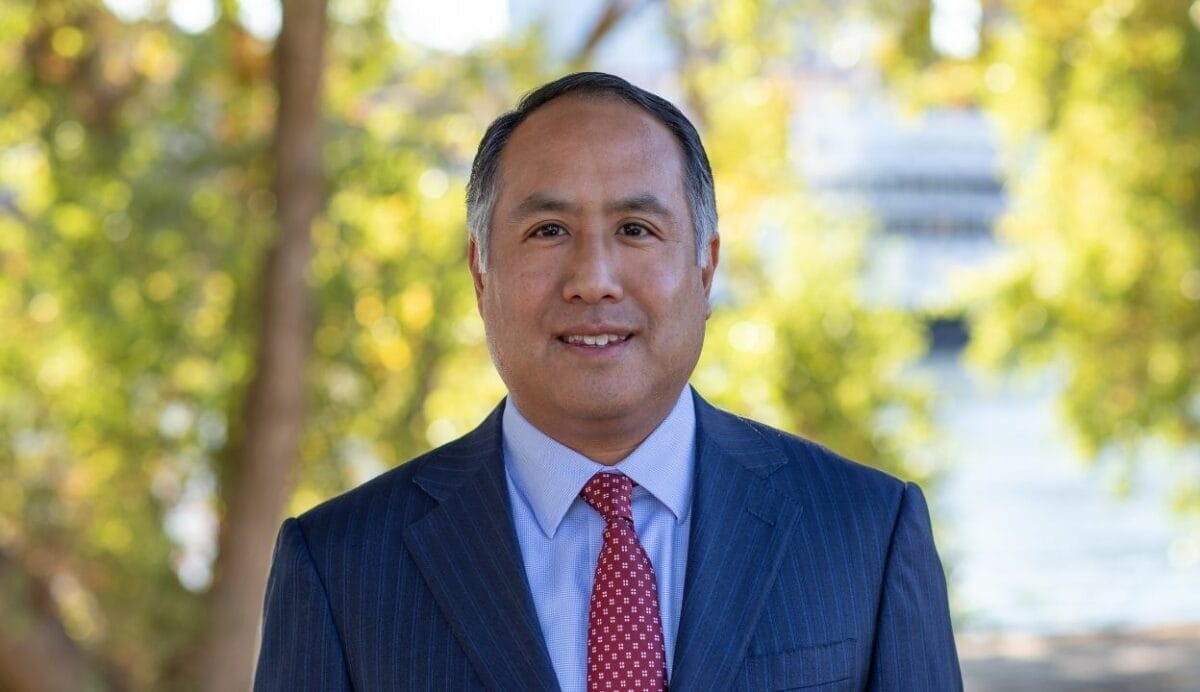

Scott Chan replaces Chris Ailman as CalSTRS CIO

After five years as deputy CIO, Scott Chan has been appointed to the top investment job at CalSTRS. Top1000funds.com takes a look at his leadership style and his influence so far on the team and the fund’s investments.

Scott Chan has been named chief investment officer of the $332 billion CalSTRS, replacing long-time investment leader, Chris Ailman, who will retire after 23 years at the helm.

In the past few years Chan, who has been deputy CIO since 2018, has been instrumental in restructuring the investment team with a particular eye on positioning for future growth; as well as directing the fund’s ‘collaborative model’ which has saved more than $1.6 billion in costs since 2017.

Like Ailman, Chan is deeply committed to the mission at CalSTRS of providing a secure retirement to California’s educators (on average, members who retired in 2022–23 had 25 years of service and a monthly benefit of $5,141). Chan also has a personal connection to the fund as the husband of a California educator, and his wife is a member.

In his new role, Chan will be responsible for developing and implementing CalSTRS’ investment policies, strategies and initiatives; managing a significant and complex budget; fostering a collaborative culture of excellence and diversity, equity, and inclusion; and overseeing all CalSTRS investment portfolios.

“I am honored to oversee CalSTRS investments and lead our amazing team,” Chan said in a statement. “I am committed to driving excellence in how we invest, including advancing sustainability practices and promoting diversity across CalSTRS, our portfolio companies, partners and the industry. I’m humbled to follow Chris Ailman, a great friend and mentor, in maintaining our collegial and inclusive workplace culture and continuing to work with our CEO, Cassandra Lichnock, and our board’s Investment Committee to achieve our goals.”

Sponsored Content

Chan has always been supportive of his team and quick to give praise to others.

“We had built solid strengths across asset classes, and we have deep expertise. I think we have the number one team in the country – I’m bullish on our team,” Chan said in an interview last year. “We want to make sure we build upon that. And what stands out is we have such a strong culture, focused on the mission and a great set of values in how we operate.”

An investment team restructure last year was deliberate in its focus on how to position the fund for future growth with assets doubling every eight to 10 years. It also intentionally took a close look at the ongoing complexity of the portfolio and the skills required to manage it effectively in the future.

One of CalSTRS’ identifying factors is its ‘collaborative model’ which includes more internally managed assets, with 62 per cent of the portfolio now managed internally. But as the fund moves more into private assets, the collaborative model has focused not just on internal management but how CalSTRS can partner with external providers in innovative ways to achieve similar benefits.

SMAs and co-investment have been a feature of the model so far and Chan has said as the fund moves into the next phase of the collaborative model it will move more into joint ventures and revenue share and ownership.

A direct result of the collaborative model is that CalSTRS internally is taking on more execution risk, which has a direct implications for the size and quality of the team.

In its most recent five-year plan, the fund outlined 91 new hires and has developed a plan to hire more staff to manage and mitigate the execution risk and to train and equip the current staff. The CalSTRS investment team currently numbers 225 and Chan has said a focus will be on hiring people with a background suited to those types of investments, such as a recent portfolio manager hired from KKR.

In an interview last year about the collaborative model he said: “All the credit goes to the team; they have executed this excellently. We have a great team and culture, they feel empowered and have delegation up and down the chain. We have a streamlined decision-making process and they can be nimble in the marketplace.”

Like many large institutional investors, CalSTRS is paying more attention to overseeing management of the total fund including short and medium tilts and whole of portfolio challenges like taking advantage of the energy transition and diversity of managers and internal teams.

Leave a Comment

Aware Super maps AI exposure as it sharpens whole-of-portfolio risk focus

Aware Super maps AI exposure as it sharpens whole-of-portfolio risk focus

Australia’s third-largest pension fund Aware Super is taking stock of its investment exposure to AI and the initial analysis suggests at least 15 per cent of the fund’s assets are exposed to the thematic. In a project deep dive, head of investment strategy Michael Winchester says finding the portfolio's true concentration around AI will require looking beyond simple dollar aggregation.

Sort content by

Cross-checking data, wringing necks: the ESG journey

Making a portfolio more resilient to climate change, and playing a role in decarbonising the real economy, requires a range of creative solutions to complex problems, along with a good measure of determination, said a panel of leaders driving ESG efforts at GIC, New Zealand Super and APG.

CDPQ’s real estate arm Ivanhoé Cambridge talks agility and evolution

Two thirds of Ivanhoé Cambridge's real estate allocation used to be invested in return-dragging office and retail assets. Now, in a complete reversal, two thirds is invested in logistics and residential real estate alongside a growing allocation to alternative life sciences

Eyes on SE Asia, divergent views on China among global funds

Australia’s second-largest superannuation fund, the A$240 billion Australian Retirement Trust, will likely “do more, not less” investing in China, said the fund’s head of strategy, following significant internal debate over geopolitical developments and how they will impact the portfolio.

CIOs’ confidence wanes as agility becomes the focus

The 2023 CIO Sentiment Survey, a collaboration between Top1000funds.com and CaseyQuirk, finds asset owners focusing on agility as they observe dramatic market changes not seen in a generation. Only 36 per cent of CIOs are confident they will reach their return targets in 2023.

HOOPP eyes bonds as source of incredible return once again

Given current levels in real interest rates, real return bonds (namely Canadian government bonds and US Tips) represent an 'incredible' return compared to the underlying risk, Canada's HOOPP plans to build on its exposure.

SVB collapse reminds us long-term investors, too, can panic – but don’t

"A long-term investor sells when it wants to, not because it has to." This is an especially clear and succinct definition of long-term investing. Long-term investing is about how the institution behaves, not a fixed time period.

Previous



