
Factor rebalancing superior for managing liquidity

Factor rebalancing a portfolio is a better way to manage liquidity and leverage implications of illiquid assets compared to traditional rebalancing to a static asset allocation, according to new research presented at the Fiduciary Investors Symposium in Singapore.

A research paper, (Re)Balancing Act: The interplay of private and public assets in dialing the asset allocation, published in the Journal of Portfolio Management in April, proposes a new way to rebalance portfolios that more deliberately considers a more stable risk and leverage profile of a portfolio.

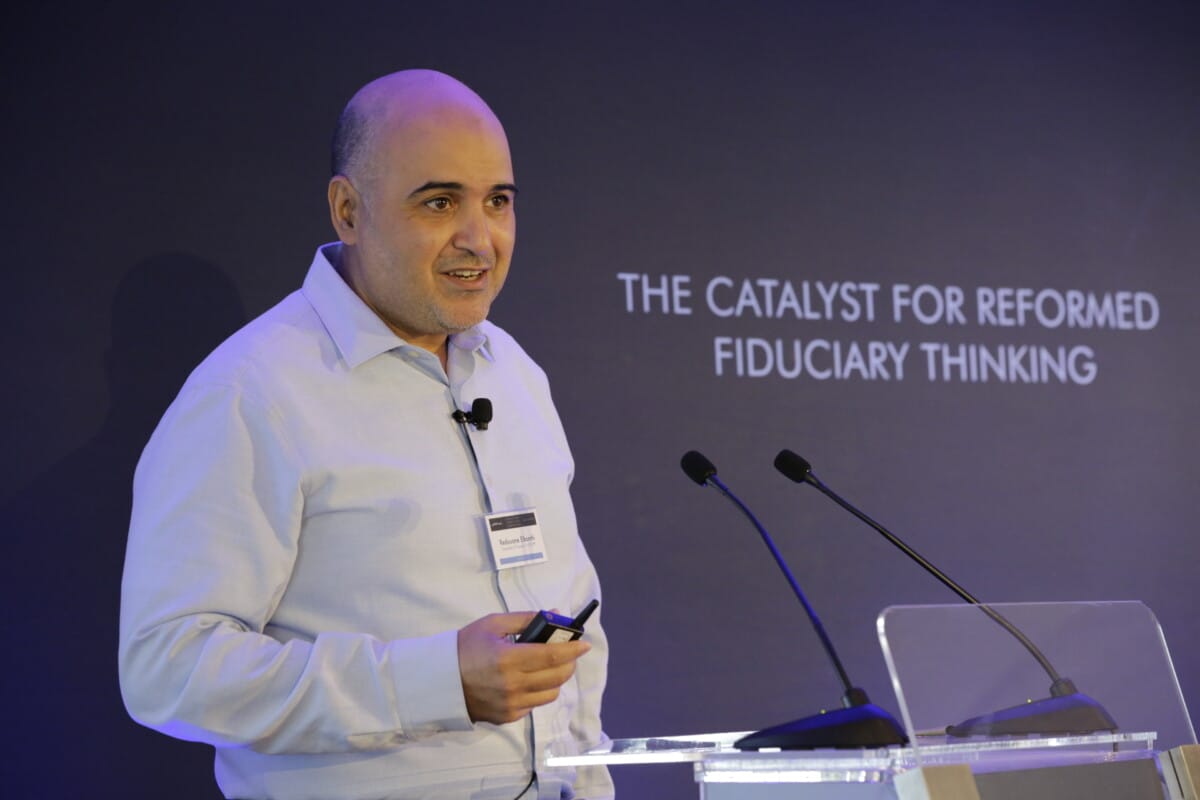
Co-author Redouane Elkamhi (pictured), Professor of Finance at the Rotman School at the University of Toronto, who presented the research in Singapore, said this approach allows investors to rebalance to the same underlying exposures – such as growth, inflation, and real rates – without being forced to rebalance to the fixed allocations.

“Generally, we think if you have come back to the SAA and rebalance, that is an active decision at each point in time that that is the best portfolio you can hold,” he said. “Coming back to that starting point is a big call. We need to be more dynamic in the face of uncertainty and the framework we have worked under for a long time.”

The factor rebalancing approach focuses on addressing a number of problems when it comes to rebalancing illiquid assets. For example, during market downturns, private assets can become significantly overweight due to stale valuations and the depreciation of public assets.

And standard rebalancing strategies can unintentionally introduce leverage due to the illiquid nature and potential stale valuation and lead to a deterioration of the fund’s liquidity position.

Sponsored Content

“You can’t easily rebalance illiquid assets, but the way people deal with that is by leverage, which means an unintended active decision that has implications on value-add,” Elkamhi said.

“This is a plumbing issue – a serious issue in asset management. As the privates get bigger it creates liquidity and leverage problems.”

Liquidity and leverage

The paper demonstrates how liquidity and leverage changes with a traditional rebalancing approach and using factor rebalancing which is designed to help the portfolio achieve more stable profiles in terms of leverage, risk, and liquidity.

This is done by considering public assets as complements to the illiquid private assets and making adjustments to the allocations of public assets to maintain the desired factor allocation for the overall portfolio.

Elkamhi said the approach gives investors a framework that allows a portfolio to be tilted without unintended active decisions.

Elkamhi said the paper was not a view on the optimal allocation to private versus public assets but a tool to rebalance to desired allocations without the unintended impacts on leverage among other things.

“If you have constraints to come back to the fixed allocations this is giving you a degree of freedom to give you a better liquidity coverage ratio and to better deal with privates in the portfolio,” Elkamhi said.

“We are not advocating for more privates but if that is the aim our methodology allows you to have more private without effecting the liquidity coverage ratio (LCR) level the same way traditional rebalancing will do, with a huge magnitude.

Redouane Elkamhi is part of the faculty of the University of Toronto and will speak at the Fiduciary Investors Symposium on campus from May 29-31. For information click here.

Leave a Comment

Macquarie: Deglobalisation the next inflection point in real assets

Macquarie: Deglobalisation the next inflection point in real assets

Global governments are partnering with private investors to boost their domestic infrastructure and become more self-sufficient in a geopolitically fragmented world, according to Ben Way, global head of Macquarie Asset Management, who said that constrained public balance sheets are increasingly reliant on private capital to meet their infrastructure needs.

Sort content by

‘Math wins’: Why investors should push harder on fiscal discipline

Investors need to start demanding that governments act with more fiscal discipline as ballooning debts on sovereign balance sheets around the world approach a breaking point, MFS Investments, one of the world’s oldest asset managers, said at FIS Singapore.

‘We are way ahead’: How Fairfax County bagged staggering crypto returns

Fairfax County Employees’ Retirement System says its allocation to digital assets has become the best-performing investment in the fund’s history. The $6.3 billion pension plan first invested in blockchain infrastructure and digital assets through venture funds in 2019, and early distributions are now beginning to arrive.

IMCO World View: Active strategies, diversification and liquidity focus

Canadian pension investor IMCO is bracing for higher inflation and a weaker US dollar in 2026, as the $62 billion fund said investors need to protect diversification and liquidity in a volatile environment and be wary of risks in passive investments. In a podcast, chief strategist Nick Chamie unpacked the asset allocation insights, which were released in the annual IMCO World View paper, in conversation with Top1000funds.com editor Amanda White.

Conflict in Iran: Investors mute the noise but inflation risk grows

Investors are watching conflict in the Middle East closely as inflationary pressures begin to build beneath the surface. One of the challenges for many investors is reduced exposure to the hedging benefits of fossil fuels in listed, and private markets.

Dynamic diversification: CalSTRS’ One Fund approach navigates uncertainty

Scott Chan is shocked the market hasn’t reacted more to the crisis emanating from the conflict in the Middle East. But the CalSTRS' CIO is confident its one fund approach allows it to position dynamically and ensure diversification no matter what is presented.

Germany’s largest pension fund VBL ups diversification; invests more abroad

Germany’s €70 billion pension provider VBL is increasing its diversification, notably investing in overseas real estate outside Germany for the first time. It's also increasing its tilt to international equities over European stocks, enabled by an organisational and investment process overhaul.

Previous



