
The business as usual oil groups betting against Paris

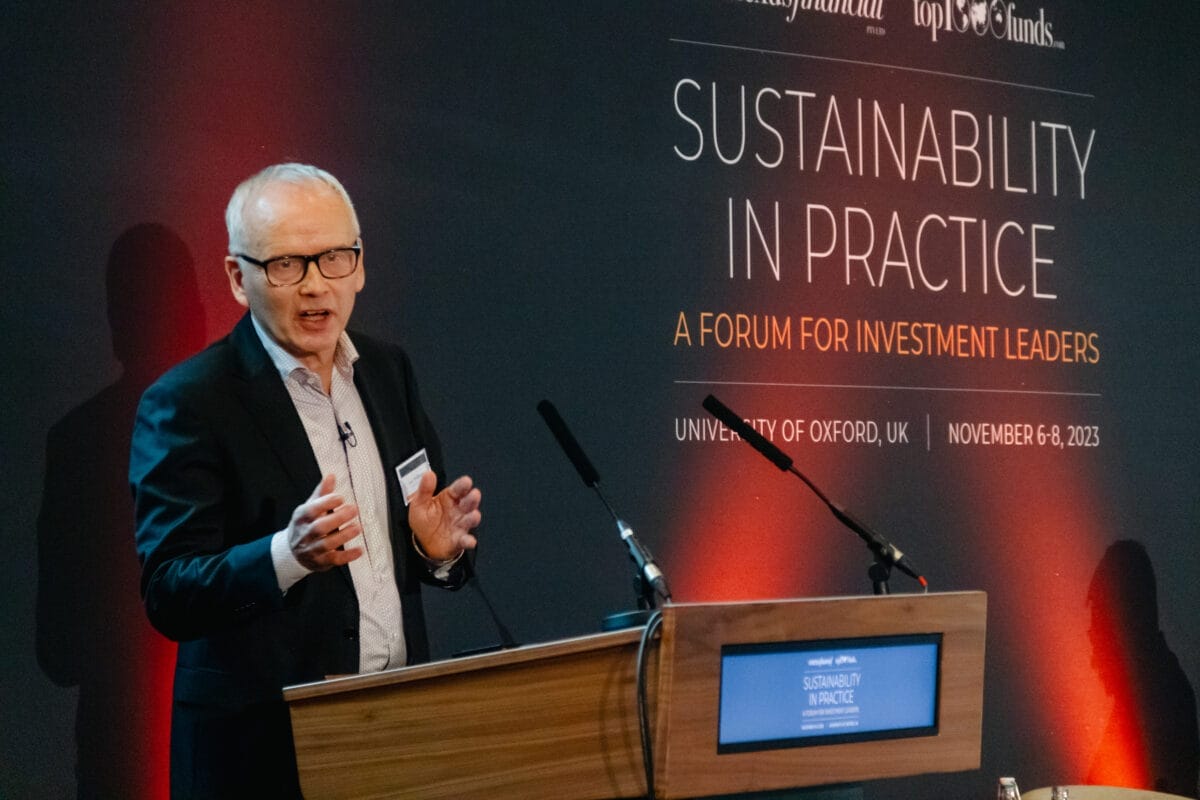
Investors should avoid oil companies advocating a business-as-usual growth strategy. US oil giant Exxon has pursued a business-as-usual growth strategy that has underperformed the wider market and peers, said Mike Coffin, head of oil, gas, and mining at Carbon Tracker Initiative who said shareholders of the oil group have only been rewarded because of the cyclical nature of the oil industry.

He said that unlike food production or transport, oil and gas cannot be decarbonised. Oil and gas groups should set goals with an absolute basis for reduction that incorporates end use emissions and downstream products, not just their Scope 1 and 2. He said these targets need to be framed to protect investors; companies plans must be appropriate, exclude divestment and not too dependent on unproven technology.

A low carbon, Paris-aligned world will result in a rapid decline in global demand for oil and gas. This means there is no need for new projects, and existing assets will be able to meet demand. “There is already enough oil and gas out there from production from existing projects to supply demand in 1.5-degree scenario,” he said.

Limiting warming to 1.65 degrees would only allow a small number of new projects to go ahead, yet Coffin said some oil and gas groups are planning a whole range of projects that would go over this scenario. These projects will be stranded; they will destroy investor value and will take the world over emissions targets.

He said that these projects will also take companies up the cost curve in pursuit of growth that amounts to a bet against Paris. “Companies sanctioning these projects are not Paris-aligned.” He suggested oil and gas groups should let their existing assets decline naturally in a runoff strategy that is better for investors and the environment. Alternatively companies can reframe their business away from oil and gas, and either return money to shareholders or invest in new, long term green projects.

No excuse

Coffin said the energy crisis, most prevalent in Europe, following Russia’s invasion of Ukraine shouldn’t put growth back on the table for oil and gas groups. Projects take five years to come to fruition, and demand will rapidly weaken over the next decade, he said, warning of  prices crashing and projects being left stranded. “If you sanction projects now, even if there is demand now, when projects are up and running demand will be in a decline phase.”

Sponsored Content

Coffin said that if petro-states claim alignment to the Paris goals, they can not justify supporting new projects, and are investing based on short-term prices with risky lead times.

Fellow panellist Mark Campanale, founder, Carbon Tracker Initiative called what lies ahead the biggest reallocation of capital in history. He said the technology behind internal combustion has not changed much in 200 years – it remains inefficient, cyclical and geopolitically dependent. In contrast, renewables are more efficient, not cyclical and once installed are not as volatile as fossil fuels.

He said that all the cheap access to fossil fuels has been found, noting that transporting fossil fuels will become more expensive. In contrast, renewable energy gets cheaper the more it is built. “This is the key distinguishing factor,” he said.

As the price of renewable energy falls, so competition steps up. He said that he had encountered policy makers who didn’t realise that renewable energy is cheaper than fossil fuels. “Renewables are experiencing falling rates and will continue to,” he said. He also noted that ESG-aligned private equity investment does not equate to capital flowing into renewable energy. He said investors need to allocate directly to the sector, especially in the global south.

He noted that the rise in electric vehicles will increasingly dampen oil demand in a trend most visible in China where electric busses are increasingly prevalent. He said air pumps will displace gas boilers where technology and take-up will also lead to a sharp drop in their price. This will be another factor leading to markets discounting fossil fuels.

Earnings calls

Elsewhere he noted how references to carbon in earnings calls has risen sharply. “Climate and carbon have become one of the crucial topics for boards and earnings calls,” he said.

Campanale said that Exxon’s decision to continue to build more capacity and volume echoed companies like Blockbuster video and Kodak that both missed the digital revolution.

He noted that the business model of oil and gas groups is based on producing a product cheaply to sell at a higher price, yet renewable energy is not built on the same model. Oil and gas is high risk; renewables are based on long-term returns. Oil and gas groups could wind down and return money to shareholders, invest in renewables or become providers of new technology around carbon capture for industries that can’t decarbonise.

The panellists also reflected on the importance of aligning executive pay with the transition, something that still doesn’t happen. Executives in the oil and gas sector are still incentivised to grow production.

Leave a Comment

Meeting multiple objectives: The pension fund addressing mental health

Meeting multiple objectives: The pension fund addressing mental health

With the right governance models pension funds can play a role in broader societal issues, such as mental health in the workplace, while still delivering financial security for members. A unique “democratic governance structure” at the Danish Velliv Association allows it to manage multiple objectives, chief executive Lars Wallberg said.

Sort content by

The value in natural capital

Nature is increasingly viewed as an economic asset, or natural capital. Identifying the natural capital assets that can be used most effectively to offset carbon, such as land and forestry, can provide a real advantage in the path to decarbonising investment portfolios.

Real estate’s net zero challenge

Real estate accounts for nearly 40 per cent of energy-related carbon emissions but cutting emissions to net zero in the sector is highly complex. Investors should focus instead on cutting emissions by refurbishing properties and avoiding new builds.

Bridgewater and PGGM discuss ESG’s need for better communication

Bridgewater’s Carsten Stendevad and PGGM’s Jaap van Dam discuss the need for more clarity and better communication in sustainability and explore how investing for impact is re-shaping investment strategies.

APG develops ESG indexes

A new set of responsible investing indexes, developed by APG and Qontigo, allow investors to measure and report on the impact on risk and return of individual ESG criteria.

APG positions for a digital future

APG, the biggest pension provider in Europe, is positioning itself as a digital pioneer with investment in the large-scale use of data, workflow automation and digital analytical platforms. A leader in funds management, most notably sustainability, it is once again a frontrunner by embracing technology.

Stephen Kotkin: Why greenwashing is pervasive

Greenwashing is pervasive and it's no mystery why, according to Professor Stephen Kotkin, who says governments continue to sign on to mandates they cannot meet, and investors pledge commitments they cannot redeem, creating a lucrative industry in greenwashing.

Previous