Decarbonisation and value creation go hand in hand

The Boston Consulting Group – the consultancy partner of COP26 – has worked across multiple industries with investors to transform high emitting businesses while creating meaningful value in the process. The consultant outlines why decarbonization and value creation can go hand-in-hand.

Companies developing a decarbonisation strategy can create value for their customers, investors and the planet, said BCG sustainable finance leads speaking at Sustainability in Practice.

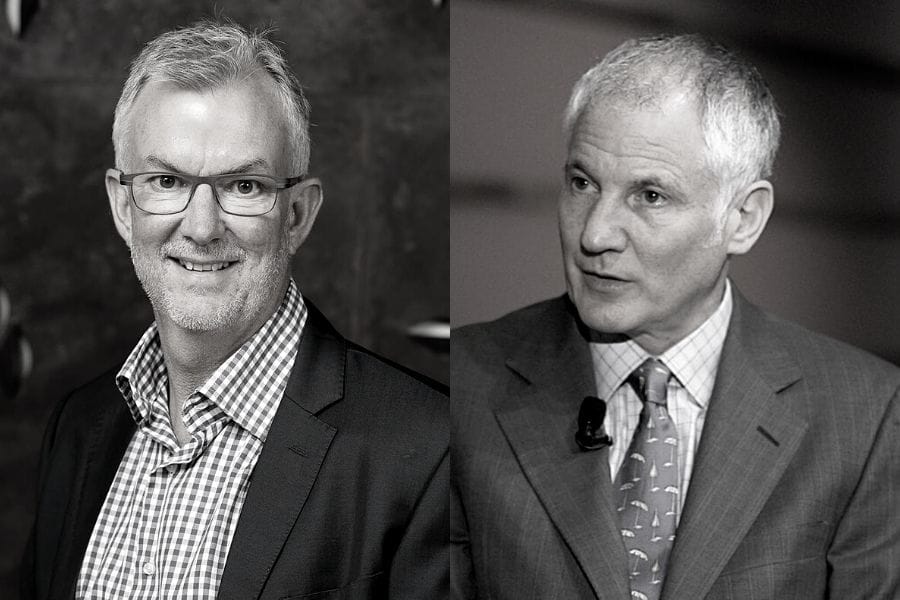
Decarbonization holds two main levers that can drive value, said Thomas Baker, leader energy practice, BCG, adding that the levers are not mutually exclusive and that companies can pull both. On one hand decarbonization will reduce Scope 1,2 and possibly 3 emissions; the second lever to drive value comes with identifying new business opportunities and looking for new value pools where companies can leverage their competitive strengths.

The conversation highlighted corporate examples where decarbonisation has created value. Finish oil and gas company Neste has invested in biofuels, pushing into refining and development. Now a household name, the company operates globally and has introduced clear investor value by recognising the shift to biofuels.

Elsewhere, Nextera Energy, a US energy group, has changed strategy to derive more of its generating capacity from renewables away from fossil fuels. The company had done two things over the last decade, explained Baker. It has reduced its Scope 1 and 2 emissions, divested out of coal and invested in renewable clean fuels for its own electricity production leaving the business now split between renewables development and its core utility business.

“It has created significant value for shareholders over the last decade,” he said.

Sponsored Content

He added that Nextera is an example of how decarbonisation can create a “win for climate, customers and shareholders”.

“When utilities shift to renewables it can lead to less cost for customers,” he said.

BCG notes that some of the hardest sectors to decarbonise are in industrial goods, and carbon intensive industries that use processes that can’t be easily electrified, requiring fuel as a unique chemical property. For example, aviation could be one of the hardest industries to decarbonise because of oil’s high energy density, needed to power planes. For sure, sustainable aviation fuels are developing but they are costly, and the supply of biofuels holds challenges. Similarly heavy road transport could be hard to decarbonise.

Panellists urged investors to take on exposure to sectors where opportunity exists. Importantly, investors should consider the fact some sectors need more time to reduce emissions. Net zero is exciting but ensure you have enough flexibility in the portfolio to tolerate assets with higher emissions if those companies are on track to achieve a lower carbon footprint, they advised.

Vinay Shandal, global leader, sustainable finance, BCG noted the recent proliferation in enabler funds, whereby investors take a stake in a company on track for a broad sustainability transformation.

Shandal also touched on how sustainability can drive value in other areas. Getting a company’s sustainability story right helps companies secure the best talent, informs consumers purchasing decisions and allows companies to break into new customers and secure a pricing premium. “Operational value creation is driving a lot of excitement,” he said.

He concluded that the combined function of maturing technology and policy frameworks is seeing value pools shift and said that investors should bring capability as well as capital to companies, and that technology, data, and measurement solutions are all vital.

Leave a Comment

America’s net zero opportunity

America’s net zero opportunity

Research from Princeton University plots a Blueprint for how the US can achieve net zero emissions in the next decade showing the key is overcoming execution challenges including the infrastructure deployment and the mobilisation of capital and labour.

Sort content by

Investors call for more transparency in climate disclosures

Investors including the French SWF wanting clarity around corporate carbon emissions call for mandatory disclosure.

Church of Sweden manages concentration risk

The SEK10 billion Church of Sweden fund invests all its assets through a sustainability lens. It’s had stellar performance driven largely by a chunk of the fund invested in the Generation Investment Management global equity fund, an investment that was diluted last year to manage concentration risk. Amanda White spoke to CIO, Anders Thorendal.

Sustainable and responsible investing: ABP’s policy for 2020-2025

ABP wants to offer all participants a good pension both now and in the future. A pension they can enjoy in a livable world. That’s why we pay attention to returns, risk, costs and sustainability performance with every investment decision we make.

How does ABP deal with the energy transition

In this position paper we give ABP’s view on the energy transition and show how this is reflected in our investments. This paper focuses on our investments in primary energy producers* and energy suppliers in the utilities sector.

ABP’s Sustainable and Responsible Investment Policy (2020-2025)

ABP wants to offer all our participants a good pension now and in the future – one they can enjoy in a livable world. That is why we carefully consider the return, risk, and cost, as well as the social responsibility and sustainability performance of each investment decision we make.

China: Charting the course to carbon neutrality by 2060

China’s unexpected pledge last September to become carbon neutral by 2060 has left many observers both excited and perplexed.

Previous