
The path to net zero

Investors from Brunel, Wespath and Robeco talk about the challenges of shaping their net zero portfolios including data, benchmarks and holding managers to account.

The decarbonisation of UK asset owner Brunel Pension Partnership’s £30 billion portfolio, managed on behalf of 10 local authority pension funds, involves multiple strategies, tools and careful manager selection.

Most recently it has come with ramped up due diligence around which investee companies are on a transition pathway, said Faith Ward, chief responsible investment officer at Brunel.

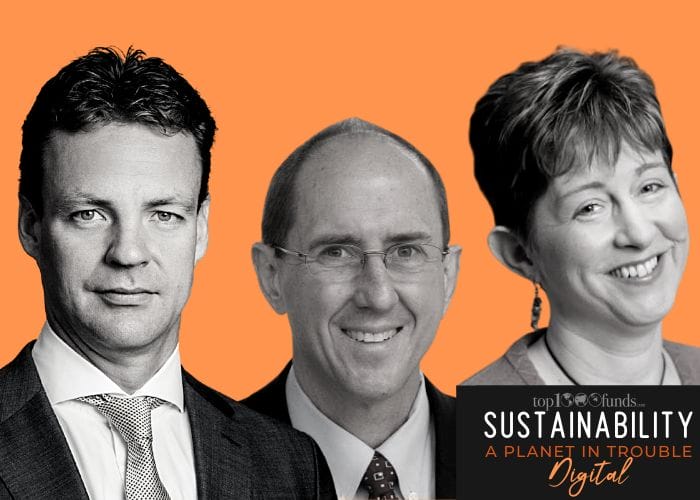
Speaking at ‘Sustainability Digital; A Planet in Trouble,” she told delegates that one of the challenges was aligning the portfolio’s different asset classes to Brunel’s net zero ambitions, most recently a multi-asset credit portfolio.

She cited the importance of ensuring net zero ambitions don’t limit managers and strong stewardship tools. Advocacy at a policy level and via the fund’s membership of collaborative organisations like Climate Action 100+, an investor initiative to ensure the world’s largest corporate greenhouse gas emitters take necessary action on climate change, are other important tools.

“It is not just about protecting the portfolio; it is about shifting the portfolio,” she said. Positive allocations to companies leading on energy efficiency or green transport is just as important.

Sponsored Content

She said one of the biggest challenges is around the availability of net-zero glide path benchmarks. Even when a manager says they are benchmark agnostic, benchmarks still drive behaviour and Brunel is working on how benchmarks drive manager behaviour and how to ensure that it is towards net zero.

At Wespath, which provides retirement plans, investment solutions and health benefit plans rooted in the principles of the United Methodist Church, achieving net zero in the portfolio is now enshrined in investment beliefs.

Other initiatives include working with BlackRock to reposition the passive portfolio to low carbon investments, said David Zellner, chief investment officer at Wespath Benefits and Investments and Wespath Institutional Investments.

“We are trying to identify and tilt to companies on the transition and ensure our investment managers actively consider ESG in their decision-making process,” he said. “We have guidelines for our asset managers on how they should vote and align with a good climate strategy.”

Data

Technology and data are driving research at Robeco, said Victor Verberk, chief investment officer, fixed income and sustainability. The asset manager finds corporate winners and transition ready companies’ sector by sector, finding those with the technology to stay on decarbonisation pathways and with the ability to adapt.

“It is very hard work, you have to make sure you understand companies on the fundamental side,” he said.

In another development, Robeco has launched the first Paris-aligned bond fund. It complies with EU rules on what constitutes Paris-alignment and has involved working with data scientists and developing forward looking indices and sectoral pathways in what he described as the holy grail in actively managed Paris-aligned funds. One learning has been around investing in carbon allowances.

Access to data has also been a key challenge; buying data from all vendors is expensive but essential for portfolio managers. Storing and making the data easy to access and communicable for the whole team is the other challenge.

Robeco has also developed a framework that links companies to the SDGs.

“It is one of our best-selling products,” said Verberk. “As more regions adopt the SDGs there is more client engagement around SDG products.”

Brunel’s Ward referenced new guidance to investors on how best to reach net zero from the Institutional Investors Group on Climate Change (IIGCC) via its new Net Zero Investment Framework (NZIF).

The framework outlines strategic asset allocation, strategy design and asset class specifics across listed equity, bonds, infrastructure and private equity for net zero. It is a comprehensive framework, covering all bases and equipping investors to take next steps, she told delegates.

The conversation also touched on the importance of holding managers to account. At Wespath this involves manager reviews, questionnaires and holding them to account.

“We identify areas we can improve,” said Zellner, adding that the goal is to ensure investment managers understand Wespath’s beliefs and views.

Ward concluded that Brunel has made a commitment to a Just Transition, ensuring those that are impacted by the economic shift inherent in net zero are not left behind. The fund has joined a coalition that works to finance a Just Transition, allocating capital to support it.

“We have metrics to allow us to evaluate a company’s response to a Just Transition,” she said.

Leave a Comment

Climate the No.1 priority for 2021

Climate the No.1 priority for 2021

Climate is by far the number one sustainability priority for investors in 2021 according to a poll of asset owners from more than 32 countries which came together for the Top1000funds.com online Sustainability event in March.

Sort content by

How to avoid funding treason

The siege on the US Capitol has revealed asset owners may be investing in companies that work with or fund extremist groups. To protect their organisations, their stakeholders, and their savers from such risks, asset owners should consider revising their ESG frameworks to include disclosure and accountability policies on corporate political spending.

Amazon under fire

Two of the world’s largest asset owners are putting pressure on Amazon to reveal exactly how it is protecting its workers from COVID-19. It’s a move indicative of the investor mood to focus attention on human and labour rights among investee companies, with a particular spotlight on the tech sector.

Diversity: The data challenge of 2020s

Assessing, managing and changing diversity, equity and inclusion (DEI) is set to become the data issue of the 2020s, as asset owners turn their attention to the power they have to advocate for change in the companies they invest in, and the firms that manage their money.

Climate risk is investment risk: Fink

The reallocation of capital towards sustainable companies is happening in real time and will accelerate, according to Larry Fink who is investing in technology and people to develop systems that can prove “climate risk is investment risk”.

Climate problem and industry ownership

Tim Hodgson, co-head of the Thinking Ahead Group, goes through an elaborate exercise to determine how much of the climate problem the institutional investment industry owns. The first step, he says, in finding a solution.

Verification essential for more impact

A new impact investing verification, which uses the same level of rigor that institutional investors approach the due diligence of fund managers, promises to unlock capital flows into impact and build the necessary scale with integrity needed to address the urgent social, environmental, and economic challenges.

Previous