
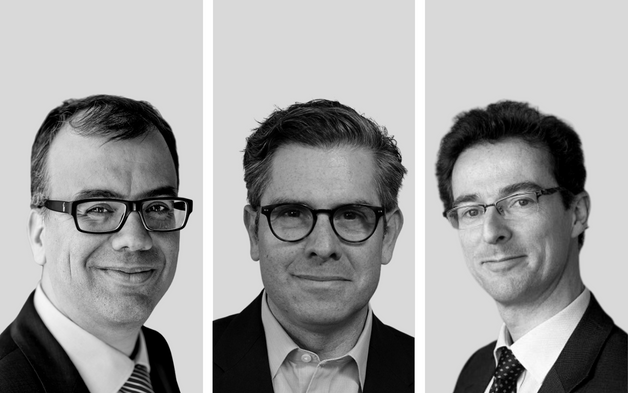

The growth and availability of data is allowing investors to see progress on their de-carbonization efforts and contributing to increased investor confidence around decarbonization, said John Quealy, chief investment officer, Trillium, the asset manager with nearly 40 years at the forefront of ESG thought leadership and responsible investing.
Speaking at FIS in Maastricht, Quealy also outlined enduring challenges regarding investors ability to impact the climate transition, including agreement around a common definition of sustainability. Investors are also struggling to conceptualize the real-world impacts of their investments; how to measure “changing the world for the better” and the integrity of the process. “It’s very difficult to achieve outcomes over three to five years,” he added.
Three Pillars
Delegates heard how European policy makers are working to bring uniformity and clarity to sustainable investment. Europe’s sustainable finance strategy is built around three pillars comprising the EU taxonomy and its common classification of activities, and disclosure requirements aligned with the taxonomy encapsulated in the EU’s Sustainable Finance Disclosure Regulation, explained Alain Deckers, head of unit, asset management, directorate general for financial stability and capital markets union, European Commission.
A third pillar revolves around a series of tools to promote sustainable finance including climate benchmarks and regulation around green bond standards, still in negotiation. Other proposals and initiatives in the pipeline include work on ESG ratings and developing impact assessments. This work involves close coordination with the International Sustainability Standard Board, aligning as much as possible to these standards but also considering the EU’s quest for a double materiality framework, explained Deckers.
He said much of the process around the strategy is still bedding down and involves “learning by doing” as policy makers grapple with new and difficult topics. War in Ukraine has also complicated the transition because it has created a short-term energy crisis.
However, Deckers maintained that conflict in Europe has also heightened the importance of moving away from dependency on Russian energy. “The way ahead is to push on with the transition to renewables and achieve our climate objectives,” he said. Moreover, he pointed to encouraging current indicators that suggest gas prices might come down including healthy storage capacity, demand destruction and LNG ships waiting to dock.
Almost all Dutch investors now view climate as a fundamental risk, said fellow panellist Marcel Jeucken, founder and managing director of SustFin, an independent advisory on sustainable investment. Investors stress-test their asset allocations in terms of fiscal and transition risk but are also tapping opportunities in the transition. In another trend, Jeucken said that investors increasingly measure how divestment supports decarbonisation efforts and engage to bring about real-world impacts to help finance the transition.
Jeurcken dissented from other conference voices on the challenges of decarbonizing high carbon industries. Stephen Kotkin, Birkelund Professor Emeritus at Princeton University said decarbonizing industries like cement, steel and travel looks increasingly unlikely. In contrast, Jeurcken said he believed as renewables become increasingly cheap, “[decarbonization] could be much faster than the fossil fuel industry thinks.”
However, Decker warned that it will take time to achieve the transition. It is not possible to just switch off existing energy sources. Still, he said setting objectives is an essential part of the process; without which the world is navigating in the dark. “It is a challenging process, but not one we can pass on,” he said.
The conversation turned to building momentum behind the transition in Australia where regulators and the government are now leading with policy initiatives. Australia is still in the early stages of understanding how private capital will invest in the transition.
Portfolio ResiliEnce
An increasingly key issue for investors is the impact of climate change on their portfolios. Fires, droughts, and other impacts of climate change are happening, raising questions around portfolio resilience. Moreover, investors shared stories on the challenge of reducing their carbon footprints when it comes to investing in the construction projects needed to transition.
Delegates discussed the need to engage not just on fossil fuel supply but on demand. Others discussed the need for visibility on impact and stressed the importance of allying with other investors in risk sharing and accessing an increased set of opportunities in blended investments with governments.
Other investors noted how integrating ESG has gone through board and governance processes and is now in a digestion phase. Companies have improved on their reporting processes in a standardized fashion. The level of conversation and detail is stronger.
Panellists concluded by reflecting on the need for transparency and clarity on the objectives they are trying to achieve. Investors need clear reporting processes and to show how they are delivering on objectives. Decker warned of huge change and steep learning curves ahead but concluded on a note of encouragement. “We will fix teething problems and it will get easier and easier. We will also have a higher quality of information on what to base our decisions.”






Leave a Comment
You must be logged in to post a comment.
Login