
Why risk parity investors have lost faith
Denmark's Kasper Lorenzen, group CIO at PFA explains why he's lost his faith in risk parity.
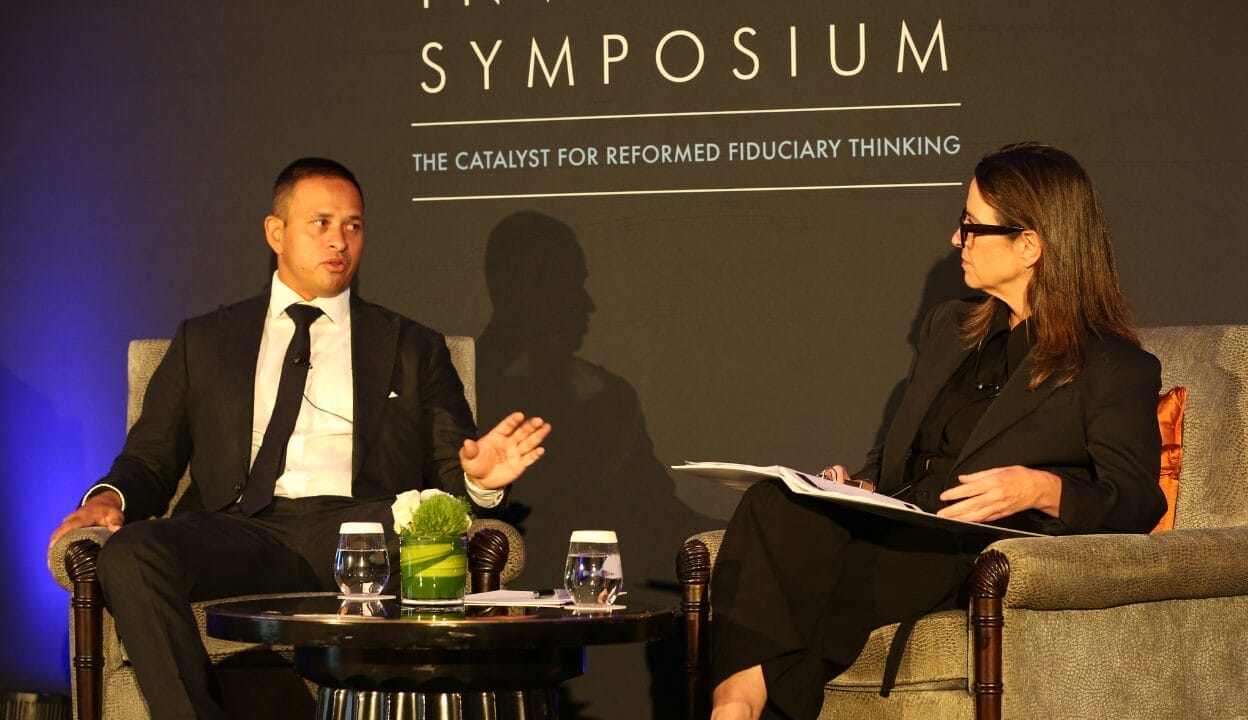
The principles of high-performance leadership – whether in business or sport – remain remarkably consistent and include the ability to maintain clarity, integrity, and conviction under immense pressure. Former Australian test cricketer Usman Khawaja told the Fiduciary Investors Symposium that the only time you really lose is when you stop trying.
Denmark's Kasper Lorenzen, group CIO at PFA explains why he's lost his faith in risk parity.
The traditional 60/40 portfolio allocation is no longer enough. The opportunity for alpha is not gone, but the low-hanging fruit has long been harvested, and the path toward higher absolute returns has gotten far more nuanced according to a new report from the Chartered Alternative Investment Analyst (CAIA)
Brunel Pension Partnership, the £31 billion asset manager for 10 local authority pension funds in the United Kingdom, is in the process of allocating to a new cohort of managers across private equity and debt, infrastructure, and unsecured income.
The 2022 annual CIO Sentiment Survey, a collaboration between Top1000funds.com and CaseyQuirk, finds asset owners most concerned about equity valuations and inflation. After three years of fee rises, asset owners are paying less for investments while CIOs in 2022 are also working with a smaller manager roster.
Incorporating uncertainty into the asset allocation process is a complicated but essential ingredient of building portfolio resilience, something investors are valuing more than ever in an environment where inflation, geopolitical and climate risks dominate. GIC and BlackRock have both developed asset allocation frameworks that incorporate investors’ aversion for uncertainty.
The UK's BT Pension Scheme's CIO Wyn Francis reflects on the pressure war in Ukraine will put on investors net zero targets.






Top1000funds.com is the market leading news and analysis site for the world’s largest institutional investors. It focuses on leading the global investment industry to continuous improvement through case studies of best practice in governance and decision making, portfolio construction and efficient portfolio management, fees and costs, and sustainable investing.
The publication pushes the industry to question whether status quo processes and behaviours to tackle risks and opportunities will be sufficient in the future, and actively campaigns for diversity, sustainability, transparency, innovation and better alignment of fees in the investment industry.
Top1000funds.com is read by investment professionals in more than 40 countries.

FIS 2026 at Raffles Singapore