
WEF lays out global risks ahead: Cost of living and climate dominate
The world faces a set of risks that feel both wholly new and eerily familiar. The Global Risks Report 2023 explores some of the most severe risks we may face over the next decade.
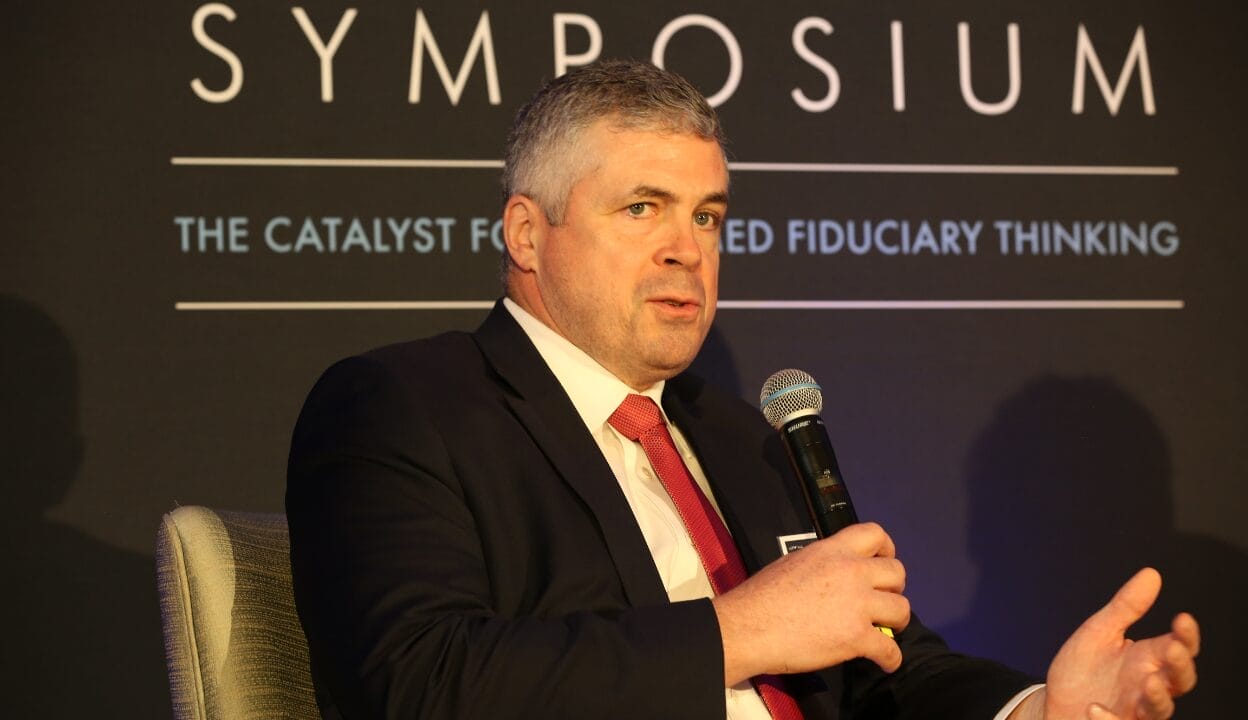
Investors need to start demanding that governments act with more fiscal discipline as ballooning debts on sovereign balance sheets around the world approach a breaking point, MFS Investments, one of the world’s oldest asset managers, said at FIS Singapore.
The world faces a set of risks that feel both wholly new and eerily familiar. The Global Risks Report 2023 explores some of the most severe risks we may face over the next decade.
Queensland Investment Corporation's (QIC) CIO of State Investments, Allison Hill, explains why private debt is a crucial part of the portfolio.
Allocations to property, some hedge funds and holding most of its assets in currencies other than sterling, helped Wellcome Trust withstand the impact of last year's simultaneous decline in prices in equities, government bonds and corporate credit on a scale not seen for many years.
It’s possible that a traditional 60:40 passive portfolio could get close to a target return of 7-8 per cent this year in a trajectory not seen for the last 12 years, according to Rich Hall, CIO of $65 billion University of Texas endowment.
AP3’s ability to actively benefit from volatile markets is rooted in a reform process undertaken by CIO Pablo Bernengo, replacing decade-old, separate alpha and beta allocations with a traditional asset class structures but avoiding silos. Active risk and sustainability go hand in hand, he says, and is a 2023 focus.
Persistently challenging market conditions driven by stagflation, uncertainty and volatility, the response to climate change and populism increasingly shaping government decisions, mean 60:40 needs a re-think according to Raphael Arndt, chief executive of the A$240 billion Future Fund.






Top1000funds.com is the market leading news and analysis site for the world’s largest institutional investors. It focuses on leading the global investment industry to continuous improvement through case studies of best practice in governance and decision making, portfolio construction and efficient portfolio management, fees and costs, and sustainable investing.
The publication pushes the industry to question whether status quo processes and behaviours to tackle risks and opportunities will be sufficient in the future, and actively campaigns for diversity, sustainability, transparency, innovation and better alignment of fees in the investment industry.
Top1000funds.com is read by investment professionals in more than 40 countries.

Fiduciary Investors Symposium 2026, Singapore