


An allocation to climate solutions and the ability to generate alpha from that across asset classes are what will define the future “California model”, according to CalPERS managing director of sustainable investment, Peter Cashion.
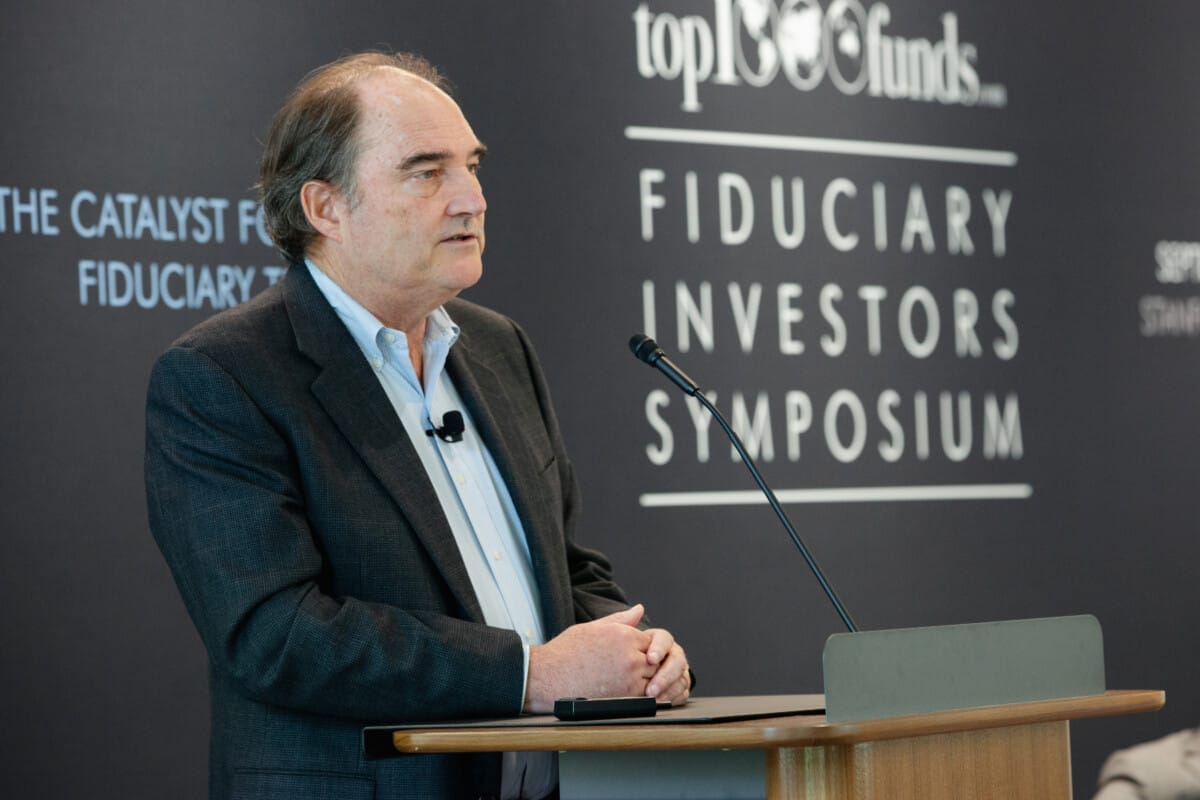
At the Fiduciary Investors Symposium at Stanford University, Cashion invited other Californian pension and endowment funds to together create an enabling environment for sustainable investment considering that the state is a “global leader when it comes to climate policy initiatives”.
“It’s [the California model] a working process, we haven’t trademarked it yet,” he quipped.
“We’re starting to work more closely together, particularly with CalSTRS, and doing things jointly.
“We can even draw some parallels with what California, and specifically Silicon Valley, has done as a global leader in technology.
“I think there’s an opportunity now for California to also lead in the climate transition, and actually technology will be a critical driver in that.”
CalPERS is the biggest asset owner in the United States and the fund has committed $100 billion to be invested in climate solutions in 2030. Cashion added that close to $50 billion of that mandate has already been deployed.
But on a state level, there is still plenty of capital to deploy as all of the major Californian pension and endowment funds collectively have more than $1 trillion assets under management – CalPERS alone has two million beneficiaries.
“We’re in a unique position. We have the assets, we have the aspiration and the desire, and it’s really grounded in we’re doing this to generate outperformance because that’s fundamental as part of our fiduciary duty,” he said.
Although generating alpha from climate and transition allocations is often easier said than done, Cashion said CalPERS has a few reasons to back its conviction.
Firstly, the sheer size and scale of the transition means it’s bound to throw out some good opportunities, Cashion said.
“In 2023, $1.7 trillion was spent on transition, up from $900 billion in 2019, so there’s really been a considerable increase, and that’s only going to grow,” he said.
“The second element is the importance of resource efficiency…so whether that’s water, power, energy efficiency – just inputs in general – that’s going to translate into lower costs, higher profitability and higher valuations.
“We’ve really seen, particularly in public equity, those strategies have really outperformed over the last years that are resource-specific measures.”
The third reason is CalPERS’ belief that it is beneficial to work with companies which are more aware of the climate and transition risks and act upon that information.
“At the end of the day, it’s really about information asymmetry and knowing something that the market either isn’t fully aware of or hasn’t fully priced in,” he said.
“If we think that the market…isn’t fully pricing in, correctly pricing in, something that will take six [or] seven years to play out, we’re okay to invest now and wait.”
Another advantage of being situated in close proximity to Silicon Valley is that there is a “strong cohort” of venture capital funds in the area, and CalPERS has good exposure to those and growth funds in private equity, Cashion said.
“We were a participant in Clean Tech 1.0 and unfortunately, it ended up where it did,” Cashion said, lamenting the early commercialisation efforts of climate technology and the bubble created by VC investors between 2006 and 2011.
“There were reasons for that, and we’ve studied those, and we feel confident we’re in a very different position today. We’ve done a few site visits, actually, just to portfolio companies here which are really at the cutting edge.
“Whether it’s because of institutions like Stanford or National Labs, there is just a whole ecosystem that promotes and supports [climate tech in California].
“And I think frankly, they like to have in their LP list an institution like CalPERS, which is also a local player.”







Leave a Comment
You must be logged in to post a comment.
Login