
CalSTRS considers
asset risk factors

The $152.5-billion Californian State Teachers Retirement System (CalSTRS) is undertaking an asset-allocation review that will consider the underlying risk factors of assets for the first time.

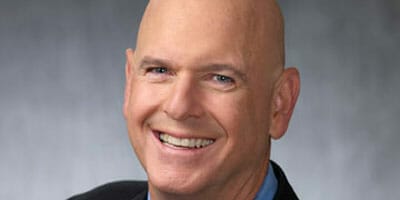
Chris Ailman, chief investment officer of CalSTRS, says the fund is in the middle of an asset-allocation study, which would likely take six months, and would take a different tack.

In the past the fund has only considered capital-market mean optimisation in making asset-allocation decisions, but now it will look at allocations according to risk factors as well.

“We will look at the drivers of risk – including inflation, interest rates and GDP – and what the fund is willing to include and exclude. We will optimise our allocations from a capital and risk perspective,” he says.

“If it reaffirms that we’re taking the right level of risk and return, then that is enriching the decision-making,” he says.

 Watching its weight

Sponsored Content

Ailman says the fund is adding points of view to the asset-allocation study and, at a recent board meeting, had an “interesting debate” on whether the goal of the portfolio was to make money or not to lose money.

“Capital-market theory and mean optimisation calculates risk by only one-term standard deviation, but it is much more complex than that. We apply so much math to investments because we want it to be a science, but it’s an art, and requires judgement.”

CalSTRS also makes tactical asset-allocation decisions and this week was due to hold a TAA meeting with one decision on the table: whether to go overweight the US.

At the moment the fund is neutral US, underweight Europe and underweight fixed income.

It has an automatic rebalancing process when allocations exceed the ranges, and Ailman says the question becomes when to rebalance and by how much.

“We are trying to build out an overlay portfolio with focus on left-tail risk,” he says.

Acknowledging inflation as a risk

Ailman’s view is that the biggest bubble in investments is fixed income, and acknowledging inflation as a risk is missing in most portfolios.

CalSTRS will look to expand its inflation-hedging portfolio among a basket of investments, including treasury inflation-protected securities and infrastructure.

The fund currently has a lot of growth assets, with 50.7 per cent in global equities and 14.5 per cent in private equity.

It also allocates 18.4 per cent to fixed income, 14.2 per cent to real estate, 1.6 per cent to cash, 0.2 per cent to inflation and 0.4 per cent to an overlay.


Leave a Comment

Sort content by

Listed companies are failing on sustainability

US companies are failing to meet a 10-year roadmap to sustainability and some sectors globally are ‘inherently unsustainable’ requiring a drastic refocus, according to two separate reports released this week by leading sustainability research firms Ceres and EIRIS. A report on the progress that some of the world’s biggest companies are making towards achieving sustainability

OECD, ITUC call for more green investment

Amid calls from global leaders for pension funds to invest more in the green economy, institutional green investments still languish at less than 1 per cent of portfolios. A recent OECD report looks at some of the barriers facing investors wanting to invest more in the sector, with regulatory uncertainty and a lack of suitable

Money for water

The global scarcity of water continues to make headlines, but a water-themed investment approach is only just starting to make waves with large institutional investors. Estimates of the assets in equity funds in this niche corner of the investment world vary from about $3 billion to $6 billion in funds under management – a veritable

GMO’s Grantham bets against irrational markets

Supposedly long-term investors typically have the patience to wait about three years to see if an investment strategy will pay-off with managers needing to manage to their own and their client’s career risk tolerance, investment icon and Grantham, Mayo and van Otterloo (GMO) founder Jeremy Grantham says. In his quarterly letter to investors, Grantham says

Mercer: think laterally on bonds

The angst in Europe has calmed down, relatively speaking, but according to Mercer, it will be a long haul, with deleveraging there and in the US taking many years. Investors need to act accordingly. Part of the problem is that conventionally safe assets, such as US Treasuries, are expensive. “That will take years to work

CEM study reveals in-house savings

A defining characteristic of leading pension funds globally is the cost savings garnered from in-house investment management. An organisational design study by CEM Benchmarking has revealed that “leading” funds have an average of 49 per cent of assets managed in-house, and yet the internal staff and non-manager third-party costs make up only 15 per cent

Previous




