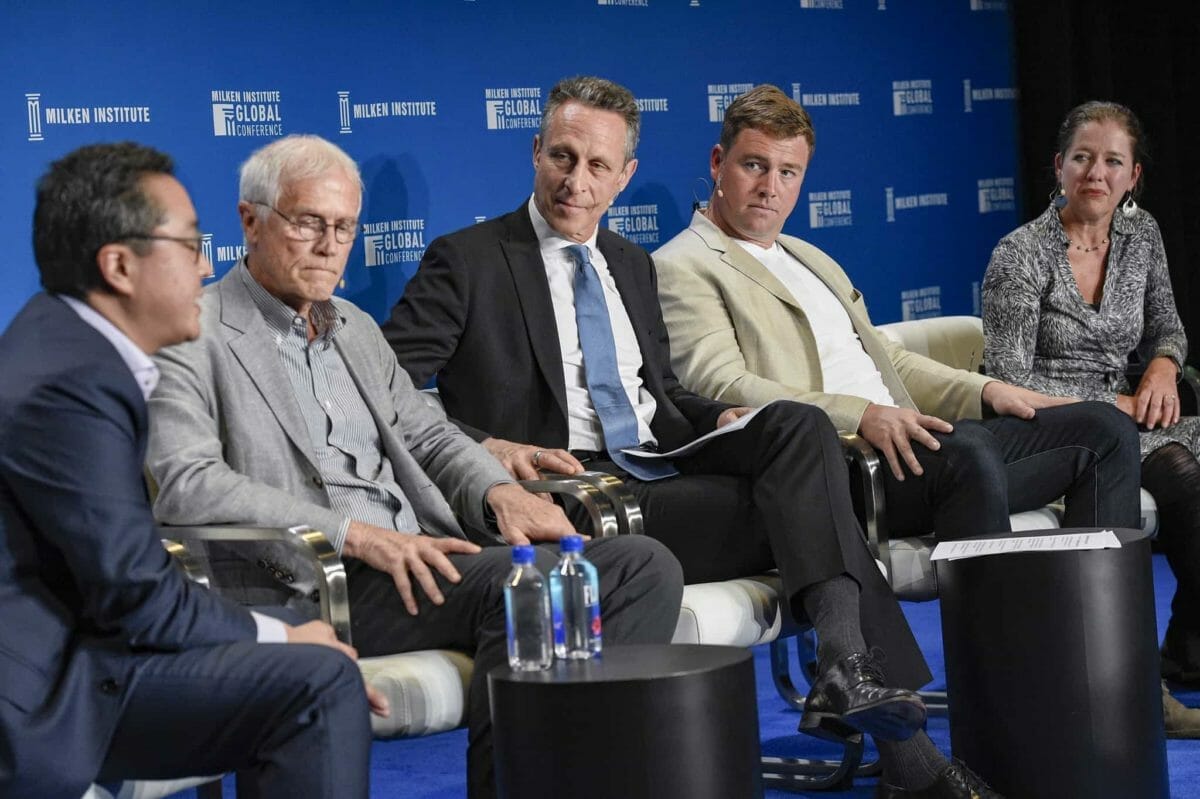
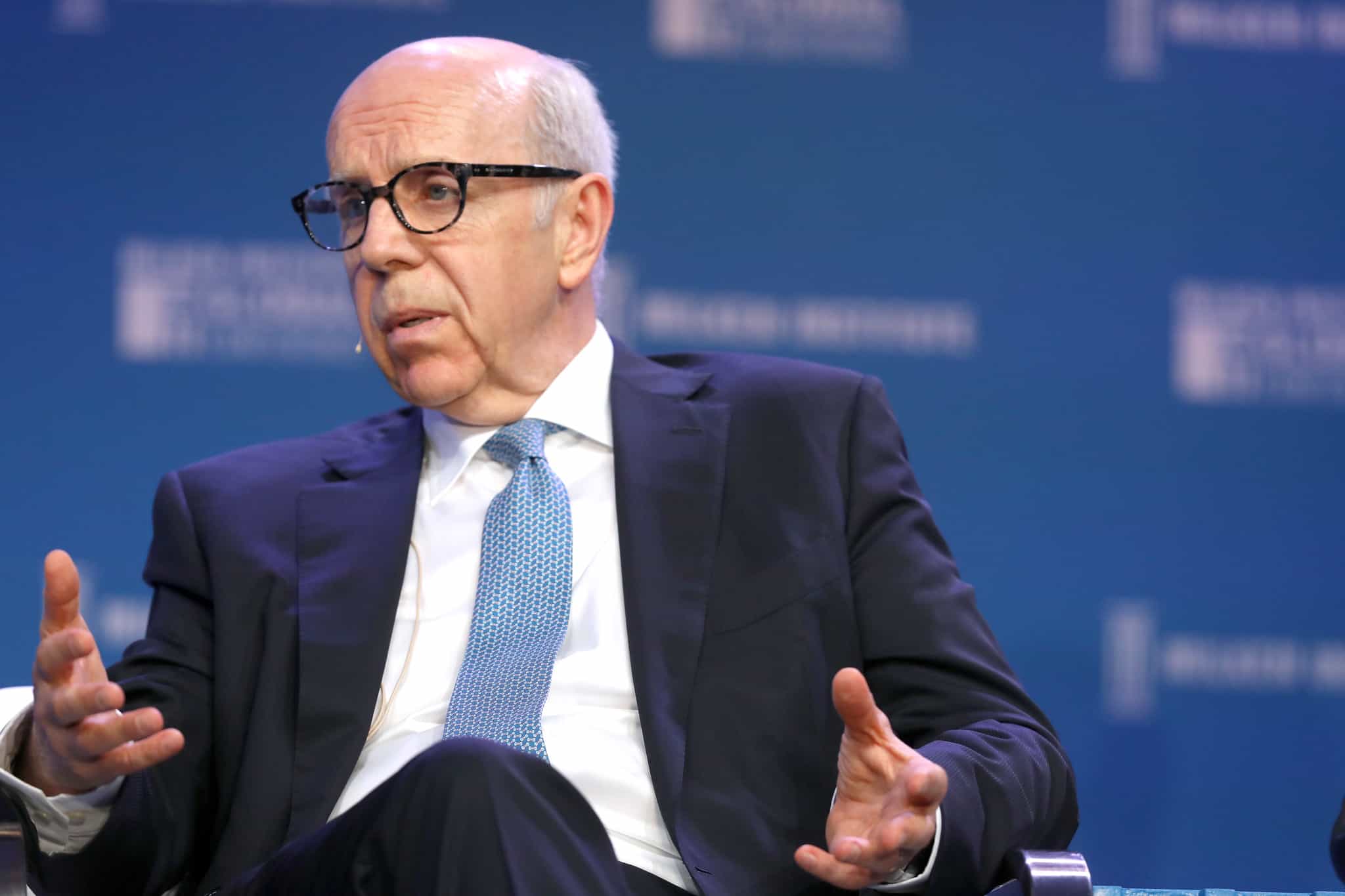
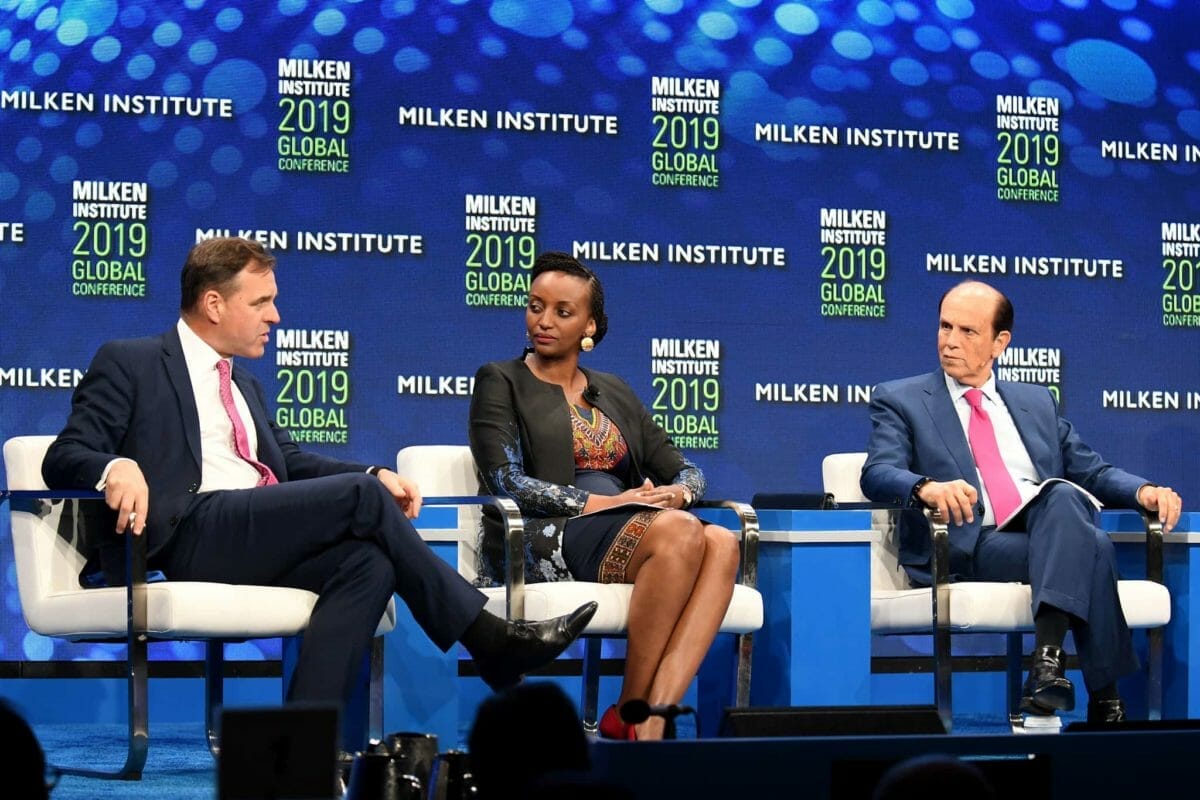
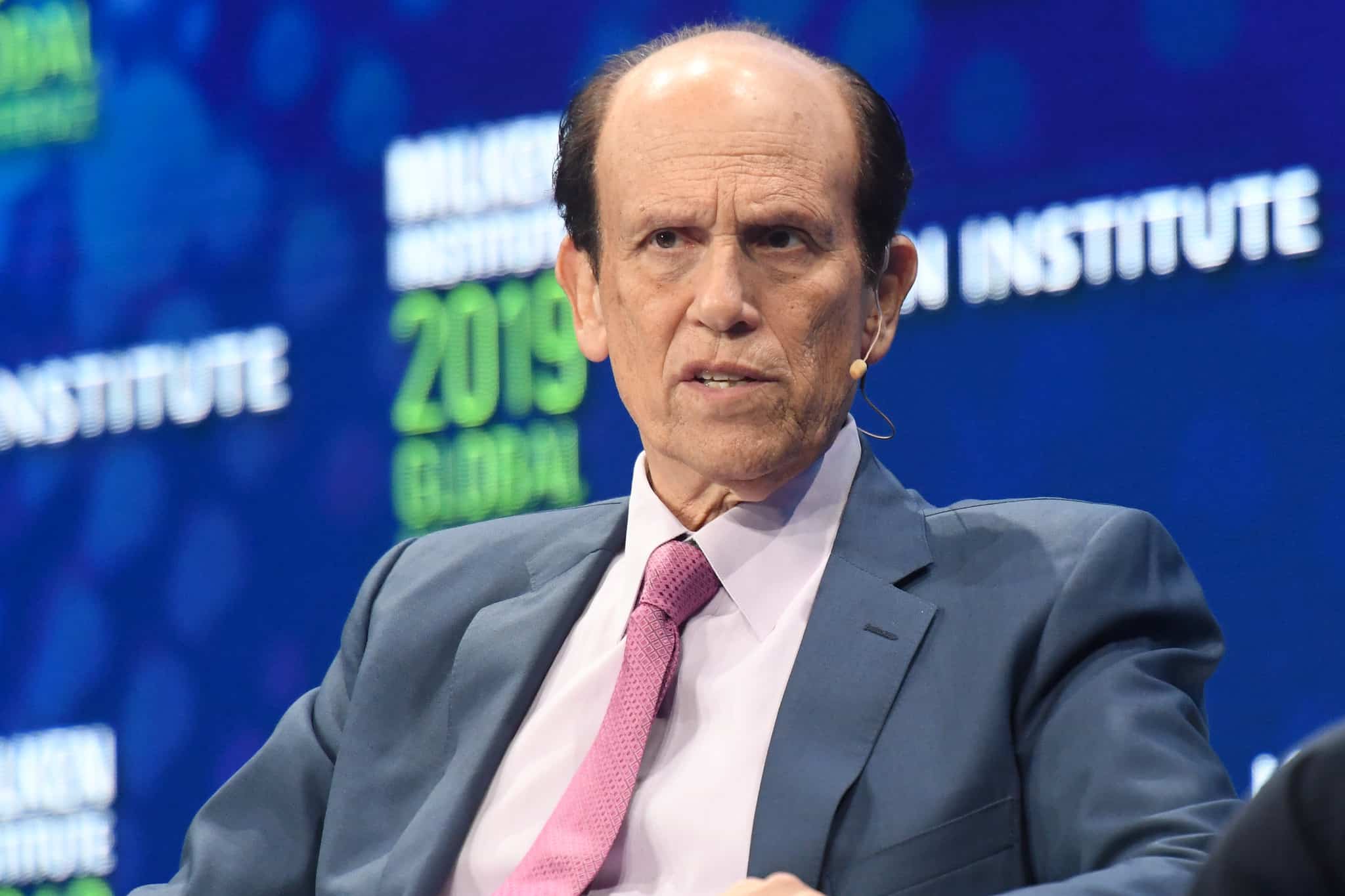
Following comments from the IMF’s Christine Lagarde on the global economy a turbocharged session at the Milken Institute Global Conference saw chiefs of five large financial services firms explore their concerns about the global economy.

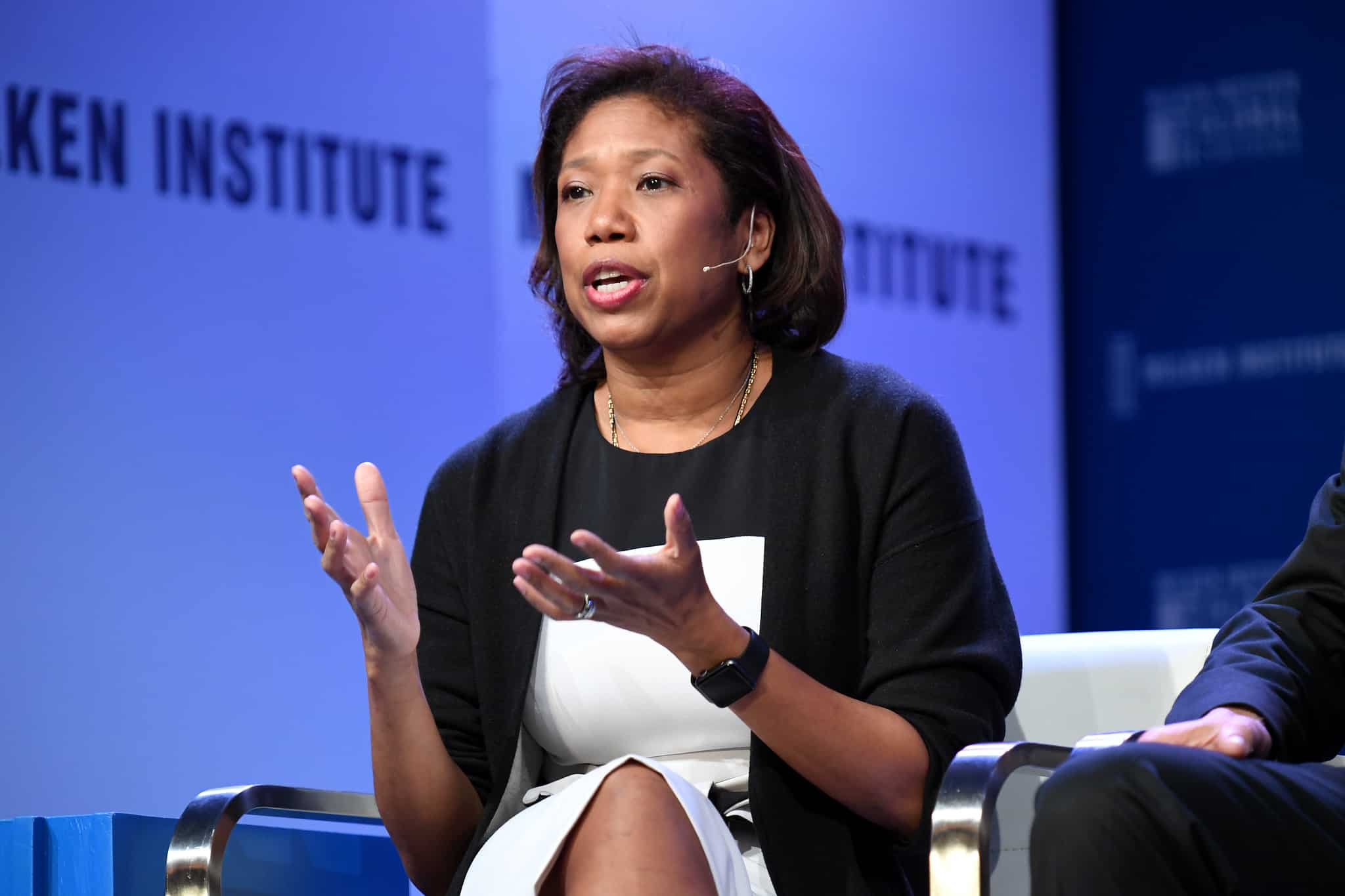
In that session Tom Finke, chief executive of Barings urged all market participants to be more aware of the implications of inequality in jobs and salaries.

“If we wait for the political system to figure it out, we’ll fall further behind, we need to lead,” he told delegates. “These issues have a big impact on the global economy.”

David Hunt, chief executive of PGIM, who wrote an article on LinkedIn ahead of the conference tha covered the issue of inequality and its impact on the global economy, said while inequality was important it was part of a broader narrative.

“More than one billion people have joined the middle class so from a global perspective inequality is changing, but it doesn’t feel like that in developing markets,” he said. “From a larger perspective, alongside income inequality people are also experiencing a loss of hope where they don’t think the opportunity is there; also they see that the US economy has lost its dynamism; and there is a sense of financial vulnerability. You can see how emotionally Americans feel about why they country is not prosperous.”

Hunt urged delegates, made up largely of pension funds, asset managers and high-net worth individuals, to start dealing with these issues by making a difference to the skills gap in the country.

“We need more coders and data scientists but they’re not being produced out of our educational system. Invest in your own workers and schools and universities to make sure we get the skills we need. Also reach out to those that have fallen out of the workforce, give them vocational training. We need to fix the skills gap,” he said.

In addition to the skills issue, PGIM’s Hunt said the massive amount of infrastructure spending needed in the US was a real concern.

“We need $100 billion a year in the US to begin to upgrade the infrastructure, how do we do that? We need to bring dynamism back to the US economy,” he said.

But the problem with infrastructure in the US, according to State Street chief executive Ron O’Hanley was that most of the assets are controlled at the state level.

“There needs to be a convention between federal and state governments to figure out how to work this out,” O’Hanley said. “There is plenty of investor demand but there is no system in place for public private partnerships.”

In further conversation about the risks in the global economy Credit Suisse’s chief risk officer, Lara Warner, said she was worried about the fragility in Europe.

“I worry we are in a period where small earthquakes can lead to large tsunamis. Europe seems to be the place which is most fragile,” she said.

“We are most worried about Europe and are steering away from Europe. US equities we like and emerging markets.”

State Street’s O’Hanley observed the impact of technology and consolidation in every industry.

“The risk is no longer too big to fail but too small to scale,” he said. “We have to think as investors about how to invest in something that ultimately has scale.”

PGIM’s Hunt said his firm spends a lot of time on the consideration of cyber risks, citing it as the firm’s number one risk concern.

“Risk is likely to come from technology and cyber attacks on infrastructure of the financial markets. That’s the biggest risk we spend a lot of time on that,” he said. “We will see risks from different places we have seen before.”

With regard to disruption Barings’ Finke also said financial services firms need to disrupt themselves.

“We look at the risks of what will disrupt the companies we invest in and are they aware of it. But we also look at whether we are disrupting ourselves to bring a better result to our clients.”

The session expertly chaired by head of Bloomberg Economics, Stephanie Flanders, explored some of the ideas brought up by Christine Lagarde, including productivity growth, mystification of inflation, worry about levels of debt, and problems of capitalism.

PGIM’s Hunt said he disagreed with Lagarde’s view that there was a synchronised slowdown in economic growth.

“There’s not a synchronised slowdown at all. The US is doing very well, but we are quite worried about Europe. What’s happening in Germany is a surprise. And we are optimistic about China. There is quite a lot of disparity regarding growth.”

Productivity is a key way out, he said.

“But companies are not investing enough in their own technology to believe productivity will grow. We have a long way to go on productivity.”

Chief investment officer of Guggenheim Scott Minerd said that in the short term there will be a bounceback in global growth.

“We will see long term rates rise and the yield curve steepen. The base case is the economy picking up momentum and the lull in inflation will slowly fade away,” he said. “Most telling is risk assets – equities and bonds are inflated in value and investors are not being compensated to take on a lot of risk. This is not the time to take on risk assets.”

Guggenheim’s Minerd is pessimistic and said investors should be expecting a reversion to the mean. The firm’s forward looking expectation for US equities is 1 to 2 per cent return.

PGIM’s Hunt agreed assets are incredibly priced around the world calling it the biggest risk in markets.

“How do we get returns we’ve got? Volatility is not risk, volatility gives us an opportunity to get in at a reasonable price. The biggest risk is we don’t have a little bit of correction in prices to allow us to get into markets.”

The new normal of lower for longer will be around for long period of time, the panel said.



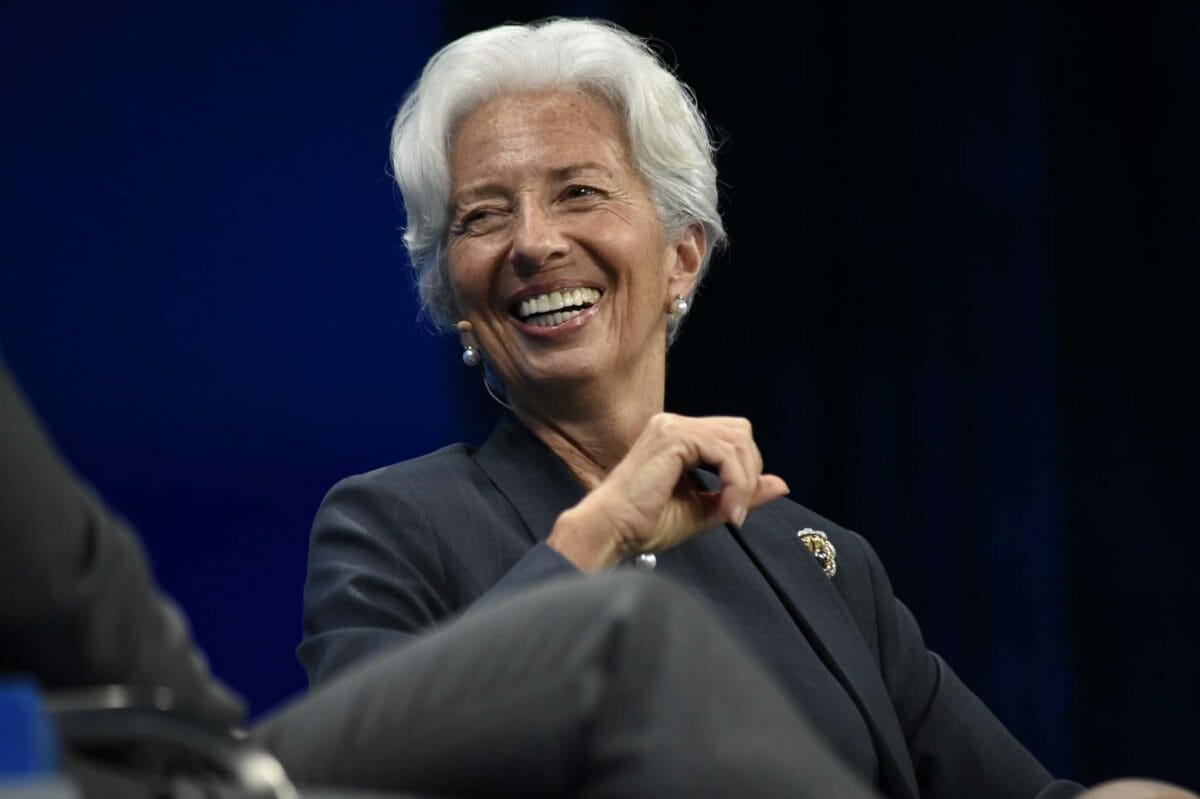
Given the synchronised slow down in growth it is still a delicate moment in the global economy, according to Christine Lagarde, president of the IMF. However she told delegates at the Milken Global Conference she was not expecting a global recession.

While growth in the US has been above 3 per cent for three of the last four quarters Lagarde says it is important to analyse where the growth is coming from.

“Productivity is critically important,” she said. “There should be some movement in productivity and if we see that it is encouraging. If productivity is still at the low end we won’t be as optimistic.”

She said the ageing phenomenon in the world is having a very significant impact on inflation and its relationship with debt.

“We are facing a landscape where productivity is low and we are watching productivity closely. I want us at IMF to better measure how technology is impacting productivity.”

Lagarde said it was a “bit of a mystery” why there is supressed inflation, and forecast higher inflation in the months to come because of the price of oil.

“People are finding it hard to explain inflation, some say it is because babyboomers leaving the workforce, and ageing. You have to dig into employment numbers to understand. We believe inflation will pick up slowly,” she said.

She said while Central Banks had a mandate of stability, there was a question over whether that is the right mandate.

“If you can’t get to 2 per cent there is no logic to setting it higher. Everyone would like a bit more inflation but setting the bar higher won’t get there,” she said.

With regard to Brexit, she said it was a tribute to Chancellor of the Exchequer, Mark Carney, that there was stability in markets.

“He has handled the situation very well. The financial services sector was ready early for if a no-deal Brexit happened,” she said. “That must have given some confidence to the markets.”

Lagarde said she was concerned over the level of debt in the global economy.

“This new theory that you can borrow your way into the future and everything is going to be ok. It’s not just that this modern monetary approach is not ok, it’s not sustainable.”

She said she had concern in particular about the level of debtedness of the lower economies.

“There are a lot of people with a lot of disarray and misery. I said more than a year ago that this excessive debt will weigh on us.”

“I don’t think that globalisation will go away, but we can’t continue with the levels of inequality that we have. I understand why people are talking about what is wrong with capitalism, but what do we do about inequality and inclusion?” she asked delegates to consider.


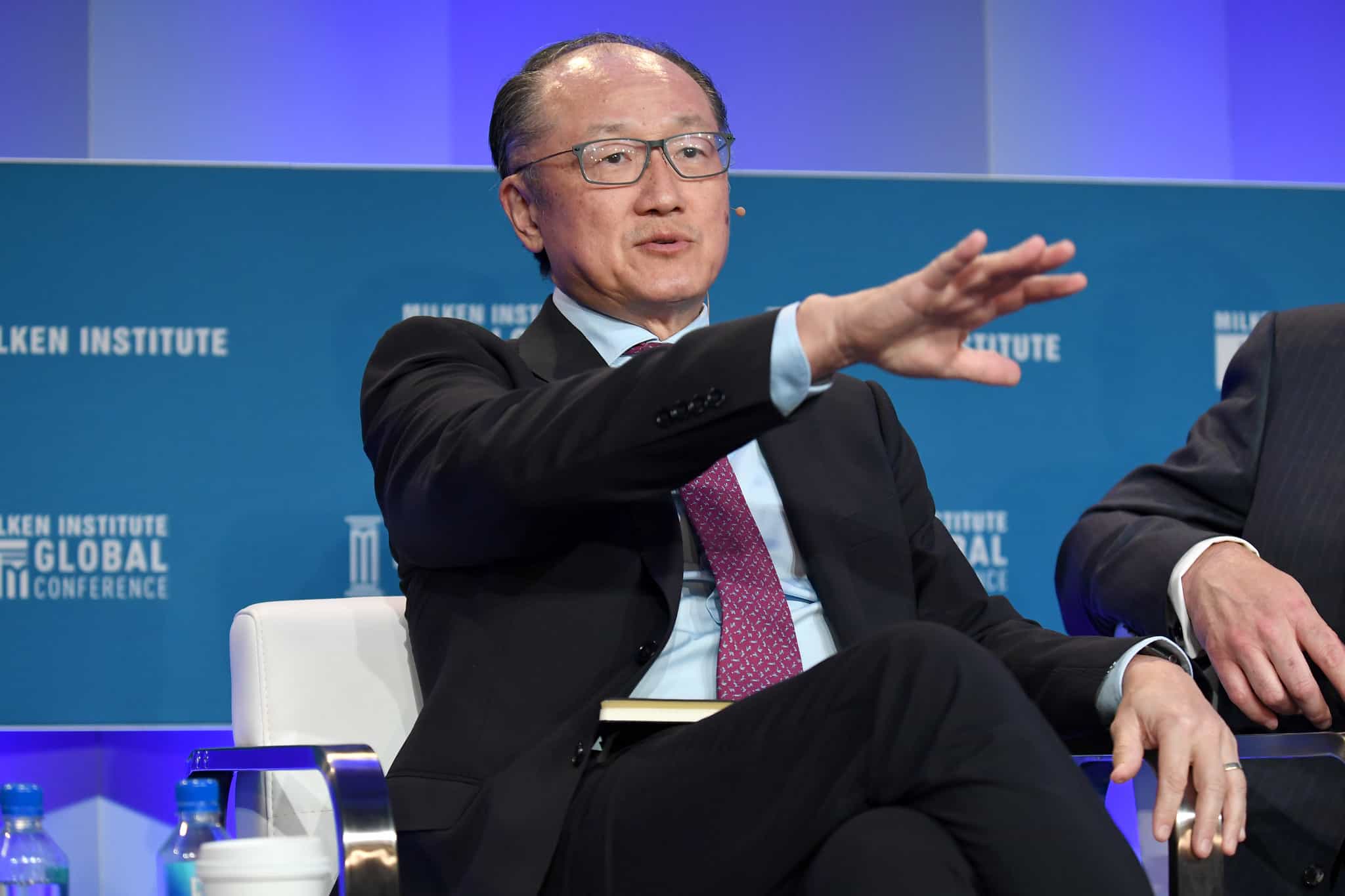
There is an urgent need for infrastructure investment that cannot wait, according to Jim Yong Kim, former president of the World Bank and now partner and vice president of Global Infrastructure Partners.

In emerging markets around $2.7 trillion a year is needed in infrastructure investment, he told the Milken Global Conference in April.

“People say money is not the issue but now I’m in this new role I see it is as I have to convince people they can get the return,” he said. “There is a lot of interest in emerging markets infrastructure but there is a huge mismatch in the understanding of the countries and the way managers and owners are thinking. I think we can fill the gap.”

He said that investors needed to consider the bigger picture, for instance the lack of development in Africa will have a huge impact on European life.

“People in Africa will need jobs and they can see on their iphones how the rest of the world lives. I think pension funds in Europe would be interested in investing in infrastructure in Africa because it is meeting such a critical need for the long term.”

Kim said the problem of instability in Africa and problems of climate change, which are not way into the future but happening now, meant urgency was required for investment in infrastructure.

“We can’t wait, we have to invest now,” he said.

Hiro Mizuno, chief investment officer of the $1.6 trillion Government Pension Investment Fund of Japan, said the sustainable development goals were difficult to invest in, but the risk of not doing so is too high.

“If we fail to meet the SDGs by 2030 then what type of risks will our portfolio be facing?”

Mizuno said infrastructure should be at the top of the list of the finance ministers meeting at the G20, which Japan is hosting in June.

Angela Rodell, chief executive of Alaska Permanent Fund questioned how to get creative and find mechanisms to invest in.

“We need to figure out how to capture the economic value in the return equation and add it into the bottom line of whether to invest in things that are vitally important,” she said pointing by way of example to the third tunnel between New York City and New Jersey.

“It is too expensive, but the cost of not doing it is too high,” she said.

The argument that the risk of not doing something is too high was a compelling argument at the World Bank, Kim said, but for investors it is different.

“One of the reasons I’m doing what I’m doing now is we just have to put the deals together,” he said. “There’s no point saying there’s a need without having the real deals to invest in.”

Different investors have different purposes for investing in infrastructure.  For instance for GPIF, which started investing in infrastructure about five years ago, the decision was driven by the need to diversify fixed income given the low interest environment.

“The need came as we were in a low interest rate environment and can’t rely on fixed income. Core infrastructure has a stable cash flow, and we were attracted to it as a good alternative to the fixed income portfolio,” Mizuno said.

“We think infrastructure is very important and we are trying to expand our approach to invest in emerging markets and greenfield projects.”

But the problem of investing in emerging markets according to Mizuno was there was no comparability.

“We don’t know what we expect in returns because all projects are so different,” he said. “Investors can’t get their head around risk/return tradeoff in emerging markets because there is nothing to compare it to. None of our peers have the answer to what return we require to make an infrastructure investment in emerging markets.”

Mizuno said asset allocators always compare investments so lack of comparability is a big challenge


Photos: Milken Institute

The CalPERS’ board has approved the first step in the creation of a new private equity model, and now the fund’s CEO, Marcie Frost, is looking for advice on how to structure such an entity.

The new venture will invest in two funds, one in late stage venture in healthcare, technology and life sciences; and one for long-term investments in established businesses. Over time the two funds will both invest around $10 billion each, with allocations coming from global equity and fixed income.

The $362 billion CalPERS has an improved liquidity position partly due to a cash injection of $6 billion from former Governor Gerry Brown, and Frost said private equity was viewed as the best place to invest to get the best returns.

CalPERS currently has around $28 billion invested in private equity and sees further investment in the asset class as instrumental to achieving its 7 per cent return target. Private equity has averaged 10.6 per cent annually over the last 20 years and is also the only portfolio forecast to beat its return target over the next 10 years.

Frost said the board’s approval in the first step of a separate entity to invest in private equity was an important signal the fund was embracing innovation.

Now CalPERS is a looking for a team, or individual, to join discussions and workshops to help figure out what the detail of this new private equity venture could look like.

“Come and talk to us about your ideas,” she said. “We need every access point in private equity we can get. 7 per cent is a high target and we know we have to take some risk and have to understand those risks.”

The board showed its support for the investment office’s plan by approving the concept that’s been discussed for the past 18 months. The next step will be for CIO Ben Meng and his team to recruit potential managers to oversee and run these new approaches. Once they have been recruited and an independent review is conducted to assure that the agreement is in CalPERS’ best interest, the board will decide whether to give the final greenlight to go forward.

Currently the CEO is the only exempt employee of CalPERS and everyone else is a public servant, but Frost conceded that in order to hire the right people for the new private equity venture, the fund would need to pay market rates of compensation.

“We want someone with credentials around private equity on the GP side to manage and lead a team, and we will incentivise that team appropriately,” she said.

While she said the fund would have to pay private sector compensation, how the pay and the entity is structured is yet to be determined.

“It could be we want someone to build a team and invest directly or outsource to a GP. We want to pay them but it has to be aligned, to create long term value,” she emphasised.

The new entity will be arm’s length from the fund and “walled off” from CalPERS which initially will be the only LP. There may be a longer term opportunity to invite other LPs to invest, Frost said.

There is no specific timeline for implementation of the new entity and for investments to begin. “Hiring the right people is more important than a timeline of implementation,” she said.

While the new private equity venture will have an independent structure, including the possibility of an independent board, Frost said it would be constantly interacting with the CalPERS investment team. That team currently has delegated authority to invest up to $2 billion.

Frost also said that to date the fund has been very reliant on GPs for private equity investing and wanted that close relationship to continue in the future.


For more background see CalPERS PE expansion plans in doubt  and CalPERS wants PE plans to move quickly.

Asset owners must deal with a potentially low-yielding investment environment for the foreseeable future.

The traditional approach has been to use external managers to achieve fund goals and hope that diversification allows them to navigate difficult markets, as in the fourth quarter of 2018. 

But alpha in many of these strategies has been hard to come by leaving funds trailing their target rate of return over long periods of time. A complementary strategy is to focus on an untapped alpha source to improve returns, risk management and governance. 

Rather than focus on security selection for alpha, innovative plans are focusing on the biggest risk in funds – asset allocation or beta – and the permissible ranges around the strategic asset allocation (SAA) to capture substantial added value through “strategic tilting” or “informed rebalancing”.

At least three innovative institutions have recently been reported to have added substantial value, as much as 1 per cent per annum on the entire fund, over periods as long as 10 years – New Zealand Super (NZS), San Bernardino County Employees’ Retirement Association (SBCERA) and the Verizon Investment Management Company (VIMCO).

What distinguishes this approach from others is that this is alpha was captured by informed decision-making by internal staff. Hence costs are low, interests are aligned, and overall governance improved.

Dynamic markets cause a portfolio to drift around its SAA, so when approving a SAA policy a board also approves allowable policy ranges before a rebalancing is triggered.  This policy range is generally viewed from the goal of minimising tracking error.

Traditionally, plans implement a calendar or range-based approach to manage portfolio drift. However, traditional rebalancings are a concentrated tactical decision, often a coin toss and represent arbitrary, reactive decisions based on behavioural biases. Worse, they can actually serve to exacerbate drawdowns in bear markets as was the case in 2008. Previous claims that traditional rebalancing approaches were actual strategies- “buy low, sell high”, or “a form of volatility pumping”- and were also “not market timing” are all easily disproved.


In 2005, SBCERA decided to address this drawback in portfolio implementation. The CIO noted to the board that, “one goal at SBCERA was to improve governance of the pension portfolio through a disciplined and formal process (for asset allocation), similar to what’s expected of external managers in managing stock and bond portfolios.”

Asset allocation decisions contribute 80-90 per cent to total fund risk and good governance requires that they should be actively measured, monitored and managed. Instead of letting a portfolio aimlessly drift until some happenstance trigger occurs, a clearly identified staff member was tasked with taking ownership of the asset allocation decision to make adjustments in an explicit, dynamic, and diversified, rules-based manner. SBCERA called this approach “informed rebalancing”, different from “traditional rebalancing”, requiring the staff member to source the best ideas from academic journals so that the “strategic tilting” was based on staff’s best estimate of which assets were over/undervalued and in turn, under/overweighted within the board approved ranges.

One could see this as a “Portfolio GPS”, giving the team guidance on how to navigate dynamic markets. VIMCO leveraged its relationships with external managers thereby “crowdsourcing best ideas”, and NZS appears to have developed contrarian ideas based on the academic research of mean reversion.

Three elements appear to be common in each of these successful programs: good governance by boards and CIOs, allowing decisions to be made internally, and to be patient when these strategies had difficult performance; a staff member willing to do the research to develop these “rules”; and a willingness to provide resources to support these efforts (often much less than external managers fees). Further, if implemented intelligently through futures, informed rebalancing takes advantage of frictional cash to generate additional cash for the fund (as much as $1 billion over 13 years in the case of SBCERA).

These approaches are easily replicable by other asset owners, and each fund can develop its own bespoke approach based on their objectives and abilities.

In short, with a little effort and creativity, asset owners could get paid to manage risk and generate additional cash for their funds through informed rebalancing.

Arun Muralidhar is co-founder of Mcube Investment Technologies.