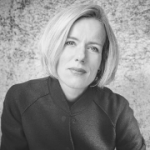
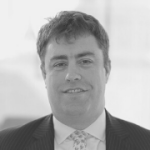
Nigel Topping, Champion of COP26, says institutional investors should  put their fund managers on notice to provide more net zero products. He was speaking at the Top1000funds.com Sustainability conference in a session detailing how asset owners can move towards net zero.

Nigel Topping, high level climate action champion for COP26, now postponed until November 2021, urged asset owners to do more to commit to net zero. Speaking at Sustainability Digital in a session that cast ahead to next year’s climate conference which also marks the fifth anniversary of the Paris Agreement, he told institutional investors to join the Net Zero Asset Owner Alliance, make their commitments public and put their managers on notice.

Topping said investors should think about how they engage with companies and reminded them that the signals they send are powerful enough “to flip” corporate thinking. He also urged asset owners to explain to companies why they are committed to net zero, detailing their moral or rational stance. In a next step, asset owners should also engage with policy makers, he said. “Asset owners are one of the most influential voices in the world.”

Long-term fiduciary owners need to put pressure on their asset managers to provide net zero products, urging managers to innovate their product range and come up with solutions. He told delegates that the investment industry is late to the sustainability story, and risks getting left behind. Many passive investments or those “tweaked” to beat benchmarks are “backward looking,” he said, also predicting that a similar net zero club will soon emerge for asset managers.

Instead of using backward measures he said investors needed to paint a picture of what the world will look like in 10 years time.

“In 10 years-time, combustion engines will look like very old technology,” he said. “No one will be buying these in 10 years-time.”

Elsewhere he noted how the falling costs across renewable energy are turning fossil fuels into legacy assets at the risk of being stranded. Similarly, food systems will look different as the world shifts from intensive meat production and its high emissions, to high quality alternative proteins free from ethical guilt or environmental costs.

Huge “sector by sector” disruption will be spurred on by citizen pressure and policy and fiscal incentives. It means that laggard corporations, neither “ahead of the curve” intellectually or in their development of new products, will find it “very difficult” to catch up as the world “flies off into the future.”

Traditional sectors already losing market share to innovation include the luxury car market. Manufacturers have lost out to Tesla, he said.

“It is a brand loyal sector; will they regain it?” he questioned. Urging investors to track the transition rather than trail it, Topping said that asset owners are already losing out by investing in sectors that are missing the transition. “How many transitions do you have to miss before you realise structurally something is wrong,” he said.

Topping also noted how rating agencies are working on the transition pathway, making it easier for investors to understand which companies are on the right path to net zero.

Elsewhere cities are greening their centres, cleaning their air and joining the race to net zero in a change he attributed to the rise of elected mayors. “Cities are a real driver of environmental change; Mayors are responsible for policy and executing it with citizens,” he said.

Topping also noted that sovereign countries are coming up with more ambitious plans to meet net zero and more private sector players are committing to net zero. Progress includes the EU’s commitment to net zero, and the private sector “ramping up” its commitment to net zero. Something he said was an example of the “ambition loop” of policy and the private sector reinforcing each other.

He added that negotiations at COP 26 will include final details outlined in the Paris Agreement around carbon markets and climate aid commitments from the developed North to the developing South. At its heart the conference will unleash much more ambition as the world moves towards net zero.

“It is not a place to renegotiate the geopolitics of energy,” he said.


For the full recording of this session, all the conference program and white papers and stories visit the Sustainability content hub here.

Watch day one of the Sustainability Digital event like it’s a live stream. All the action and all the speakers can be viewed here.

What is required for all investors to use their influence to create a more sustainable economy, and to wake up to the crucial role they play in ensuring a sustainable recovery?

Speaker

Christopher Ailman has been the chief investment officer of CalSTRS for over 18 years. He leads an investment staff of 170 and oversees a portfolio valued at $253.6 billion as of July 31, 2020. He has over 36 years of institutional investment experience.
He has served on several boards and advisory boards in the US and UK. He represents institutional investors on the MSCI Index Editorial Advisory Board, EDHEC Risk Institute, PRI Asset Owners Advisory Committee, and the Toigo Foundation. He is the co-chair of the North American 300 Club and the Milken Global Capital Markets Committee. In 2016, he was part of the first cohort to achieve a Fundamentals of Sustainable Accounting (FSA) credential.
Each year, he is recognised as one of the top CIOs both in the US and globally. He has received numerous awards and recognitions: CIO of the Year in 2000, recipient of the 2003 Richard Stoddard Award for service in the investment of pubic pensions, 2006 he received the Distinguished Service Award for Advancement of Latinos in Business from the New American Alliance, 2011 he received the Institutional Investor’s Large Public Fund Manager of the Year Award and in 2013 he was named the number three CIO in the world and Investment Innovator of the Year. In November 2017, Ailman received Institutional Investor magazine’s first Lifetime Achievement Award. He is a regular guest on the TV and radio and is frequently quoted in in major financial publications.
Ailman has a Bachelor of Arts in business economics from the University of California, Santa Barbara. He received his certified financial planner designation from the University of Southern California. He is married with three daughters and is a committed Promise Keeper.

Barbara Zvan is a seasoned senior executive and visionary in the pension field. As a trained actuary and 25-year industry veteran, she brings expertise in pension administration and member services, pension design, enterprise strategy and risk management, long-term responsible investing, and leading high-performing teams.
After starting out as an assistant portfolio manager at the Ontario Teachers’ Pension Plan, she took on increasing responsibilities rose to become its chief risk and strategy officer (CRSO) and leader of the strategy and risk team. As CRSO, Zvan supported the plan sponsors in determining plan design and the board in establishing a robust enterprise risk management framework anchored by a transparent risk appetite. She helped design a total fund investment strategy that delivered both leading returns and a stable, secure pension promise to members. She crafted the fund’s responsible investing and climate change strategy, leading Ontario Teachers’ to be named one of the world’s top responsible asset allocators by Bretton Woods II.
Recognized as a leading voice on sustainable investing and an ambassador for defined benefit pensions, Zvan is known for her efforts to bring institutional strength to complex challenges and forge new collaborative pathways for innovation and growth.
Zvan was appointed to the Government of Canada’s Expert Panel on Sustainable Finance, is a member of the Advisory Committee for the new ‘Investing to Address Climate Change’ Charter and played a significant role in creating the G7 Investor Leadership Network.
She serves on the boards of the Global Risk Institute and the Responsible Investment Association and the advisory board of the Institute of Sustainable Finance at the Smith School of Business. She was chair of the International Centre of Pension Management and the Sustainability Accounting Standards Board’s Investor Advisory Group, and served of the boards of the Canadian Coalition for Good Governance, Cadillac Fairview and the Chilean water utilities Esval (Essbio) S.A.
Zvan is a Fellow of the Society of Actuaries and the Canadian Institute of Actuaries, a holder of the Institute of Corporate Directors designation (ICD.D) and has a Master of Mathematics degree from the University of Waterloo. She is an honouree of Canada's 2020 Clean50 and Canada's 2008 Top 40 Under 40.

Moderator

White is responsible for the content across all Conexus Financial’s institutional media and events. She is responsible for directing the bi-annual Fiduciary Investors Symposium which challenges global investors on investment best practice and aims to place the responsibilities of investors in wider societal, and political contexts, as well as promote the long-term stability of markets and sustainable retirement incomes. She is the editor of conexust1f.flywheelstaging.com, the online news and analysis site for the world’s largest institutional investors. White has been an investment journalist for more than 20 years and has edited industry journals including Investment & Technology, Investor Weekly and MasterFunds Quarterly. She was previously editorial director of InvestorInfo and has worked as a freelance journalist for the Australian Financial Review, CFO, Asset and Asia Asset Management. She has a Bachelor of Economics from Sydney University and a Master of Arts in Journalism from the University of Technology, Sydney. She was previously a columnist for the Canadian publication, Corporate Knights, which is distributed by the Globe and Mail and The Washington Post. White is currently a fellow in the Finance Leaders Fellowship at the Aspen Institute. The two-year program consists of 22 fellows and seeks to develop the next generation of responsible, community-spirited leaders in the global finance industry.

Key takeaways

Chris

  • Screening China from an environmental and human capital standpoint will be critical in 2021.
  • Investment teams of the future will be younger, more open-minded and highly adaptable. People are a huge asset. How people are managed impacts company value greatly.
  • The future may well involve closer collaboration between asset owners and asset managers. Wall Street is far too expensive.
  • It is hard to be adaptable when reality hits you in the face.
  • The future will be much more challenging than the past.
  • Throughout history massive shocks have forced changes in human behaviour.
  • Sustainability can become part of the mainstream lexicon in the USA if we are not unnecessarily distracted by politics. We need to take the conversation away from politics and focus on risk.
  • We have entire parts of the world that are not fully committed to sustainability, so it is hard to be proud.
  • We need all the world’s bright minds to think ahead.
  • ‘Constant education is key to a better world and a better future.’

Barbara 

  • We should consider what our individual organisation can do and what our organisation can do in partnership with others.

What is sustainability if not the ability to exist into the future? In this context how sustainable are institutions, organisations, communities and politics and what will the future actually look like?

Speaker

Professor Kotkin received his PhD from the University of California, Berkeley in 1988, and has been a professor at Princeton since 1989. He is also a senior fellow at the Hoover Institution at Stanford University.
At Princeton Professor Kotkin teaches courses in geopolitics, modern authoritarianism, global history, and Soviet Eurasia, and has won all of the university’s teaching awards. He has served as the vice dean of Princeton’s Woodrow Wilson School of Public and International Affairs, and chaired the editorial committee of Princeton University Press. Outside Princeton, he writes essays and reviews for Foreign Affairs, the Wall Street Journal, and the Times Literary Supplement, among other publications, and was the regular book reviewer for the New York Times Sunday Business section for many years. He serves as an invited consultant to defence ministries and intelligence agencies in multiple countries. His latest book is Stalin: Waiting for Hitler, 1929-1941 (Penguin, 2017). His previous book was a finalist for the Pulitzer Prize.

Moderator

Tate has been an investment industry media publisher and conference producer since 1996. In his media career, Tate has launched and overseen dozens of print and
electronic publications. He is the chief executive and major shareholder of Conexus Financial, which was formed in 2005, and is headquartered in Sydney, Australia.
The company stages more than 20 conferences and events each year –
in cities which have included London, New York, San Francisco, Los Angeles, Amsterdam, Beijing, Sydney and Melbourne – and publishes three media brands,
including the global website and strategy newsletter for global
institutional investors conexust1f.flywheelstaging.com. One of the company’s signature events is the bi-annual Fiduciary Investors Symposium. Conexus Financial’s
events aim to place the responsibilities of investors in wider societal, and political contexts, as well as promote the long-term stability of markets and sustainable
retirement incomes. Tate served for seven years on the board of Australia’s most high profile homeless charity, The Wayside Chapel; and he has underwritten the
welfare of 60,000 people in 28 villages throughout Uganda via The Hunger Project.

Key takeaways

  • The key to achieving sustainability is always politics.
  • Case studies from around the world suggest that sustainability is failing and succeeding simultaneously.
  • Apocalyptic portrayals of sustainability only galvanise those who are already galvanised. The rest of the population is left scared and paralysed.
  • We need to dial down existential language and talk more calmly about cost/benefit analysis and the expectation of driving superior economic outcomes through sustainable investing.
  • Everyone when surveyed says they want to go green. People surveyed also say they want to lose weight. But are these people prepared to take the required actions to hit their targets? Signing a pledge is not enough.
  • We should ask ourselves what sustainable globalisation looks like. We do not have global solidarity. People are global citizens only in a small way. Governments are accountable primarily domestically. Policy is national not global. Global politics does not come from politicians it comes from global investors and global corporations. We can’t vote out the global government because it doesn’t exist. Therefore the private sector is at least 75 per cent of the solution.
  • We need voluntary compliance to achieve sustainability, not coercion.
  • Let us tackle social issues like racial injustice with objective analysis of data not tabloid exaggeration.
  • The electric grid that we have is not fit for purpose in the 21st century.
  • Sustainability is about the ability to adapt to change and respond to future uncertainties.
  • The US election will make a big difference to the future of America. Whilst I can’t be optimistic, I think the pessimism is overdone.

The climate emergency is so large it requires a rewiring of the whole economic and financial system. But to do this new risk models are required and old paradigms must be abandoned to make way for a better way of understanding complex systems.

View Professor Hepburn’s presentations slides here

Speaker

Cameron Hepburn is the director of the economics of sustainability programme, based at the Institute for New Economic Thinking at the Oxford Martin School. He is also director and Professor of Environmental Economics at the Smith School of Enterprise and the Environment, a Fellow at New College, Oxford, and a Professorial Research Fellow at the Grantham Research Institute at the London School of Economics.
He has published widely on energy, resources and environmental challenges across a range of disciplines, including engineering, biology, philosophy, economics, public policy and law, drawing on his degrees in law, engineering and doctorate in economics. He is on the editorial board of Environmental Research Letters and is the managing editor of the Oxford Review of Economic Policy. His research is often referred to in the printed press, and he has been interviewed on television and radio in many countries.
Hepburn provides advice on energy and climate policy to government ministers (e.g. China, India, UK and Australia) and international institutions (e.g. OECD, UN organisations) around the world. He began his professional life with McKinsey, and has since had an entrepreneurial career, co-founding three successful businesses – Aurora Energy Research, Climate Bridge and Vivid Economics – and investing in several other social enterprises, such as Purpose and Apolitical. He also serves as a trustee for Schola Cantorum of Oxford.

Moderator

White is responsible for the content across all Conexus Financial’s institutional media and events. She is responsible for directing the bi-annual Fiduciary Investors Symposium which challenges global investors on investment best practice and aims to place the responsibilities of investors in wider societal, and political contexts, as well as promote the long-term stability of markets and sustainable retirement incomes. She is the editor of conexust1f.flywheelstaging.com, the online news and analysis site for the world’s largest institutional investors. White has been an investment journalist for more than 20 years and has edited industry journals including Investment & Technology, Investor Weekly and MasterFunds Quarterly. She was previously editorial director of InvestorInfo and has worked as a freelance journalist for the Australian Financial Review, CFO, Asset and Asia Asset Management. She has a Bachelor of Economics from Sydney University and a Master of Arts in Journalism from the University of Technology, Sydney. She was previously a columnist for the Canadian publication, Corporate Knights, which is distributed by the Globe and Mail and The Washington Post. White is currently a fellow in the Finance Leaders Fellowship at the Aspen Institute. The two-year program consists of 22 fellows and seeks to develop the next generation of responsible, community-spirited leaders in the global finance industry.

Key takeaways

  • We need to piece together what nasties might be lurking ahead.
  • We are pouring trillions into the rescue and recovery. Let’s make sure these trillions are directed into assets that are fit for the future.
  • 80 per cent of people in China, Mexico and India want a green recovery. There is overwhelming appetite for a different and better future.
  • We must achieve net zero. It is a question of when, not if.
  • What theoretical ‘surgical interventions’ – legal cases or geopolitical actions – would accelerate the move to net zero?
  • Government is a key actor in the system as it can potentially enforce mandatory initiatives.
  • A carbon tax might be useful, but it is probably not the most important of effective tool. We have to paint on a broader canvas.

Poll results

What percentage reduction in emissions from today’s levels is ultimately required to stabilise temperatures at 3°C

The SDGs are a framework for looking at the broader global challenges the world needs to solve. This session looks at case studies of how investors are using SDGs to shape a view of the future and incorporating that into an investment framework.

Speaker

As managing director global responsible investment and governance Claudia Kruse is part of the management team of the investment function reporting into the chief investment officer on the board of APG Asset Management. APG manages pension assets of 515 billion euro (April 2020) on behalf of Dutch pension funds. The 20 people strong global RI and governance team based in Amsterdam, New York and Hong Kong, safeguards the implementation of the clients’ responsible investment policies across all asset classes.
Before joining APG in 2009, she worked on the buy and sell-side in London for almost a decade. She is an experienced non-profit board member and serves on the board of the International Corporate Governance Network (ICGN). Since 2016 she has been appointed to the German Corporate Governance Code Commission, and she was a member of the EU Expert Group on Sustainable Finance (2017) whose recommendations inspired the EU Action Plan on Sustainable Finance. In 2016 she was voted CIO Europe’s Next Generation CIO Award winner.
Claudia co-chairs the Principles for Responsible Investment’s Advisory Committee on the UN Sustainable Development Goals, and APG is also a member of the UN initiative Global Investors for Sustainable Development (GISD) which seeks to advance investment into the SDGs.
Claudia studied International Management & Chinese, and has an MSc Tourism & Development (UCL, London). She has lived in Germany, China, the UK and now the Netherlands. She has inter alia published on the Governance of Sustainability and the integration of sustainability into remuneration which reflects her strong belief in the connection between good governance and sustainability.

Moderator

Tate has been an investment industry media publisher and conference producer since 1996. In his media career, Tate has launched and overseen dozens of print and
electronic publications. He is the chief executive and major shareholder of Conexus Financial, which was formed in 2005, and is headquartered in Sydney, Australia.
The company stages more than 20 conferences and events each year –
in cities which have included London, New York, San Francisco, Los Angeles, Amsterdam, Beijing, Sydney and Melbourne – and publishes three media brands,
including the global website and strategy newsletter for global
institutional investors conexust1f.flywheelstaging.com. One of the company’s signature events is the bi-annual Fiduciary Investors Symposium. Conexus Financial’s
events aim to place the responsibilities of investors in wider societal, and political contexts, as well as promote the long-term stability of markets and sustainable
retirement incomes. Tate served for seven years on the board of Australia’s most high profile homeless charity, The Wayside Chapel; and he has underwritten the
welfare of 60,000 people in 28 villages throughout Uganda via The Hunger Project.

Key takeaways

Claudia  

  • We are actively engaging with Amazon to influence their corporate behaviours.
  • We need to be transparent about what we do and how we do it.
  • We actively seek stakeholder feedback to enable us to become better investors.
  • Given our asset class focus, we have a specific focus on contributing to the sustainable city SDG.
  • We are currently focused on the contribution to the SDGs and are moving ever closer to an analysis of outcomes.

Andy

  • The SDGs are part of the pathway out of the crisis, however the SDGs existed before the crisis and they will exist after it. The crisis rallied action around the SDGs.
  • Some of the countries most impacted by COVID-19 have been the countries which suffer from the greatest social tension and inequality. These root causes need to be addressed as a matter of urgency.
  • Ironically, climate change gets a disproportionately large amount of airtime and yet is one of the easier items to understand and measure.
  • We need to be very clear about what we are trying to achieve and about how we are communicating and targeting that objective.
  • Fundamentally, tackling the SDGs means change. Some companies and industries will not survive this change. Investors have the opportunity to support those committed to undertaking the change journey. This is an incredibly complex challenge. It will serve us all well to collaborate to get the best outcome. Targeting the SDGs is not a philanthropic endeavour, it is an investment question and a question of ensuring the allocation of client capital is aligned to the direction in which the world is moving.
  • The world of the future will look different. ‘You don’t arrive at the future by looking through the rear view mirror.’ We need to look forward and turn the SDG conceptual framework into a tangible strategic imperative.

Poll results

Are you aligning your investments with the SDGs?