In this intimate conversation, Paul Polman, SDG ambassador and chair of IMAGINE, discusses the importance of leaders accelerating corporate responsibility efforts.
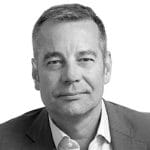
Speaker
Moderator

Tate has been an investment industry media publisher and conference producer since 1996. In his media career, Tate has launched and overseen dozens of print and
electronic publications. He is the chief executive and major shareholder of Conexus Financial, which was formed in 2005, and is headquartered in Sydney, Australia.
The company stages more than 20 conferences and events each year –
in cities which have included London, New York, San Francisco, Los Angeles, Amsterdam, Beijing, Sydney and Melbourne – and publishes three media brands,
including the global website and strategy newsletter for global
institutional investors conexust1f.flywheelstaging.com. One of the company’s signature events is the bi-annual Fiduciary Investors Symposium. Conexus Financial’s
events aim to place the responsibilities of investors in wider societal, and political contexts, as well as promote the long-term stability of markets and sustainable
retirement incomes. Tate served for seven years on the board of Australia’s most high profile homeless charity, The Wayside Chapel; and he has underwritten the
welfare of 60,000 people in 28 villages throughout Uganda via The Hunger Project.

Key takeaways

  • The SDGs will fail if we don’t create a more inclusive world.
  • Although we know what needs to be done we are not able collectively to behave at the scale and speed needed to fix known issues.
  • We only treasure what we measure. The progress in the area of measurement has been too slow.
  • Achieving the SDGs is hard work. The problem is that we do not have enough leaders in business and finance prepared to place self-interest to one side and focus on the greater good.
  • The successful company of the future will not focus on being ‘less bad’, it will focus on doing ‘more good’.
  • ‘The world really is in trouble. There are no healthy people on an unhealthy planet.’
  • Humanity will pay the price if we do not address structural issues.
  • If issues of unemployment persist, social cohesion issues will escalate. We need to create better and more resilient jobs by investing in R&D and education.
  • If we all know what needs to be done why is our collective behaviour not reflecting this?
  • Business and politics alike suffer from short-term goals and assessments.
  • We need to put a price on scarce resources and social risk.
  • We cannot rely on governments to bring about the required system change.
  • The SDGs are the biggest business opportunity in the world.
  • Seek out your investors, don’t respond to them passively.
  • ‘You don’t have to eat the elephant in one bite’ – have a ten year business model that addresses known social issues.
  • ‘The companies that don’t place sustainability at the forefront of their strategy will be relegated to the graveyard of dinosaurs.’

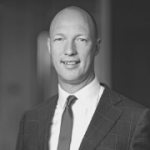
This session takes a deep dive into the sustainability lens from a large corporate view and how investors and corporates are working together to create lasting impact.

Speaker

Beatriz Perez is the senior vice president and chief communications, public affairs, sustainability and marketing assets officer for The Coca-Cola Company. She leads an integrated team across public affairs and communications, sustainability and marketing assets to support the company’s new growth model and path to become a total beverage company. In this role, Perez aligns a diverse portfolio of work against critical business objectives to support brands, communities, consumers and partners worldwide. She continues to oversee the company’s sports and entertainment assets, including iconic partnerships with Olympics, Special Olympics and FIFA. She will continue to lead strategic and operational efforts for the company’s retail, licensing and attractions portfolio of assets.
Since 2011, Perez served as The Coca-Cola Company’s first chief sustainability officer, where she developed and led progress against comprehensive global sustainability commitments with a focus on water stewardship and women’s economic empowerment. She advanced a global sustainability strategy designed to help grow the business while making a lasting positive difference for consumers, communities and the environment.
Prior to leading the company’s sustainability efforts, she served as chief marketing officer for Coca-Cola North America, where she built brands by developing some of the company’s most historic relationships, including American Idol and NASCAR. She began her career at The Coca-Cola Company in 1996 and held various roles in brand management and field operations before becoming CMO.
Among her recognitions are membership in the American Advertising Hall of Achievement and the Sports Business Journal’s Hall of Fame. The Association of Latino Professionals for America (ALPFA) named Perez to its 2017 50 Most Powerful Latinas ranking. She has been recognized as a “Conservation Trailblazer” by The Trust for the Public Land. She was on Hispanic Executive magazine’s list of Top 10 Leaders, and she was featured as one of the “25 Most Powerful Latinas” on CNN and in People en Español.
Perez is a strong advocate for community service, serving on various boards including The Coca-Cola Foundation, the company’s global philanthropic arm. She also serves on the corporate boards for Primerica and Grainger. She holds a Bachelor of Science degree in Marketing from the University of Maryland.

Peter van der Werf is engagement specialist, covering the consumer staples, healthcare and shemicals sectors. His areas of expertise include impact investing, labor rights, supply chain management, access to medicine and nutrition and social and environmental issues in the food and agriculture sector. He is an advisory committee member of a number of PRI working groups such as Agricultural Supply Chain, Sustainable Palm Oil and Deforestation. He gained over four years of professional experience in business development in frontier markets before joining Robeco in 2011. He holds a Master’s in Environmental Sciences from Wageningen University.

Moderator

White is responsible for the content across all Conexus Financial’s institutional media and events. She is responsible for directing the bi-annual Fiduciary Investors Symposium which challenges global investors on investment best practice and aims to place the responsibilities of investors in wider societal, and political contexts, as well as promote the long-term stability of markets and sustainable retirement incomes. She is the editor of conexust1f.flywheelstaging.com, the online news and analysis site for the world’s largest institutional investors. White has been an investment journalist for more than 20 years and has edited industry journals including Investment & Technology, Investor Weekly and MasterFunds Quarterly. She was previously editorial director of InvestorInfo and has worked as a freelance journalist for the Australian Financial Review, CFO, Asset and Asia Asset Management. She has a Bachelor of Economics from Sydney University and a Master of Arts in Journalism from the University of Technology, Sydney. She was previously a columnist for the Canadian publication, Corporate Knights, which is distributed by the Globe and Mail and The Washington Post. White is currently a fellow in the Finance Leaders Fellowship at the Aspen Institute. The two-year program consists of 22 fellows and seeks to develop the next generation of responsible, community-spirited leaders in the global finance industry.

Key takeaways

Beatriz

  • We set bold ambitions with decade-long timeframes.
  • Even during the pandemic, positive work must keep moving. If something is truly core to your strategies, find a way to maintain momentum in the short-term to achieve long-term targets.
  • Targets must be clearly defined and clearly understood.
  • Business planning is critical to achieving growth, not just mitigating risk.
  • There is significant value in having your impact data independently audited.
  • CocaCola has created 1000 new recipes and this was in part due to strategy and sustainability engagement with Robeco.
  • It is critically important to focus the business strategy around what the public most care about.
  • The right behaviours must be incentivised appropriately for both short- and long-term.
  • When investors demonstrate care through engagement, so will everybody else.
  • ‘Robeco have made us better. They forced us to wake up. They forced us to make sure we did not become obsolete.’
  • I cheer the investment community for driving investee companies in the right direction.

Peter

  • We challenge companies on their strategic direction. It is important that investee companies have a clear North Star.
  • Tension through the engagement process can help achieve better outcomes. Have the courage to ask investee companies whether their strategy transformation is moving fast enough.
  • It is important to identify where sustainability efforts can be accelerated. There must be a long-term commitment to engagement.

Impact investing is the next iteration of sustainability but it faces some challenges including the basic notion of how to measure impact alongside risk and return. This session will hear from investors on their approaches and the applicability and power of impact investing across both public and private assets.

Speaker

Laurent Ramsey has been a Managing Partner of the Pictet Group
since 1 January 2016. He has co-headed Pictet Asset Management with
Sébastien Eisinger since 1 April 2019, having been solely responsible
for the Group’s institutional arm between 2016 and 2019.
He joined Pictet in 1993 and has held various senior management
positions at Pictet Asset Management in Geneva, Hong Kong,
Singapore and London.
Laurent holds a Master’s in International Management from HEC
Lausanne School of Business and Economics and a degree in Business
Administration.
Laurent also serves as Vice-President of the Geneva Financial Centre and is a Board member of the Swiss Asset Managers Association.

Roy Swan leads the foundation’s mission investments team, managing Ford’s portfolio of mission-related investments (MRIs) and program-related investments (PRIs), and working to expand and strengthen the impact investing field.
Before joining Ford, Swan served as managing director and co-head of global sustainable finance at Morgan Stanley. During his time at Morgan Stanley, Global Sustainable Finance committed over $13 billion in community development transactions. Among his prior experiences, he was the founding chief investment officer of New York City’s Upper Manhattan Empowerment Zone (UMEZ), a federal initiative to bring new resources to distressed urban communities which played a key role in Harlem’s economic rebirth. He also served as CFO at Carver Bancorp, a Harlem-based publicly traded financial institution and the nation’s largest African American managed bank. Over the course of his career, Swan has worked in corporate law at Skadden Arps, investment banking at The First Boston Corporation, Salomon Brothers, and JPMorgan, and finance at Time Warner.
Swan serves on several non-profit boards, including the Dalton School, Enterprise Community Partners, Low Income Investment Fund, and the Partnership for After School Education. He also serves on the advisory boards of several private equity funds. he received a bachelor’s degree from Princeton University and a JD from Stanford Law School, where he was an editor of the Stanford Law Review.

Moderator

Tate has been an investment industry media publisher and conference producer since 1996. In his media career, Tate has launched and overseen dozens of print and
electronic publications. He is the chief executive and major shareholder of Conexus Financial, which was formed in 2005, and is headquartered in Sydney, Australia.
The company stages more than 20 conferences and events each year –
in cities which have included London, New York, San Francisco, Los Angeles, Amsterdam, Beijing, Sydney and Melbourne – and publishes three media brands,
including the global website and strategy newsletter for global
institutional investors conexust1f.flywheelstaging.com. One of the company’s signature events is the bi-annual Fiduciary Investors Symposium. Conexus Financial’s
events aim to place the responsibilities of investors in wider societal, and political contexts, as well as promote the long-term stability of markets and sustainable
retirement incomes. Tate served for seven years on the board of Australia’s most high profile homeless charity, The Wayside Chapel; and he has underwritten the
welfare of 60,000 people in 28 villages throughout Uganda via The Hunger Project.

Key takeaways

Laurent

  • Clients want to have a purpose when allocating their money.
  • Going forward sustainability preferences will become a key component of financial advice at the very outset when clients are setting their upfront investment objectives.
  • Active engagement with investee companies will help drive positive change both financially and environmentally. When you engage you have a much better sense of impact measurability.
  • We talk a lot about climate change but sustainability goes far beyond that. Biodiversity should not be neglected.
  • There is no downside in incorporating non-financial factors into investment decision-making.
  • Sustainability and long-termism are part of Pictet’s DNA – The average tenure of partners at Pictet is around 20 years and these partners act as custodians of the business for future leaders.

Roy

  • History has shown that not everyone is able to consistently achieve alpha. Areas such as affordable housing provide a positive financial and social opportunity.
  • The Ford Foundation is based on two simple thoughts – 1) Better is good and 2) Don’t let perfect be the enemy of the good. In other words, impact measurement can be simple and high-level. Complex impact measurement should not get in the way of tackling major issues that are looming large.
  • The Ford Foundation aims to put capital into the hands of those who have been historically disadvantaged.

Poll results

Are you invested in impact ?

Investors are increasingly seeking to design portfolios that achieve financial goals (return & risk) and have environmental and social impact. This session will look at how to assess the effect of ESG issues on macro economies and markets and how to engineer a scalable strategic asset allocation that delivers consistent financial performance and is aligned to the UN Sustainable Development Goals.

View Karen’s presentation slides here

Speaker

Karen Karniol-Tambour is the Head of Investment Research at Bridgewater Associates, the world’s largest hedge fund with $160 billion in institutional investments. In this capacity, she oversees a team of over 150 investment professionals researching and building systematic strategies to trade global financial markets. Karen oversees Bridgewater’s systemized investment logic for trading fixed income, with a secondary responsibility for equities, and is a regular author of Bridgewater’s Daily Observations. She meets regularly with investors and policymakers, and represented Bridgewater at the World Economic Forum in Davos in 2017 and 2018.
Karen graduated from Princeton University’s Woodrow Wilson School, where she studied under Nobel Laureate Daniel Kahneman and was awarded the Gale F. Johnson Prize in Public Affairs. Born and raised in Israel, Karen has worked with nonprofit Seeds of Peace since she was a teenager and serves as member of its Global Leadership Council. Committed to enhancing women’s leadership in finance, Karen is an active angel investor focusing on technology startups led by women. She is a Council on Foreign Relations Corporate Leader and was included in Business Insider’s Rising Stars Under 35 in Asset Management

Moderator

White is responsible for the content across all Conexus Financial’s institutional media and events. She is responsible for directing the bi-annual Fiduciary Investors Symposium which challenges global investors on investment best practice and aims to place the responsibilities of investors in wider societal, and political contexts, as well as promote the long-term stability of markets and sustainable retirement incomes. She is the editor of conexust1f.flywheelstaging.com, the online news and analysis site for the world’s largest institutional investors. White has been an investment journalist for more than 20 years and has edited industry journals including Investment & Technology, Investor Weekly and MasterFunds Quarterly. She was previously editorial director of InvestorInfo and has worked as a freelance journalist for the Australian Financial Review, CFO, Asset and Asia Asset Management. She has a Bachelor of Economics from Sydney University and a Master of Arts in Journalism from the University of Technology, Sydney. She was previously a columnist for the Canadian publication, Corporate Knights, which is distributed by the Globe and Mail and The Washington Post. White is currently a fellow in the Finance Leaders Fellowship at the Aspen Institute. The two-year program consists of 22 fellows and seeks to develop the next generation of responsible, community-spirited leaders in the global finance industry.

Key takeaways

  • It is increasingly obvious that it is not feasible to be an investor without thinking hard about issues of sustainability. It is impossible to map the expected future path of the world without considering the SDGs.
  • The biggest change in perspective required is the evolution from risk/return to risk/return/impact. We believe it is very practical and achievable for institutional investors to consider all three dimensions. There is no need to sacrifice return in order to meet impact targets.
  • Investors should build a diversified portfolio of sustainable assets, scalable to your whole portfolio. Assets should be chosen that further your goals.
  • The sustainability investment data ecosystem is growing rapidly. What we are doing today may be ten times better in a few years.
  • Net zero by 2050 could be a secondary goal to the SDGs, or it could be your only goal. You can then buy assets to build a portfolio to meet that goal.
  • ‘In our minds a lot of investors are overly skewed to equities. In our view this is a huge mistake. It leaves you very naked if something unexpected happens.’
  • ESG factors are critical to generating alpha simply because ESG factors are critical to the world’s present and future.
  • We believe it is our duty as investors to raise awareness of where we can find investible opportunities aligned to specific SDGs and where we cannot. This will help maximise opportunities and help address gaps.

The COVID-19 crisis has presented an opportunity to reshape a future which is green, inclusive and sustainable. Through the recovery and the years that follow, PRI will be working with investors to help realise this more prosperous reality. This will include an emphasis on moving beyond risk and return to include real-world impact, a focus on social issues and more ambitious stewardship practices as well as strong action on climate. This session outlines how the PRI is calling on the global investor community to help in building back better.

Speaker

Fiona Reynolds is the chief executive of the Principles for Responsible Investment (PRI) and has responsibility for its global operations. Appointed in 2013, she has 25 years' experience in the financial services and pension sector. Reynolds joined the PRI from Australian Institute of Superannuation Trustees (AIST), where she spent seven years as the chief executive, working within the Australian superannuation sector and played an active role in advocating pension fund policy and participated in a number of government committees and working groups on superannuation and retirement incomes policy. She serves on the board of the UN Global Compact, she is the chair of the Financial Services Commission into Modern Slavery and Human Trafficking (The Liechtenstein initiative), which has been developed by the United Nations University Centre for Policy Research (UNU-CPR) and supported by the Government of Liechtenstein and. Reynolds is also a member of the International Integrated Reporting Council (IIRC), the Global Advisory Council on Stranded Assets at Oxford University, the UN Business for Peace Steering Committee, the Global Steering Committee for the investor agenda on climate action and the Steering Committee for Climate Action 100+ which is the largest ever investor engagement with listed companies. She has been a member of the UK Government Green Finance Taskforce. In 2018 Fiona was named by Barron’s magazine of one of the 20 most influential people in sustainability globally and by the Australian Financial Review of one of Australia’s 100 women of influence for her work in responsible investment globally. She has formerly been a pension fund director/trustee of AUSfund and been on the boards of Industry Funds Credit Control, Australia for UNHCR, the Australian Council of Superannuation Investors and the National Women in Super Network. In September 2012, she was named by the Australian Financial Review as one of Australia’s top 100 women of influence for her work in public policy.

Moderator

Tate has been an investment industry media publisher and conference producer since 1996. In his media career, Tate has launched and overseen dozens of print and
electronic publications. He is the chief executive and major shareholder of Conexus Financial, which was formed in 2005, and is headquartered in Sydney, Australia.
The company stages more than 20 conferences and events each year –
in cities which have included London, New York, San Francisco, Los Angeles, Amsterdam, Beijing, Sydney and Melbourne – and publishes three media brands,
including the global website and strategy newsletter for global
institutional investors conexust1f.flywheelstaging.com. One of the company’s signature events is the bi-annual Fiduciary Investors Symposium. Conexus Financial’s
events aim to place the responsibilities of investors in wider societal, and political contexts, as well as promote the long-term stability of markets and sustainable
retirement incomes. Tate served for seven years on the board of Australia’s most high profile homeless charity, The Wayside Chapel; and he has underwritten the
welfare of 60,000 people in 28 villages throughout Uganda via The Hunger Project.

Key takeaways

  • The world has finally woken up and realised the importance of sustainability. We have the opportunity to leverage the crisis to build back better.
  • ‘The SDGs are the business plan and North Star for the world. We don’t need a new plan, we just need to execute on and invest in the existing plan.’
  • We are accelerating into the era of Responsible Investment 2.0 or 3.0, which means shifting the dialog from risk/return to risk/return/real world impact.
  • In the past, social issues have been treated as the poor cousin of ESG and this cannot continue to be the case. Many investors are still unclear on how best to fulfil their responsibilities on human rights. PRI’s aim is to raise awareness of human rights obligations, as has been done with climate over the past 5 years.
  • Legal frameworks need to evolve to help investors implement sustainability outcomes.
  • Further work is required around data to ensure we can better measure risk and impact.
  • We aim to usher in a new ambitious era of stewardship. We cannot engage on everything so let’s get on the same page and focus on the most pressing systemic issues facing the world. Asset owners and corporates can help by signing up to the net zero commitment.
  • PRI’s next evolution of reporting will focus more on outcomes, not just process.
  • PRI wants to be a big tent organisation that works with all parties, not just the leading parties. Nonetheless, PRI intends to raise its minimum standards for ratings and new signatories.
  • I’m not sure we will hit the targets across all 17 SDGs in the next decade but I’m confident we will make significant progress for people and planet.

The SDGs have a bold ambition to “transform our world” while “leaving no one behind”. Hear from some of the United Nations SDG ambassadors on why they are a universal action plan to end poverty, protect the planet and ensure that all people enjoy peace and prosperity by 2030