A Joe Biden win in the October presidential election in the United States could be more accommodating to financial markets in the longer term despite a likely negative initial reaction, according to Ray Dalio, co-CIO and founder of Bridgewater Associates.

A Democratic Party Biden administration would implement fiscal policies similar to the kind of policies Franklin Roosevelt, the country’s 32nd president, put into play in 1933 around the time of the Great Depression.

Similar to Roosevelt, a Biden fiscal and economic stimulus reform would involve raising company and capital gains taxes, but it would also involve raising deficits to spend more, Dalio said during an interview broadcast live on Tuesday night for Top1000fund’s Sustainability Digital 2020. You can watch the full interview with Dalio here.

While financial markets are likely to react positively initially should Donald Trump prevail in October, the longer term impact on the markets could be more muted compared to if Biden is to win, Dalio said.

“Either way you are going to get a lot of stimulation, you’re just going to get more with Biden,” Dalio said


Dalio went on during the interview to talk about the divisiveness of populism, partisan politics and the disruptiveness of unfettered capitalism.

The man who could be described as the most influential investor in financial markets given Bridgewater’s size and the bets the fund is willing to take on global macro themes – particularly in relation to currency arbitrages, Central Bank/Treasury support programs and global income – Dalio called out the damage capitalism has caused to societies, particularly in the United States where there are now irreconcilable gaps in education, wealth and prosperity of the country’s citizens.

“Capitalists like capitalists and capitalism,” which is the reason financial markets will interpret a Trump presidential win initially,” Dalio said.

But over a longer period the spending the Democrats have outlined will invariably have more of a stimulatory effect on financial markets, Dalio said.

Dalio was also quick to point out the illusionary effect stimulus and all the government efforts have on global financial markets, giving some insight into the mechanical way the 71 year old titan of the hedge fund world thinks about, risk parity and relative value.

“We look at markets through the lens of a currency and so we judge everything on whether it goes up in that currency, but we sometimes make the mistake of not realising that sometimes those things go up really because the currency is going down.

“When you print a lot of money and take on a lot of debt, it makes it a very unattractive asset. And so what we have seen is other assets – stocks, gold and so on – rise as real interest rates have gone down.

“In other words inflation adjusted interest rates have gone down – the discount rate for all assets has gone down.

“On April 9 in the US you had the federal government saying ‘we are going to give you a lot of money’, and you had the Federal Reserve and the ECB [European Central Bank] and Central Banks all around the world saying we are going to give you a lot more money and we are going to print that money.”

The then US president Roosevelt announced a plan to raise deficits and print money to increase spending in 1933 and that’s what Biden is saying he plans to do if he wins in October, Dalio said.
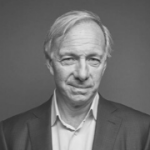
A fireside chat with the founder of one of the most successful investment management firms in the world on how capitalism is broken, and importantly how it can be fixed.

Speaker

Ray Dalio is founder, co-chair and co-chief investment officer of Bridgewater Associates. He started Bridgewater out of his two-bedroom apartment in New York in 1975 and under his leadership, the firm has grown into the fifth most important private company in the US according to Fortune Magazine.
For his and Bridgewater's industry-changing innovations as well as his work advising policymakers around the world, Dalio has been called the “Steve Jobs of Investing” by aiCIO Magazine and Wired Magazine, and named one of the 100 Most Influential People by TIME Magazine.
He is also the author of The New York Times #1 Bestseller Principles, which outlines his work and life principles, the foundation of Bridgewater’s distinctive culture and the cornerstone of his and Bridgewater’s success. Dalio and Bridgewater also recently published Principles for Navigating Big Debt Crises, the first public dissemination of their research on these economic events, which enabled them to anticipate the 2008 Financial Crisis. He is currently working on his third book, which will outline his investment principles.
Dalio holds a Bachelor of Science degree in Finance from C.W. Post College and an MBA degree from Harvard Business School. He has been married to his wife, Barbara, for over 40 years and has four grown sons. He is an avid philanthropist with a special interest in ocean exploration and conservation.

Moderator

Tate has been an investment industry media publisher and conference producer since 1996. In his media career, Tate has launched and overseen dozens of print and
electronic publications. He is the chief executive and major shareholder of Conexus Financial, which was formed in 2005, and is headquartered in Sydney, Australia.
The company stages more than 20 conferences and events each year –
in cities which have included London, New York, San Francisco, Los Angeles, Amsterdam, Beijing, Sydney and Melbourne – and publishes three media brands,
including the global website and strategy newsletter for global
institutional investors conexust1f.flywheelstaging.com. One of the company’s signature events is the bi-annual Fiduciary Investors Symposium. Conexus Financial’s
events aim to place the responsibilities of investors in wider societal, and political contexts, as well as promote the long-term stability of markets and sustainable
retirement incomes. Tate served for seven years on the board of Australia’s most high profile homeless charity, The Wayside Chapel; and he has underwritten the
welfare of 60,000 people in 28 villages throughout Uganda via The Hunger Project.

Key takeaways

  • ‘I think sustainability is the most important word of the 21st It’s the most important force.’
  • For a society to be great, you need to increase productivity and then divide it well. COVID has made productivity difficult but it has also highlighted inequalities. For example, the top 40 per cent of the US population spends 5 times more on the education of their children than the bottom 60 per cent. This mismatch creates a fundamental inequality and unfairness. The US economic mechanism is not meeting its goals of fairness or equality. Inequality is not just unfair its damaging. Populism, for example, has arisen because of unfairness.
  • The problems of civility, poverty and guns are American problems. I’m a mechanic. I don’t approach this moralistically. I want us to consider what we want to be as a nation and how we engineer for it.
  • The system that we need is a bipartisan system, otherwise we will constantly be at one another’s throats battling over contradictory positions. We need to produce win-win outcomes, not lose-lose outcomes, to avoid social and political conflict. We need leaders to create harmony so we can work together to generate efficiencies.
  • I am a realist. The curse of every generation is to not acknowledge the lessons from prior generations.
  • The children of today will need skills to navigate the risks, uncertainties and opportunities of the future world.
  • Regardless of who wins the US election, there will be significant stimulus.
  • Impact investment is easier to measure than philanthropy, but it is still difficult.
  • Oceans are the greatest asset in the world.
  • Three issues currently exist that last occurred in the turbulent 1930s period:
    • Extreme debt levels
    • The values and political gap
    • A rising power (China) challenging a historical power (USA)

This session looked at case studies of investors who have integrated sustainability practices into their investment decision making and portfolio construction, their outlook for the next five to 10 years, and what they think ESG 2.0 will look like in their portfolios.

Speaker

Lucy Thomas leads NSW Treasury Corporation’s stewardship activities. In her role she has joint accountability with the investment leadership team for the design and implementation of a new total portfolio approach to investment and stewardship philosophy and process. TCorp is committed to be an effective steward of the $90 billion of assets entrusted to TCorp on behalf of the people of NSW.
She is responsible for establishing and managing best-practice stewardship at TCorp and uses a five pillar framework to embed stewardship across the organisation. These pillars include ESG integration, proxy voting, engagement, collaboration and disclosure. She ensures consistency of approach and transparency to stakeholders including government, clients, TCorp board and global industry peers.
She was previously global head of sustainable investment at Willis Towers Watson. Her career spans diverse global investment roles with over 15 years’ industry experience. Her background includes equity research at Morgan Stanley in London; a boutique real estate manager in Europe; and a Sydney based market neutral hedge fund.
She is a CFA charterholder and holds a BA (Hons) in management science from Dublin University (Trinity College).

Andrew Siwo is the director of sustainable investments and climate solutions (SICS) at the New York State Common Retirement Fund and reports to the chief investment officer. He is charged with providing leadership and oversight on sustainable investment efforts across the Fund’s $220 billion portfolio and is the portfolio manager for the fund’s $20 billion commitment to SICS. Previously, Siwo was an investment director and served as the head of mission-related investments (MRIs) at Colonial Consulting, an investment consultancy to over 150 leading foundations and endowments with an aggregate of $40 billion in assets.
At Colonial Consulting, Siwo led the creation of client portfolios targeting MRIs, developed the firm’s MRI (SRI, ESG, impact) framework as well led sourcing, investment research, and due diligence across asset classes for related investment strategies.
Prior to joining Colonial Consulting, Siwo was a manager at the Global Impact Investing Networking (GIIN). In his capacity there, he was responsible for the operation, sourcing, and development of ImpactBase, the largest platform of impact investment funds globally, which he grew by $10 billion and validated over 100 impact funds. He also educated and fostered institutional investors seeking exposure to socially/environmentally responsible investment portfolios.
Prior to joining the GIIN, Siwo spent five years in the investment banking division at JP Morgan-most recently in the Global Special Opportunities Group, a $3 billion proprietary portfolio of principal investments in private equity, debt, mezzanine, infrastructure, and real estate. He also held roles on the rates desk executing fixed-income financing transactions as well as the Securitized Products Group valuing collateralized mortgage obligations.
Before JP Morgan, Siwo was a member of the Corporate Finance and Real Estate Strategy Group at Victoria's Secret leading project finance initiatives. He began his career at E*Trade Financial, managing a team of investment representatives serving active traders and high net-worth investors. His investment articles have been printed in various industry publications. Siwo completed an MPA in Finance and Fiscal Policy at Cornell University and holds a BA in Accounting from Morehouse College. He has held FINRA Series 7, 63, and 24 licenses. Siwo was selected into the 2020 Class of Crain’s New York Business “40 under 40.”

As PKA’s deputy executive director Dewi Dylander is head of sustainable investments and the investment secretariat where she works with integrating ESG in investments, exercising active ownership and optimizing the business through sustainable investments. She is responsible for climate related issues and implementing the UN SDG's. In addition, she is ensuring long-term value creation through an increased focus on implementing ESG factors as core elements in the investment strategy, policies and guidelines.
With a practicing certificate and +20 years' business experience – including on executive level – I have a strong professional foundation with broad financial, legal and international experience from both the public and private sectors. She has worked at ATP, and was well as stints in government including chief negotiator and head of department for the Ministry of Energy, Utilities and Climate in Denmark, where she was Denmark’s chief negotiator for international climate negotiations with the EU and UN. She has a Masters Degree in Law from the University of Copenhagen.

Moderator

White is responsible for the content across all Conexus Financial’s institutional media and events. She is responsible for directing the bi-annual Fiduciary Investors Symposium which challenges global investors on investment best practice and aims to place the responsibilities of investors in wider societal, and political contexts, as well as promote the long-term stability of markets and sustainable retirement incomes. She is the editor of conexust1f.flywheelstaging.com, the online news and analysis site for the world’s largest institutional investors. White has been an investment journalist for more than 20 years and has edited industry journals including Investment & Technology, Investor Weekly and MasterFunds Quarterly. She was previously editorial director of InvestorInfo and has worked as a freelance journalist for the Australian Financial Review, CFO, Asset and Asia Asset Management. She has a Bachelor of Economics from Sydney University and a Master of Arts in Journalism from the University of Technology, Sydney. She was previously a columnist for the Canadian publication, Corporate Knights, which is distributed by the Globe and Mail and The Washington Post. White is currently a fellow in the Finance Leaders Fellowship at the Aspen Institute. The two-year program consists of 22 fellows and seeks to develop the next generation of responsible, community-spirited leaders in the global finance industry.

Key takeaways

Lucy

  • We think about allocating risk, not capital. We take a whole portfolio view.
  • We assess ESG risks and benefits. Can we mitigate risks or take advantage of benefits?
  • Before we invest, we think about whether we can add value by active engagement and stewardship over the long-term.
  • It is important for sustainability to be integral to every cog of the investment wheel.
  • We ask our asset manager managers to follow the CFA’s code of ethics and report on their compliance to it, which gives us an insight into the culture.
  • We should continue to ask ourselves what our portfolio impacts, not just what our portfolio returns.

 Andrew

  • The fund focuses on 9 of the 17 SDGs.
  • For sustainable investing 2.0, asset managers will need to identify the source of alpha.
  • In future, there will be a close examination of claims made versus claims achieved.
  • There is currently problematic inconsistency in rating agency assessments in the ESG space.

Dewi

  • A few years back, we set a target to invest 10 per cent in climate actions.
  • We wish to invest at least US$8bn in climate initiatives by 2030.
  • We have an ESG tilt to our equities portfolio.
  • The lack of data and lack of comparability is an ongoing issue.
  • Investment in the S and G is expected to continue in the current global circumstances.

Responsible investment is a long-term movement whose time has come. How can its leaders take the movement further? This session examined the importance of impactful stewardship to deliver sustainable wealth creation and its potential to transform financial, social and environmental outcomes.

Speaker

Saker Nussebeih is chief executive of the international business of Federated Hermes, appointed November 2011, having joined in June 2009 as chief investment officer. He is also a member of the Federated Hermes Executive team. Prior to this, Nussebeih was global head of equities at Fortis Investments, having previously been CIO global equities since 2005. Before this, he was CIO of global equities and head of marketing for SGAM UK. This followed SGAM’s acquisition of Trust Company of the West, where Nussebeih was a managing director running global and international strategies, as well the London office. He started his career at Mercury Asset Management in 1987.
Nussebeih is founder of the 300 Club and was an inaugural member of the CFA Institute’s Future of Finance Advisory Council from 2013 until 2019. He is a member of the IIRC Council, the FCA-PRA Climate Financial Risk Forum, the United Nations Environmental Programme Financial Initiative Steering Committee, the Banking Standards Board, the UK National Advisory Board on Impact Investing, and the advisory Board of the National Youth Orchestra.
In 2018, Nussebeih was named CEO of the Year at the Financial News Asset Management Europe Awards. He has a BA and PhD in Medieval History from King's College, University of London.
He was awarded a CBE (Commander of the Order of the British Empire) in the Queen’s 2019 New Year's Honours list for services to Responsible Business and Finance.

Moderator

White is responsible for the content across all Conexus Financial’s institutional media and events. She is responsible for directing the bi-annual Fiduciary Investors Symposium which challenges global investors on investment best practice and aims to place the responsibilities of investors in wider societal, and political contexts, as well as promote the long-term stability of markets and sustainable retirement incomes. She is the editor of conexust1f.flywheelstaging.com, the online news and analysis site for the world’s largest institutional investors. White has been an investment journalist for more than 20 years and has edited industry journals including Investment & Technology, Investor Weekly and MasterFunds Quarterly. She was previously editorial director of InvestorInfo and has worked as a freelance journalist for the Australian Financial Review, CFO, Asset and Asia Asset Management. She has a Bachelor of Economics from Sydney University and a Master of Arts in Journalism from the University of Technology, Sydney. She was previously a columnist for the Canadian publication, Corporate Knights, which is distributed by the Globe and Mail and The Washington Post. White is currently a fellow in the Finance Leaders Fellowship at the Aspen Institute. The two-year program consists of 22 fellows and seeks to develop the next generation of responsible, community-spirited leaders in the global finance industry.

Key takeaways

  • Long-term deep engagement on the issues that matter most leads to substantial outperformance versus the sector. Going forward, there will be an indisputable recognition by all investors that ownership of companies demands a critical element of stewardship.
  • Legitimate ESG managers have full integration, deep engagement with investee companies and a humility to accept that we are still learning. ESG is not a ‘do-gooder’ thing, it’s about doing capitalism better. I welcome every manager aiming to be an ESG manager. This is about us all winning, not one company winning.
  • Not believing in diversity is simply stupidity because it halves the supply chain.
  • COVID has taught us that culture, for example, has a real value in challenging circumstances which hasn’t always been truly acknowledged by investment analysis.
  • If you have a 30 year time horizon, expenditure on engagement is a value adding investment, not merely a cost.
  • Don’t bet on markets. Instead, invest and engage for the long-term. If you want to bet, go to Vegas, it’s a lot more fun.

Poll results

Should stewardship be mandatory?

This session looked at the the importance of net zero 2050 and the opportunity for a turning point post COVID-19. It  examined net zero investor tools, the role of engagement, and gave examples of how investors are aligning their portfolios with the goal of the Paris Agreement.

Speaker

Eva Cairns is responsible for climate change research within the ESG investment team at Aberdeen Standard Investments. That includes climate related research for high emitting sectors such as oil & gas, utilities, transportation and agriculture. She is responsible for TCFD reporting in relation to specific asset manager disclosures such as carbon footprinting, scenario analysis and integrating climate change into the investment process. She joined ASI in 2010 and before joining the ESG team managed a team of business analysts and worked on front office projects focused on the investment process, particularly research and risk. She obtained the Professional Risk Management (PRM) qualification in 2014 and was awarded Candidate of the Year 2014 based on exam results.
She was previously an economist at Halcrow, a consultancy firm where she was responsible for project analysis and delivery in the energy and transport sector across the UK and internationally. She has a MSc in Economics with Distinction and her thesis was focused on the social cost of carbon and its application in UK policy.

Anne Simpson is CalPERS’ director of board governance and strategy, reporting to the CEO and responsible for strategic initiatives across the $400 billion fund. These include Climate Action 100+, a global investor alliance of $40 trillion driving business action on climate change, the Net Zero Asset Owner Alliance, and the UN Secretary General’s Global Investors for Sustainable Development. In the past year, Simpson has been named by Time Magazine as one of 15 women leading the global fight on climate change; by GreenBiz as one of 25 “kickass” women on climate change; and as one of the 100 Most Influential Women in US Finance, by Barron’s (Dow Jones).
Simpson serves on the SEC’s Investor Advisory Committee, as well as the Haas Business School Senior Advisory Board at the Center for Responsible Business and the Leadership Council for the Robert F. Kennedy Center for Justice and Human Rights. She has published in the field over many years, most recently as co-author of the new book The Financial Ecosystem: The Role of Finance in Advancing Sustainability with Satyajit Bose and Dong Guo of Columbia University. She is also the co-author of Fair Shares: the future of shareholder power and responsibility with Jonathan Charkham.
Simpson is a graduate of Oxford University where she read philosophy, politics and economics, and a former Slater Fellow at Wellesley College, Massachusetts. Her prior roles include senior faculty fellow amd lecturer at the Yale School of Management; head of the global corporate governance forum, at the World Bank; first executive director of the International Corporate Governance Network and joint managing director of Pensions & Investment Research Consultants Ltd. She is British, has three grown children, and lives in California.

Moderator

Tate has been an investment industry media publisher and conference producer since 1996. In his media career, Tate has launched and overseen dozens of print and
electronic publications. He is the chief executive and major shareholder of Conexus Financial, which was formed in 2005, and is headquartered in Sydney, Australia.
The company stages more than 20 conferences and events each year –
in cities which have included London, New York, San Francisco, Los Angeles, Amsterdam, Beijing, Sydney and Melbourne – and publishes three media brands,
including the global website and strategy newsletter for global
institutional investors conexust1f.flywheelstaging.com. One of the company’s signature events is the bi-annual Fiduciary Investors Symposium. Conexus Financial’s
events aim to place the responsibilities of investors in wider societal, and political contexts, as well as promote the long-term stability of markets and sustainable
retirement incomes. Tate served for seven years on the board of Australia’s most high profile homeless charity, The Wayside Chapel; and he has underwritten the
welfare of 60,000 people in 28 villages throughout Uganda via The Hunger Project.

Key takeaways

Eva

  • There are several pillars to net zero, including:
    • Decarbonise
    • Invest in low carbon solutions
    • Net zero engagement strategy
  • There will be different net zero pathways for different sectors and regions.
  • Developing carbon footprinting capabilities is not without its challenges, for example it is backward looking and it doesn’t give you the whole story. You need to go beyond that with forward looking tools.
  • It is important to consider how resilient a portfolio is to different climate scenarios and potential policy developments.
  • It is still a challenge for some to articulate how targets are being put into action.
  • We must continually ask ourselves – what is our impact on the real economy? Reporting on real world impact of decarbonisation is a work in progress.
  • Investors need to assess whether they are comfortable with the risks related to physical and regulatory factors.
  • We often talk about climate risks, but investors can take advantage of the many companies that will benefit from the transition to a green economy.

Anne

  • Greenhouse gases do not have a passport, so we need a global strategy.
  • We cannot exclude anyone. We cannot exclude emerging markets. We are all in the same boat amidst the same storm. We are seeing the first results in India of major companies committing to net zero.
  • There must be dialogue with regulators and government agencies. We only make progress through partnerships. Money does talk, but we need the level playing field of rules and governance.
  • Success for Climate Action 100+ is to:
    • Have boards take responsibility for transition strategy to net zero by 2050
    • Have each company set targets to achieve net zero by 2050
    • Create a reporting framework, preferably a mandatory reporting requirement within an audit
  • We have outlined the carbon footprint of 90 per cent of our entire fund.
  • We have developed a physical risk mapping tool to understand zip code risk.
  • We look up to a century ahead as we have an intergenerational investment responsibility.
  • We have found that taking a sustainability lens to risk and return has made us more intelligent investors. Risk in not to be avoided, but to be understood for benefit.
  • CalPERS thinks about managing 3 types of capital – financial, environmental and human. This means that ESG is not an add-on, but a critical part of investment DNA and fiduciary duty.

The COP26 is an important meeting – it marks the 5th anniversary of the Paris Agreement – and is said to be a coming together to ratchet up that ambition and sort out the gap between ambition and reality. This session looked at the areas of focus for the meeting and how within the short term focus of this COVID-19 crisis we can mobilise government, business and investors into action around the important issue of climate change.

Speaker

Nigel Topping has been appointed by the UK Government as the High Level Climate Action Champion for United Nations climate talks, COP26. He was previously the CEO of We Mean Business until December 2019, where he drove radical collaboration for climate action among NGOs working with the world's most influential businesses. This coalition played a key role in bringing the constructive voice of business in support of the Paris Agreement and, under his leadership has continued to drive ambition and action to accelerate the transition to a zero carbon economy.
Previously, Topping was executive director of CDP, launching new programs and partnerships including supply chain, water, forests and cities. He has 18 years’ experience in the private sector, including as a member of the management board of the world's largest manufacturer of brake pads, TMD Friction.
He is a commissioner on the Energy Transitions Commission and has been instrumental in the launch of many collaborative initiatives such as Science Based Targets, Business for Nature and the Global Commons Alliance.
He holds an MA in Mathematics from Cambridge University, Cambridge, UK and an MSc in Holistic Science from Schumacher College, Devon, UK

Moderator

White is responsible for the content across all Conexus Financial’s institutional media and events. She is responsible for directing the bi-annual Fiduciary Investors Symposium which challenges global investors on investment best practice and aims to place the responsibilities of investors in wider societal, and political contexts, as well as promote the long-term stability of markets and sustainable retirement incomes. She is the editor of conexust1f.flywheelstaging.com, the online news and analysis site for the world’s largest institutional investors. White has been an investment journalist for more than 20 years and has edited industry journals including Investment & Technology, Investor Weekly and MasterFunds Quarterly. She was previously editorial director of InvestorInfo and has worked as a freelance journalist for the Australian Financial Review, CFO, Asset and Asia Asset Management. She has a Bachelor of Economics from Sydney University and a Master of Arts in Journalism from the University of Technology, Sydney. She was previously a columnist for the Canadian publication, Corporate Knights, which is distributed by the Globe and Mail and The Washington Post. White is currently a fellow in the Finance Leaders Fellowship at the Aspen Institute. The two-year program consists of 22 fellows and seeks to develop the next generation of responsible, community-spirited leaders in the global finance industry.

Key takeaways

  • We are making progress on various levels:
    • 120 countries have now committed to net zero
    • More and more private players and cities are committing to net zero
    • It is becoming increasingly easy to understand which stakeholders are on the right pathway to net zero and which are not
  • Investors can join the race to zero club to accelerate action and place constructive pressure on their manager partners to follow suit.
  • There is inevitable disruption here so we need to commit ourselves to the transition. Trump promised to bring back coal. It’s down 30 per cent. We all need to get on board.
  • The future has the potential to look very different to today in the most positive sense. Asset owners are amongst the most influential voices in the world so speak up to help mould a better tomorrow.