This session takes an indepth look at an issue being discussed around every investment table… inflation. 

It looks at whether inflation risk exists and how different asset classes behave in inflation regimes. It asks whether inflation is entirely negative for portfolios and under which scenarios inflation is desirable and controllable. It questions whether there is a new relationship between growth and inflation, or whether historic patterns will prevail and, if so, which ones.

Click here to view Patrick’s presentation slides

Speakers

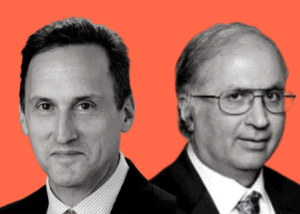
With over two decades of experience at Pictet, Zweifel has been crucial in building the firm’s macroeconomic research capabilities. At Pictet Asset Management, he leads a team of four economists. Zweifel plays a key role producing research that helps shape the global investment strategy of the firm and which is fundamental to the investment decisions of fund managers. His analysis helps identify structural imbalances and business cycle turning points through the use of proprietary quantitative models and leading indicators on activity and inflation.

Zweifel’s interest for emerging and Asian economies began following his work on International Economics for the World Bank and for the European Commission in the mid-1990s. He went on to teach econometrics and monetary theory at HEC Lausanne and HEC Genève until he joined Pictet Wealth Management in 1997, where once again he focused on emerging markets and currencies and rose to head of macro research. Zweifel then joined Pictet Asset Management as chief economist in 2009. He holds a PhD in Econometrics from the University of Lausanne.

Moderator

White is responsible for the content across all Conexus Financial’s institutional media and events. She is responsible for directing the bi-annual Fiduciary Investors Symposium which challenges global investors on investment best practice and aims to place the responsibilities of investors in wider societal, and political contexts, as well as promote the long-term stability of markets and sustainable retirement incomes. She is the editor of conexust1f.flywheelstaging.com, the online news and analysis site for the world’s largest institutional investors. White has been an investment journalist for more than 20 years and has edited industry journals including Investment & Technology, Investor Weekly and MasterFunds Quarterly. She was previously editorial director of InvestorInfo and has worked as a freelance journalist for the Australian Financial Review, CFO, Asset and Asia Asset Management. She has a Bachelor of Economics from Sydney University and a Master of Arts in Journalism from the University of Technology, Sydney. She was previously a columnist for the Canadian publication, Corporate Knights, which is distributed by the Globe and Mail and The Washington Post. White is currently a fellow in the Finance Leaders Fellowship at the Aspen Institute. The two-year program consists of 22 fellows and seeks to develop the next generation of responsible, community-spirited leaders in the global finance industry.
Key takeaways

  • Inflation is set to rise further but the consequences are not all bad
  • It is important to distinguish between the two sources of inflation – supply side or demand side and how each feeds into different cycles.
  • Goods have a much lower share in most inflationary indices compared to services.
  • Uncertainty about consumption spending could cool inflation as could uncertainty about how much of this spending will be tilted to services.
  • Avoiding risk assets when growth is low; good inflation hedges include gold and inflation linked bonds.
  • Inflation can occur in a period of strong or low growth.
  • Emerging market equities and fixed income (hard and local currency) also offer investors opportunities, performing well in a climate of strong growth and rising inflation.
  • Investors should look at emerging markets in the context of their own growth, rather than comparing growth to developed markets.
Will the COVID-19 crisis mean we will be trapped in the lower for longer regime or are we on the road to a rate change? This session examined the proposition that we are in a “lower for longer” environment, explored whether a reflationary environment will prevail, and debated if growth is around the corner. The session also highlighted what these potential scenarios might mean for investors and identify opportunities from an investment perspective. 

Speakers

Robert Tipp, CFA, is a managing director, chief investment strategist, and head of global bonds for PGIM Fixed Income. In addition to co-managing the global multi-sector strategies, Tipp is responsible for global rates positioning for core plus, absolute return, and other portfolios. He has worked at the firm since 1991, where he has held a variety of senior investment manager and strategist roles. Prior to joining the firm, he was a director in the portfolio strategies group at the First Boston Corporation, where he developed, marketed, and implemented strategic portfolio products for money managers. Before that, he was a senior staff analyst at the Allstate Research & Planning Center, and managed fixed income and equity derivative strategies at Wells Fargo Investment Advisors. He received a BS in Business Administration and an MBA from the University of California, Berkeley and holds the Chartered Financial Analyst (CFA) designation.

Dr. Sushil Wadhwani, CBE, is the chief investment officer for QMAW, originally founded as Wadhwani Asset Management in October 2002. Prior to joining QMA, he served as the founder and chief executive of Wadhwani Asset Management. Previously, he was a member of the monetary policy committee at the Bank of England. He also served as the director of quantitative systems at Tudor Investment Corporation, director of equity strategy at Goldman Sachs, and as an academic economist at the London School of Economics. He is an emeritus governor at the London School of Economics and a Commander of the Order of the British Empire. He earned a BSc, MSc and PhD from the London School of Economics and Political Science.

Moderator

White is responsible for the content across all Conexus Financial’s institutional media and events. She is responsible for directing the bi-annual Fiduciary Investors Symposium which challenges global investors on investment best practice and aims to place the responsibilities of investors in wider societal, and political contexts, as well as promote the long-term stability of markets and sustainable retirement incomes. She is the editor of conexust1f.flywheelstaging.com, the online news and analysis site for the world’s largest institutional investors. White has been an investment journalist for more than 20 years and has edited industry journals including Investment & Technology, Investor Weekly and MasterFunds Quarterly. She was previously editorial director of InvestorInfo and has worked as a freelance journalist for the Australian Financial Review, CFO, Asset and Asia Asset Management. She has a Bachelor of Economics from Sydney University and a Master of Arts in Journalism from the University of Technology, Sydney. She was previously a columnist for the Canadian publication, Corporate Knights, which is distributed by the Globe and Mail and The Washington Post. White is currently a fellow in the Finance Leaders Fellowship at the Aspen Institute. The two-year program consists of 22 fellows and seeks to develop the next generation of responsible, community-spirited leaders in the global finance industry.

Key takeaways

  • Inflation has become the number one investor worry according to a poll of delegates at FIS Digital 2021 with 51 per cent of respondents naming rising prices above any other risk.
  • But it might not be long-term. Country by country and demographic drivers are disinflationary, and today’s robust economic activity will tail off and economies will turn as sluggish as 2019.
  • Other panellists argued inflation could remain uncomfortably high. Even transient factors can take a while to unwind – particularly a labour shortage.
  • The longer inflation stays high, and the less pre-emptive central banks are in trying to curb it, the greater the risk.
  • Investors face challenges keeping to strategic asset allocations and navigating the impact of lost diversification between stocks and bonds.
  • One popular strategy comes via increased allocations to commodities where low inventories has left many commodity markets in backwardation. But looking ahead factors like China prioritising financial stability over growth could quickly change the picture. Moreover, if central banks turn hawkish, it bodes badly for industrial metals.
  • Elsewhere commentators said taxes will rise and this means deflationary forces could hold back the demand side. Systemic forces will also drive down inflation – taming inflation won’t just be the responsibility of central banks.
  • Many pension funds’ portfolios are not designed for unanchored inflation. Insurance assets like inflation-linked bonds or commodities are good in the short-term but don’t fit easily in a long-term portfolio.
  • Central bank credibility has provided an extraordinary backdrop to investment decisions – and any sense that discipline might be eroding could end badly for the portfolio.

Poll results

What do you consider to be the biggest risk facing your portfolio right now?

Fiscal policy, vaccines and green initiatives are creating waves of change in infrastructure. What exactly is infrastructure now, and most importantly what is not infrastructure? This session examined how the digitalization of economies and the shift to renewable energy offer potential long-term growth opportunities in infrastructure; and how it can play a role in long-term investor portfolios.

Speakers

Ben Hawkins leads the team of investment professionals responsible for a global portfolio of infrastructure and renewable resources investments. Hawkins also currently serves on the board of directors for Grupo SAESA, having previously served on the boards of London City Airport, Puget Sound Energy, Mosaic Forest Corp and Autopista Central. He joined AIMCo in 2007 as a portfolio manager with a focus on strengthening the direct investment capabilities for the asset class.
Since becoming part of the infrastructure team, he has held progressively more senior positions resulting in him becoming head of the group in 2014. Hawkins’ previous experience includes the utility sector where he worked in several commercial roles developing and acquiring infrastructure assets across the US and Canada. Prior to that, he worked for an advisory firm providing private capital solutions as well as developing and refining business strategy.
He holds both an MBA and Undergraduate degree from the University of Alberta and is a CFA Charterholder.

Benjamin Morton, executive vice president, is head of global infrastructure and a senior portfolio manager for Cohen & Steers’ infrastructure portfolios, including those focused on master limited partnerships. He has 22 years of infrastructure-related investment experience. Prior to joining Cohen & Steers in 2003, Morton worked at Salomon Smith Barney as a research associate for three years, covering the utility and pipelines sectors. He also worked at New York Mercantile Exchange as a research analyst. Morton holds a BA from the University of Rochester and an MES from Yale University. He is based in New York.

Dominic Swan is senior adviser to the global chief investment officer of HSBC Asset Management, and also head of ABS Investments. As senior adviser he covers all assets classes and countries, including debt, equity and alternative investments.
As head of the ABS Team, he manages over $40 billion of ABS across a range of sectors and countries.
Before taking up his current role, Swan was global head of fixed income for Halbis Capital Management, where he was responsible for teams managing over $200 billion of assets, including Euro, Sterling and USD fixed income portfolios, ABS and EMD.
Swan has over 20 years’ experience of the ABS market. In previous roles at HSBC he established and managed the banks UK credit card, covered bond and RMBS issuance programs. He previously worked for almost 10 years at Moodys Investors Service where he was rating committee chairman for structured covered bonds and much of the European securitisation market.

Moderator

Tate has been an investment industry media publisher and conference producer since 1996. In his media career, Tate has launched and overseen dozens of print and electronic publications. He is the chief executive and major shareholder of Conexus Financial, which was formed in 2005, and is headquartered in Sydney, Australia. The company stages more than 20 conferences and events each year – in London, New York, San Francisco, Los Angeles, Amsterdam, Beijing, Sydney and Melbourne – and publishes five media brands, including the global website and strategy newsletter for global institutional investors conexust1f.flywheelstaging.com. One of the company’s signature events is the bi-annual Fiduciary Investors Symposium. Conexus Financial’s events aim to place the responsibilities of investors in wider societal, and political contexts, as well as promote the long-term stability of markets and sustainable retirement incomes. Tate served for seven years on the board of Australia’s most high profile homeless charity, The Wayside Chapel; and he has underwritten the welfare of 60,000 people in 28 villages throughout Uganda via The Hunger Project.

Key takeaways

  • In a panel session on opportunities in infrastructure investors noted how technological change is repricing assets and many investors are substituting fixed income with infrastructure debt.
  • US President Biden’s plans for sweeping infrastructure investment could have important investor consequences around tax cuts and renewables. Driving 5G development will enable greater penetration for tower companies and economically sensitive businesses like freight railway will benefit from growth.
  • Higher yields can be found in non-investment grade infrastructure allocations, but investors shouldn’t view this as a long-term strategy.
  • Renewables are often linked to quasi-guaranteed cashflows comprising long-term contracts with lower volatility. In contrast, digital assets will be subject to huge change as the “revolution” continues. Hence the need to adopt a shorter time frame investing in assets over a 3 to 5-year horizon.
  • In periods of high inflation, infrastructure credit risk falls. This is priced into how debt products are valued in the market, providing a “windfall opportunity.”
  • Investor areas of focus include renewables, telecoms and digital infrastructure given new trends in remote working.
  • Data is increasingly helping resolve intermittency challenges in renewables.
  • Stranded or obsolete assets could spike in traditional energy infrastructure as well as in assets subject to technological change. For example, technological disruption is growing in the satellite space.

This session examined the growing debt burden, borrowing from the future, and the impact on markets, the economy and asset class returns.

Speakers

Rich Randall is responsible for the creation and management of IFM Investors’ debt investments strategies and portfolios, and for the debt investments team globally. He also heads IFM Investors’ North American debt investment business. Based in New York, he has more than 20 years of experience in originating, analysing, structuring and arranging debt facilities for large infrastructure projects. His experience includes fixed and floating rate debt instruments across a broad credit and industry spectrum, and he has a specialty in the US energy sector, which is the primary source of infrastructure debt issuance in North America. Randall joined IFM Investors after 10 years with RBS, where he was head of project finance in North America. He also managed and was responsible for the bank’s $3 billion portfolio of infrastructure investments. Prior to RBS, he spent nine years with Credit Agricole (Credit Lyonnais) as a senior banker structuring, analysing and underwriting project finance debt.

Moderator

Tate has been an investment industry media publisher and conference producer since 1996. In his media career, Tate has launched and overseen dozens of print and electronic publications. He is the chief executive and major shareholder of Conexus Financial, which was formed in 2005, and is headquartered in Sydney, Australia. The company stages more than 20 conferences and events each year – in London, New York, San Francisco, Los Angeles, Amsterdam, Beijing, Sydney and Melbourne – and publishes five media brands, including the global website and strategy newsletter for global institutional investors conexust1f.flywheelstaging.com. One of the company’s signature events is the bi-annual Fiduciary Investors Symposium. Conexus Financial’s events aim to place the responsibilities of investors in wider societal, and political contexts, as well as promote the long-term stability of markets and sustainable retirement incomes. Tate served for seven years on the board of Australia’s most high profile homeless charity, The Wayside Chapel; and he has underwritten the welfare of 60,000 people in 28 villages throughout Uganda via The Hunger Project.

Key takeaways

  • The unprecedented level of government debt signals sub-par economic growth ahead.
  • Debt involves borrowing from the future, and all studies show that countries that have high levels of debt have lower rates of GDP growth.
  • Government bonds are no longer a defensive asset: the downside risk of holding government bonds has increased and the negative correlation with equity reversed.
  • Investors have found opportunities in corporate debt in the wake of bank disintermediation since the GFC. Banks have ceded much of their lending in developed markets to the capital markets. However, private assets hold illiquidity risk as opposed to tradeable government bonds.
  • Companies that were hanging on before the pandemic and that got rescued will now face a reckoning. Service-type companies are over-leveraged, and airlines are also highly leveraged. Fallen angel opportunities exist as investment grade companies fall into the sub-investment grade market.
  • Debt capital provided by non-banks in US and Europe is developed, but in Asia only around 10 per cent of debt capital is provided by non-bank institutions.
  • Private corporate debt opportunities in emerging markets are limited because of the accompanying volatility. There is also a supply and demand imbalance given banks’ role in providing capital.

Is distressed an indicator of public market activities. Given the recovery in markets, what does that mean for the opportunity in distressed? Will we see a divergence in the bond and equity markets? What are the regional differences and where are the opportunities?

Speakers

Victor Khosla is founder and chief investment officer of Strategic Value Partners, LLC (SVP), an $11.4 billion global alternative investment firm, focused on distressed and deep value opportunities. He established SVP in 2001 and has built one of the leading firms in the business, with approximately 123 employees and offices in Greenwich, CT, London and Tokyo. Khosla has a 32 year track record in distressed and private equity investments. He started his career at Citibank (1989-1993) and subsequently built and managed one of the top distressed proprietary trading businesses at Merrill Lynch (1993-1998). At the time of his departure from Merrill Lynch, Khosla had investment authority for $2 billion in corporate and real estate investments and headed a team of 40 analysts and traders based in New York, Tokyo, London, and Hong Kong. After leaving Merrill Lynch, Khosla served as president of Cerberus Capital (1998-1999) and ran MooreSVP (1999-2002), a JV with Moore Capital, which focused on investing in Japanese distressed debt. Khosla graduated with a first class Bachelors of Commerce (Honors) degree from Delhi University, an MA in Economics from Vanderbilt University, as well as an MBA from the University of Chicago. He is a member of the management council at the University of Chicago Booth School of Business and is on the board of Pratham USA, one of the largest non-governmental education organisations in India.

Moderator

White is responsible for the content across all Conexus Financial’s institutional media and events. She is responsible for directing the bi-annual Fiduciary Investors Symposium which challenges global investors on investment best practice and aims to place the responsibilities of investors in wider societal, and political contexts, as well as promote the long-term stability of markets and sustainable retirement incomes. She is the editor of conexust1f.flywheelstaging.com, the online news and analysis site for the world’s largest institutional investors. White has been an investment journalist for more than 20 years and has edited industry journals including Investment & Technology, Investor Weekly and MasterFunds Quarterly. She was previously editorial director of InvestorInfo and has worked as a freelance journalist for the Australian Financial Review, CFO, Asset and Asia Asset Management. She has a Bachelor of Economics from Sydney University and a Master of Arts in Journalism from the University of Technology, Sydney. She was previously a columnist for the Canadian publication, Corporate Knights, which is distributed by the Globe and Mail and The Washington Post. White is currently a fellow in the Finance Leaders Fellowship at the Aspen Institute. The two-year program consists of 22 fellows and seeks to develop the next generation of responsible, community-spirited leaders in the global finance industry.

Key takeaways

  • Distressed debt opportunities will switch to Europe where a deeper recession promises more corporate failures than the US. Here creative destruction has already seen corporates take on losses, clear up and move on.
  • Elsewhere, the speaker reflected on how the debt cycle hadn’t run its course when COVID arrived – suggesting another correction may lie in the not-too-distant future.
  • As for the catalyst, changes in inflation and interest rates are obvious contenders but other factors that investors can’t figure out (like COVID) could just as easily surprise. That said, he warned that central banks are not letting go of the policy levers, and counselled against betting against the Fed.
  • The most obvious opportunities at the beginning of the crisis lay in liquid large cap companies. Next, the opportunity evolved with corporate restructuring by another swathe of companies (Virgin Atlantic and JCPenney, for example) running out of money.
  • Opportunities include businesses that are either resilient through a recession or which if cyclical, bounce back after a crisis because of their strong market share. Typically deals are private and not on the radar.
  • The asset class has a good sense of its own limitations. It doesn’t necessarily include investing in distressed tech assets because the pace of change is so rapid; by the time bankruptcy and restructuring processes are over the technology has changed. Elsewhere distressed debt investors avoid industries in secular decline and emerging markets.

Editorial content

Poll results

Are you increasing your allocation to distressed debt opportunities as a result of COVID-19?

This session looked at the biggest risks that asset owners are facing in this environment over the next 2-3 years as a result of the major shifts to near-zero interest rates, coordinated monetary and fiscal policy (MP3), and heightened internal and external conflict. It examined how the move to MP3 has significant implications for how investors manage risk and construct portfolios going forward. In an MP3 world, direct government spending rather than mostly efficient markets will be a much larger influence on the investment assumptions we take for granted, the drivers of growth and inflation, the flow of liquidity and how it impacts the cash flows of each asset, the pricing of the assets, their discount rate and the currency they’re denominated in.

Click here to view Bob’s presentation slides

Speakers

Bob Prince is co-chief investment officer for Bridgewater Associates, responsible for managing the company’s investment process with Ray Dalio and Greg Jensen. During his tenure at Bridgewater, he has been a partner in developing all aspects of Bridgewater’s investment process and client strategies. Prince got to know Dalio and Bridgewater in the early 1980s when he headed the Treasury Department of First National Bank of Tulsa, in Tulsa, Oklahoma. Before joining Bridgewater, for three years Prince used Bridgewater as his off-campus research staff in managing the bank’s funding, asset/liability management, and investment portfolio. He holds a Bachelor of Science degree in Finance and Accounting and an MBA from the University of Tulsa.

Moderator

Tate has been an investment industry media publisher and conference producer since 1996. In his media career, Tate has launched and overseen dozens of print and electronic publications. He is the chief executive and major shareholder of Conexus Financial, which was formed in 2005, and is headquartered in Sydney, Australia. The company stages more than 20 conferences and events each year – in London, New York, San Francisco, Los Angeles, Amsterdam, Beijing, Sydney and Melbourne – and publishes five media brands, including the global website and strategy newsletter for global institutional investors conexust1f.flywheelstaging.com. One of the company’s signature events is the bi-annual Fiduciary Investors Symposium. Conexus Financial’s events aim to place the responsibilities of investors in wider societal, and political contexts, as well as promote the long-term stability of markets and sustainable retirement incomes. Tate served for seven years on the board of Australia’s most high profile homeless charity, The Wayside Chapel; and he has underwritten the welfare of 60,000 people in 28 villages throughout Uganda via The Hunger Project.

Key takeaways

  • Bridgewater’s Bob Prince explains the perils of MP3 and suggests shaping strategies around cash-flow yield and connecting equity cash flows to stable sources of spending in the economy.
  • Today’s MP3 world where monetary and fiscal policy work hand-in-hand has resulted in important secular shifts.
  • Under MP1, interest rates were the driver, used to change levels of borrowing and lending to alter spending habits. Under MP2 QE became the main tool whereby governments printed money to drive up asset prices.
  • Under MP3 the Fed borrows and directs money into the economy wherever it wants, supplementing incomes and raising spending.
  • Now governments are trying to suppress interest rates so as not to offset the stimulation from the fiscal side. It means that the goal has become to hold interest rates stable so as not to conflict with the “person on the accelerator”.
  • This shift in linkages has big implications.
  • Asset holders are on the wrong side. Holders of cash have lost their purchasing power. Cash and bonds are no longer a saving vehicle.
  • Central banks now only playing a support role to governments, heavily involved in markets.
  • Investors need to think differently and get returns through cash flow yields. It is possible to create a tracking portfolio of stable sources of spending in the economy.
  • Stable cash flow streams still get price volatility, but it is possible to hedge this.
  • Through this lens public and private assets are on the same plane.
  • However, zero interest rates, deficits and printing money, doesn’t exist in Asia. It makes investment in Asia another source of diversification and investors should move between east and west.