
Spain’s Pensions Caixa 30: A complex world requires systems leadership

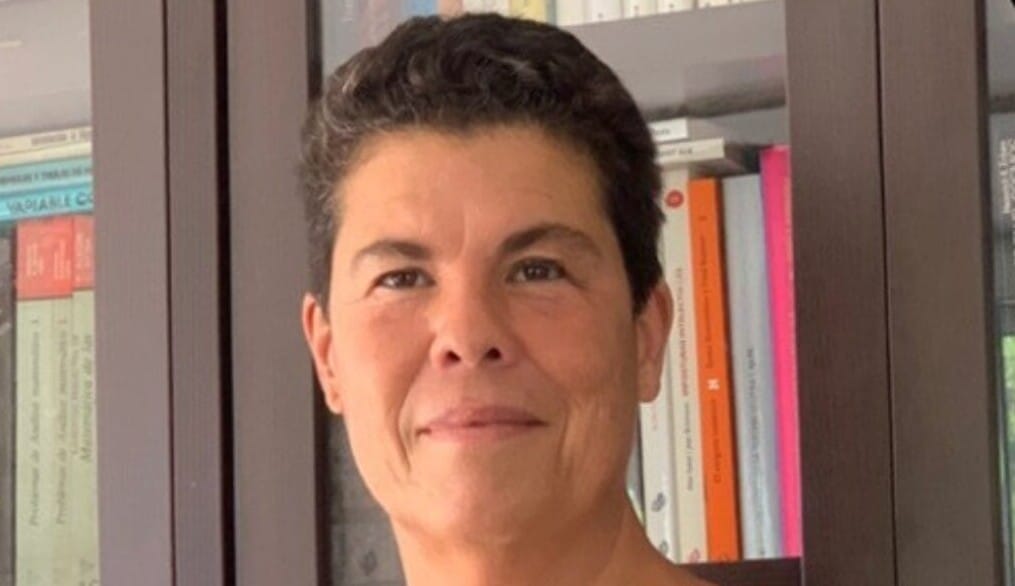
Yolanda Blanch

Whenever Yolanda Blanch is making decisions, she thinks of the Cobra Effect. Blanch is the chair of Spain’s largest corporate pension fund, the €7 billion ($7.9 billion) pension fund for Caixa Bank employees (Pensions Caixa 30).

Also known as the “law of unintended consequences”, it refers to how attempts to solve a problem can often end up making it worse. It often occurs when an incentive, meant to encourage positive behaviour, inadvertently encourages the opposite.

The story goes that to deal with an excess of cobras attacking people, the Indian government offered a bounty for every dead one. People began breeding cobras to pick up the payment, and when the government cancelled the bounty, farmed cobras were released into the wild, exacerbating the problem.

“The Cobra Effect is an example of not implementing systems thinking in a complex and interconnected world,” says Blanch, whose leadership of the 25-year old pension fund since 2023 (she worked as an FX options trader at Caixa Bank for 20 years before that) aims to follow a systems approach which seeks to understand the relationships and interconnections within a system rather than just its individual parts.

A systems approach requires systems leadership, and Blanch invests a lot of energy in ensuring employees are thriving so the investor can tap into all the knowledge and talent it has available. She says systems leadership involves creating the conditions for others to think and express themselves clearly, ensuring psychological safety in an atmosphere of collaboration, communication and trust.

“In a complex world, no one can know about everything. I think the days of a leader who knows everything and decides everything is over. Now leadership is much more about being of service to others,” she reflects.

Sponsored Content

Systems Leadership in practice

Caixa’s 15-member supervisory board administers the fund, decides the investment policy and approves performance and return expectations in a wide-ranging and active remit.

Blanch views the rest of her board as a source of unique individual talent and ideas. “I try to approach everyone with humility and curiosity, and encourage debate,” she says.

Elsewhere, the parameters of board meetings have been laid out after guidelines were established to shape the kind of meetings the organisation wanted and protect against the risk of unruly meetings muddying decision-making.

“We’ve agreed that creating space for everyone to contribute without interruptions, and keeping our interventions concise, ideally under three minutes, helps us reach better outcomes,” she says. “In a complex world, we need to make room for diverse perspectives. We value what each person brings to the table, and believe that thoughtful listening and inclusive dialogue are essential to finding the most balanced and effective solutions.”

Blanch also bases her leadership on an acceptance of the reality we live in and approaches every day from a place of trust, not fear.

“Most human beings want to create a better world. What’s challenging is that we don’t always agree on how to get there,” she says, adding that she is encouraged by the strong example of soft skills in pension fund leadership.

Over the years, the pension fund has honed a reputation for excellence in investment governance. In 2016, trustees drew up seven investment beliefs to improve decision-making and achieve better outcomes, and in 2018 it approved eight SRI-related investment beliefs.

More recently, trustees carried out a deep dive into the asset allocation, centred around analysis of the distribution of accumulated assets across the current and forecast membership, and the risks implied by the various drawdown methods that the scheme offers its members.

Board discussions currently focus on shifting geopolitics, the beginning of a new era away from globalisation, and the potential for more collaboration in European capital markets. Elsewhere, she wants to begin exploring plan members’ appetite for lower returns vis-à-vis sustainable investment, a conversation she believes needs to be had because maximising returns at all costs increasingly conflicts with sustainability.

“One of the important challenges we face is the tension between the demand for continued economic growth and the environmental limits of a finite planet. As fiduciaries, our responsibility remains to deliver strong, long-term returns for plan members.”

Should circumstances ever evolve in a way that requires reflecting on how sustainability and financial performance interact, we would of course take careful account of members’ views and sensitivities. So far, sustainability and profitability have often aligned well, but we are aware that future scenarios could be more complex and will require thoughtful, balanced consideration.”

 Other longer-term projects include exploring impact investment in the illiquid allocation that will complement sustainable investments in thematic equities and fixed income via a social bonds portfolio.

The board re-evaluate the pension fund’s strategic asset allocation every year (it isn’t modified every year) and also closely follows tactical decision making. All investment is managed by Caixa’s fiduciary manager VidaCaixa, Spain’s largest asset manager, also owned by Caixa Bank

“We are really close to the investment process,” she says.

The portfolio is divided between equities (30 per cent), illiquid assets (20 per cent) and fixed income (50 per cent) “Global equity has proven resilience in the long run,” she says.

The investment objective of the Pension Fund is to achieve an annual return (measured on an annualised basis over 5 years) in line with the 3-month Euribor + 2.75 per cent. At the end of 2023, the 15-year return was 5.46 per cent and the 5-year return was 5.81 per cent. The level of risk associated with this objective should be in the region of 10% (measured through annual volatility).

“When we reach a certain age in life, usually professional ambition and ego no longer primary focus, I think institutional investors understand the challenges and contradictions on the table.

Leave a Comment

Silver is the new gold: France’s UMR targets opportunities in ageing economy

Silver is the new gold: France’s UMR targets opportunities in ageing economy

French pension organisation UMR has launched a multi-asset thematic program that will target opportunities in Europe’s ageing economy. It’s part of a broader strategy to increase diversification in private markets where it sees secondary markets as an increasingly important tool.

Sort content by

NZ Super cuts benchmark return expectation on US valuation concerns

A view that the US stock market is overvalued and equity risk premia will be lower over the long term has driven New Zealand Super to lower the return expectations for its reference portfolio following its recent five-yearly review of the benchmark. Co-chief investment officer Brad Dunstan also flags underweight commodity exposure as an area to address and explains why the fund remains sceptical of illiquidity premia despite seeing a growing case for private markets.

Sampension: Why there are many reasons to be optimistic

Now is not the time to reduce risk, argues Henrik Olejasz Larsen, chief investment officer of Sampension, Denmark’s $50 billion pension fund for public and private sector employees. In an interview with Top1000funds.com, he says corporate profits have not deteriorated, and although the market has been tested from multiple directions, the underlying optimism driving equities is strong enough to overrule the negative impact of geopolitical risk.

France’s Banque des Territoires looks for data centre opportunities

France’s Banque des Territoires, a subsidiary of Caisse des Dépôts, the country’s €323 billion state-owned financial institution, plans to invest more in data centres in France. The push is in line with government policy to build out AI infrastructure off the back of the country's access to cheap, green, nuclear energy that uniquely positions France to provide power to the AI industry while maintaining net zero credentials.

Why NYC pensions CIO hasn’t drunk the ‘TPA Kool-Aid’

Three decades of investing have given Monte Tarbox sharp eyes for recognising risk and opportunities, and he’s putting it to use as the new permanent chief investment officer of the $306 billion NYC Bureau of Asset Management. In an interview with Top1000funds.com, Tarbox outlines his vision for the fund, why he’s bullish on infrastructure but “nervous” on PE, and why he hasn’t drunk the TPA “Kool-Aid”.

How CPP is evolving risk management for a faster, more interconnected world

In an environment where multiple risks are emerging and their effects are compounding on the portfolio, CPP Investments' chief risk officer Priti Singh says the $572 billion fund is rethinking risk management from the ground up, shifting from reaction to preparation and embedding risk thinking earlier in investment decisions. She speaks to Amanda White about the fund's risk approach.

URS bets on nuclear to power AI and lower emissions

Next-generation nuclear energy, and the money pouring into it, will truly change the world, according to CIO of Utah Retirement System John Skjervem. It’s a lonely position as the CIO of a public pension fund but one Utah is embracing as it builds out early-stage investments in nuclear energy as part of its alternative energy portfolio. He speaks to Sarah Rundell in an exclusive interview about how investing in transformational energy technologies can be part of prudent investment management.



