
London’s TfL takes ESG message to masses

Investments at TfL Pension Fund, the £11 billion ($14 billion) fund for the public-sector employees running London’s transport network, span India’s biggest solar company, a Canadian environmental services group and a tertiary education provider in Brazil. Coupled with the fund’s sophisticated ESG risk management and persistent engagement with corporations and asset managers, they make for a developed and sweeping ESG strategy. Now, TfL Pension Fund’s trustees have released its first-ever annual report on sustainable investment, finally putting in place the communication pillar of ESG integration, to help ensure the pension fund’s 86,000 members are on board with all the scheme is doing.

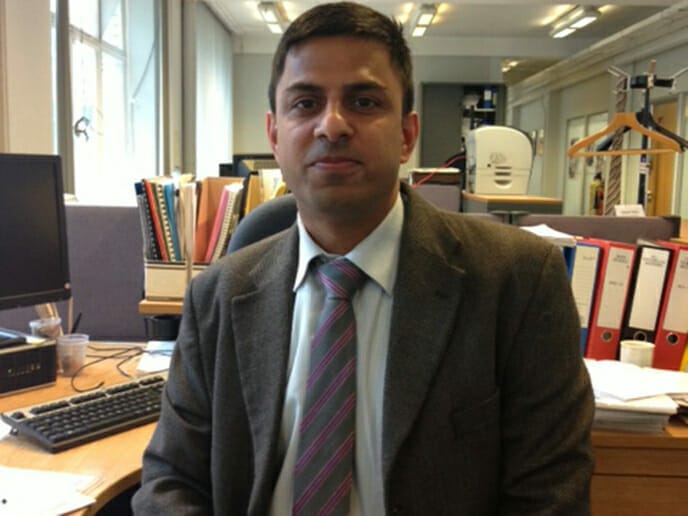
“One of the main reasons we have put out this report is because we felt there was a disconnect between efforts of the scheme and members’ perception of what we are doing,” says Padmesh Shukla, TfL Pension Fund’s head of investments. “There are a great deal of interesting things happening in ESG at many pension funds, but the communication isn’t always there.”

The report outlines TfL Pension Fund’s progress on ESG alignment, integration and investment. It also includes two new investment beliefs: returns and sustainability are not conflicting objectives; and an active corporate governance program can add value.

“Good ESG is a good investment. It is hand in glove, not either or,” Shukla says.

Pressure on managers

It’s not just better communication with members the report targets. The pension fund wants to send an important message to its 30 external managers, which run 44 separate mandates across its bonds, equity, private markets and hedge fund allocations. The directive? Step up ESG integration so it sits alongside risk-and-return analysis. ESG is no longer a top-down, box-ticking exercise; the pension fund wants to see how managers are reflecting its policies and principles in their investment underwriting process, in a bottom-up fashion, Shukla says. He adds that the trustees are actively engaging with four managers who have decided not to sign up to the PRI.

Sponsored Content

“ESG should be part of the investment process, not a bolt on,” he says. “We need to see greater evidence about how managers are thinking about ESG in their processes. It’s not an easy journey because many managers are in their 40s and 50s and this wasn’t part of their toolkit in their earlier working lives. It is a big learning curve and some are changing more quickly than others.”

It is these relationships TfL Pension Fund will prioritise. Take, for example, the small-cap emerging market equity manager that drilled below the poor ESG metrics MSCI analysis revealed on an Indonesian cement company. It found the company had made important progress on health and safety and had stronger-than-reported governance.

“We are on the Aladdin platform, where MSCI tools flag up red cases when ESG scores are bad. In this case, we sat down with the manager. Rather than box-ticking MSCI’s scoring methodology, the manager found it wasn’t as bad as the score said.”

TfL Pension Fund now combines corporate engagement and monitoring with a more direct approach. It recently excluded from its private allocation any investment in power and extraction companies with more than a 30 per cent tilt of their business activities to thermal coal. It is in the process of extending this across all the fund’s active equity and bond segregated mandates. The fact that this strategy happened in private markets first reflects the fact ESG integration is more difficult in public markets, Shukla says. There is more control and visibility for investors in private companies, which are better engaged on the ESG issue, with a sharper focus and incentive to deliver long-term value creation, he says.

TfL Pension Fund has an actively managed £3 billion equity portfolio and a £2.6 billion passive equity portfolio managed by BlackRock.

“BlackRock has a strong track record of activism both at meetings with and in their engagement with management,” the report states.

TfL Pension Fund aims to invest 5 per cent of its AUM in ESG themes in coming years.

“It’s not just about alignment and integration. It’s also about opportunity,” says Shukla, who notes that most of the opportunities in renewables, waste processing, healthcare and ageing society are on the private side.

The report readies TfL Pension Fund for new UK regulations this October, by which time trustees must have updated their Statement of Investment Principles (“SIP”) regarding ESG issues, specifically including climate change.

“The trustees have embarked upon an important ESG journey and, like everything new, expect to learn, adapt and improve as it goes along. There will be a greater focus on not just doing the right thing as the trustees discharge their important fiduciary duty but also on being more transparent and communicative about such activities with members of the fund,” it states.


TfL Pension Fund asset allocation

Overseas equity: 48.1 per cent

Index-linked instruments: 11.6 per cent

Liquid alternatives: 10.6 per cent

Global bonds: 6.2 per cent

UK equities: 5.2 per cent

Private equity: 4.2 per cent

Infrastructure: 3.9 per cent

Alternative credit: 3.6 per cent

Real estate: 2.9 per cent

Cash and other: 2.9 per cent

Commodities: 0.5 per cent

Fixed-interest gilts: 0.3 per cent

Asset Owner:TfL Pension

Leave a Comment

New Jersey’s $85 billion fund stockpiles cash, eyes PE secondaries

New Jersey’s $85 billion fund stockpiles cash, eyes PE secondaries

An underweight position across private markets, predicated on a view that geopolitics and inflation mean interest rates are not coming down any time soon, has positioned the New Jersey Division of Investment with plenty of dry powder and a cash position four times the policy allocation. It is now readying for opportunities in private equity secondaries and with emerging managers. Chief investment officer Shoaib Khan spoke to Top1000funds.com.

Sort content by

Future Fund jolts out of ‘set and forget’ mode

Australia’s sovereign wealth fund has handed mandates to external active managers and built a dedicated treasury management function, six years after going all-in on passive index strategies. It is is also on the hunt for early stage venture opportunities as it continues to forecast challenging conditions and higher persistent inflation.

What drives success at CPP Investments’ giant PE portfolio

Size and scale are not always advantages. Against the backdrop of tougher market conditions, CPP Investments' global head of private equity Suyi Kim says successfully managing what could be the world’s largest private equity allocation a program will depend on successfully managing the large team.

Finnish fund Elo’s CIO reveals portfolio plans

Hanna Hiidenpalo, Elo’s CIO discusses progress around internal management, the impact of Finnish equities on the portfolio, and the fund’s sustainability program which includes a target of carbon-neutral energy use in direct real estate by 2027. 

UN pension fund flags climate risk on ALM and performance

In a nod to headwinds including climate change, evolving demographics, and the future economic outlook the $85.5 billion United Nations Joint Staff Pension Fund will use a slightly lower real rate of return to inform its upcoming actuarial valuation with the 2023 ALM scenario planning focusing on climate risk.

MN: A new private debt allocation that integrates ESG

Fixed income at fiduciary manager MN will now include private debt. Markus Schaen explains the challenges of building out the portfolio alongside MN's client funds' strict ESG priorities. He also explains how for some ESG-conscious investors ESG integration and impact is more important than outperformance.

Why transparency is a strategic initiative for Norway’s SWF

Norway’s giant sovereign wealth fund took out the top spot in this year’s Global Pension Transparency Benchmark. Amanda White talks to CEO of Norges Bank Investment Management, Nicolai Tangen, about why transparency is important and why under his leadership Norges aims to be the best fund in the world.

Previous



