
How abundant inflows have put New Mexico’s SIC in a bind

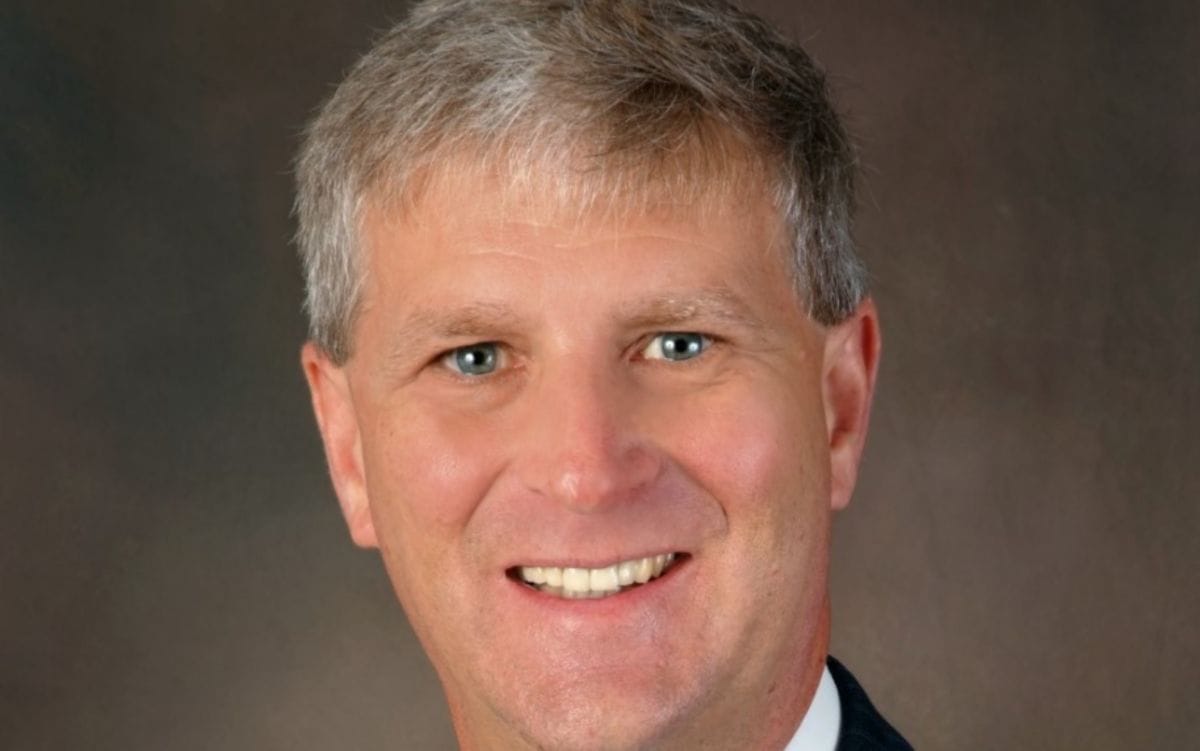
New Mexico State Investment Council (SIC) the $54 billion sovereign wealth fund, has so much money pouring in from tax and royalty collections on oil and natural gas production in the state that CIO Vince Smith is struggling to put the money to work. The SIC is expecting $5 billion in inflows this year following $8 billion in both 2023 and 2022, and is currently around 10 per cent overweight cash and bonds relative to target.

“We are seeing massive capital coming into our funds,” says Smith in an interview with Top1000funds.com from the SIC’s Santa Fe offices. “We are getting satisfactory yields in the bond market and 5 per cent on our cash, which isn’t damaging returns. But our large cash allocation is due to the large inflows, not by strategic choice.”

Assets under management at the SIC which oversees four permanent funds and is America’s third largest sovereign wealth fund, have grown from $13 billion when Smith joined 14 years ago and are forecast to hit $100 billion in the next 10 years.

The fund’s models suggest that inflows will meet SIC’s distribution needs to the state, much of which goes on education, for the next decade. This will allow all earnings to stay in the fund and compound. Only as the energy transition gathers pace and weighs on demand for fossil fuels will those numbers drop.

In a reflection of the fund’s growth, the internal team is also expanding. A new budget has just approved five additional positions in the investment department which will grow to 18 with three new analysts, an investment operations manager, and a cash manager to oversee the fund’s cash management program.

“We’ve had a team of 13 since the fund was $13 billion assets under management. To be honest, we’ve only just caught up,” says Smith.

Sponsored Content

Over valued equities

One of the reasons it is challenging putting the money to work is because of valuations in public equity. Smith believes public equity is highly valued across the board, and he is wary of the enduring dominance of tech stocks.

He uses three to four measures to value the portfolio, including the cyclically adjusted price earning (CAPE) ratio and Warren Buffett’s ‘Buffett Indicator’ that compares the total market capitalization of all US stocks with the quarterly output of the US economy.

“All the measures we use tell us that we are paying a lot, particularly relative to higher interest rates. When the Fed was at zero on the Fed Funds rate and 10-year Treasuries were 2.5 per cent, there was a case that stock markets should be highly valued. But now rates on cash are 5.4 per cent and we are seeing 4.3-4.5 per cent on the 10-year, and these valuations are a lot more challenging.”

The US election in November could be a source of welcome volatility that opens the door to deploying more to equity.

“Volatility would help us right now because we’ve got excess cash and bonds because of our inflows – volatility in the stock market would definitely be helpful for us.”

Strategies in public equity are mostly plain vanilla with a small (1.5 per cent) tracking error. The tracking error for the international portfolio is 3 per cent.

Smith employs a macro, top-down medium-term (7-10 year) strategy to guide asset-allocation and asset-class construction. He’ll publish this year’s annual investment plan in August, and predicts the next few years will be “interesting.”

For now, the surprising strength of the US economy prevails in a trajectory that wrong footed investors poised for recession at the beginning of 2023 and those that forecast six to seven rate cuts at the beginning of 2024.

“Here we are, seven months into 2024, and we haven’t had any rate cuts and the expectation is for just one or two. The US labour market is strong; stocks are doing better than expected and higher interest rates are earning good returns on the fund’s cash.”

Private markets

It’s no easier putting money to work in private markets. New Mexico targets 50 per cent of assets in private markets and allows five years to reach its target asset allocation in a pacing program run in-house.

The allocation to private equity and venture is below target, an underweight Smith attributes to the SIC slowing investment in 2019 and 2021. Aggressive fund raising between 2021 and 2023 means many fund managers have now slowed down on raising new funds. It’s one reason why he is expanding the manager roster, hunting for new relationships able to take large investments of $100 million plus in private equity and $300 million in private credit.

He is particularly focused on building the allocation to venture as a proportion of private equity, targeting 15 per cent of total AUM in venture. Strategy will centre on avoiding the riskier end, and careful manager selection, he says.

“We didn’t have much in venture and we are now putting more focus on this and expanding the allocation. For us it’s a matter of staying in the middle of our band and getting the allocation up over the next three to four years.”

Allocations to private equity, real estate, real return and private credit have a strong focus on US dollar-denominated, US-based assets.

New Mexico first began investing in private credit in 2021 and focuses on fund investment and direct investments with managers.

The IMF recently flagged risks in the $1.7 trillion market, warning that rapid growth in the asset class hasn’t been tested in a downturn, and questioning the impact of sudden demands on funds’ liquidity and the quality of underlying borrowers. Smith predicts investors will ultimately put as much to work in private credit as they have in private equity and says SIC strategy is on a sure footing.

“We deal with the larger, established managers and feel we have adequate transparency in the funds we commit to. We stay away from the riskier corners, and don’t expose ourselves to higher risk strategies,” he says.


Leave a Comment

How CPP is evolving risk management for a faster, more interconnected world

How CPP is evolving risk management for a faster, more interconnected world

In an environment where multiple risks are emerging and their effects are compounding on the portfolio, CPP Investments' chief risk officer Priti Singh says the $572 billion fund is rethinking risk management from the ground up, shifting from reaction to preparation and embedding risk thinking earlier in investment decisions. She speaks to Amanda White about the fund's risk approach.

Sort content by

Finland’s VER warns impact of higher rates on private markets still unknown

Timo Löyttyniemi, CEO at VER is focused on how the fund's asset managers have handled the impact of higher interest rates in private markets. It's about to become apparent if they've successfully hedged interest rate risk; re-financed, and reduced total leverage levels to manage higher borrowing costs.

A new SAA at Connecticut allocates more to risk assets in manager shakeup

Since joining the Connecticut retirement plans as CIO just under two years ago, Ted Wright has developed a new strategic asset allocation that has bumped up the allocation to private assets. Top1000funds.com talks to him about risk budgets, a manager shakeup and diversity.

UN Pension Fund back on track after 2022, as low costs pay off

The United Nations Joint Staff Pension Fund, UNJSPF, is clawing back 2022 losses with assets under management currently valued at $82 billion and the fund experiencing a positive return of 5 per cent so far this year.

West Virginia CIO fears anti-ESG politics threaten fiduciary independence

Like many other US pension funds, West Virginia Investment Management Board’s (IMB) proxy vote has been a lightning rod for anti-ESG sentiment. CEO/CIO, Craig Slaughter explains why he fears recent legislative changes could herald the beginning of a threat to the fund's fiduciary independence.

PGGM’s private equity priorities: Impact, Paris-alignment and co-investment

After four years as CIO at ABP, Diane Griffioen has joined PGGM as head of private equity where her focus is on driving Paris-alignment, impact and co-investment across the €23 billion portfolio.

AP2 returns active Chinese equities back to quant

AP2, Sweden’s SEK 400 billion ($38.8 billion) buffer fund, recently divested its allocation to three Chinese asset managers overseeing an allocation to China A shares despite spending many years carefully building up the successful stock picking portfolio.

Previous




