
GPIF positions its alternatives database as first gate in manager selection

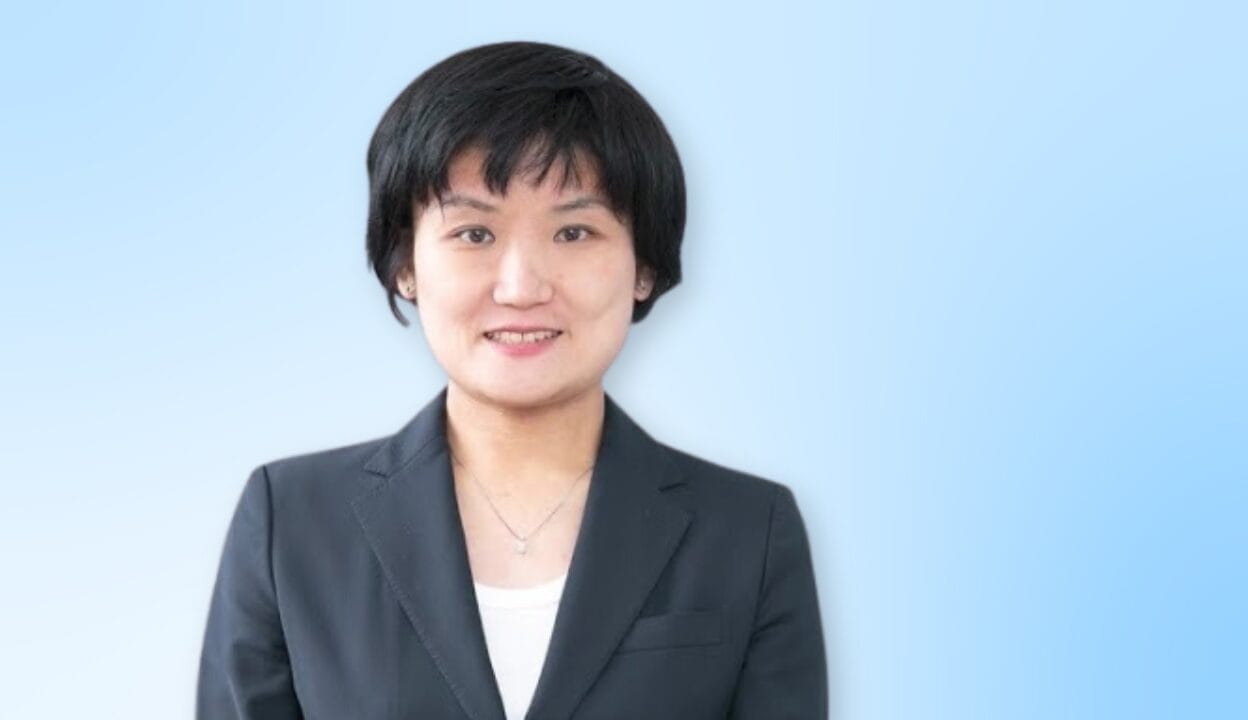
Mari Tanaka

Japan’s Government Pension Investment Fund will soon expand the scope of its alternatives database, which analyses the active performance of private market managers, as the $2 trillion pension giant positions the tool as the first point of reference for private market manager due diligence.

The giant fund has a very small but growing alternatives allocation and currently has active RFPs for fund of funds in global private equity, global and Japanese infrastructure, and global and Japanese core real estate, as well as for single funds in Japanese core real estate.

Analysing active value-add above the policy benchmark allocations is an important process for GPIF which does not have alternatives in its policy mix but considers them as an active decision above the listed market allocations.

The database project began last October and uses BNY Mellon’s subsidiary Eagle Investment Systems as the data collection vendor to gather metrics around private market funds and their underlying portfolio companies including internal rate of return (IRR), total value to paid in (TVPI), cash flows and historical company data.

Mari Tanaka, GPIF director of research and analytics who oversees the project’s build-out, tells Top1000funds.com that the focus so far has been getting the database up and running, but the next step is to expand its scope.

“This [database] is going to be the very initial screening process for us to select funds, and fund managers are also aware this is an important step for us, and for them to provide such data,” Tanaka says in an interview from GPIF’s Tokyo office.

Sponsored Content

GPIF is predominantly a listed markets investor but has been plotting a further push into alternatives to generate alpha, as the world’s second-largest asset owner came under pressure to improve long-term returns in the face of Japan’s rapidly aging population.

Alternatives represented only 1.63 per cent of the portfolio as of March 2025, the latest disclosure, and is nowhere near its upper limit of 5 per cent, but considering the fund’s size, the allocation is still worth 4,187.7 billion yen ($26 billion) and has grown more than fourfold since 2020.

Infrastructure is the largest component of the allocation and constituted almost half (49 per cent) of the alternatives portfolio, followed by real estate (30 per cent) and private equity (20 per cent).

The “very time-consuming” process of standardising private markets data across asset classes has been the greatest challenge so far, Tanaka says.

“We need to deal with very different formats GP by GP, so we need to do some data cleansing like standardising the descriptions, or sometimes the data is not correct and we need to verify the data,” she says.

“Before we started this project, we tried to collect [this type] of information from GPs by ourselves, but it is very difficult and not feasible for us to do that continuously on an ongoing basis, so we decided to retain a third-party vendor to help us on the initiative.”

It’s somewhat of a learning curve for GPIF and BNY Mellon as it’s a first-of-its-kind project for both organisations, sometimes requiring them to fill in data gaps when GPs don’t directly collect the required metrics.

BNY Mellon is also using AI to pick up data from fund documents or standardise formats so that they fit into the system.

The database not only covers funds GPIF invests in but also selected external funds, Tanaka says, and its scale is only getting bigger. She also sees it as a potential reference point for GPIF to compare the characteristics of similar assets, such as data centres.

“Some funds [we collect data around them] completely out of interest, like very, very tiny funds for example, may be out of our scope” she says.

“Basically what we do is not going to be changed dramatically over time, but the scope is going to be expanding.”

GPIF doesn’t have a dedicated allocation to alternatives in its policy asset mix, but classifies each alternative investment into domestic bonds, foreign bonds, domestic equities or foreign equities according to their risk-return profile.

As such, Tanaka says private market investments are considered active decisions and need to demonstrate their potential for excess return over public benchmarks. In a discussion paper in 2023, the fund proposed a so-called “spread-based direct alpha” (SBDA) methodology to effectively achieve that objective. The paper used private equity funds as an example but notes that the measure should also be applicable to infrastructure and real estate too.

Tanaka says it’s too early to evaluate the project’s success, but says GPs have been supportive of the requests for data.

“Fund managers are aware that this is an important step for us, and for them to provide such data. So at this moment, we have no issues dealing with fund managers,” she says.

“Ultimately, the success of this project is up to GPs’ cooperation in providing data so we would like them to support us, as they do right now.”

Leave a Comment

Beyond asset classes: Active credit becomes the test case for Florida’s portfolio evolution

Beyond asset classes: Active credit becomes the test case for Florida’s portfolio evolution

Florida State Board of Administration has built an active credit portfolio spanning public and private markets, CIO Lamar Taylor says the initiative could be the first step in a broader shift away from traditional asset-class investing towards a framework centred on return drivers and risk exposures.

Sort content by

Why NYC pensions CIO hasn’t drunk the ‘TPA Kool-Aid’

Three decades of investing have given Monte Tarbox sharp eyes for recognising risk and opportunities, and he’s putting it to use as the new permanent chief investment officer of the $306 billion NYC Bureau of Asset Management. In an interview with Top1000funds.com, Tarbox outlines his vision for the fund, why he’s bullish on infrastructure but “nervous” on PE, and why he hasn’t drunk the TPA “Kool-Aid”.

How CPP is evolving risk management for a faster, more interconnected world

In an environment where multiple risks are emerging and their effects are compounding on the portfolio, CPP Investments' chief risk officer Priti Singh says the $572 billion fund is rethinking risk management from the ground up, shifting from reaction to preparation and embedding risk thinking earlier in investment decisions. She speaks to Amanda White about the fund's risk approach.

URS bets on nuclear to power AI and lower emissions

Next-generation nuclear energy, and the money pouring into it, will truly change the world, according to CIO of Utah Retirement System John Skjervem. It’s a lonely position as the CIO of a public pension fund but one Utah is embracing as it builds out early-stage investments in nuclear energy as part of its alternative energy portfolio. He speaks to Sarah Rundell in an exclusive interview about how investing in transformational energy technologies can be part of prudent investment management.

Managing volatility and inflation: Constant rebalancing shores up UK’s lifeboat fund

A keen focus on rebalancing, and best in class systems, allows the UK’s £31.2 billion Pension Protection Fund to effectively implement a dynamic hedging strategy for one of the UK's biggest LDI portfolios. Sarah Rundell reports.

Velliv reset: More Danish funds lean into low cost DC model

In Denmark’s fiercely competitive commercial pension industry, Velliv was quick to take action with a root-and-branch overhaul of its pension provision when it experienced a drop in returns in the first half of 2024. It sacked its active equity managers, scaling up internal active strategies and low-cost, index-based investments instead, and stopped allocating to its $4.3 billion alternatives allocation. Thor Schultz Christensen, deputy chief investment officer at Velliv, unpacks the change.

Ohio sounds warning bells on PE liquidity logjam

Farouki Majeed, chief investment officer of the $23 billion Ohio School Employees Retirement System, has highlighted worrying signs in private equity that resulted from a backlog of exits, including industry murmurs that some GPs are having to borrow money to operate their business because LP fees are drying up. In an interview with Top1000funds.com, Majeed unpacks why its 12 per cent PE allocation is shielded from the rout.

Previous



