
Finnish fund just getting started

Finland’s newest pension fund, Elo Mutual Pension Insurance Company, (Elo), emerged in 2014 when Pension Fennia and the LocalTapiola Pension Company merged.

One of the rationales behind the merger was to create an economy of scale that combined each fund’s investment skills in one strong, in-house team with expertise across the asset classes.

Two years on, and with some 80 per cent of assets now managed in-house, the EUR 21 billion ($23.8 billion) fund is one of the most popular pension providers in the country, with one in three companies, and more than 40 per cent of Finland’s self-employed, holding pensions with Elo.

Elo returned 5 per cent last year from a portfolio that although diversified, still has around a third of investments in Finnish assets.

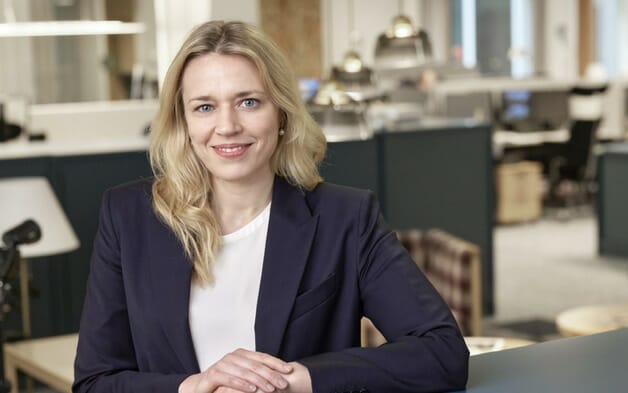
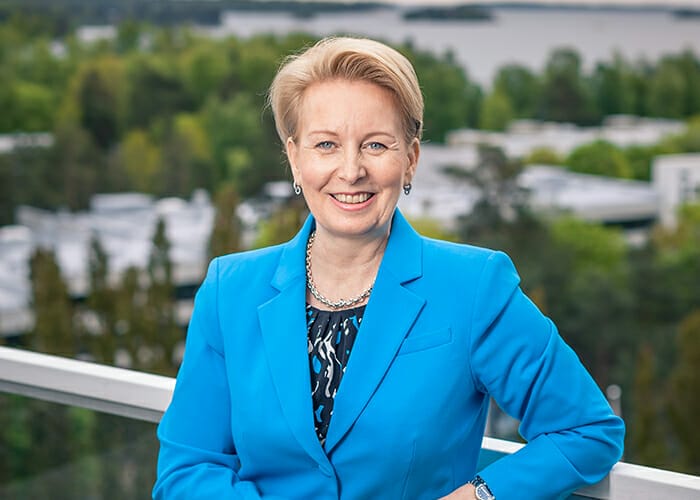
In an interview from the fund’s Espoo headquarters, Finland’s second largest city, chief investment officer, Hanna Hiidenpalo, who joined Elo from Tapiola Mutual Insurance Company where she was chief investment officer for more than 10 years, says 2016 promises similarly stable returns.

“We’ve been positively surprised by good performances in our emerging market investments, both in equity and fixed income. Some other parts of the fixed income portfolio have also performed very well, like high yield. On the other hand, this market environment seems to be difficult for hedge fund managers,” she says, attributing this to new capital flowing into hedge funds and the narrowing risk premiums.

Sponsored Content

Assets are split between a 43 per cent allocation to fixed income, including credit and cash and direct lending to corporates, a 31 per cent allocation to equities which includes private equity, 13 per cent to real estate – of which 10 per cent is in direct investments – and a 13 per cent allocation to hedge funds.

High Finnish exposure

Although the fund’s high exposure to the Finnish economy comes mostly from its direct real estate holdings, Finnish companies account for about one fifth of Elo’s equity portfolio.

It amounts to a significant exposure to the current challenges in Finland’s economy, the eurozone’s worst performing economy in the third quarter of 2015, but Hiidenpalo believes the affect is muted.

“Elo’s direct real estate portfolio is mainly invested in Finland and this domestic exposure accounts for most of the whole portfolio’s Finnish exposure. On the equity side we have Finnish companies in the portfolio, but almost all of them operate in the global markets. I don’t count these as a domestic exposure if a company’s turnover is generated mostly outside Finland,” she says.

Over the course of 2015 the fund increased its equity exposure to the US and emerging markets, while cutting its allocation to European equity.

It also increased the proportion of index investments and exchange traded funds (ETFs) which Hiidenpalo likes, and plans to increase further, because of the low costs, efficiency, entire market exposure and diversification the strategy brings.

Along with the allocation to Finnish equity, the portfolio is portioned to European stocks (37.4 per cent) the US (20 per cent) and emerging markets (17.8 per cent) with “other markets” accounting for the final 6.8 per cent.

From the beginning of 2017, Finnish pension insurance companies will be able to increase equity investments by about 5 per cent, due to changes in Finland’s solvency framework: Hiidenpalo won’t be drawn on whether that means a bigger equity allocation next year.

“Any possible increase will be related to the market view and return expectations on equities,” she says.

In-house models and big data

Building in-house management is an ongoing theme at the fund, where Hiidenpalo seeks to develop in-house models and use big data to enhance the cost effectiveness and transparency of the portfolio.

“In-house management will increase in the future. In-house costs are only a fraction of the total costs and so it makes sense to increase in-house capabilities and our own resources,” she says.

As well as moving more management in-house to cut costs, she is embedding a culture around the awareness of costs, particularly those related to investment processes that includes monitoring third party fees on funds and keeping a close eye on any “unnecessary trading.”

Almost all fixed income investments are managed in-house as well as forex, European equity and part of credit portfolio, as well as well as direct real estate. Indirect real estate and private equity is outsourced.

The portfolio is also becoming increasingly carbon aware.

Last year the fund measured its carbon footprint in direct equity investments, corporate bond investments and real estate.

It found the carbon intensity of its direct equity portfolio was already 15 per cent lower than the MSCI World Index. Strategy includes robust engagement with companies on their carbon profile, Hiidenpalo says.


Leave a Comment

AP4: Why a dynamic, shorter term allocation is paying off

AP4: Why a dynamic, shorter term allocation is paying off

Volatile markets have provided a rich hunting ground and opportunistic best ideas have come thick and fast for AP4’s new five-pronged global allocation made up of systematic equity, currency and rates, asset allocation, hedge funds/external mandates and analysis. Magdalena Högberg explains the risks and opportunities of the best ideas allocation.

Sort content by

Railpen reaps benefits of in-house team

Adding nearly two dozen staff and boosting its expertise in order to manage its property and equity assets has paid off in savings – and more importantly control – for the UK’s RPMI Railpen.

TCorp’s chair on change

Philip Chronican had 35 year career in Australian banking including as head of ANZ, and is now on the board of NAB. He talks about transformational change at the A$92 billion ($68 billion) TCorp.

Australia’s HESTA makes big changes

HESTA's CIO Sonya Sawtell-Rickson and Willis Towers Watson’s Roger Urwin are guiding a transformation at the fund, including adopting a total portfolio approach and planning an innovation lab.

TCorp pulls trigger on shake-up

The $70 billion NSW Treasury Corp has reorganised its investment staff to erase most sector divisions, in favour of more centralised portfolio construction and manager selection.

AIMCo makes private equity top priority

Canada's AIMCo is pushing innovation further, taking ownership stakes in energy groups and hedge funds, and going after private equity with renewed gusto.

Cbus moving raft of assets in-house

Australia’s $34 billion pension fund for the construction industry is moving nearly half of its asset management in-house, starting with active equity and infrastructure.

Previous