
Fast growing UK DC master trust Smart Pension prioritises tech, low costs

The UK’s Smart Pension already exceeds £5 billion and is one of the fastest growing defined contribution Master Trusts in the country. Launched in 2014 it serves more than 1.4 million members and more than 70,000 employers in the UK. It receives regular contribution inflows of £1 billion annually and anticipates doubling within three years.

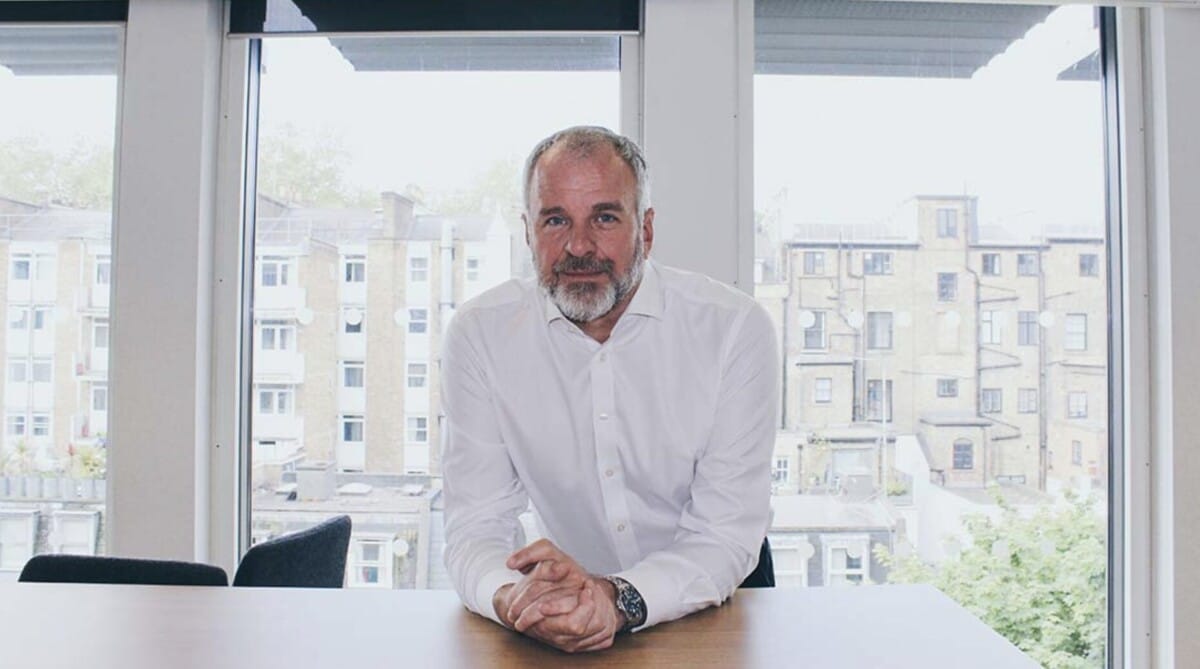
“Smart Pension was initially launched in response to the UK Government’s change to make it a legal requirement for UK businesses to set up and contribute into a workplace pension plan for their employees,” Paul Bucksey, chief investment officer of Smart Pension tells Top1000funds.com.

Alongside organic growth, Smart Pension has expanded through a string of strategic consolidations. In July 2023 it acquired Evolve Pensions, a leading provider of UK workplace pension services. This acquisition was the latest in a consolidation strategy which now includes nine former master trusts.

Bucksey predicts that consolidation in the UK DC landscape will continue, moving from around 1,800 single employer trusts and 35 master trusts today to just “hundreds” of single employer trusts and “about 15 master trusts” in the next five years. “The number of master trusts will reduce considerably, and the UK government and regulators are pushing towards that.”

“The workplace pension marketplace is changing fast, and master trusts are key drivers of that change. More and more employers in the UK are using these simple and effective retirement savings structures to reduce risk, lower costs, improve oversight and upgrade the investment options available to their employees. They offer significant potential benefits to both employers and members,” he continues.

Bucksey argues that winning market share depends on delivering better value for savers. Size and efficiency are important but a leap forward in technology is also essential. Much of the industry is still underpinned by clunky and expensive 20th century IT systems, amplifying risk and frustrating  opportunities to create value for employers and members, he argues.

Sponsored Content

“We offer a number of investment options our members can use if they wish to make their own investment decisions, but most use one of our managed strategies where we automatically move them as they get older into asset classes that are more aligned with how they may choose to access their pension savings. These changes begin to be made when a member is eight years from their selected retirement age.”

evolving Investment strategies

The Smart Sustainable Growth fund (used in the growth phase of the most popular managed strategy) has a typical bundled charge of 0.30 per annum.

“The asset allocation of the Smart Sustainable Growth fund is 80 per cent in equities, 10 per cent in fixed income and 10 per cent in private credit. When setting the asset allocation, we are looking to optimise returns for our members against volatility and cost,” Bucksey says.

He explains that within the equity bucket, Smart Pension has focused on reducing emissions and has also allocated to a biodiversity strategy. Similarly, the fixed income bucket is invested in green bonds.

“We are reviewing the asset allocation and may increase the allocation to equities slightly,” he says.

“Our technology allows us to keep our administration costs down which in turn allows us to spend proportionally more on investments than most of our competitors. In addition to integrating more expensive ESG components into our investments, we’ve also been investing 10 per cent of the Smart Sustainable Growth fund in a private credit strategy for almost three years now.”

Bucksey adds that investing in illiquid assets will improve returns for members and provide greater diversification going forward. “We are actively looking at private renewable infrastructure as well as private equity right now, and I would expect that we will be investing in these asset classes by the beginning of next year.”

“Having very strong recurring inflows enables us to invest in longer term and less liquid assets already. As our AUM gets closer to £10 billion, we expect to be able to invest on a direct basis which should provide us with additional opportunities that aren’t currently possible using pooled funds.”

Technoligical advancement

Bucksey argues that as the UK pensions industry faces transformative shifts due to the Mansion House reforms and the exploration of a ‘pot for life’ model, the imperative for technological advancement has never been more pronounced.

For pension providers, this means prioritising technological upgrades not just for compliance, but to effectively reduce administration costs and deliver higher quality investment solutions and an improved customer experience.

The winners and the consolidators will be those that embrace and invest in their underlying technology ahead of the inevitable changes that are coming, not only to avoid passing higher entry costs to members but also to help ensure the industry is equipped for the demands of a rapidly evolving financial landscape, where both efficiency and adaptability will be key to success.

“We’re uniquely positioned to deliver on this. Right now many of our industry’s best improvements are coming from digital solutions and master trusts,” he concludes.


Leave a Comment

Sampension: Why there are many reasons to be optimistic

Sampension: Why there are many reasons to be optimistic

Now is not the time to reduce risk, argues Henrik Olejasz Larsen, chief investment officer of Sampension, Denmark’s $50 billion pension fund for public and private sector employees. In an interview with Top1000funds.com, he says corporate profits have not deteriorated, and although the market has been tested from multiple directions, the underlying optimism driving equity is strong enough to overrule the negative impact of geopolitical risk.

Sort content by

Cashed-up CalSTRS positions for opportunities in volatile markets

CalSTRS has plenty of cash as it positions for opportunities emerging out of the current economic volatility. In the longer term, the fund’s asset allocation will continue to move away from global equities into private markets as the dust settles and makes way for more US opportunities.

Norway’s new small cap Nordic-focused SWF keeps capital at home

The Norwegian Parliament has approved $1.4 billion in seed funding for a specialist Nordic small-cap equity fund. It will be overseen by the domestic pension fund, Government Pension Fund Norway, whose CEO Kjetil Houg said its birth chimes with the trend of investors putting more capital to work at home.

Austria’s VBV strives to give young savers more risk exposure

Günther Schiendl, chair of Austria's VBV Pension Fund board explains how he's enabling younger savers to access more equity investment. However, despite long-held plans to develop the allocation to private equity, US tariff and trade policy has halted the strategy for now.

Maryland’s Andrew Palmer reflects on 40 years in investment industry

After a decade in the top investment job at the $69 billion Maryland State Retirement Fund, Andrew Palmer will retire at the end of June. He speaks to Amanda White about his achievements and reflections on an industry where he has worked for 40 years.

UK fixed income investor PIC ponders the long term risk of government debt

Rob Groves, CIO of the UK's Pension Insurance Corporation, describes a cautious, heavily regulated strategy focused on fixed income. PIC is on the look out for undervalued corporate credit opportunities appearing in the current market, but few opportunities have appeared yet.

Spain’s Pensions Caixa 30: A complex world requires systems leadership

Yolanda Blanch, chair of Spain’s largest corporate pension fund Pensions Caixa 30, explains the importance of fostering an atmosphere of collaboration, communication and trust in pension fund management.

Previous



