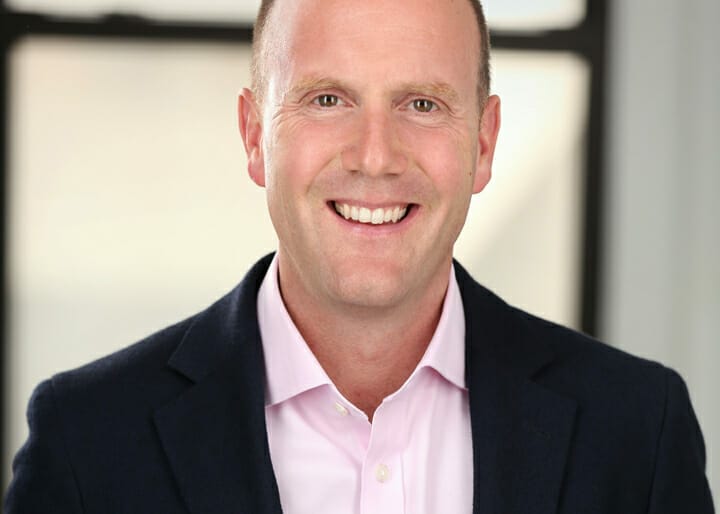

Church Commissioners prepares early

The holy grail in the £8 billion ($11.1 billion) Church Commissioners for England’s successful investment strategy is preparation for challenges during times of peace and calm. Making big decisions on asset allocation in the heat of market dislocations is not only painful, it’s also one of the main reasons investors fail to be contrarian. Pre-committing to strategies that kick in when markets hit specified levels is the answer.

It means completing all the discussions and governance steps with investment committees, consultants or advisers in advance, and mandating to managers well ahead of time.

This lies at the heart of Church Commissioners – the endowment that supports the work of the Church of England, including funding dioceses in low-income areas, maintaining crumbling cathedrals and paying clergy pensions. It has helped the fund exceed its targeted return of inflation + 5 per cent over five-, 10-, 20- and 30-year periods, despite excluding on ethical grounds sectors such as weaponry, thermal coal and human embryonic cloning. Commissioners returned 17.1 per cent during 2016. As for the latest year’s results, all chief investment officer Tom Joy would divulge ahead of the fund’s annual report, due out in mid-May, was that “2017 was a strong environment for risk assets, as was 2016”.

Joy has endeavoured to institutionalise the ability to both think ahead and diverge from the norm at the fund, despite the fact investors, like most people, are more comfortable acting in a group.

“It’s about looking at the behavioural hurdles that stop people being contrarian, and putting in place processes that circumvent them,” he says.

Joy has already prepared for any dislocation in credit and fixed income markets, as investors are now particularly prone to illiquidity during market volatility since regulatory changes led banks to scale back their participation as middlemen.

Sponsored Content

“Should there be a dislocation in the market, we are pre-committed to strategies that will draw our capital into high-yield bonds, emerging-market debt and other structured credit spaces,” Joy says. “We currently have very little allocated to this area, but we have a high degree of money that is pre-committed, and all of the necessary operational infrastructure is in place with managers.”

Although this is the only strategy to which he is currently pre-committed, he is considering doing the same in UK commercial real estate, where the fund also has a low weighting.


Cash stashed   

It’s a cautious strategy, mindful of a market correction, and it manifests in many ways throughout the diversified portfolio, which spans equity, multi-asset, credit, property, land and timber allocations. For example, Joy is increasingly incorporating hedging strategies, just not through traditional fixed income. Instead, the fund has a deliberately high 10 per cent allocation to cash.

“Myriad factors have led us to run a high cash position – valuations are high, investor complacency is high,” he lists, although he does think investors received a “useful and meaningful” reminder from the recent fall in markets that investment involves risk.

A high allocation to cash means the fund can easily meet distributions and won’t be forced to sell assets at depressed prices, Joy says. It also means he has dry powder in the event an opportunity emerges.

He adds: “When there is a recession or set back in markets, a traditional fixed income hedge normally means fixed income appreciates in price. It means investors can take profits and continue to meet distributions. But as we have just seen, there was a big wobble and bonds and equities went down when, obviously, cash didn’t.”

He has also allocated 8 per cent of the fund to defensive equities. This sits within the fund’s 40 per cent of assets under management (AUM) in equity, which Joy doesn’t plan to reduce at the moment, despite acknowledging that equity “isn’t cheap” and that in the US it is “overvalued”. The defensive allocation comprises long, short, and active long-only strategies invested with managers that have a global, demonstrative track record of outperforming in weak markets. The strategy is less volatile than the market.

“The aggregate of this portfolio has a beta of about 0.3, so that is materially lower than the market.”

‘Someone who eats their own cooking’

Joy continues to favour active management, despite the investment industry’s structural shift into passive.

“For many people, passive is the right answer. Identifying, selecting and implementing an active equity strategy is not simple,” he acknowledges. Doing it successfully depends on picking managers with specific characteristics in a process that weeds out 90 per cent of the market, he explains. The key consideration is alignment.

“You need someone who eats their own cooking,” he says. A focused product range is also important, so multiproduct firms don’t feature in Commissioners’ manager roster. In most cases, the only strategy the chosen asset manager tends to run is the one Commissioners has bought.

Joy also likes managers to have a “clear philosophy around capacity”, particularly in private markets. In short, he wants managers to be prepared to turn people away despite the ensuing loss of fees.

“Success leads to managers attracting more assets under management but the bigger the fund, the less chance a manager has of hitting the same level of returns in the future as they have in the past,” he says.

Another factor Joy considers crucial when choosing managers is the other investors in the fund. Active managers have long, protracted periods when they underperform, and he wants to know they will continue to manage the money in downturns, rather than hurtle around trying to save the business if investors start bailing out.

“You need to know that the other people you are investing with understand what they are buying, and this is commonly overlooked,” he explains. “We spend a lot of time looking at who the other [limited partners] are and let’s just say there are types of investors we are more comfortable being aligned with than others.”

The fund has manager relationships in its portfolio that stretch back over 10 years. Many are boutique firms, rather than household names, but Joy declines to name key managers or the number in the portfolio.

“It’s always the same pattern,” he says, reflecting on what Commissioners’ long-term approach tries to ensure against. “A manager will have a good track record, say, three years of material outperformance of the benchmark, and they get hired. At that moment, the chances of that continuing in the near term are quite low. So, what you find then is a long and protracted period of underperformance of the benchmark. The manager gets sacked and the merry-go-round starts again. If you look at those managers’ track records over the long term it could be great, but that doesn’t always benefit clients who may not be with them long enough.”

The investment division is run by an internal team of 35, eight of whom, plus Joy, are responsible for manager selection and monitoring. The property portfolio, which accounts for nearly a quarter of AUM spread across commercial, residential and agricultural property, is also run internally, as is the responsible investment division, which now houses a beefed-up engagement team, led by Adam Mathews. The Church of England Pensions Board set up the team in 2016. It lobbies investee companies, particularly on executive remuneration, climate change and board diversity.

The fund’s 4 per cent allocation to private equity is concentrated in the mid-market buyout space, where competition for the best managers isn’t as fierce. The strategy is focused on pushing more into venture capital. At the end of 2016, Joy hired a new head of venture to increase Commissioners’ ability to invest in tech in the US. That market is characterised by strong manager relationships and a bias amongst managers towards US clients, he says.

To overcome that, Commissioners must play to its strengths.

“Our name, pedigree and clear focus on the long-term help,” he says.

Leave a Comment

Sampension: Why there are many reasons to be optimistic

Sampension: Why there are many reasons to be optimistic

Now is not the time to reduce risk, argues Henrik Olejasz Larsen, chief investment officer of Sampension, Denmark’s $50 billion pension fund for public and private sector employees. In an interview with Top1000funds.com, he says corporate profits have not deteriorated, and although the market has been tested from multiple directions, the underlying optimism driving equities is strong enough to overrule the negative impact of geopolitical risk.

Sort content by

Alecta doubles down on governance, risk management and culture

Sweden’s largest pension fund, the $126 billion Alecta, has spent much of the last year continuing to work on improving governance, risk management, competence and culture in the wake of a $2 billion loss in 2023 attributable to investments in US regional banks, including Silicon Valley Bank, turning sour.

How the tech surge has hit active management at Denmark’s AP Pension

The active equity strategy of Denmark’s €23 billion AP Pension – which focuses on a narrow exposure to a small set of high conviction, quality companies - has been hit by the surge in tech stocks, none more so than Nvidia. Investment director Pernille Jessen explains the problem.

USS swings into surplus but flags re-think after Thames losses

USS says losses in Thames Water have led to deep reflection on how it will invest in regulated assets in the future, flagging the need for consistent regulation to support pension fund investment. As the fund celebrates its 50th year it records a surplus for the first time since 2008.

UK’s GMPF: Why institutional investors are pushing into the rental market

A chronic shortage of housing in the UK has resulted in long waiting lists for social housing and young people left priced out of ownership. The experience of the Greater Manchester Pension Fund, investing more in the sector, provides lessons for other investors in jurisdictions with a housing shortage.

GPIF finds gaps in manager engagement with Japanese corporates

The annual survey by Japan’s 245.98 trillion yen ($1.5 trillion) Government Pension Investment Fund, measuring asset manager engagement of listed companies, finds purposeful and constructive dialogue between investors and companies remains challenging. Lacklustre asset manager engagement with investee companies comes as GPIF seeks to widen its manager pool.

Thailand’s GPF – where sustainability is more important than returns

Thailand’s GPF is a regional leader in ESG integration. Top1000funds.com talks to Man Juttijudata, responsible for GPF’s active investment and outsourced investments about the challenges – like how to treat EV companies – and how uses fund managers for nuanced assessment.

Previous



