
Calif. fund seeks ‘safe’ returns

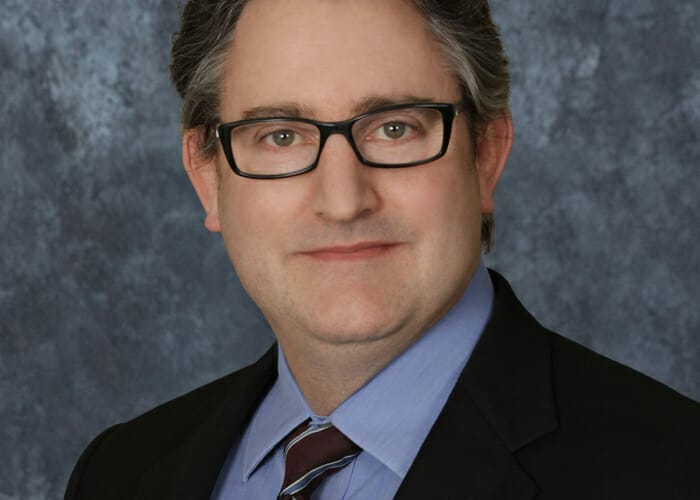
Donald Pierce, chief investment officer of the $9 billion San Bernardino County Employees’ Retirement Association (SBCERA), brings vision and a steady hand to investment strategy.

The portfolio he shapes is built around low equity exposure and diversification, with assets chosen according to their value, along with their contractual and income qualities. All SBCERA investments are viewed through these three lenses, in a blueprint that runs throughout the portfolio. This explains the chunky allocation to alternatives, the preference for debt instruments and the fund being “grouchy” about equity without dividends attached, Pierce says.

Value means buying assets at a significant discount to what they’re worth. A principle recently challenged in the California-based fund’s emerging-market debt portfolio by the sell-off in Brazil, which has tested the mettle of most credit investors.

“Brazil sold off, we bought in and it got worse,” says Pierce, a United States Air Force veteran who saw active service in the Gulf War fresh out of high school. “When you are interested in an area that has been beaten down, it doesn’t mean as soon as you enter it won’t get beaten down more. And the one time you avoid the first round, you can guarantee it will rally on you and you’ll get mad at yourself.”

The portfolio’s contract and income principles mean SBCERA favours assets containing contracts that at some point in time settle up or pay money back to investors.

“Benjamin Graham’s The Intelligent Investor talks about buying assets below intrinsic value, yet one of the things rarely talked about – which we take to heart – is that the market may never take you out of your position,” Pierce says, in reference to Graham’s 1949 book, which is a bible for value investors.

Sponsored Content

It means he hunts for assets that extract value through cash flows and don’t ultimately rely on market movements for a return. There is always a danger that the market won’t move. In that case, embedded contracts ensure payment of some kind, at some point, “if push comes to shove”.

These principles sit easily within alternative assets, where the fund has allocations to timber, infrastructure and private equity. Rather than focus on the individual assets, Pierce looks at their components.

“Is it equity or is it debt? Does it have leverage? When does the debt facility mature? Is there a significant amount of asset coverage? Each asset we have we would like to underwrite in some way,” he explains. “It is much more of an underwriting story than an alternative story. The income is the least volatile of those components. The price change is where the action is, but it is also where all the volatility is.”

Pierce, who succeeded his mentor, Tim Barrett, in 2010, has introduced new allocations to international private equity and emerging-market debt, as well as option strategies and a wide-ranging rebalancing program. Here, the portfolio’s allocation is adjusted every month, according to asset prices, within a fixed range.

“It doesn’t change that much; we are a low-turnover portfolio. However, the main criticism I have of any strategic asset allocation [when] folks don’t change it, is that they are saying the price of the asset they are purchasing doesn’t matter. If your asset allocation doesn’t change when the stock price and value have increased by 200 per cent ov

er the last seven or eight years, you are saying the price at which you buy assets isn’t [relevant] to your asset allocation and this doesn’t make sense.”

Cash pile

Accessing assets that combine value, income and contractual elements is a challenge in today’s climate. Couple that with some large sums coming back to the fund from maturing private-equity investments, and it means SBCERA sits on a cash pile amounting to almost 10 per cent of its assets.

“It definitely feels like a weight,” Pierce says. “We are finding it harder to deploy capital in a way that meets our cost of capital and this is reflective of the opportunities out in the marketplace. Spreads are tight, equity is rich, and while there are some isolated areas that are interesting, they are not areas you can lean into meaningfully. And, of course, as the market continues to rally, holding cash doesn’t look like a good idea.”

The cash pile has roughly doubled from its June 2016 proportion of 4.8 per cent. At that time, SBCERA had a quarter of its assets in the alternatives portfolio, with equity (33.6 per cent) fixed income and credit strategies (29.1 per cent) and real estate (6.7 per cent) forming the other allocations.

Managers and fees

SBCERA uses 50-60 managers, but “actively engages” with about 15 of them. The strongest relationships within this group are with managers that “truly understand” SBCERA’s investment philosophy. It is this select cohort that plays a key role in bringing new ideas to the fund.

“Our best managers come to us only with assets we like and have taken our investment approach to heart,” Pierce says. “That said, we do use managers that cause us to stretch away from these principles, test our predilections and bring real diversification. This is particularly related to growth equity, which doesn’t tend to fall into our philosophy of value, income or contractual.”

He likes managers that welcome investor input and are prepared to let him upsize various ideas and “add-on positions”.

“When managers that don’t always ask us for money do ask, it usually makes sense” he says. “When someone is always asking for money, then that is not the partnership we are looking for.”

He also runs a highly collaborative “standing table call-in” process where co-investment decisions involving managers include all investment staff on the call.

“All the co-investment decisions that come through involve the entire team, hands on deck.”

Investment management and performance fees in the alternatives portfolio came in at $47 million in 2016, out of a total investment managers’ bill for the year of $62 million.

Reducing fees is hard in buoyant markets, but Pierce cites examples of successfully securing better fees by working with managers on specific asset structures, such as risk-retention vehicles. He also argues that opportunities to invest with SBCERA are rare.

“It is hard to get into our portfolio, so when it opens up, it is important they agree to our terms.”

Strategy also includes the freedom to invest without constantly referring back to the board.

“We ask for a lot of permissions up front,” he says, although he is quick to nod to the board’s expertise.

“Have I ever had a brushback pitch?” he says, referring to when the board ditches an idea. “There isn’t a CIO out there who hasn’t had one of their ideas shown the exit. In some ways, this is better than if it gets in the portfolio, particularly if you [would have spent a lot of political capital defending something that] doesn’t work. At this point, either you kill it or the board will kill it. It’s a humbling business.”

Leave a Comment

Silver is the new gold: France’s UMR targets opportunities in ageing economy

Silver is the new gold: France’s UMR targets opportunities in ageing economy

French pension organisation UMR has launched a multi-asset thematic program that will target opportunities in Europe’s ageing economy. It’s part of a broader strategy to increase diversification in private markets where it sees secondary markets as an increasingly important tool.

Sort content by

NZ Super cuts benchmark return expectation on US valuation concerns

A view that the US stock market is overvalued and equity risk premia will be lower over the long term has driven New Zealand Super to lower the return expectations for its reference portfolio following its recent five-yearly review of the benchmark. Co-chief investment officer Brad Dunstan also flags underweight commodity exposure as an area to address and explains why the fund remains sceptical of illiquidity premia despite seeing a growing case for private markets.

Sampension: Why there are many reasons to be optimistic

Now is not the time to reduce risk, argues Henrik Olejasz Larsen, chief investment officer of Sampension, Denmark’s $50 billion pension fund for public and private sector employees. In an interview with Top1000funds.com, he says corporate profits have not deteriorated, and although the market has been tested from multiple directions, the underlying optimism driving equities is strong enough to overrule the negative impact of geopolitical risk.

France’s Banque des Territoires looks for data centre opportunities

France’s Banque des Territoires, a subsidiary of Caisse des Dépôts, the country’s €323 billion state-owned financial institution, plans to invest more in data centres in France. The push is in line with government policy to build out AI infrastructure off the back of the country's access to cheap, green, nuclear energy that uniquely positions France to provide power to the AI industry while maintaining net zero credentials.

Why NYC pensions CIO hasn’t drunk the ‘TPA Kool-Aid’

Three decades of investing have given Monte Tarbox sharp eyes for recognising risk and opportunities, and he’s putting it to use as the new permanent chief investment officer of the $306 billion NYC Bureau of Asset Management. In an interview with Top1000funds.com, Tarbox outlines his vision for the fund, why he’s bullish on infrastructure but “nervous” on PE, and why he hasn’t drunk the TPA “Kool-Aid”.

How CPP is evolving risk management for a faster, more interconnected world

In an environment where multiple risks are emerging and their effects are compounding on the portfolio, CPP Investments' chief risk officer Priti Singh says the $572 billion fund is rethinking risk management from the ground up, shifting from reaction to preparation and embedding risk thinking earlier in investment decisions. She speaks to Amanda White about the fund's risk approach.

URS bets on nuclear to power AI and lower emissions

Next-generation nuclear energy, and the money pouring into it, will truly change the world, according to CIO of Utah Retirement System John Skjervem. It’s a lonely position as the CIO of a public pension fund but one Utah is embracing as it builds out early-stage investments in nuclear energy as part of its alternative energy portfolio. He speaks to Sarah Rundell in an exclusive interview about how investing in transformational energy technologies can be part of prudent investment management.



