
Brunel keeps wary eye on markets and raises manager reporting duties

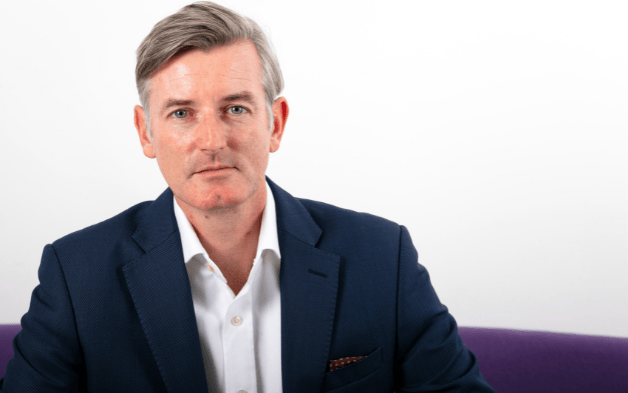
Brunel Pension Partnership chief investment officer David Vickers recently flagged the risk of today’s “Goldilocks” economic scenario not delivering for investors. Although recession risk is receding; markets have priced in three rate cuts in the US and the inflation dragon appears slain, the reality might be different.

Vickers, who joined  as CIO in 2021 to oversee around £40 billion in assets at one of the eight LGPS pools, warned that conflict in Ukraine and the Middle East, and weakening economic data pose substantial investor risks. He said equity is, on aggregate, more expensive and warned that investor compensation for investing in debt markets is low. “It is plausible we get a Goldilocks scenario, but [investor] disappointment if we don’t will be keenly felt.”

Brunel Pension Partnership goes into 2024 with a raft of ambitions but also facing challenges, states the asset manager’s recently published Annual Review. One of the biggest unknowns is UK government plans for the LGPS pools. Following a consultation on the future of the LGPS, policy makers laid out ambitions for pools to transition all assets by March 2025, a process some local authority pension funds like West Yorkshire, part of Northern LGPS, have been slow to complete.

The government also targets further consolidation, suggesting pools reach £200 billion by 2040. Brunel says it has appointed “a third party to enable us to consider options for consolidation.”

Pools also face government pressure to invest more in unlisted assets and venture. In its 2023 Autumn Statement the government said it will revise guidance that the LGPS double its allocation to private equity to 10 per cent.

Brunel has also stated new commitments to raise manager reporting duties. In its latest climate policy, which updates an original policy first published in 2020,  the investor promises to “turn the screws” on managers and its holdings via increased RI expectations, seeking to drive whole-economy change for the long term  and “not simply buff our portfolios.”

Sponsored Content

Brunel was one of the first out of the gates regarding pooling assets and integrating sustainability. In 2018 it was the first UK pool to sign up to TCFD reporting and the first to launch its own RI policy. One year later, it had transitioned 50 per cent of client assets. In 2021, it formally committed to net zero, co-launched new Paris-aligned benchmarks and had introduced a suite of 17 multi-client portfolios – adding a local impact portfolio in 2022. Last year it introduced a fourth cycle of private markets portfolios and began developing a new RI priority – biodiversity.

The investor will spend much of this year beginning to integrate nature risk having committed to adopt Taskforce on Nature-related Financial Disclosures (TNFD) reporting metrics that detail nature dependencies, impacts, risks and opportunities in the financial year 2025-6, one of 320 organisations from 46 countries that signed up as early adopters in Davos.

Brunel’s TNFD commitment builds on earlier biodiversity initiatives. Last year it conducted a pilot project with S&P Global to assess nature risk across its listed equity and fixed income portfolios. Working with S&P Global enabled Brunel to delve into complex themes, like identify companies whose assets overlap with existing protected areas and key biodiversity areas. “Less than a third of Europe’s biggest companies have set biodiversity targets,” it states.

In it’s latest review, Brunel reports that absolute performance was strong across all listed market categories, in a reversal of 2022. Within private markets, whilst performance data is lagged, the last audited NAVs show that portfolios performed well.

Active management struggled, specifically in global equity mandates, given the concentration of returns. Indeed, the global equity index looks likely to have beaten the vast majority of active managers. Brunel’s least constrained fund, global high alpha, kept pace.

Other 2023 milestones include successfully trialing AI internally and strengthening access to data by drawing a clearer line between data managers and data owners.

Leave a Comment

Finland’s Elo: Larger equity allocations promise new media scrutiny

Finland’s Elo: Larger equity allocations promise new media scrutiny

As Finland's pension funds prepare to increase their equity allocations to unprecedented levels compared to global peers, they must also navigate a new and unfamiliar risk. Elo's chief investment officer Jonna Ryhänen explains the fund's investment approach going forward and how it will manage stakeholder and media scrutiny as they react to swinging volatility and returns.

Sort content by

Alternative benchmarks attractive for Strathclyde

For many trustees, fundamental indexing is still too much of a leap to risk any serious asset allocation. But the £11 billion Glasgow-based Strathclyde Pension Fund, one of the largest UK local authority schemes, plans to invest in the strategy. The idea is to track an equity index that weights companies according to their economic

Modern portfolio theory drives Volkswagen Stiftung

The €2.3-billion ($3-billion) assets at the Volkswagen charitable foundation in Germany are powered by portfolio theory and diversification. The foundation is so keen on modern portfolio theory that its founder Harry Markowitz gets a mention in its annual report. Chief investment officer Dieter Lehmann says he is sure “that his correlation analysis isn’t correct at

Innovation brings results at Austria’s APK

Austria is a country with a strong tradition of innovation. That can be sensed through its nineteenth century industrial emergence to Gustav Klimt’s secessionist art movement in turn-of-the-twentieth-century Vienna and the Austrian school of economics that later spawned monetarist pioneer, Friedrich Hayek. The APK pension fund is these days adding to the list of those

Calming the waters of uncertainty at UK seafarers’ fund

The UK’s £3.3-billion ($5.6-billion) Merchant Navy Officers’ Pension Fund (MNOPF) is poised to offload the final portion of its defined-benefit liabilities in the old section of the scheme. The fund, which has provided pensions to the shipping industry since 1937, comprises a $3.2-billion new section and a $2-billion old section, closed since 1978 and with

Controlling strategy inhouse at UK coal scheme

Until a few years ago, every aspect of the investment strategy at the UK’s £20-billion ($32-billion) coal industry pension scheme was outsourced. The main inhouse task at the pension fund was benefit payment but now, in a fresh approach spearheaded by straight-talking 38-year old New Zealander, Stefan Dunatov, the new chief investment officer of the

Swiss powerhouse: the Sulzer pension fund

Sulzer is a Swiss manufacturer with a proud past. From pioneering the diesel engine to making the specialist pumps that drive power production around the world, it has been around for 178 years. Perhaps leveraging off such a rich history, the company’s pension scheme is very much looking into the future thanks to solid returns

Previous



