
Border to Coast hunts strategic partners as private markets set to surge

Border to Coast, the £120 billion ($161 billion) LGPS pool, wants to increase its strategic partnerships with asset managers to facilitate more investment in private markets since doubling in size after seven additional partner funds joined the pool earlier this year.

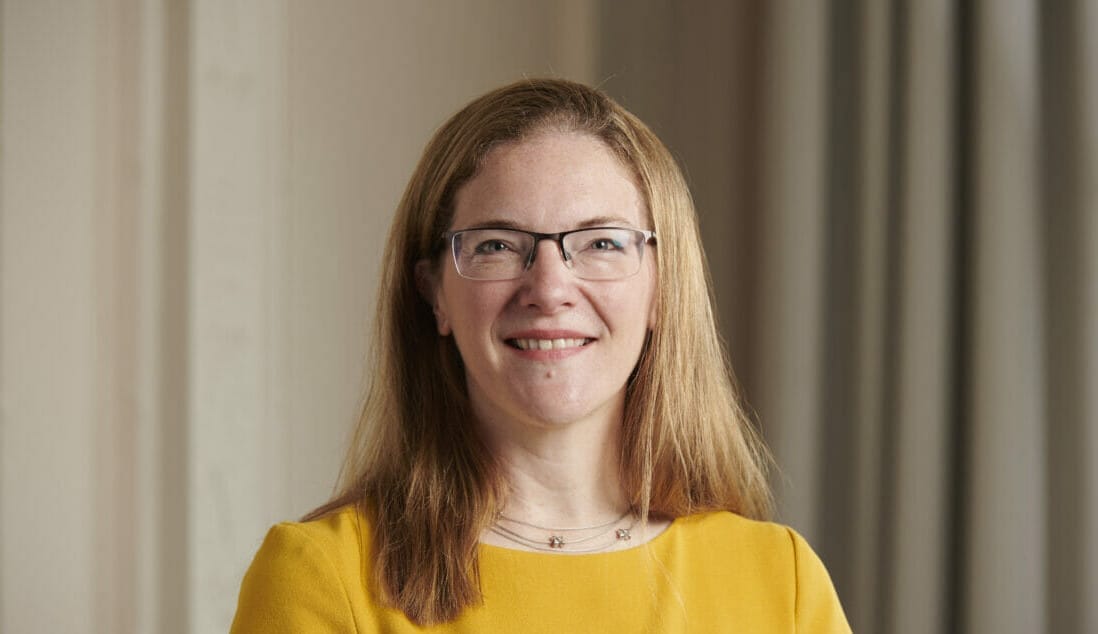
“I really like the idea of being able to blend our internal expertise with the specialist expertise and connections within the asset management industry. If you are a sophisticated, experienced client, you can get more out of the asset management industry, and working with them in strategic partnerships is a brilliant opportunity,” Rachel Elwell, chief executive of Border to Coast, tells Top1000funds.com.

It’s a strategy that mirrors other fast-growing UK pension funds. In 2025, Nest bought a stake in Australian infrastructure manager IFM to funnel more capital into private markets where it wants to invest 30 per cent of its £62 billion ($83 billion) AUM, forecast to reach £100 billion ($134 billion) by 2030. In the US, Jase Auby, chief investment officer of the Teacher Retirement System of Texas, TRS, recently described the fund’s asset manager relationships as “strategic alpha.”

Border to Coast, established in 2018, initially planned to build out its private markets capability last. But Elwell says because partner funds were keen to invest more in alternatives, that capability was brought forward. Today the pool has around £24 billion ($32 billion) in private markets, which will jump to £40 billion ($53 billion) in the next six months once both legacy assets and new partner fund assets are transitioned.

strategic dating

Elwell says the first step on the road to strategic partnerships began with sending a clear signal that the pool was in the market for long-term relationships. Signs like setting up an internal team able to make decisions quickly backed by robust and repeatable due diligence processes, and with the understanding, and network, to grasp the types of opportunities available for investors able to tie up capital for decades.

From this foundation, she says Border to Coast’s access to co-investment opportunities as a junior partner developed into more strategic partnerships that have included innovations like the climate opportunities fund, launched in 2022.

Sponsored Content

Now she seeks more co-investments with asset managers in more collaborative not just transactional relationships, as well as coalitions with other asset owners in the UK and globally.

“We are on a continuous journey. It never really ends because we’re constantly asking ourselves: Do we need more internal capability? Where should we go next? Should we deepen or fold that relationship? And where do we have a genuine advantage?”

One obvious area Border to Coast has an advantage is investing in the UK. In its home market, it can provide potential partners with connectivity to other asset owners as well as state-backed financial entities like the British Business Bank and National Wealth Fund.

“The voice we have with government and other policy makers gives us an advantage in the UK, and we are looking to partner with other asset owners and managers that might have similar advantages in their own countries.”

She also believes that investment in the UK showcases Border to Coast’s capacity to innovate. A UK Opportunities fund, launched in 2024, allows partner funds to invest locally for returns and additionality in private investments across green energy, local housing and SMEs with an increasing eye on areas like life sciences and defence tech. It’s an approach, she recalls, that was novel at the time.

“When we first went live with this, we said to our partner funds that we had to start somewhere because only then, like a flywheel, will the space attract more investment and will asset managers become engaged.”

Investing in a Just Transition is another example of innovation, she continues.

Elwell grew up in Yorkshire mining villages and witnessed first hand the impact on productivity when an industry closes down without anything to replace it. The team have done extensive work on embedding the Just Transition into the investment process which is also a good way of looking at issues systemically.

“We are going to be around for a long time and systemic risk is really important. We can help portfolio managers, and the wider industry, to think about investment returns in this context.”

cultural EDGE

The expansion of the organisation has highlighted the importance of culture at Border to Coast. Something she describes as a shared preparedness among staff to roll up their sleeves and deal with issues and make difficult decisions for the benefit of the partnership.

Despite partner funds’ differences which span different funding levels, cash flow requirements and risk appetites, and the fact that the organisation has grown so rapidly (in the last 12 months the headcount grew 19 per cent to 250), she believes the culture has held fast and grown.

“One way you can tell if a merger and acquisition has been successful is if there is still a difference between the two parties or if the new entity is part of the larger family working towards the same goal.”

Perhaps it is the sense of purpose that emanates from the top. Elwell is passionate about the LGPS’s role in local communities where it touches a large slice of the UK’s total population (one in three UK households have some connection with the LGPS) and final pensions for its mostly part-time, female workforce, are low at around £5,000 annually.

“This is the person we are representing and keeping the organisation and team, connected with that purpose is important,” she says.

Culture will play a key role in holding the ship steady as yet another government takes the helm in the UK, opening the door to the prospect of more tinkering with the pension system. In the last two years, policy changes have come thick and fast like Fit for Future to the cut in the number of pools to six from eight last year.

“We recognised a few years ago that it was likely some kind of consolidation was going to happen in the LGPS that brought both benefits, and the need to actively manage the risk,” she reflects.

How would more consolidation impact the LGPS?

“If you get too big, there is a risk you become a bit like a super tanker, and investment decisions can move the market. At £120 billion, we are still able to be innovative.” But she is ready for change when it inevitably comes.

“The way to think about political change is to realise it is part of the democratic process the LGPS is also accountable to,” she concludes.

Leave a Comment

New Jersey’s $85 billion fund stockpiles cash, eyes PE secondaries

New Jersey’s $85 billion fund stockpiles cash, eyes PE secondaries

An underweight position across private markets, predicated on a view that geopolitics and inflation mean interest rates are not coming down any time soon, has positioned the New Jersey Division of Investment with plenty of dry powder and a cash position four times the policy allocation. It is now readying for opportunities in private equity secondaries and with emerging managers. Chief investment officer Shoaib Khan spoke to Top1000funds.com.

Sort content by

CalPERS’ plan to generate alpha from climate investments

CalPERS’ sustainable investment strategy is predicated on a belief it can generate outperformance by investing in climate solutions – with $100 billion to be allocated by 2030. Peter Cashion, managing investment director for sustainable investments tells Amanda White why, and how, it looks for climate alpha opportunities.

Temasek says structural demand and geopolitical risk impacting China

Singapore's Temasek explains why it has a cautious approach to investment in China and highlights the growing size of its allocation to private markets.

How abundant inflows have put New Mexico’s SIC in a bind

New Mexico's oil fund is 10 per cent overweight cash and bonds relative to target in a reflection of the challenges CIO Vince Smith faces putting money to work. Equities are over valued and allocating to private markets takes time but volatility during the November election could be an opportunity.

AP funds face consolidation as report flags scale and efficiency wins

A long-awaited review into Sweden's buffer funds suggests consolidation between the three Stockholm funds – AP1, AP3 and AP4 – stating that the advantages in terms of efficiency and scale outweigh the disadvantages of continued separation.

How liability-aware investment took off at Seattle SCERS

Seattle City's chief investment officer Jason Malinowski explains why he has embraced liability aware investment, why hedge funds and commodities are out, and why cash - not a risk-free asset for a long-term investor – is kept to a minimum.

AIMCo talks total portfolio approach, private credit, and risk

As AIMCo prepares to beef up its private credit team in New York, CIO Marlene Puffer explains how she plans to scale the allocation, as well as describing a new total portfolio approach to private markets, and the investor's new approach to risk management.

Previous



