
Alecta doubles down on governance, risk management and culture

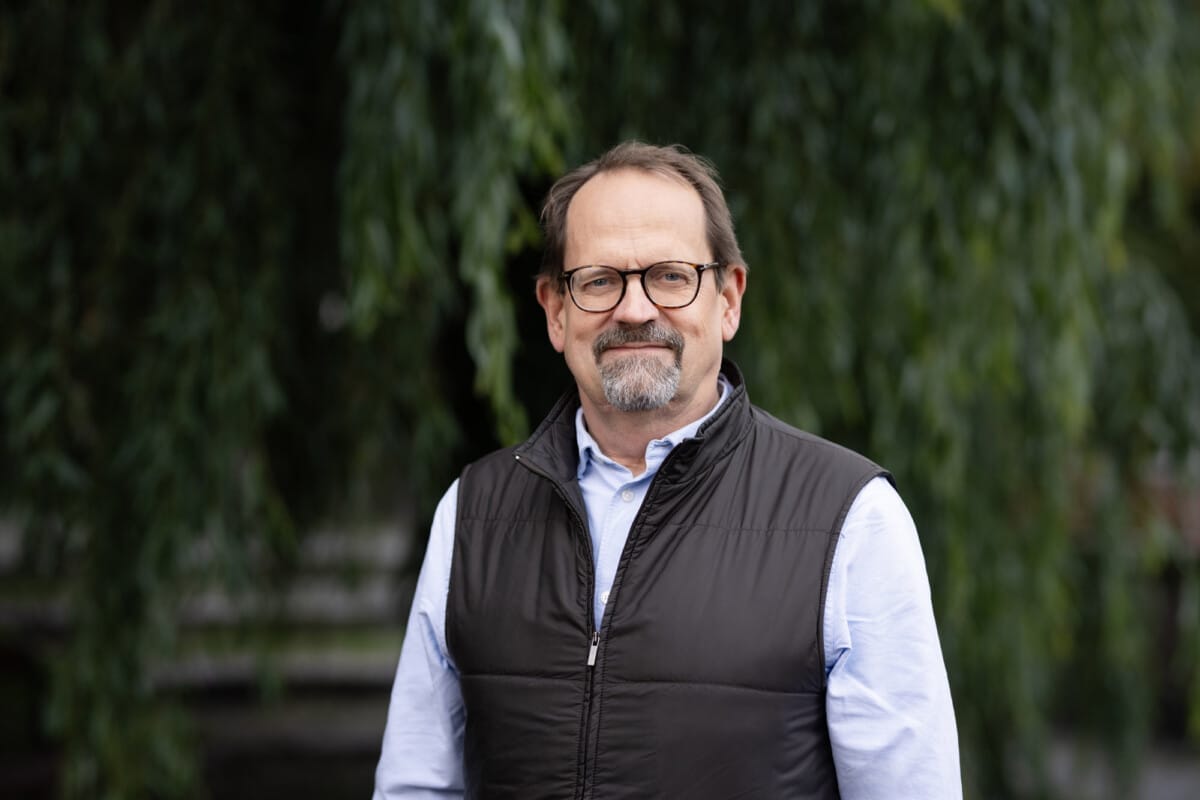
Peder Hasslev, Aletca, pressbild

Sweden’s largest pension fund, Alecta, has spent much of the last year continuing to work on improving governance, risk management, competence and culture in the wake of a $2 billion loss in 2023 attributable to investments in US regional banks, including Silicon Valley Bank, turning sour.

Alecta, Sweden’s biggest pension fund with 1.31 trillion Swedish kronor ($126 billion) of assets under management, has spent much of the last year continuing to work on improving governance, risk management, competence and culture.

It’s been essential, says chief executive Peder Hasslev, to rebuild damaged trust in the wake of the investor losing $2 billion in 2023 when its investment in US regional banks Silicon Valley Bank (SVB), Signature Bank and First Republic Bank turned sour. The fund also experienced losses from its investments in Scandinavian real estate company Heimstaden Bostad.

“We have worked intensively on developing and implementing improvement measures to strengthen Alecta,” said Hasslev who has been in the top job since September 1.

Alecta began investing in SVB in June 2019 and made its last investment in November 2022. The pension fund was the fourth largest shareholder in SVB.

In the immediate aftermath of the losses, Alecta fired its chief executive Magnus Billing and head of equities Liselott Ledin. This year it has continued to tighten governance following an April 2024 board meeting when four new board members were elected of which three are independent from the social partners. Alecta is a mutual fund, owned by the Confederation of Swedish Enterprise, Unionen, PTK, Sveriges Ingenjörer and Ledarna.

Sponsored Content

Alecta has also struggled to fill the position of chair on its board following the resignation of Ingrid Bonde in October 2023.

In January 2024, the committee proposed Lars Rohde but withdrew this due to a conflict of interest. Next up was Carina Åkerström, former CEO of Handelsbanken, but she resigned after just 11 days. Currently, Jan-Olof Jacke is chair of the board.

The Swedish Financial Supervisory Authority (FSA) opened an investigation into the bank losses in May 2023. A remit it then expanded to include the fund’s investments in indebted real estate company, Heimstaden Boden in which Alecta lost SEK 12.7 billion.

Preliminary findings of the FSA investigation released in July found that the company violated regulations. The FSA said it has notified Alecta of its observations from its investigations and the pension fund has been given until the 6 September to respond to the FSA.

“The fund has assisted the Financial Supervisory Authority with material and answers to ensure that the investigations can be carried out as thoroughly and efficiently as possible. At the end of June, we received an opinion letter with the Financial Supervisory Authority’s preliminary assessments. We are now working on going through it and formulating our response, in accordance with the usual process,” said Hasslev.

The pension fund returned 7.7 per cent in the first half of 2024 with the strongest performance from equities which returned 12.9 per cent in the period. Volatility in interest rates  and rising long-term interest rates in Europe and the USA had a negative effected alternative investments.

However, the fund said that the prospect of lower short-term interest rates in the future has improved the outlook for real estate.

The value of Alecta’s holdings in Heimstaden Bostad rose by 3.9 percent during the period and now amounts to SEK 39.2 billion.

Alecta’s operating costs for the interim period amounted to SEK 586 million, higher than the target of SEK 576 million. The higher outcome is mainly attributable to one-off costs related to the extraordinary events in 2023.

Leave a Comment

The Austin advantage: Texas Teachers talks optimism, innovation and growth

The Austin advantage: Texas Teachers talks optimism, innovation and growth

Jase Auby, TRS's celebrated CIO, explains why TPA doesn't fit with its culture; why community push back on data centres could turn out to be an investor advantage, and argues the case for continuing to invest in fossil fuels. Top1000funds.com sat down with the CIO in his Austin office for an all-encompassing conversation.

Sort content by

Illiquid medicine brings rude health to the Wellcome Trust

Sir Henry Wellcome, the early twentieth century pharmaceuticals magnate (pictured below), would be pleased with how well the London-based charitable foundation that bears his name has weathered the global downturn. The Wellcome Trust (WT), which supports medical research in Britain and around the world, reported a total return of 12 per cent for the year

Sustainability sets solid base at Germany’s MetallRente

Germany’s MetallRente has made quick progress since its foundation by trade unions in 2001. It has grown into Germany’s biggest multi-employer pension provider, boasting €3 billion ($3.87 billion) in assets, and counts a mammoth 21,000 companies as customers, from within the metal industry it was set up to serve and beyond. In the past two

Alternative benchmarks attractive for Strathclyde

For many trustees, fundamental indexing is still too much of a leap to risk any serious asset allocation. But the £11 billion Glasgow-based Strathclyde Pension Fund, one of the largest UK local authority schemes, plans to invest in the strategy. The idea is to track an equity index that weights companies according to their economic

Modern portfolio theory drives Volkswagen Stiftung

The €2.3-billion ($3-billion) assets at the Volkswagen charitable foundation in Germany are powered by portfolio theory and diversification. The foundation is so keen on modern portfolio theory that its founder Harry Markowitz gets a mention in its annual report. Chief investment officer Dieter Lehmann says he is sure “that his correlation analysis isn’t correct at

Innovation brings results at Austria’s APK

Austria is a country with a strong tradition of innovation. That can be sensed through its nineteenth century industrial emergence to Gustav Klimt’s secessionist art movement in turn-of-the-twentieth-century Vienna and the Austrian school of economics that later spawned monetarist pioneer, Friedrich Hayek. The APK pension fund is these days adding to the list of those

Calming the waters of uncertainty at UK seafarers’ fund

The UK’s £3.3-billion ($5.6-billion) Merchant Navy Officers’ Pension Fund (MNOPF) is poised to offload the final portion of its defined-benefit liabilities in the old section of the scheme. The fund, which has provided pensions to the shipping industry since 1937, comprises a $3.2-billion new section and a $2-billion old section, closed since 1978 and with

Previous



