
Credit market flashes warning sign for software investors: SVP

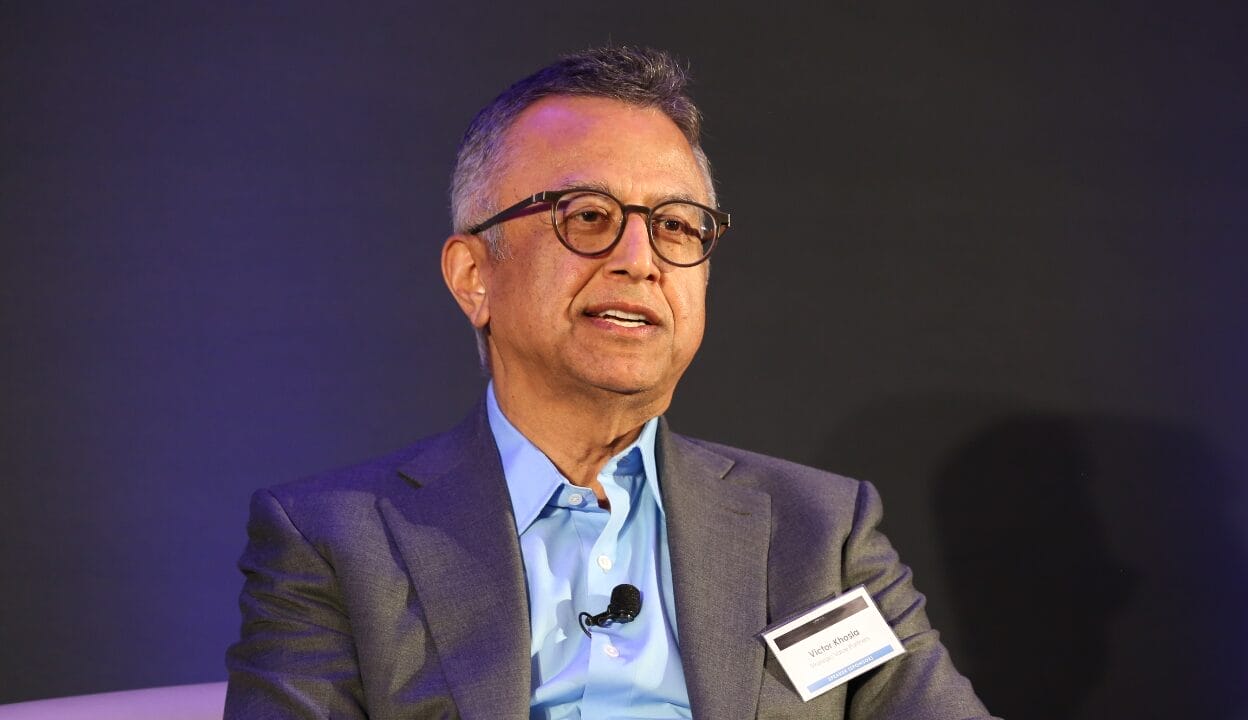
Victor Khosla. Photo: Jack Smith

The credit market is seeing elevated default rates that could climb over the next few years, spelling trouble for software investors, according to Victor Khosla of Strategic Value Partners.

Khosla, who is founder and chief investment officer of the $22 billion opportunistic credit manager, said stress in the software industry had been brewing between 2024 and 2025 before the SaaSpocalypse brought it to mainstream attention this year.

“There were a couple of software businesses which went broke [then], and when these businesses go broke, they don’t just decline 10 or 15 per cent. The business model is going out of existence. They go off a cliff,” Khosla told the Fiduciary Investors Symposium at Harvard University.

“We’ve got zero investments in software today.”

In public markets, 20 per cent of senior software debt is trading at 80 cents on the dollar, which is entering into distressed debt territory, Khosla said.

“Our view [is that] significant parts of software are going to get really dramatically impaired,” he said.

Sponsored Content

“If 20 per cent is a good number for what percentage of portfolios get distressed, I think it’s the markets telling you that we think it’s going to get worse, not better, from here. It’s a little bit like a hiss, not a pop.

“For us, we’re just not that brave to be piling into it today and say, ‘we figured out the business models – which are distressed but which are going to work’.”

Khosla is also spotting worrying signs in private credit, including the redemption requests queuing up at open-ended funds. An index of the largest and most liquid US-listed business development companies shows average price-to-NAV currently sitting at around 0.84x compared to 1.08x in Q1 2025.

“Those redemption queues aren’t going away for the next three or four or five quarters. So the private credit world is telling you that we’ve got problems. It’s not reflected in the valuations yet quite so much, but just [in] the line forming up in private credit,” Khosla said.

 Khosla said that performance in the asset classes is unlikely to completely collapse but that allocators are likely to see lower returns.

“Instead of making 10 per cent like you have historically, I would say going forward, those portfolios you’ll end up with more something like 4, 5, or 6 per cent,” he said.

“The credit portfolio in the ground, the ones with the 25 per cent exposure to software, the ones which were done pre the rise in interest rates. You know, I think one should have a natural concern about them, but it’s not existential,” though adding that the market stress means it could be a good time to add to opportunistic allocation. 

Khosla observed that some of its largest competitors from a decade ago have mostly become primarily direct lenders now, whereas SVP stayed close to “grungy” businesses in manufacturing, industrials, building materials, real estate and power plants.

“Every one of them zigged, they became more direct lenders… we were the only firm which zagged,” he said.

“They are not shiny new growth toys like AI, but this world has lots and lots of problems. There are some really extraordinary assets, and even as we are focused on this, we find competition in our world has actually gotten less.”

Leave a Comment

Impact investing’s case for scale

Impact investing’s case for scale

Impact investing has come a long way in the past two decades, going from a niche strategy to a $1.5 trillion industry, but there are still challenges for it to reach institutional scale due to the lack of products and insufficient evidence of outperformance in some parts of the market.

Sort content by

Macquarie: Deglobalisation the next inflection point in real assets

Global governments are partnering with private investors to boost their domestic infrastructure and become more self-sufficient in a geopolitically fragmented world, according to Ben Way, global head of Macquarie Asset Management, who said that constrained public balance sheets are increasingly reliant on private capital to meet their infrastructure needs.

Investors put private equity performance under the microscope

Investors are seeking better performance attribution in private markets to better understand underlying return drivers – especially in private equity, where metrics such as IRR or multiples are increasingly criticised for being opaque. HarbourVest made the case for an alternative attribution method at FIS Harvard.

The ‘space economy’ is a legal and literal vacuum for investors

The looming SpaceX IPO has put the spotlight firmly on the so-called ‘space economy’, but asset owners have been urged to exercise caution about investing in a sector that still resembles the wild west, with no legal or governance framework to protect capital. That’s not to say money will not be made, but it might not be in the areas investors first expect.

Photo gallery: Fiduciary Investors Symposium 2026 at Harvard University

mrec4inarticleinline Sponsored Content scnative1 scnative2 scnative3

The twin forces rewriting the rules of investing

Portfolios built for the old world will be severely tested as emerging forces rewrite the rules of investing. The Fiduciary Investors Symposium heard that geopolitical and macroeconomic upheaval, together with the disruption wrought by AI, should force asset owners to rethink the structure and composition of portfolios.

CPP outlines risk playbook for a new world order

The $570 billion CPP Investments is strengthening efforts around scenario analysis as volatile fiscal, geopolitical and economic risk factors plunge the macro environment into a state of flux, with the fund naming four scenarios for the future world order within its risk management framework.



