What would be the implications of a large number of global asset owners attempting to become 100% sustainable by 2030?

This is an important question and opportunity emerging out of the work we did over the past year as members of the New York State Common Decarbonization Advisory Panel whose recommendations were just released this week in a 38-page report.

Appointed roughly a year ago by Governor Andrew Cuomo and State Comptroller Thomas DiNapoli, this panel consisted of myself, Alicia Seiger of Stanford, George Serafeim of Harvard, Tim Smith of Walden Asset Management, former SEC commissioner Bevis Longstreth and chairperson Joy Williams from Canada, now with Mantle314.  The panel met a number of times and participated in a variety of conference calls including with leading practitioners from large financial institutions who shared their latest work on sustainable investing, a field where new strategies constantly emerge.

The panel came into being out of goal setting statements made a little over a year ago as we focused on the question of divestment from fossil fuel production, especially as was being put forward by New York City Mayor Bill de Blasio and City Comptroller Scott Stringer, alongside supportive statements from Governor Cuomo on divestment which continue to emerge while the Comptroller was and remains an advocate for shareholder engagement.

Regardless of the New York City statement on divestment as a goal, among the five separate pension funds within the City system, two of those funds, those for retired police and firemen immediately rejected divestment as an option, but the largest two of the five funds remain in play. Further, the New York State Common Retirement Fund was and remains a global leader on shareholder engagement, as the recommendations report linked above and its accompanying notes provide in specific detail.

With the challenge at hand of unifying different perspectives, and after significant deliberation, a number of important dynamics emerged.  Most significantly, what allowed unanimous agreement among the panelists to emerge surrounding these final recommendations was a collaborative desire to find and establish common ground.

The panelists in some cases came to this table with different priorities. Tim Smith is an engagement advocate, perhaps the most vociferous of all.  Bevis Longstreth has been outspoken on his calls for divestment, yet all of us tried to see if we could come to a consensus.  In this age of dozens of US presidential candidates as we head towards 2020, and a lack of coalescing around a specific Brexit plan, it was heartening to be part of an attempt to reach consensus, especially as it actually started to work.

We also operated under the assumption that what we came up with had to fit neatly within the remit of Comptroller DiNapoli being in effect the sole fiduciary for the over one million retired employees of the State of New York and the roughly $210 billion being managed on their behalf, making fiduciary responsibility a first and overarching priority for the recommendations and for which it remains.

In this regard it became clear that, as we looked forward even a little bit, that the fiduciary responsibility of the fund was to consider what is coming from a climate change perspective, and make fully sure that it was prepared on two fronts, those being related to a) physical risks, and b) transition risks.

“The number one recommendation we arrived at for the fund was for it to seek to become 100 per cent sustainable by 2030, with an accompanying definition of what that means specifically.”

The climate science is clear and 100 per cent agreed – any sceptical views have been fully debunked and the best climate modeling keeps being found to have been very accurate in retrospect, and these models are only getting better with time.  However, it is less clear what any specific asset owner can and should do about this, and so we set out to establish a framework for what that starts to look like (and please do read the full set of recommendations for all the specific steps that are outlined in full that resulted from our analysis and work).

The number one recommendation we arrived at for the fund was for it to seek to become 100 per cent sustainable by 2030, with an accompanying definition of what that means specifically. We recognise this is a significant ask, but it will be vital to achieve in order to best protect the financial interests of beneficiaries.

Also, through my initial suggestion the concept of minimum standards emerged as a way of baking divestment into the investment process.

We mostly take for granted that there are food or product safety minimum standard requirements that go into what we eat or consume, yet for whatever reason we don’t have minimum standards on what we invest in.

Surely it makes sense to have minimum standards on what we own as well, so that when both engagement and the business case are seen to have failed, large asset owners and others so minded aren’t left stuck holding onto losers to the detriment of beneficiaries.

There is a history of this sort of risk of passive being missed, including by NYSCRF, most recently in the early 2010s when they were a large holder of Peabody Energy, which traded at $70 a share before proceeding to go bankrupt without a mechanism for protecting shareholder value up until it fell out of the S&P500.  Surely there’s a better way, and the work of Norges Bank is a clear example of this sort of application of minimum standards in practice today that all asset owners can take from.

Minimum standards then become an opportunity to bake divestment into any investment process, while satisfying both engagement focused asset owners, as well as those who focus on divestment and it is exciting to see this emerge in the public discourse through these recommendations.

In addition, our recommendations as a panel called for a specific climate-focused program and resources for such an effort.  In general, we find asset owners are resource challenged in general and especially on sustainability initiatives, but this needs to change or the best people involved may not be necessarily incentivised to stay.  It is one thing to build a solid plan that protects and enhances shareholder value surrounding issues of climate and sustainability, and another to execute that plan well.  Education and proper incentives are therefore also important to establish across all of NYSCRF, so that the urgency of implementing our recommendations are understood.

We also make clear in the recommendations that what have become somewhat understandable tendencies towards passive approaches being taken by asset owners to public equity allocations now need to be questioned, especially perhaps given future concerns on issues of transition risk, whether it’s due to the rise of electric cars, or utilities going bankrupt, or due to various potential forms of future stranded assets or the implementation of future policies.

Overall, the recommendations speak for themselves and for the panelists as a group, so please do read them, think about them, and most of all adapt and adopt them.  It has been an honor to serve the Comptroller and his team; they have a lot of work to do, and so do we all.


Cary Krosinsky was a member of the New York State Common Decarbonization Advisory Panel, set up to advise the Comptroller, as trustee of the $209.1 billion New York State Common Retirement Fund, on how best to mitigate investment risks stemming from climate change and maximise opportunities from the new, low-carbon economy.
Investors spend too much time enquiring into investing in China, when they should be assessing Chinese investments, says Mark Walker, chief investment officer of Coal Pension Trustees which will invest in onshore Chinese equities for the first time.

Speaking on a panel at the Fiduciary Investors Symposium, chaired by Bill Maldonado,regional CIO for Asia, and global CIO for equities at HSBC, Walker said while that might sound like the same thing there was a difference.

“When I look at some of the questions from the investment sub-committees and trustees we spent a lot of time talking about investing in China as opposed to making China investments. Questions tend to come about investing in China the country, questions such as can we get our money back, what if policy changes, how do we deal with a top level political and economic environment opposed to freer markets? But when we buy equities we are buying Chinese companies, and that is an awfully good opportunity set.”

Coal Trustees is already a “big investor in China” according to Walker, with about 10 per cent of the private equity portfolio is in Chinese funds, and roughly the same proportion in in the public equities portfolio allocated to China.

“If we think we are a long-term investor and that returns are driven by economic growth then it is difficult to ignore China as a big part of your future investment opportunities,” he says.

The fund is about to invest in onshore investments for the first time which will broadly increase the allocation to China by 1 to 2 per cent, with the fund spending a lot of time in the past six months looking for investment managers in A shares.

“When my team recommended that a third of onshore equities goes into a systematic manager, which is all based on information flows and signals, it led to questions about the accuracy of information. It’s different but not that different to other markets opening up. Information increases over time.”

Hua Fan, who is director and chief strategist of the China Wealth Management 50 Forum and former head of asset allocation at CIC says a good source of data “truth” is Chinese asset managers because they are putting money to work and “have to tell the truth to authorities”.

“They have better knowledge of what is going on locally and are my channel to get the information on what’s happening locally .”

Fan said from an asset allocation point of view including Chinese assets expands the opportunity set and removes constraints, ultimately driving better results.

“Chinese assets have low correlation and also offer pretty decent expectations compared to the rest of the world’s assets, and they are less expensive than other assets,” she said. “People worry about the volatility of Chinese assets. We often joke we have the worst beta in the world but the best alpha.”

Fan said she had looked at studies of active management in China, including Morningstar figures, and found that Western managers managing China markets out of Europe alpha is 2.2 per cent, for local Chinese managers the alpha is more like 8 per cent per year. She said one of the few long-term investors in China, the National Social Security Fund, had a 10 year outperformance of 15 per cent per year.

“There is alpha there but you have to move early,” she said.

Also on the panel, Remy Briand, chair of the index policy committee at MSCI, said there had been a lot of improvements made in the Chinese equity market since its inclusion in the index.

Briand, who has been involved in market classification and re-classification for 15 years, saidIf those improvements continued it could be a possibility that assume that China could get to 100 per cent inclusion.

“The numbers for that are quite staggering, in equities China would represent 45 per cent of emerging markets and with the potential new IPOs and changes in evaluations China could be 10 or 15 per cent of the entire universe. this is something that I think most market participants have not internalised, and they think China is very small. But the market is huge – as big and deep as the US market,” he said. “The proposition of the economy represented in the stock exchange is very low compared to other countries, so there are a lot of additional companies that could get into the market,” he added.

“The future to a large extent is dependent on how quickly the Chinese authorities want to continue the opening.”

Strategic tilting has added 1.1 per cent, or NZ$3 billion, to the New Zealand Super Fund’s reference portfolio over the past 10 years, David Iverson, head of asset allocation at the NZ$41 billion fund told delegates at the Fiduciary Investors Symposium at Cambridge University.

In the 10 years to February 2019, the New Zealand reference portfolio returned 12.6 per cent and the tilting program has added a further 1.1 per cent on top of that. This is way above the expected return from the program which was set at around 40 basis points.

The tilting program is the fund’s largest active return strategy, and by design the largest portion of active risk.

It constitutes around 30 instruments and markets including the recently added commodities and critically is a contrarian strategy so relies on strong governance.

“That’s the critical thing,” Iverson said. “About 80 per cent of this program is good governance and 20 per cent the investment management. The ability to be able to say you can hold something that will lose is very difficult. We all want the risk but not the pain that goes with it.”

The tilting program “has all the time varying expected returns in it” compared to the reference portfolio of 80 per cent equities, 20 per cent bonds which is built on a premise of a 30-year return forecast horizon.

“We link all our strategies back to our beliefs and how markets work and the comparative advantages we have, and this is one of those, it’s a contrarian strategy. We are very transparent in the way we build our dynamic asset allocation framework, it’s very systematic. If markets fall we’ll buy and if they fall further we’ll buy some more. Our governance structure is such that there has to be a reason why we don’t buy more, rather than the other way around.”

The program is fully internalised, partly due to cost but mostly because of alignment, particularly around the time horizon.

“We have a much longer horizon in which we expect this to pay off and manager’s time horizons are not set up for that. We wanted to calibrate this on the basis we could suffer a five-year loss. We think we have the ability to hold the loss for a longer period of time,” he said.

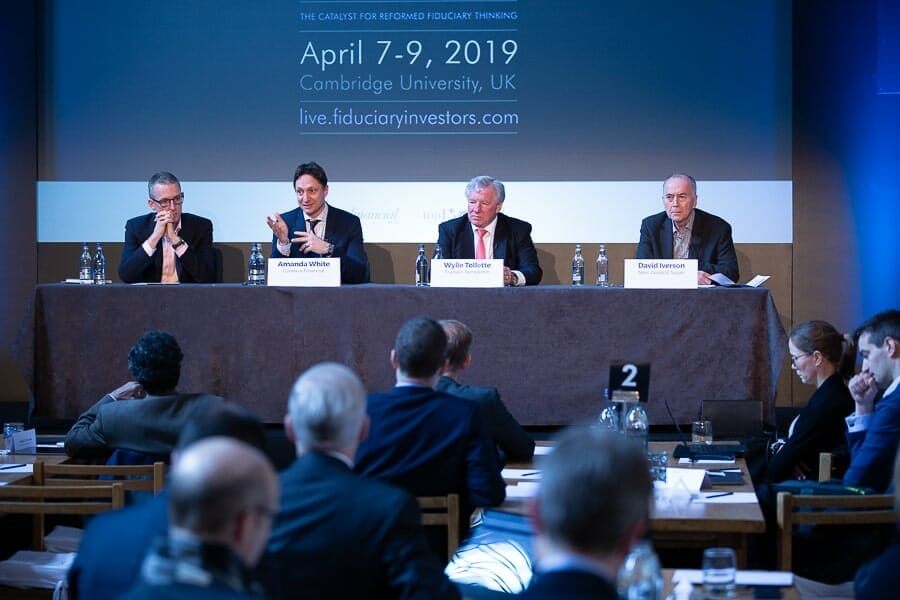
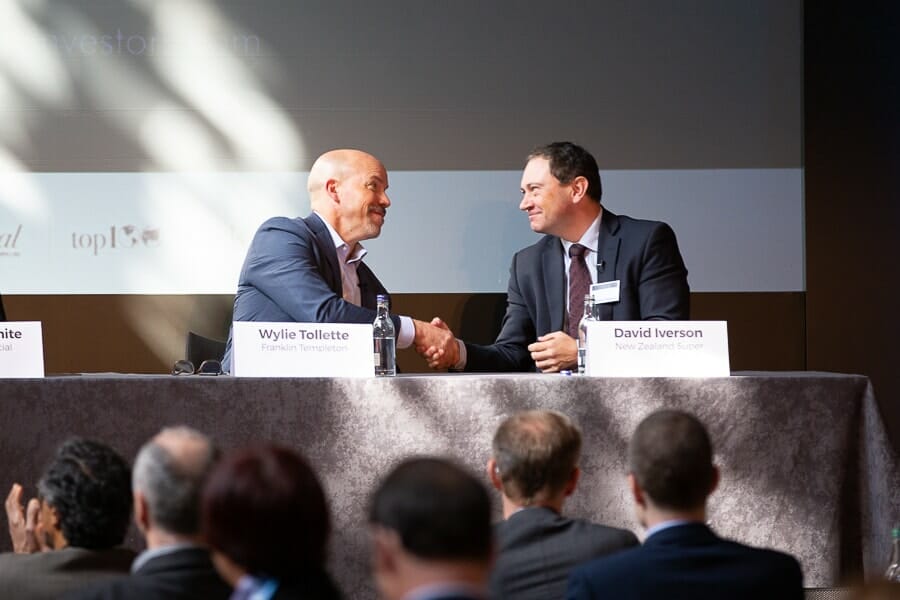
Iverson was speaking at the event in a panel conversation on asset allocation with Wylie Tollette, executive vice-president, client portfolio solutions at Franklin Templeton Investments who said that while dynamic asset allocation can add value it is risky.

“If markets are increasingly micro efficient cross sectionally but macro efficient, in that they can stay under or over valued for a long time, there are ways of taking advantage of that and that is dynamic asset allocation. You can add value that way but it is a risky,” he said.

Tollete, who was formerly chief operating investment officer at CalPERS, recently co-authored a paper in the Journal of Portfolio Management with Eugene Podkaminer and Laurence Siegel called “Preparing a multi-asset class portfolio for shocks to economic growth”. In the paper the authors examine the impact of shocks to economic growth and the implication for asset allocation. They advise investors to “take less risk than you think you need to meet your return objectives”.

Speaking at Cambridge, Tollette said that with large allocations to equities, investors were now very tied to economic growth.

“Hitching our wagon to economic growth subjects them to some dramatic shocks,” he said, referencing the paper which looks at how to deal with those shocks.

“The first way to do that which most of the people in this room would have already done, is to broaden your asset spectrum to include forestland, infrastructure, real estate put it in there, and see it consistently drives your efficient frontier up and to the left. You need to be very careful about anything that narrows your investment universe,” he said.

He said that strategic asset allocation is the number one decision and driver of performance between one investor and the next and agreed that in the medium term it is possible to exploit macro inefficiencies if the right governance structure is in place.

“If you the have the right team internally you can leverage tactical asset allocation,” he said.

This is supported by the fact that the “periodic table of annual returns” shows that the asset class with the best one-year return changes every year. In 2018 it was US fixed income, in 2017 emerging market equity, in 2016 infrastructure, in 2015 US real estate and so on.

“There are very few patterns in that, it doesn’t look like an efficient market. An efficient market wouldn’t have that degree of variability. It’s due to the economic shocks, and if an investor can either lean into or away from those assets you can add value to a portfolio.”

Risk management in these programs is critical, and understanding and measuring the performance, and communicating it back to the governance structure is important.

“This allows you to constantly evaluate how your strategic allocation is doing versus the reference portfolio, and how your decision making is adding value,” he said.

Conventional approaches to mitigating climate change are not working. Despite the actions pledged under the 2015 Paris Agreement, actual progress is falling well short. Given limited time and resources, traditional efforts such as the climate stabilization wedge approach are unlikely to be effective on their own. Physical science has shown how complex adaptive systems can cross critical thresholds (“tipping points”), such that a relatively small change can trigger a larger change that becomes irreversible, where nonlinear feedback effects act as amplifiers. We propose to examine how to exploit similar sensitive intervention points (SIPs) and amplification mechanisms in socioeconomic, technological, and political systems to advance climate change mitigation. We focus on research and policies in which an intervention kicks or shifts the system so that the initial change is amplified by feedback effects that deliver outsized impact.

Click here to read the full article

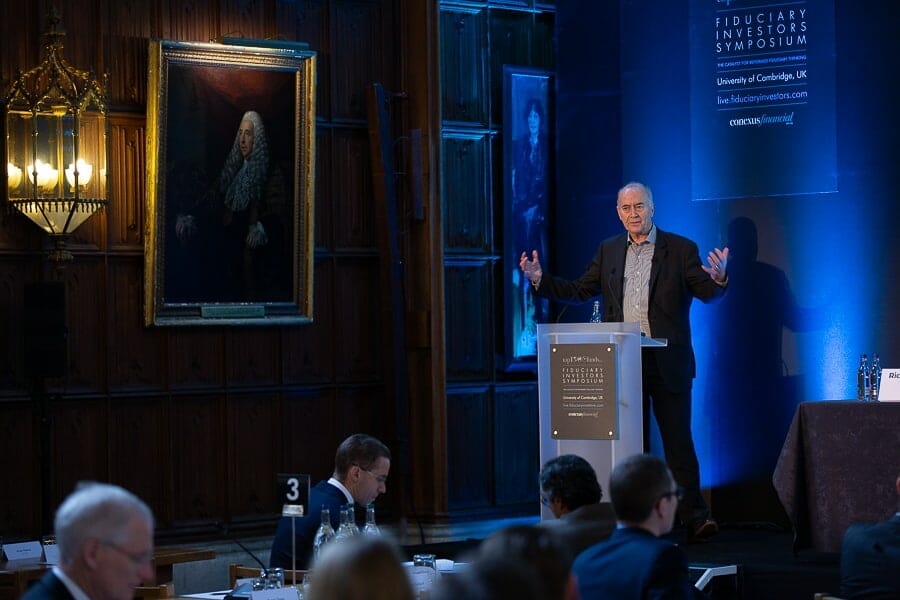
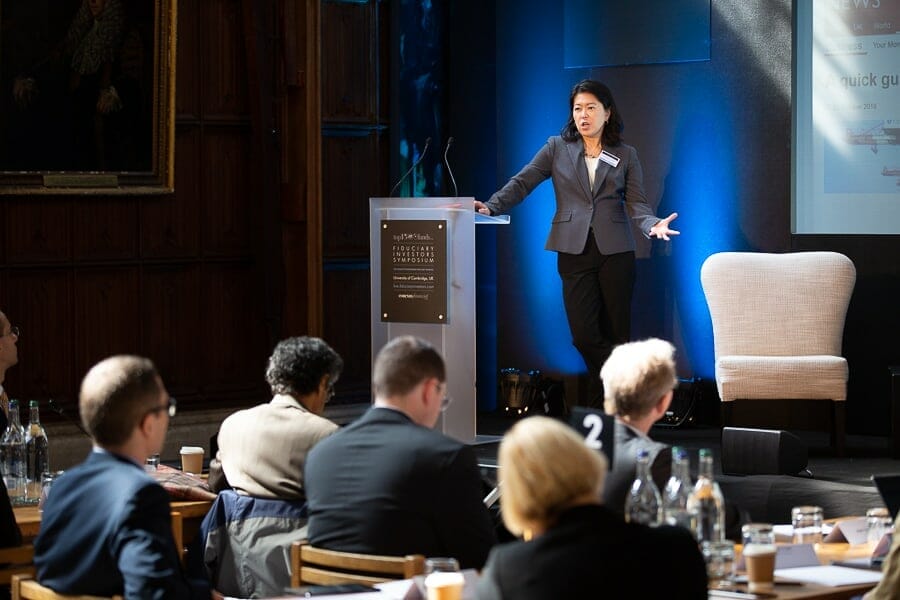
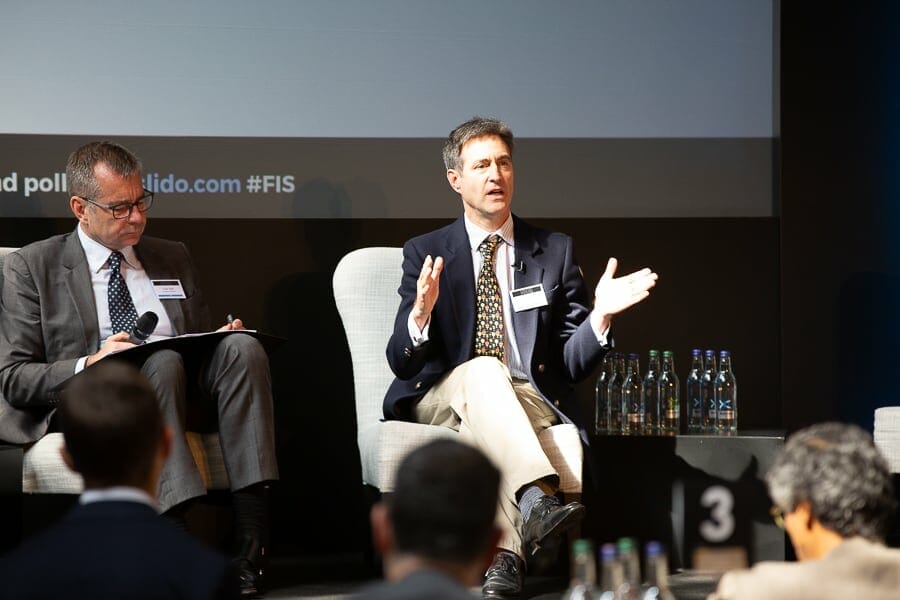
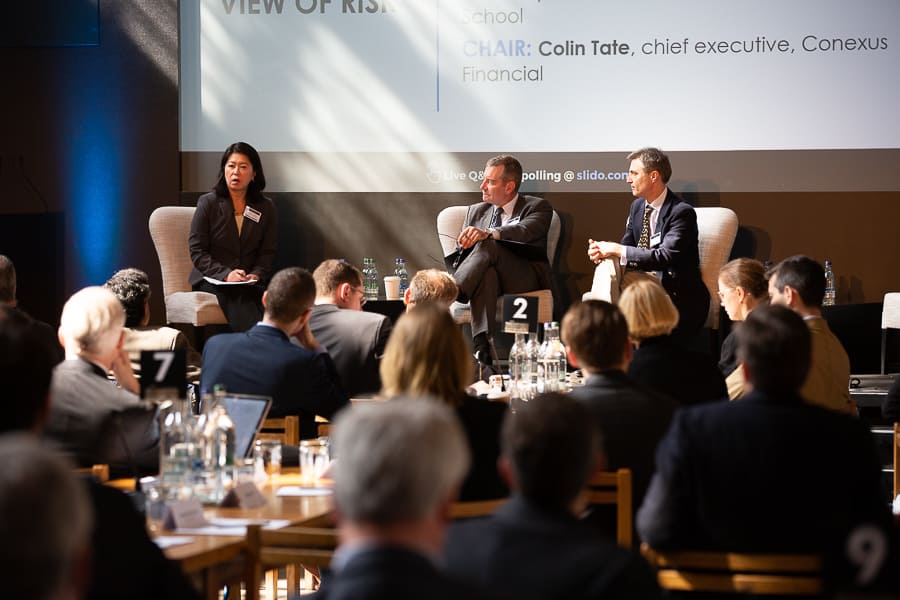
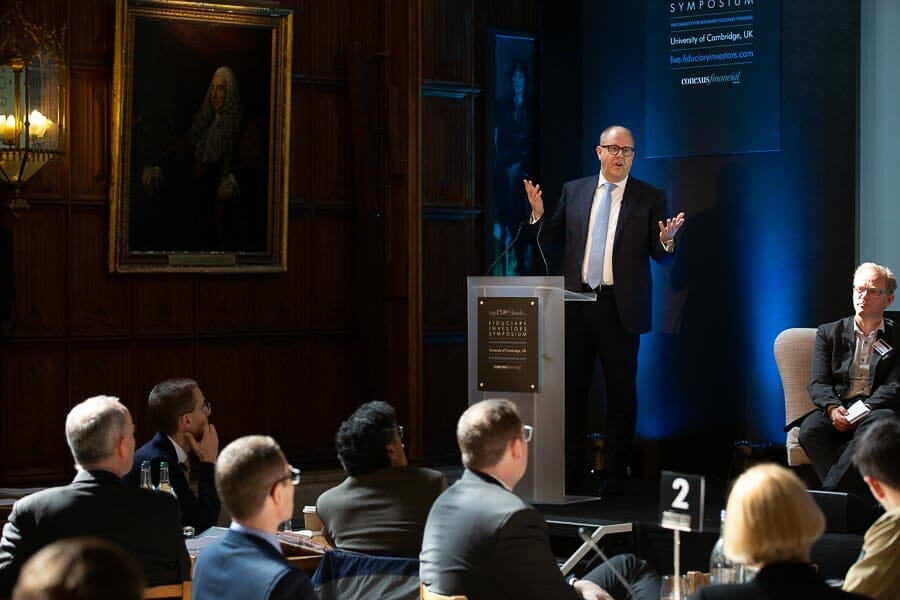
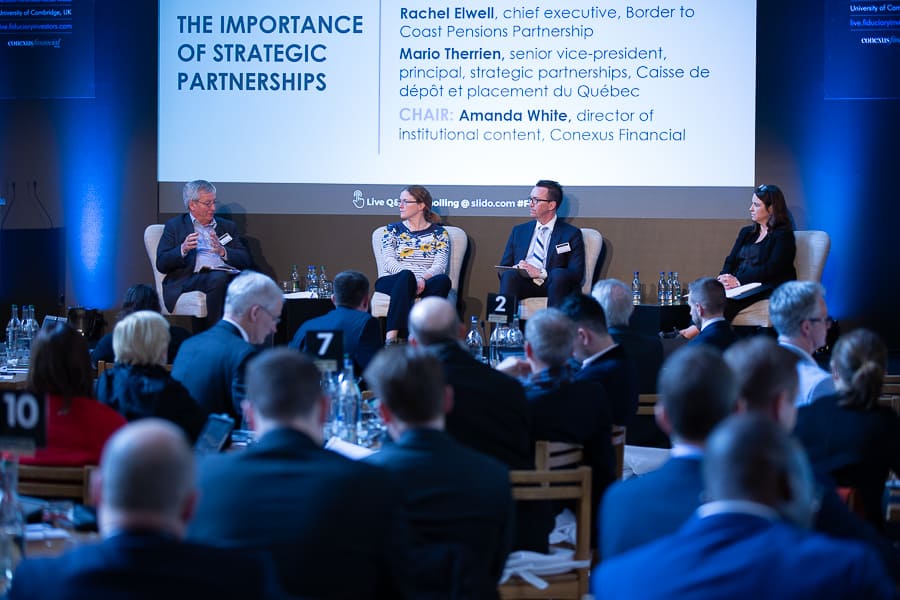
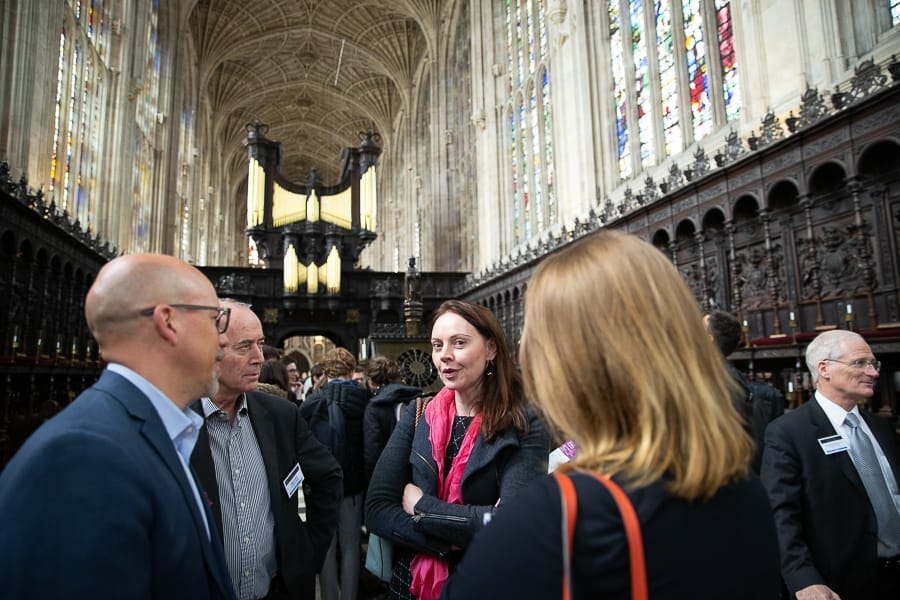
The Fiduciary Investors Symposium at Cambridge University brought together more than 70 asset owners from 15 countries to discuss asset owners responsibility to engage with policymakers, barriers to long term investing and risks including ESG, climate and cyber security.

Brett Himbury, chief executive of IFM Investors revealed how an asset manager defines its behaviours and processes as responsible.

Himbury said a sustainable organisation is crystal clear on its purpose and its culture, processes and people align to that.

“Be authentic and don’t stand for anything that is inconsistent with that,” he said.

He said asset managers need to think about their investors and societies and how to rebuild public trust.

The world needs growth and is limited in how to drive it, pension funds have a real challenge in seeking out returns, and the world mistrusts institutions,” he said. “If you put those three things together you get a situation where would like to invest in the real economy but the public is sceptical as to our real motives. There is a significant risk if we don’t do something about it.”

In an interactive panel on long term investing Philip Edwards, chief executive of new consulting firm, Ricardo Research laid out key areas for investors to consider in determining the obstacles to long term investing. In particular he focused on reducing exposure to explicit price chasing strategies such as momentum and trend following.

Both Jaap van Dam, principal director of investment strategy at PGGM  and Sarah Williamson, chief executive of Focusing Capital on the Long Term gave delegates some practical tips for investors to move towards acting long term. These include reframing some ideas around risk and performance measurement, for example reporting long term returns, for example 10 years, first; and them five, three and one year returns.

Williamson discussed the challenges of investors which are managing risks across multiple time horizons, and suggested some tips for doing so.

To close the first day, an interactive session on implementing the sustainable development goals saw a large asset manager, two asset owners and an academic on a panel discussing the virtues and barriers to implementation.

Professor Mike Kenny, professor of public policy at the University of Cambridge talked about Brexit as a protracted political crisis in the UK, saying there will be some political instability for several years.

He said the resilience of the UK economy’s fundamentals would be an important consideration and the harder the Brexit the bigger the impact on GDP. Overall as a result of Brexit the EU will have lower GDP that the US.

Pilar Gomez-Bravo, director of fixed income for Europe at MFS Investment Management said the question around interest rates and inflation are the big questions when it comes to Brexit.

“An election is the big threat to markets. If Brexit goes as planned Carney will increase interest rates. And as soon as there is an election it will impact currency and gilt,” she said.

But there is nothing happening in Brexit that is significant in the context of Britain’s relationship with Europe according to Stephen Kotkin, Professor of History and International Affairs at Princeton University. Kotkin talked about turning points in the past including the late 1970s where Reagan, Thatcher and the free market revolution reigned, there was the political Islamism rising and it marked the beginning of the reform era in China. He said “we are currently experiencing a global turning point but we don’t know where because we’ve never been able to know it in real time”

He advised that investment strategy should be centred around serving the China middle class and the dislocation from within Asia.

An overwhelming number of delegates at the Fiduciary Investors Symposium said the funds management industry was not doing well in innovation

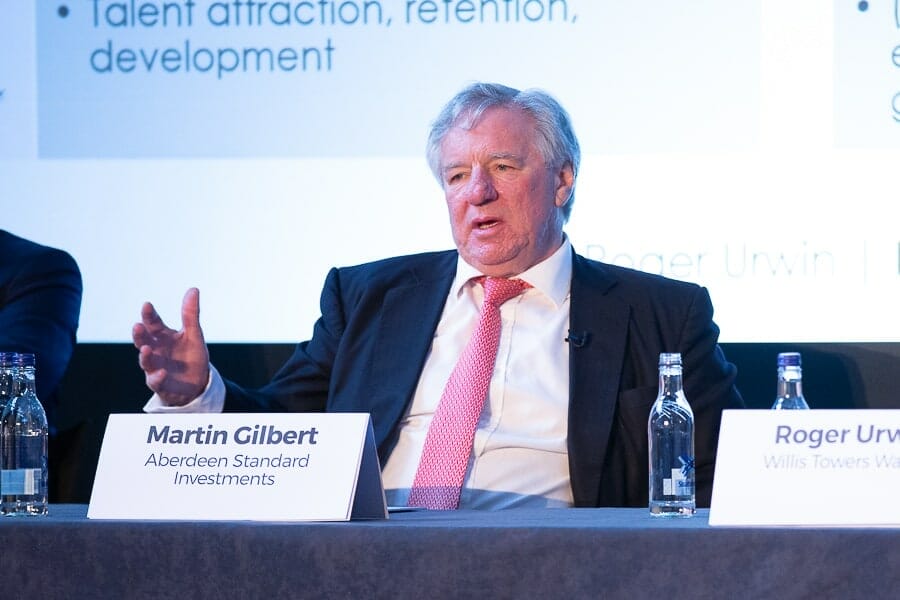
Martin Gilbert, who started Aberdeen Standard Investments in 1983 and is now chair, said industry participants needed to innovate and disrupt themselves.

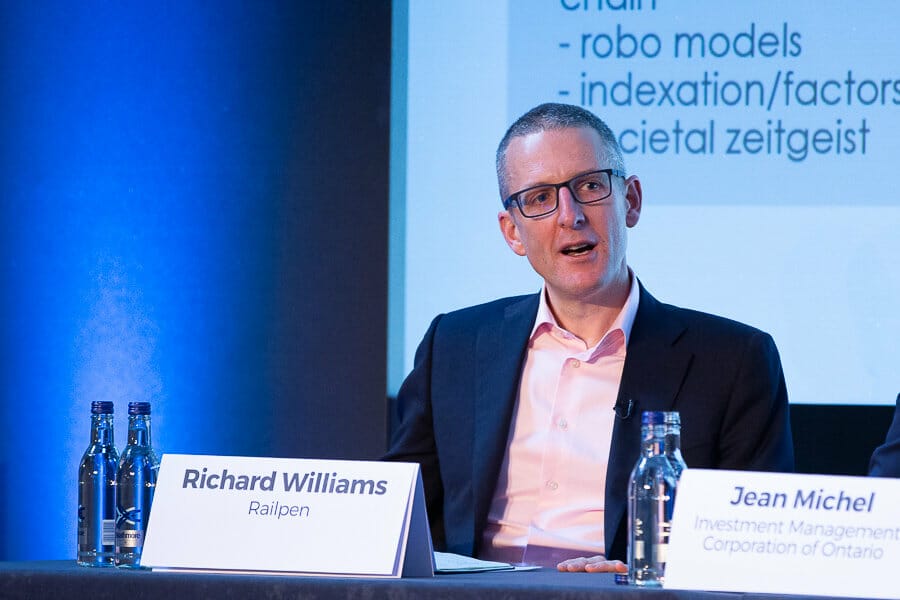
Richard Williams, chief investment officer of Railpen said the fund was trying to change its culture to be more innovative.

“We think about innovation in two ways: tactical small changes; and larger strategic changes. We want the culture to change to an environment where it’s ok to be making more of those smaller changes,” he said.

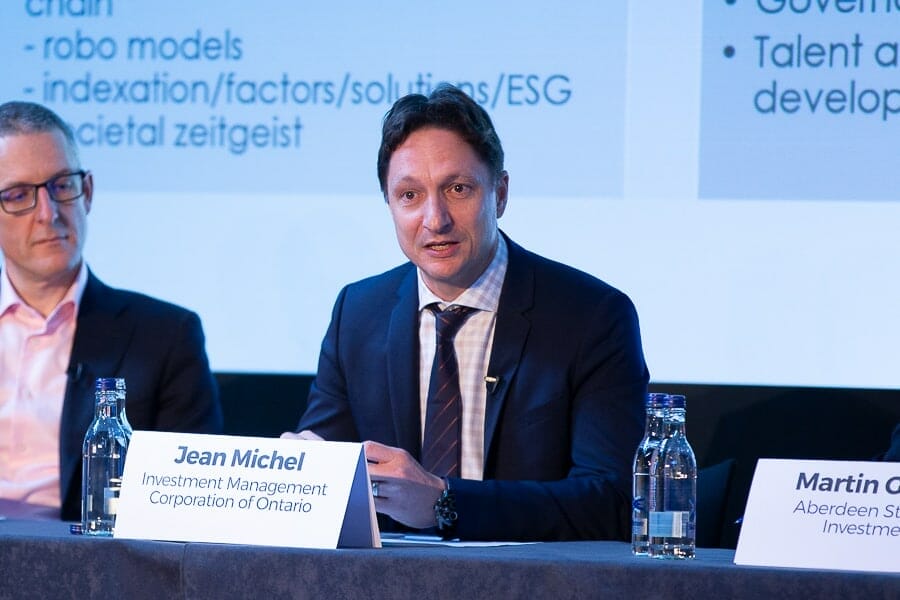
Jean Michel, chief investment officer, Investment Management Corporation of Ontario an organisation that is only two years old, emphasised the importance of building strong internal teams to be able to partner with external managers that become an extension of the team.

Michelle Tuveson, executive director of the centre at the Judge Business School discussed the need to broaden the view and assessment of risk.

The Cambridge centre for risk studies has developed a metric for enterprise risk called five-year enterprise value at risk, which attempts to measure all the different scenario impacts on the value of a company.

Three risk professionals – Samir Ben-Tekaya, head of risk at BCI, Mads Gosvig, vice president, portfolio construction at ATP and Arjen Pasma, chief risk officer at PGGM – gave case studies on their approach to investment and organisational risk. They emphasised the importance of risk management in pension investment organisations and the balance required in taking enough risk in a diversified way.

The panel brought together some of the topics of the morning including innovation and asset allocation with risk management.