The extreme uncertainty of the global economy requires a new risk management framework. This session will examine the rapidly changing risks to the global economy and the need for new ways of behaving, making decisions and even reversing decisions.

Speaker

Lakshmi Shyam-Sunder was appointed vice president and World Bank Group chief risk officer in February 2014. She was previously chief financial officer and director, finance and risk at the Multilateral Investment Guarantee Agency (MIGA), the political risk insurance and credit enhancement arm of the World Bank Group. Shyam-Sunder was one of the key contributors to the MIGA/IBRD Exposure Exchange Agreement within the Bank Group, and was responsible for strengthening and enhancing the finance, risk, resource management, IT, and control functions in MIGA. Prior to joining MIGA in March 2011, she worked at the International Finance Corporation (IFC), also part of the World Bank Group, where she held a variety of positions. As director for corporate risk, she led the development of a new client risk management advisory service function for IFC clients and the creation of the International Financial Institutions Risk Data Consortium. Before that Shyam-Sunder was director of IFC’s risk management and financial policy department where she developed IFC’s integrated economic capital and pricing framework, and had responsibility for all financial risks arising from the corporation’s loan and equity investments in emerging markets, and Treasury activities as well as managing rating-agency issues. She was also co-chair of IFC’s new products assessment group. Shyam-Sunder has consulted for a wide range of public and private sector institutions in the US and in emerging markets. She has also served on the board, and finance and risk committees of institutions in emerging markets. Before joining IFC, Shyam-Sunder was a faculty member at the MIT Sloan School of Management where she received an award for Excellence in Teaching. Shyam-Sunder was also on the faculty of The Tuck School of Business Administration at Dartmouth College. She holds a Ph.D. in Finance from the MIT Sloan School of Management and an MBA from the Indian Institute of Management, Ahmedabad. Shyam-Sunder was born in Iraq, and grew up in India. She is married and has one daughter.
Moderator

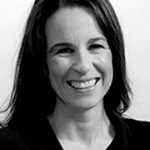
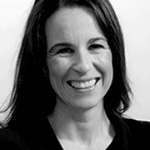
Amanda White is responsible for the content across all Conexus Financial’s institutional media and events. In addition to being the editor of Top1000funds.com, she is responsible for directing the global bi-annual Fiduciary Investors Symposium which challenges global investors on investment best practice and aims to place the responsibilities of investors in wider societal, and political contexts. She holds a Bachelor of Economics and a Masters of Art in Journalism and has been an investment journalist for more than 25 years. She is currently a fellow in the Finance Leaders Fellowship at the Aspen Institute. The two-year program seeks to develop the next generation of responsible, community-spirited leaders in the global finance industry.

Key takeaways

  • We need to think far more broadly beyond simply financial risk, our view of risk must not be one dimensional. The crisis helps us learn and get better at modelling interconnected risks. Bigger, broader risks are interconnected and require increased collaboration to mitigate. Even if we are sitting on the fence and maintaining investment positions, risk has gone up.
  • The pandemic has turned our lives not inside out, but ‘outside in’. Rather than shut down, we should ask ourselves ‘what can we do to help the situation?’
  • We are in the deepest recession since World War 2, and it is completely synchronised across the world. If a vaccine is not available, the World Bank forecasts the global economy will shrink by 8 per cent.
  • The pandemic has set The World Bank back in its aim to help alleviate poverty – 170 million people will remain in poverty due to the pandemic with an income of below $2 per day.
  • The challenging environment is exacerbated by intergenerational and geopolitical tensions. Key question is how to exit from the pandemic stimulus measures.
  • Green bonds for example are a heartening development from the financial community.
  • Institutional investors are considering more non-financial risks and are engaging more deeply with investee companies. If we do this right it will mitigate, not exacerbate the issue.

Poll results

Have you changed your attitude to risk taking because of the recent onset of unforeseeable risks including this current health pandemic?
In our second feature looking ahead to FIS 2020, we highlight the focus on growing calls for a sustainable recovery and purposeful companies. Nobel prize winner Esther Duflo will talk on solutions to inequality that have been magnified during the pandemic.

The global health and economic pandemic has accelerated worrying trends like de-globalisation and the lack of global leadership. But it has also hastened the drive towards positive trends, namely sustainability. Not only have environmental, social and governance (ESG) investments outperformed their non-sustainable counterparts in recent months, the crisis has underscored how connected humans are to society and nature, and raised awareness of the impact of poor governance. Many of the lowest paid workers on whom the real economy depends lack access to insurance, sick pay and medical benefits.

Elsewhere, oil producing countries, where the International Energy Agency forecasts revenues will drop by as much as 80 per cent for some producers, will be forced to diversify their revenue sources, boding well for a greener future. Across a two-day agenda from June 23-24, FIS Digital 2020 will bring academics and asset owners together around these key themes, asking how institutional investors can help build a sustainable recovery, encourage purposeful companies, and foster equality.

For Fiona Reynolds, chief executive of the PRI, recovery from the pandemic offers a chance to rebuild a new type of economy.

“We must try and emerge from the crisis not with a return to normality, but with a plan for an economy fit for the 21st century,” she says. “I think COVID-19 gives us a really unique opportunity to reprioritise and accelerate to a low carbon economy that incorporates sustainability issues.”

The idea is gaining traction, most visible in the growing calls that government bailout money to corona-hit industries (particularly carbon intensive ones) be linked to companies protecting jobs and raising their environmental standards: if airlines need funds, they should commit to cutting emissions and developing new technologies.

It is already starting to happen. Electric cars will be cheaper and easier to charge under France’s €8 billion auto sector recovery plan. Elsewhere, Air France is set to cut domestic flights and its overall emissions as a condition of its €7 billion bailout, and the EU has said green policies will be central to the hundreds of billions of euros it has pledged for the recovery. The lifelines thrown to Canada’s big corporates will be tied to Task Force on Climate Related Financial Disclosure (TCFD) reporting, largely voluntary until now.

“Bailout packages should not be condition free, particularly for businesses in carbon intensive sectors” says Reynolds who highlights the crucial role of institutional capital as economies re-build, suggesting governments and asset owners work together to insure a pipeline of investable sustainable infrastructure.

Purposeful companies

Recovery from the pandemic could also hasten another paradigm shift. The move away from shareholder primacy got a boost last year when America’s Business Roundtable diverged from its traditional stance and stated US corporations should be run in the interests of stakeholders and shareholders.

FIS 2020 attendees will hear how so-called purposeful companies, at the behest of all their stakeholders from companies in their supply chain to employees and the wider community, are the most sought-after amongst leading investors.

“The pandemic highlighted the vulnerability of business models focused on short-term profit generation. As a provider of pensions and as a responsible steward of the companies in which we invest, we would see this as a positive development,” says Simon Pilcher, chief executive of the United Kingdom’s USS Investment Management.

Views echoed by CalSTRS CIO Chris Ailman, who says the pension fund’s commitment to its members “spans decades and must prioritize long-term value creation over short-term gain.”

Speaking alongside a cohort of other asset owners in a shared statement issued on the eve of the pandemic, Ailman, Hiromichi Mizuno, who has recently stepped down from leading Japan’s $1.4 trillion Government Pension Investment Fund (GPIF) and Gordon Fyfe, head of Canada’s $153.4 billion BCI amongst others, wrote that companies seeking to maximise corporate revenue are unattractive investment targets, and asset managers who ignore long-term risks are unattractive partners.

Purposeful companies are much more likely to put equality centre stage, another enduring topic for FIS regulars.

In conversation with Nobel prize winner Esther Duflo, delegates at the conference  will hear how economics and finance can help meet the challenge of inequality, laid bare in the swathe of sobering COVID-19 statistics.

Duflo, who is the Abdul Latif Jameel Professor of Poverty Alleviation and Development Economics in the Department of Economics at MIT and director of the Abdul Latif Jameel Poverty Action Lab, seeks to understand the economic lives of the poor, with the aim to help design and evaluate social policies. She has worked on health, education, financial inclusion, environment and governance. She has written Poor Economics: A Radical Rethinking of the Way to Fight Global Poverty, and the recently released Good Economics for Hard Times.


The Fiduciary Investors Symposium Digital 2020 on June 23 and 24 will look at the extreme uncertainty of the global economy including the changing geopolitical dynamics and the potential unravelling of globalisation; the unprecedented fiscal and monetary policy responses and the implications for investments; how investors are positioning portfolios and managing short and long term risks; supply chain risks and responsible capitalism; what a sustainable recovery looks like and how investors can ensure it happens.

Asset owners can register for the Fiduciary Investors Symposium here. 

In this Fiduciary Investors Series podcast Amanda White talks with Geoffrey Rubin, chief investment strategist at CPP Investments, which manages the investments of Canada’s largest pension fund with about C$410 billion of assets. They discuss scenario planning, the benefits of total portfolio management, rebalancing and liquidity as well as the forward-looking view of the global economy and opportunistic investments for long-term investors.

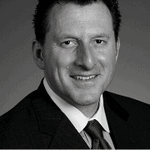
Geoff Rubin is responsible for overall fund-level investment strategy and heads the total portfolio management (TPM) department – the operational arm of CPP Investments’ investment planning committee, with overall management accountability for the oversight and management of the fund’s investment portfolio. He joined CPP Investments in 2011, with the inception of TPM, and has helped shape its growth and evolution, and to define and execute CPP Investments’ total portfolio approach. Previously, he held finance roles with Fannie Mae and Capital One Financial where he managed the global balance sheet. Rubin also ran a consulting practice and was Adjunct Professor at American University’s Kogod School of Business in Washington, DC. He holds a BA in Economics from the University of Virginia and a PhD in Economics from Princeton University.

Amanda White is responsible for the content across all Conexus Financial’s institutional media and events. She is responsible for directing the bi-annual Fiduciary Investors Symposium which challenges global investors on investment best practice and aims to place the responsibilities of investors in wider societal, and political contexts, as well as promote the long-term stability of markets and sustainable retirement incomes. She is the editor of conexust1f.flywheelstaging.com, the online news and analysis site for the world’s largest institutional investors. White has been an investment journalist for more than 20 years and has edited industry journals including Investment & Technology, Investor Weekly and MasterFunds Quarterly. She was previously editorial director of InvestorInfo and has worked as a freelance journalist for the Australian Financial Review, CFO, Asset and Asia Asset Management. She has a Bachelor of Economics from Sydney University and a Master of Arts in Journalism from the University of Technology, Sydney. She was previously a columnist for the Canadian publication, Corporate Knights, which is distributed by the Globe and Mail and The Washington Post. White is currently a fellow in the Finance Leaders Fellowship at the Aspen Institute. The two-year program consists of 22 fellows and seeks to develop the next generation of responsible, community-spirited leaders in the global finance industry.

In the first of four articles looking ahead to FIS 2020, we highlight how the event will focus on de-globalisation and geopolitical stress, particularly the deteriorating relationship between China and the US. Elsewhere, FIS delegates will hear how asset owners are positioning their portfolios in today’s challenging environment.

Crises have a habit of accelerated existing global trends, and Coronavirus is no exception. Trends like de-globalisation, already rooted in populism, and the absence of global leadership have moved centre stage in recent months. More positively, the crisis has also underscored the importance of directing capital to benefit society and the environment as a whole.

It is these key themes that the Fiduciary Investors Symposium Digital 2020 (June 23-24) will unpick via in-depth conversations with academics and asset owners. Institutional investors will play an essential role in rebuilding the global economy, and FIS Digital aims to set out their concerns and priorities in today’s unchartered landscape.

Geopolitical stress, already present in the global economy, but fractured even more by the current crisis and most visible in the deteriorating relationship between the US and China, is a main theme over the two-day agenda. During the global financial crisis, the G20 came together to orchestrate a co-ordinated economic policy response, yet this time around the US and China have been unable to put aside bilateral issues for a global imperative.

In the last few months alone President Trump has cracked down on Chinese companies listed in the US and moved to stop the Federal Retirement Thrift Investment Board, a government agency that manages $594 billion in assets for 5.9 million workers through its Thrift Savings Plan, from investing in Chinese companies. “These moves have rightfully spooked markets and raised the spectre of further curbs on Chinese investment in the US and US investment in China,” flags Cambridge Associates Aaron Costello, regional head for Asia who predicts more “tough on China” policies on Trump’s campaign trail.

“My biggest worry regarding the US-China-tensions is around technology. Are we evolving into two separate ecosystems for similar technology?” questions Patrik Jonsson, head of manager selection, public assets at AP2, Sweden’s SEK345 billion ($39.1 billion) buffer fund which first invested in China seven years ago. “In my opinion, the world needs more cooperation not less. So far, we have not made any changes to our portfolio to account for increased strains between the two countries, but we are monitoring the situation closely.” All this at a time – ironically – Costello points out China is a relative safe haven, with both the stock market and currency proving resilient during the March meltdown.

Delegates will hear how the globalisation and interdependence that has fuelled wealth and spurred companies to set up production overseas is now under threat. Ian Goldin, Professor of Globalisation and Development at Oxford University, will talk on how its demise could unravel to impact portfolios. In another session, FIS regular Stephen Kotkin, Professor in History and International Affairs, Princeton University, will argue how high-level interdependence is based in shallow global governance mechanisms and that although today’s failing relationship has similarities to historical events, we have the power to change it.

Emerging markets

If globalisation has peaked it has implications for emerging markets, one of the biggest investor stories in recent decades. Before the pandemic struck, the IMF was already flagging concerns that emerging market reform like financial liberalisation and privatisation, which take years to materialise and gathered pace in the 1990s, has slowed. Now export controls, protectionism and the economic slump threaten further growth. It is harder for governments in these countries to fund an economic stimulus, and few can borrow at rock-bottom interest rates.

Long-term investors are not inclined to panic and have the luxury to think things through. Yet some pension funds are facing reduced funding levels (many still not replenished after the financial crisis) and high return targets. All are navigating rock bottom yields on government bonds.

“This downturn is a serious step backwards in their funding progress,” warned a recent report on US public pension funds. Take, for example, $226.9 billion CalSTRS latest actuarial valuation (June 2019) which gives a funded ratio of 66 per cent.

At FIS Digital 2020, delegates will hear how asset owners facing these challenges are positioning their portfolios.

“In the wake of the pandemic we needed to ensure we had the cash and liquidity to survive the storm,” says Simon Pilcher, chief executive officer, USS Investment Management, manager of the United Kingdom’s Universities Superannuation Scheme.

“Now we are seeking to take advantage of opportunities where they present themselves. This is particularly true in fixed income, while we are also looking at further building our private markets business.”

Elsewhere CalPERS CIO Ben Meng will share his thoughts on asset allocation and liquidity alongside the Dutch €514 billion fund APG, where current strategy also includes expanding expertise in illiquid real estate, infrastructure and private equity to counter low yields on government bonds.

The Fiduciary Investors Symposium Digital 2020 on June 23 and 24 will look at the extreme uncertainty of the global economy including the changing geopolitical dynamics and the potential unravelling of globalisation; the unprecedented fiscal and monetary policy responses and the implications for investments; how investors are positioning portfolios and managing short and long term risks; supply chain risks and responsible capitalism; what a sustainable recovery looks like and how investors can ensure it happens.

Asset owners can register for the Fiduciary Investors Symposium here. 

In an open letter by Federated Hermes to companies they explain that their engagement dialogue during and after the pandemic means the focus is on resilience and stakeholders.

Read Stewardship after the pandemic here.

Active Ownership 2.0 is a proposed aspirational standard for improved stewardship.

It builds on existing practice and expertise but explicitly prioritises the seeking of outcomes over process and activity, and common goals and effort over narrow interests.

This paper sets out the case for change and a high-level framework for what the standard could involve.

Read Active Ownership 2.0: the evolution stewardship urgently needs here.