0

The coronavirus pandemic has impacted the way we work and live in unprecedented ways that are impacting how we consume. These thematics – including the increased use of technology, working from home, and online shopping – are acute in the real estate sector. This session will examine what this means for the asset class opportunities and risks as well as learnings for the whole portfolio. How investors can best combine listed and unlisted opportunities, and balance liquidity, will also be considered.
Speaker

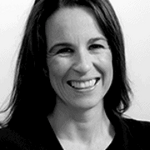
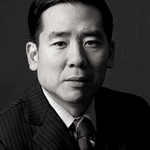
Jon Cheigh is executive vice president, chief investment officer and head of global real estate. He leads the investment department and oversees the global real estate team, serving as senior portfolio manager for all global real estate strategies. Cheigh joined the company in 2005 as a REIT analyst and has served as a portfolio manager since 2008. He was named head of global real estate in 2012 and was appointed chief investment officer in 2019. Prior to joining the company, Cheigh was a vice president and senior REIT analyst at Security Capital Research and Management. Prior to that, he was a vice president of real estate acquisitions at InterPark and an acquisitions associate at Urban Growth Property Trust, two privately held real estate companies incubated by Security Capital Group. Cheigh holds a BA degree cum laude from Williams College and an MBA degree from the University of Chicago.
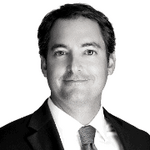
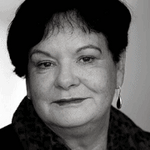
Jason Rothenberg is a portfolio manager for the State of Wisconsin Investment Board, leading the team tasked with developing and executing SWIB’s real estate investment strategy. The team sources and manages real estate investments across a wide range of structures, property types and geographies to support the objectives of the Wisconsin Retirement System. Prior to joining SWIB in 2011, Rothenberg was the director of finance for a Madison-based office and mixed-use real estate development company. He has also held positions at the Office of Management and Budget and the National Oceanic and Atmospheric Administration focused on environmental, science and space policy. He currently sits on the State of Wisconsin’s Deferred Compensation Board, which governs the state’s supplemental retirement savings program. Rothenberg received an MBA with a specialisation in real estate from the University of Wisconsin, Madison, a Master of Environmental Management degree from Duke University and a BA from the University of Virginia. He is a CFA and CAIA charterholder.

Moderator

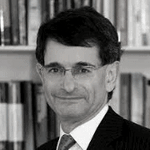
Colin Tate has been an investment industry media publisher and conference producer since 1996. In his media career, Tate has launched and overseen dozens of print and electronic publications. He is the chief executive and major shareholder of Conexus Financial, which was formed in 2005, and is headquartered in Sydney, Australia. The company stages more than 20 conferences and events each year – in London, New York, San Francisco, Los Angeles, Amsterdam, Beijing, Sydney and Melbourne – and publishes five media brands, including the global website and strategy newsletter for global institutional investors conexust1f.flywheelstaging.com. One of the company’s signature events is the bi-annual Fiduciary Investors Symposium. Conexus Financial’s events aim to place the responsibilities of investors in wider societal, and political contexts, as well as promote the long-term stability of markets and sustainable retirement incomes. Tate served for seven years on the board of Australia’s most high profile homeless charity, The Wayside Chapel; and he has underwritten the welfare of 60,000 people in 28 villages throughout Uganda via The Hunger Project.

Key takeaways

Jon

  • Retail and office are only 25 per cent of the property market. Today, the property asset class has a material weighting to data centres and technology towers.
  • We have to deal with the fact that it’s a recession, so hotels for example will naturally be impacted.
  • Some aspects of property are being uniquely impacted, for example university housing which is normally a defensive asset.
  • There will certainly be some permanent destruction of the office opportunity, even though advocates of office investment believe physical offices provide benefit relating to talent concentration, culture and collaboration.
  • The property market, like an economy, is always evolving, with some parts becoming obsolete and some parts becoming more relevant.
  • Over a cycle, it is best to have a combination of both listed and unlisted property within a portfolio.
  • We will not necessarily witness a doom and gloom exodus from big cities, but there may be opportunity for decentralised models to be explored.

 Jason

  • COVID has turbocharged changes that were already underway.
  • It’s too soon to predict the future fate of the office market.
  • Knowing how to adequately perform due diligence in this environment will be key.

Poll results

Do you think the office real estate sector has been permanently disrupted?
Check your ad settings

The coronavirus crisis has resulted in an unprecedented number of defaults and presents an opportunity of a life time for distressed debt investors. Where are the opportunities and how should investors allocate capital both domestically and internationally?

Speaker

Victor Khosla established SVPGlobal in 2001 and has built it into one of the major firms in distressed debt and private equity investments with $8.4 billion in assets under management.
Khosla has 29 years in the industry. He got his start at Citibank (1989-1993) and subsequently built and managed the distressed proprietary trading business at Merrill Lynch (1993-1998). At the time of his departure from Merrill Lynch, Khosla had investment authority for $2 billion in corporate and real estate investments and headed a team of 40 analysts and traders based in New York, Tokyo, London and Hong Kong. After leaving Merrill Lynch, he had leadership roles at two well-known funds; he was president of Cerberus Capital (1998-1999) and ran MooreSVP (1999-2002), a JV with Moore Capital, which invested in distressed debt in Japan.
Khosla graduated with a first class Bachelors of Commerce (Honors) degree from Delhi University, a MA in Economics from Vanderbilt University, as well as a MBA from the University of Chicago. He is a member of the management council at the University of Chicago Booth School of Business.

Moderator

Amanda White is responsible for the content across all Conexus Financial’s institutional media and events. In addition to being the editor of Top1000funds.com, she is responsible for directing the global bi-annual Fiduciary Investors Symposium which challenges global investors on investment best practice and aims to place the responsibilities of investors in wider societal, and political contexts. She holds a Bachelor of Economics and a Masters of Art in Journalism and has been an investment journalist for more than 25 years. She is currently a fellow in the Finance Leaders Fellowship at the Aspen Institute. The two-year program seeks to develop the next generation of responsible, community-spirited leaders in the global finance industry.

Key takeaways

  • The high yield and leveraged loan market size has doubled since the GFC.
  • Today prices will not fall as low as they did in the GFC. This opportunity set is not as deep as 2008, it is a 3 to 6-month window.
  • We believe the European trough is lower and the recovery is longer.
  • It is important to decide what not to do:
    • In certain regions such as France or Italy, the laws are not conducive to the restructuring process
    • In emerging markets it can be extremely difficult to seize the steering wheel and navigate the restructuring journey
  • There is a lot of low hanging fruit in restructuring from an operational perspective.
  • In the last 8 years there has not been huge opportunity or activity in the distressed space, but in the last 4 months the market has exploded.
  • In 2008 the rising tide lifted all boats. Today, you must be smarter, more focused and more skilled to invest successfully.
  • The distressed space offers a very comfortable discount cushion, which alleviates risk if the recovery is slower than hoped.

Poll results

Are you increasing your allocation to distressed debt opportunities as a result of COVID-19?

Is the COVID-19 crisis the paradigm shift needed to redefine business for the 21stcentury and build trust between business and society? The crisis has hastened the trend towards ‘purpose before profit’ and the fact that purposeful companies will be the ones that thrive in the future.

Speakers

Sharan Burrow was elected general secretary of the ITUC at its second world congress in Vancouver, June 2010. Prior to this, she held the position of ITUC president since its founding congress in Vienna (November 2006) and the position of ICFTU president since its 18th World Congress in Miyazaki (November 2004). She is the first woman to have held any of these positions.
Burrow was born in 1954 in Warren, a small town in western NSW, into a family with a long history of involvement in unions and the struggle to improve the lives of working people.
Her great, great grandfather participated in the shearers’ strike of 1891/92, becoming one of the first organisers for the Australian Workers’ Union and standing for the state seat of Cobar for the fledgling Australian Labor Party in 1896.
She studied teaching at the University of NSW in 1976 and began her teaching career in high schools around country NSW. She became an organiser for the NSW Teachers’ Federation, based in Bathurst, and was president of the Bathurst Trades and Labour Council during the 1980s. Burrow was elected senior vice-president of the NSW Teachers’ Federation and became president of the Australian Education Union (AEU) in 1992. She represented the AEU on the ACTU executive through the 1990s.
Burrow was previously vice-president of Education International from 1995 to 2000. Education International is the international organisation of education unions representing 24 million members worldwide.
In May 2000, Burrow became the second woman to be elected president of the Australian Council of Trade Unions (ACTU). In October 2000, and also became the first woman to be elected president of the International Confederation of Free Trade Unions Asia Pacific Region Organisation.
She has also served as a member of the governing body of the International Labour Organisation and a member of the stakeholder council of the Global Reporting Initiative. As part of her ILO responsibilities, Burrow chaired the workers’ group of the sub-committee on multinational enterprises.
Burrow was re-elected General Secretary of the ITUC at its 3rd congress, in Berlin, May 2014 and at its 4th congress, in Copengahen, December 2018.

Colin Mayer is an expert on all aspects of corporate finance, governance and taxation, the regulation of financial institutions and the role of the corporation in contemporary society.
He teaches the elective course on mergers, acquisitions and restructurings on the MBA and the Masters in Financial Economics, the core program on responsible business for MBA students, an elective on the nature of the corporation for MBA and Masters in Financial Economics students, and the principles of financial regulation on the Masters in Law and Finance.
Mayer studied as an undergraduate at Oriel College, Oxford, and received his DPhil from Oxford University in 1981. He was a Harkness Fellow at Harvard University, a Houblon-Norman Fellow at the Bank of England, the first Leo Goldschmidt Visiting Professor of Corporate Governance at the Solvay Business School, Université de Bruxelles, and has had visiting positions at Columbia, MIT and Stanford universities. In 1994, he became the first professor at Saïd Business School, and was appointed the Peter Moores Dean of the Business School between 2006 and 2011. He was the first director of the Oxford Financial Research Centre at the University of Oxford between 1998 and 2005.
Colin has served on the editorial boards of several leading academic journals and assisted in establishing prestigious networks of economics, law and finance academics in Europe at the Centre for Economic Policy Research and the European Corporate Governance Institute. He was a founding editor of the Oxford Review of Economic Policy and a founding co-editor of the Review of Finance.
Mayer was a director and chair of Oxera between 1986 and 2010, and was instrumental in building the firm into what is now one of the largest independent economics consultancies in Europe. He is a director of Aurora Energy Research Limited, an energy modelling company. He has consulted for numerous large corporations and for governments, regulators and international agencies around the world.
Mayer is an Honorary Fellow of Oriel College, Oxford, and St Anne’s College, Oxford, and he is a Professorial Fellow of Wadham College, Oxford. He is a Fellow of the British Academy and a Fellow of the European Corporate Governance Institute. He is an Ordinary Member of the Competition Appeal Tribunal and a trustee of the Oxford Playhouse.

Fiona Reynolds is responsible for global operations. She has more than 20 years’ experience in the pension sector, working in particular with the Australian Government, and has played a key role in advocating pension policy change on behalf of working Australians. She has a particular interest in retirement outcomes for women. Prior to joining PRI, she spent seven years as chief executive at the Australian Institute of Superannuation Trustees, an association for Australian asset owners. Reynolds has been a director of AUSfund, Industry Funds Credit Control, the United Nations High Commissioner for Refugees, and Women in Super. In September 2012, she was named one of Australia’s top 100 women of influence by the Australian Financial Review, for her work in public policy. Reynolds also serves on the International Integrated Reporting Council, the council for Tomorrow’s Company, the Global Advisory Council on Stranded Assets at Oxford University, and the Business for Peace steering committee.

Moderator

Colin Tate has been an investment industry media publisher and conference producer since 1996. In his media career, Tate has launched and overseen dozens of print and electronic publications. He is the chief executive and major shareholder of Conexus Financial, which was formed in 2005, and is headquartered in Sydney, Australia. The company stages more than 20 conferences and events each year – in London, New York, San Francisco, Los Angeles, Amsterdam, Beijing, Sydney and Melbourne – and publishes five media brands, including the global website and strategy newsletter for global institutional investors conexust1f.flywheelstaging.com. One of the company’s signature events is the bi-annual Fiduciary Investors Symposium. Conexus Financial’s events aim to place the responsibilities of investors in wider societal, and political contexts, as well as promote the long-term stability of markets and sustainable retirement incomes. Tate served for seven years on the board of Australia’s most high profile homeless charity, The Wayside Chapel; and he has underwritten the welfare of 60,000 people in 28 villages throughout Uganda via The Hunger Project.

Key takeaways

Sharan

  •  Signing the statement of purposeful companies is not enough. We need to make it work.
  • 6 billion workers are facing destitution in the informal working environment.
  • Corporate social responsibility is nonsense. It’s not enough.
  • Let’s make the transition to a world where everybody’s rights matter. 

Colin

  •  Purpose can play a vital role in steering companies through the crisis and safely out to the other side. Purpose is about solving the problems that individuals, society and the natural world face.
  •  Purpose gives psychological benefit to employees at a difficult time. Purpose makes companies more resilient and helps reduce risk.
  • Technology increasingly helps use find new measures for what ‘purposeful’ means.
  • A purpose statement is profoundly different from a mission statement. A purpose statement in a North Star.
  • Integrated reporting is a very important step forward.

Fiona

  • A lot of investors still think about ESG investment only in risk/return terms. The value of impact needs to be incorporated.
  • We need between 10 and 20 trillion dollars to fund the recovery, so we cannot rely only on government for a better future.
  • Stewardship is one of the most powerful tools investors have but we are underinvesting in it (.7 per cent per USD$100bn AUM).
  • We must be able to measure both the financial and sustainability impacts of investments.
0

Given the extreme volatility in markets, the changing global economic risks and policy responses, what is the future of the funds management industry?

Speaker

Jenny Johnson is president and chief executive officer of Franklin Resources, Inc. As president and CEO, she is responsible for the operation of all aspects of the business, and she will set long-range strategic objectives and drive corporate priorities.
Previously, Johnson held the role of chief operating officer; overseeing the majority of investment management and all related investment management support services. She was also responsible for Franklin Templeton's global retail and institutional distribution efforts, including product development. In addition, she oversaw client service, fund administration, global technology, and the company's high net worth business, Fiduciary Trust Company International. She remains a member of Franklin Resources' executive committee, a small group of the company's top leaders responsible for shaping the firm's overall strategy. She joined the company in 1988.
In 2014, Johnson was one of 10 executives named to Money Management Executive's inaugural list of Top Women in Asset Management and was chosen by her peers as one of Ignites.com's Most Influential Women in Fund Management. Johnson received the 2012 Robert L. Gould Award presented by global investment management association NICSA, recognising outstanding achievement in helping the mutual fund industry better serve investors through customer service, thought leadership and technology. In 2010 and 2011, she was recognised by the San Francisco Business Times as one of the Most Influential Women in Bay Area business.
Johnson earned her B.A. in Economics from the University of California at Davis. She is a board member of Riva Financial Systems. She is also a trustee at Crystal Springs Uplands School, and a board member of the Lucile Packard Children's Hospital.

Moderator

Colin Tate has been an investment industry media publisher and conference producer since 1996. In his media career, Tate has launched and overseen dozens of print and electronic publications. He is the chief executive and major shareholder of Conexus Financial, which was formed in 2005, and is headquartered in Sydney, Australia. The company stages more than 20 conferences and events each year – in London, New York, San Francisco, Los Angeles, Amsterdam, Beijing, Sydney and Melbourne – and publishes five media brands, including the global website and strategy newsletter for global institutional investors conexust1f.flywheelstaging.com. One of the company’s signature events is the bi-annual Fiduciary Investors Symposium. Conexus Financial’s events aim to place the responsibilities of investors in wider societal, and political contexts, as well as promote the long-term stability of markets and sustainable retirement incomes. Tate served for seven years on the board of Australia’s most high profile homeless charity, The Wayside Chapel; and he has underwritten the welfare of 60,000 people in 28 villages throughout Uganda via The Hunger Project.

Key takeaways

  • Market dislocations are a playground for active managers.
  • There will be an increased focus on the social aspect of ESG.
  • We had no sleepless nights post the acquisition of Legg Mason because we have a long-term view and the reason we acquired the business remain true today.
  • Equality is not only good for society, it’s good for business.
  • Fostering an environment that celebrates diversity through truly listening to different perspectives and experiences is critical. Only 2.9 per cent of VC funds go to female entrepreneurs.
  • Breadth and depth of data analysis capability will be critical in the future.
  • Governments can only do so much. What we do, every day, really matters. Let’s focus on doing it right.
Check your ad settings

The crisis has seen unprecedented fiscal and monetary policy responses around the world. So what are the implications for investments?

Speaker

Jensen joined Bridgewater in 1996. He oversees Bridgewater’s investment strategies and research efforts. He is also integral in overseeing investment talent and the firm’s account management and trading processes. In 2010, 2011, and 2012, he was named one of business’s rising stars in Fortune magazine’s Top 40 Under 40. Jensen has earned a degree in economics and applied mathematics from Dartmouth College.

Moderator

Colin Tate has been an investment industry media publisher and conference producer since 1996. In his media career, Tate has launched and overseen dozens of print and electronic publications. He is the chief executive and major shareholder of Conexus Financial, which was formed in 2005, and is headquartered in Sydney, Australia. The company stages more than 20 conferences and events each year – in London, New York, San Francisco, Los Angeles, Amsterdam, Beijing, Sydney and Melbourne – and publishes five media brands, including the global website and strategy newsletter for global institutional investors conexust1f.flywheelstaging.com. One of the company’s signature events is the bi-annual Fiduciary Investors Symposium. Conexus Financial’s events aim to place the responsibilities of investors in wider societal, and political contexts, as well as promote the long-term stability of markets and sustainable retirement incomes. Tate served for seven years on the board of Australia’s most high profile homeless charity, The Wayside Chapel; and he has underwritten the welfare of 60,000 people in 28 villages throughout Uganda via The Hunger Project.

Key takeaways

  • COVID-19 has accelerated trends that we thought would play out over a decade.
  • The COVID-19 shock has mainly been a shock to corporations (not households), leaving a monumental hole in corporate balance sheets.
  • The Developed World Populism Index has spiked significantly in recent years.
  • It has never been more difficult to be an investor. Diversification is more important than ever but more difficult than ever to achieve.
  • The hole in the real economy is harder to fill than the hole in the financial economy.
  • Companies are recognising that if they are not willing to proactively become more purposeful, they will be forced to do so (or forced out of existence).
  • We can get through this difficult period – it was done after each World War, but there will be very tricky policy decisions to make along the way as policy makers will have to prioritise what they want to achieve.

How have different governments around the world responded to the health and economic crisis and what are some of the innovative responses that will stimulate the economy and ensure a sustainable recovery?

Speakers

Randall S. Kroszner is Deputy Dean for Executive Programs and Norman R. Bobins Professor of Economics. Kroszner served as a Governor of the Federal Reserve System from 2006 until 2009. He chaired the committee on supervision and regulation of banking institutions and the committee on consumer and community affairs. In these capacities, he took a leading role in developing responses to the financial crisis and in undertaking new initiatives to improve consumer protection and disclosure, including rules related to home mortgages and credit cards. He represented the Federal Reserve Board on the Financial Stability Forum (now called the Financial Stability Board), the Basel Committee on Banking Supervision, and the Central Bank Governors of the American Continent and was a director of NeighborWorks America. He chaired the working party of the OECD, composed of deputy central bank governors and finance ministers, on policies for the promotion of better international payments equilibrium. As a member of the Fed Board, he was also a voting member of the Federal Open Market Committee.
Since 1990, Kroszner has taught at the University of Chicago Booth School of Business. He was director of the George J. Stigler Center for the Study of the Economy and the State. He served as editor of the Journal of Law & Economics and has been associate editor of a number of other academic and policy journals. He was a member of the board of directors at the National Association for Business Economics and the Financial Management Association.
Dr. Kroszner serves as the Chair of the Financial Research Advisory Committee of the Office of Financial Research of the US Treasury. He is a member of the Federal Reserve Bank of Chicago’s Academic Advisory Council and of the board of advisors of the Paulson Institute. In addition, he is a research associate of the National Bureau of Economic Research.. Kroszner received a Sc.B. (magna cum laude) in applied mathematics-economics (honors) from Brown University in 1984 and an M.A. (1987) and Ph.D. (1990), both in economics, from Harvard University.

Lucrezia Reichlin is Professor of Economics at the London Business School, non-executive director of AGEAS Insurance Group and Eurobank Ergasias SA, as well as chair and co-founder of Now-Casting Economics ltd and a trustee of the International Financial Reporting Standards Foundation. She is a columnist for the Italian national daily Il Corriere della Sera and a regular contributor of Project Syndicate. Reichlin received a Ph.D. in Economics from New York University. She has held a number of different academic positions. From 2005 to 2008 she was the director general of research at the European Central Bank. From 2009 – April 2018 she was non-executive director of UniCredit Banking Group and from 2013-2016 she was chair of the Scientific Council at the Brussels based think-tank Bruegel. Reichlin has been an active contributor to the life of the Centre for Economic Policy Research (CEPR) over the years. She has been research director in 2011-2013, first chair of the CEPR Euro Area Business Cycle Dating Committee, co-founder and scientist in charge of the Euro Area Business Cycle Network and she is now a trustee.
She is a Fellow of the Econometric Society, the British Academy, the European Economic Association, and Academia Europaea. In 2016 she received the Birgit Grodal Award, European Economic Association, and the Isaac Kerstenetzky Scholarly Achievement Award.
Reichlin has published numerous papers on econometrics and macroeconomics. She is an expert on forecasting, business cycle analysis and monetary policy. She is currently working on a book about the European Central bank during the crisis. She pioneered now-casting in economics by developing econometrics methods capable of reading the real time data flow through the lenses of a formal econometric model. These methods are now widely used by central banks and private investors around the world. Her papers have appeared in top scientific journals, including the American Economic Review, Review of Economic Studies, Review of Economics and Statistics, Journal of Econometrics, Journal of Monetary Economics and Journal of the American Statistical Association.

Moderator

Amanda White is responsible for the content across all Conexus Financial’s institutional media and events. In addition to being the editor of Top1000funds.com, she is responsible for directing the global bi-annual Fiduciary Investors Symposium which challenges global investors on investment best practice and aims to place the responsibilities of investors in wider societal, and political contexts. She holds a Bachelor of Economics and a Masters of Art in Journalism and has been an investment journalist for more than 25 years. She is currently a fellow in the Finance Leaders Fellowship at the Aspen Institute. The two-year program seeks to develop the next generation of responsible, community-spirited leaders in the global finance industry.

Key takeaways

Randy Kroszner

  • Everyone wants to know whether we are setting ourselves up for a crash.
  • Companies who are raising equity or debt and holding the cash can build a stronger “fortress balance sheet” to make them more resilient.
  • The question is whether and when the Federal Reserve can pull back their additional support to avoid inflation. However, in the short run the major risk is deflation, not inflation, and the Fed will do everything possible to avoid a deflationary scenario.

Lucrezia Reichlin

  • Monetary and fiscal policies in response to COVID-19 have been very different to the GFC period. We are likely to see increased innovation in coordination between monetary and fiscal policy.
  • One key question is whether Europe will be able to cope with individual country national debt by transferring risk between countries.
  • We should not be complacent of the possibility of inflation, however central banks have several instruments to counteract the potential risk, assuming they act in a timely manner.
  • A reduction of stimulus too early could result in a deflationary spiral.
  • Central banks will eventually think about how broad their investment mandate should be including sustainable investing, but we are not there yet.

Poll results

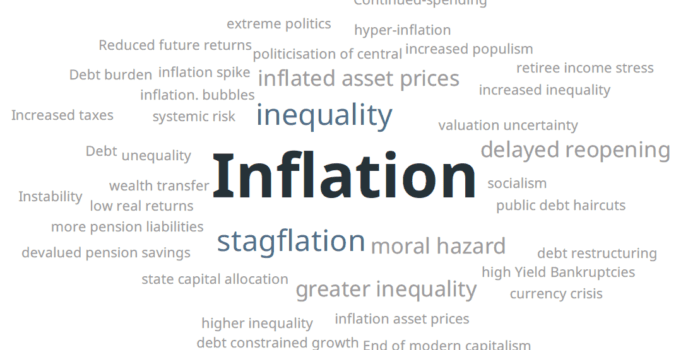
What do you think is the number one potential unintended long-term consequence from the policy responses to the crisis? (for example inflation, or inflated asset prices)

Wordcloud