
Germany’s MetallRente ups risk, gains beneficiary enthusiasm

Germany’s €8 billion MetallRente, the pension fund for workers in the metal and electrical industries, has embarked on a new, revenue-seeking strategy. Ever since it was founded in 2001, MetallRente has prioritised a restricted and conservative strategy focused on guarantees but it has began rolling out a new equity-related product for beneficiaries that allows savers to significantly boost their exposure to capital markets.

MetallRente’s pension offerings comprises a €7.5 billion direct insurance option (MetallDirektversicherung and MetallPensionskasse) that guarantees retirement income with a focus on fixed income products. A much smaller, alternative offering, the €450 million Pensionsfonds allocation, offers exposure to the capital markets but has never attracted huge assets under management amongst Germany’s conservative saver cohort since it was launched in 2003.

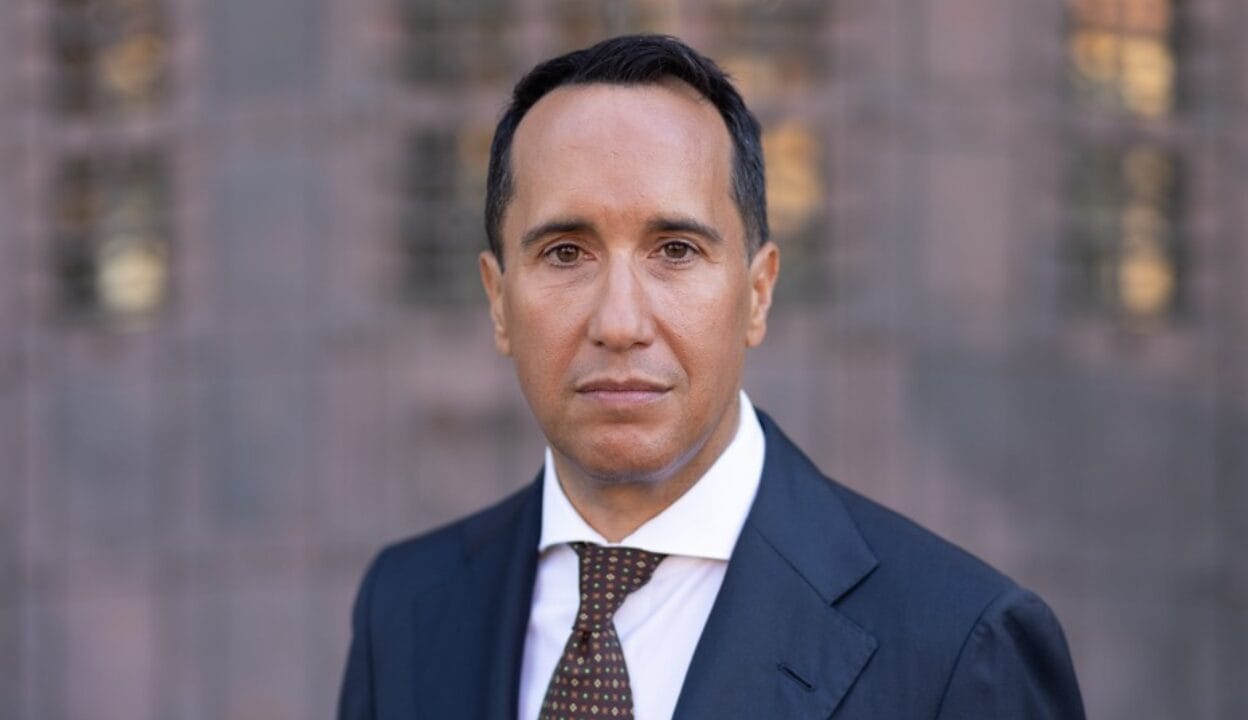
Now in a strategy that combines guarantees with risk reward, the €8 billion insurance portfolio includes an equity offering in a bold move managing director Hansjoerg Muellerleile tells Top1000funds.com he has introduced deliberately slowly.

The introduction of the new allocation, outsourced to Allianz Global Investors – sole asset manager for the entire portfolio – has trailed the wider German pension sector. Many other funds raced ahead of MetallRente in a reform process that has seen the sector reduce the level of guarantees on contributions and free up space for higher equity quotas.

MetallRente rolled out its new insurance/equity hybrid model later than others so it could tap all the benefits of a close follower, rather than risk leading the pack.

“We learnt two things from waiting,” explains Muellerleile. “We gained insights into how the market was developing around us, and we grew confident that our customers would want the product because of its low cost and simplicity.”

Sponsored Content

Muellerleile’s patience has been rewarded by strong demand, evident in the 8,000 jump in new employers (occupational contracts) since the product was offered last April. In Germany, employers choose which product to offer beneficiaries, he explains. “Over the last year, we’ve seen a big appetite for our new, insurance- based contracts that also have risk exposure. It reflects a growing and significant risk appetite amongst our customers.”

The new product offers global, passive, equity exposure of between 30-45 per cent, a ratio that is automatically scaled according to a beneficiary’s age. Meanwhile, scaling up equity risk involves lowering the insurance-based guarantee from 100 to 80 per cent.

“Risk appetite is stronger amongst beneficiaries with a high income. If people are not earning much, and need every cent for their pension, then a guaranteed income in old age is of real value,” he says.

Growing the employer base and assets under management is supporting Muellerleile’s ability to lower costs. MetallRente’s increasing scale means it is better positioned to cut administration and asset management costs paid by beneficiaries, and increase returns.

“We are in a better position to re-negotiate the costs of our contracts by growing the assets under management.”

Enthusiasm for the new hybrid product has also served to highlight lacklustre appetite for MetallRente’s Pensionsfonds allocation, split around 60:40 between risk (comprising equity and corporate bonds) and insurance products. Following an asset liability study last year, a larger element of this portfolio was moved into corporate bonds and fixed-income products after the study revealed the volatility-dampening impact of investing in corporate bonds.

However, Muellerleile says it is difficult integrating sustainability in the corporate bond allocation.

“The data on corporate bonds isn’t always great. But we manged to choose a specific corporate bonds fund that resonates with our sustainability strategy.”

Alongside continuing to attract employers to MetallRente’s new hybrid portfolio, Muellerleile will spend much of 2024 focused on how to tactically adjust the portfolio in response to market volatility. The European Central Bank has signalled it may cut interest rates from June from an all-time high of 4 per cent.

“The ECB is likely to adjust interest rates that will have implications for the portfolio on a tactical level,” he says.

Another focus will be incorporating anticipated changes in the EU’s Taxonomy. Pressure for a faster transition – and bias to other energy sources – is now likely since Europe is no longer drawing on the Russian gas that shaped much of the initial taxonomy.

“When the Taxonomy was first drawn up, Russian gas was plentiful. The Taxonomy will have to evaluate the impact of that,” he concludes.

Leave a Comment

NZ Super cuts benchmark return expectation on US valuation concerns

NZ Super cuts benchmark return expectation on US valuation concerns

A view that the US stock market is overvalued and equity risk premia will be lower over the long term has driven New Zealand Super to lower the return expectations for its reference portfolio following its recent five-yearly review of the benchmark. Co-chief investment officer Brad Dunstan also flags underweight commodity exposure as an area to address and explains why the fund remains sceptical of illiquidity premia despite seeing a growing case for private markets.

Sort content by

URS bets on nuclear to power AI and lower emissions

Next-generation nuclear energy, and the money pouring into it, will truly change the world, according to CIO of Utah Retirement System John Skjervem. It’s a lonely position as the CIO of a public pension fund but one Utah is embracing as it builds out early-stage investments in nuclear energy as part of its alternative energy portfolio. He speaks to Sarah Rundell in an exclusive interview about how investing in transformational energy technologies can be part of prudent investment management.

Managing volatility and inflation: Constant rebalancing shores up UK’s lifeboat fund

A keen focus on rebalancing, and best in class systems, allows the UK’s £31.2 billion Pension Protection Fund to effectively implement a dynamic hedging strategy for one of the UK's biggest LDI portfolios. Sarah Rundell reports.

Velliv reset: More Danish funds lean into low cost DC model

In Denmark’s fiercely competitive commercial pension industry, Velliv was quick to take action with a root-and-branch overhaul of its pension provision when it experienced a drop in returns in the first half of 2024. It sacked its active equity managers, scaling up internal active strategies and low-cost, index-based investments instead, and stopped allocating to its $4.3 billion alternatives allocation. Thor Schultz Christensen, deputy chief investment officer at Velliv, unpacks the change.

Ohio sounds warning bells on PE liquidity logjam

Farouki Majeed, chief investment officer of the $23 billion Ohio School Employees Retirement System, has highlighted worrying signs in private equity that resulted from a backlog of exits, including industry murmurs that some GPs are having to borrow money to operate their business because LP fees are drying up. In an interview with Top1000funds.com, Majeed unpacks why its 12 per cent PE allocation is shielded from the rout.

Funds SA cuts active risk as CIO puts stable beta first

Australia’s $36 billion Funds SA has slashed tracking error in its equities book and is reorienting its philosophy around stable beta, as chief investment officer Con Michalakis argues the role of alpha in a multi-asset portfolio needs a fundamental rethink.

La Caisse’s oil exit pays off as renewables portfolio pulls ahead of fossil fuels

Divesting from the oil sector has been a boon for La Caisse’s performance, as the Canadian pension giant says its energy investments have earned billions in value-add compared to the benchmark since the inception of its climate strategy. Head of sustainability Bertrand Millot unpacks the fund’s approach in an interview with Top1000funds.com.



