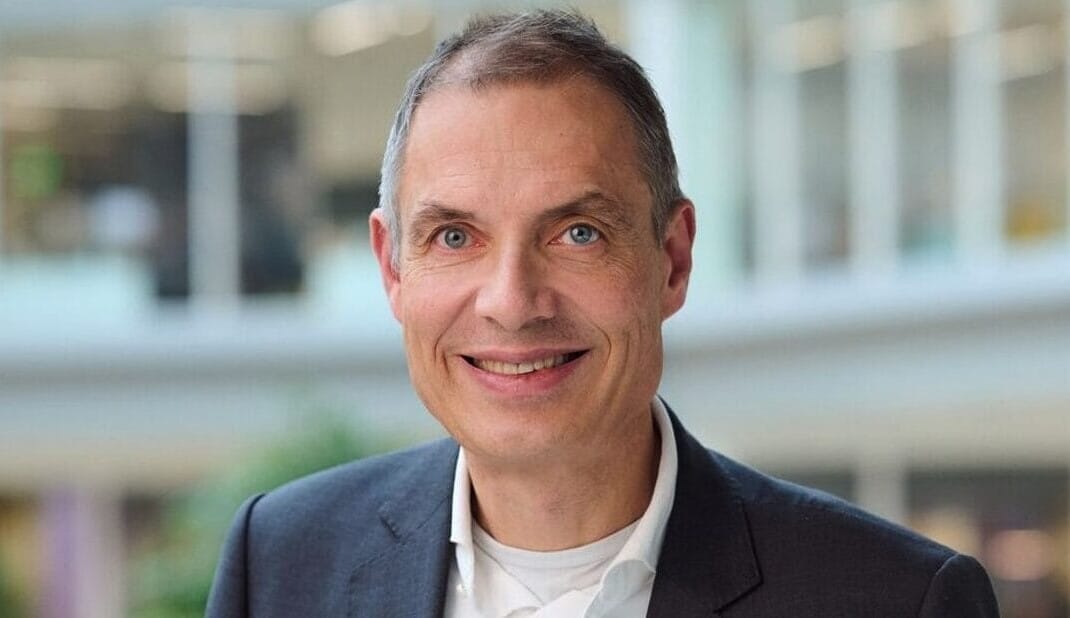

APG’s Wuijster reflects on investing more in defence

APG Asset Management which manages €552 billion ($624 billion) for Dutch pension fund Stichting Pensioenfonds ABP is pondering increasing its existing $2.5 billion allocation to the defence sector.

“Defence has always been on our radar; we haven’t excluded it,” says Ronald Wuijster, chief executive of APG Asset Management. “We are already in this sector and could do a bit more over the next five years.”

Many European pension funds cap investment in the defence sector and exclude defence stocks because they fall foul of ESG filters. Yet geopolitical uncertainty and continued war in Europe is leading the continent’s pension funds to review the ethics of investing in the industry.

Wuijster prefers to frame the argument to invest more in defence around security rather than buying weapons.

“Defence is a means of security. Everyone appreciates security, including members of pension funds.”

In this way, investments could include assets like dual usage technology comprising quantum computing, cyber security or radar and drone technology. Other potential investments could include owning and investing in military buildings whereby pension fund investment frees up government budget to invest more in weapons, indirectly playing a role.

Sponsored Content

He said any increased allocation must fall within the boundaries of a good return and benefit the world from a security perspective. He also warned that any additional investment must begin with government leadership. “It’s not the role of a pension fund to defend a country or a region, it’s the role of government. It starts with the government and then pension fund investment could play a role.”

Investing in security for impact chimes with wider investment themes around impact and infrastructure where ABP plans to allocate more following its announcement to invest $34 billion in global investments with real world impact.

The impact allocation will have a strong focus on infrastructure where ABP targets around $12 billion in climate and biodiversity investments; assets like affordable housing and the energy transition will account for the remaining €10 billion.

“We are interested in expanding infrastructure because there is a big demand and it’s a way to have an impact,” says Wuijster.

Although most of the investment will be focused on private markets, Wuijster says APG will also invest for impact in the capital markets.

APG Asset Management’s latest one-year investment return of 8.9 per cent reveals that private markets lagged public markets. Although the allocation to private markets has performed well and beaten peers and benchmarks, the stellar performance of tech stocks in the Magnificent Seven outshone private markets. Wuijster cautions it’s far too short a period to compare public and private markets due to the different principles used to determine valuations.

“To do that, you need to take a longer period, perhaps even 10 years,” he says.

He remains confident that the private equity portfolio is well positioned and says the team are comfortable entering new investments. “We don’t think we have exaggerated valuations in our portfolio analysis. Actually, the portfolio is conservatively valued.”

Still, he notices that broad private equity market valuations have moved up higher and investors are struggling to realise investments in an environment where listings are difficult. The latest challenges also serve as a reminder that private equity is not better than other asset classes “every year” and is not “a guaranteed bet.”

Wuijster is also spending time fine tuning total portfolio management. Balance sheet and asset liability management has always been a key policy at APG, but has become more important in recent years driven partly by the country’s migration to a new pension system guided by new laws that places more emphasis on asset liability.

He says total portfolio management strategies include homing in on hedging interest rate risk and how best to deliberately manage currency risk given it’s also a diversifying factor. Liquidity, and optimal diversification of the portfolio across strategies and names, also falls under total portfolio management. He adds that it is distinct from LDI which is more insurance-orientated does not include allocations to risk.

“Pension funds should take a certain amount of risk,” he says.

The challenge of long term investing

Wuijster also reflects that it is getting more difficult to be long-term.

The attention the investor attracted when it sold a $585 million stake in Tesla on behalf of its main client late last year as part of an “optimisation strategy” in the index portfolio was a case in point. Wuijster reflects how “many people found” the decision “strange” because Tesla’s share price increased in December 2024, yet the strategy attracted praise when shares declined in the first quarter of 2025. Yet neither was merited because both analysis is based on short-term analysis.

“We invest based on inclusion, in which criteria such as climate, biodiversity, human rights, and good governance play a role. This policy results in a very diversified portfolio that historically yields a return comparable to the broad market; is very well diversified, liquid, and expected to be more resistant to risk. If you change the strategy and move from one approach to another, that implementation costs money. That cannot be avoided. That result should, therefore, not be judged in the short term.”

“It’s not that we are not analysing and can’t act on a particular day, but we are in for decent return at responsible risk level and pension fund asset management is about balance or risks and return for a long-term horizon.”

APG invests based on analysis of four elements comprising return, risk, cost and sustainability, and that hasn’t changed,” he concludes, adding that sustainability has never dominated every other element and can’t go at cost of return but its valuable information for risk management purposes.

Leave a Comment

How CPP is evolving risk management for a faster, more interconnected world

How CPP is evolving risk management for a faster, more interconnected world

In an environment where multiple risks are emerging and their effects are compounding on the portfolio, CPP Investments' chief risk officer Priti Singh says the $572 billion fund is rethinking risk management from the ground up, shifting from reaction to preparation and embedding risk thinking earlier in investment decisions. She speaks to Amanda White about the fund's risk approach.

Sort content by

APG private markets CIO articulates the value of being based in Asia

Dutch investor APG is showing its deep commitment to Asia by installing its chief investment officer of private markets in the Hong Kong office, a prime location from which to proactively source opportunities. The fund outlines its plan to increase allocation in infrastructure and private equity while integrating impact themes.

CPP Investments, NBIM reflect on lessons from a 5-year transparency journey

The Global Pension Transparency Benchmark has been a driving force in improved transparency of disclosures and reporting among global asset owners. As the project comes to its close after five years, two leading funds reflect on why transparency has been a clear focus for their organisations. 

NEST’s private markets strategic review includes manager scrutiny

NEST is conducting a strategic review of its private markets allocation to ensure the program – launched in 2020 – is still capturing a liquidity premium for its young member base. Its private market head explains the key seams including no performance fees and evergreen structures to monitor deployment.

UK corporate DB consolidation: TPT throws its hat in the ring

Trustees and employers overseeing the UK’s 5,000 corporate pension plans, which hold an estimated £1.2 trillion ($1.6 trillion), have another option to help manage their defined benefit assets following TPT Retirement Solutions' proposal for a new superfund that will access managers through a fund-of-funds structure.

Fordham University dials up growth equity, cools on private credit

Fordham University CIO Geeta Kapadia is cutting back on private credit, calling it an asset class “less able to financially engineer returns” in a higher-rate world. She’s instead redirecting the $1.1 billion endowment to venture and growth equity and entrusting larger mandates to a smaller roster of high-conviction managers.

‘So far so good’: Sweden’s FTN bags 150bps equity fund return improvement

In an endorsement of its hard work over the last year, Sweden’s Fund Selection Agency, which procures and monitors the funds on offer on the country’s premium pension platform, is already starting to see improved returns and lower fees from the wave of new equity funds it mandated.

Previous



