
AP7 prepares to re-tender and add mandates

AP7, Sweden’s SEK 849 billion ($90 billion) DC state pension plan, is in the process of re-tendering mandates in its large ACWI exposure in accordance with procurement rules. Mandates for the passive, global, allocation are currently run by State Street Global Advisors, Northern Trust and BlackRock.

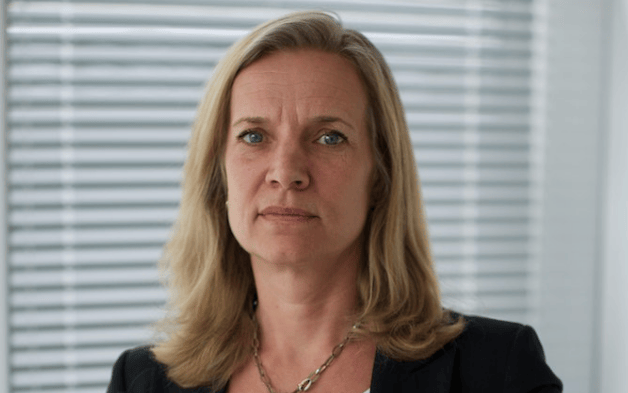
“We have just entered a new phase in our procurement process for a big part of the portfolio; it’s quite a large mandate,” says chief investment officer Ingrid Albinsson speaking to Top1000funds.com from the fund’s Stockholm headquarters.

The bulk of AP7’s equity exposure, which in turn accounts for the vast majority of the portfolio, is and will remain in the global market cap ACWI allocation.

Still, she notes that in global equities AP7 is beginning to diversify away from its pure market weighted ACWI index. Other allocations with a risk premium include private equity, small cap, some thematic strategies and some alpha strategies – where new mandates are also being added.

The small alpha allocation currently comprises three equity neutral long short mandates, two of which are run by Japanese managers (Nomura and Sumitomo Mitsui Trust) and one is with an internal team.

“We are in the process of adding mandates to some of alpha strategies,” she says. “We will communicate the details as soon as we can, but we are planning to increase the number of mandates.”

Sponsored Content

The current fine tuning of the equity allocation reflects the outsized role equity plays in the portfolio. AP7’s main life cycle product comprises a small allocation to fixed income (primarily Swedish exposure) with all the remainder in equity in a full throttle approach.

Established in the late 1990s, AP7’s guiding belief is that risk is essential to generate returns. Others include diversification – AP7 invests in over 3,000 companies spread across all the world’s sectors and regions – sustainability, long term strategies that benefit from mean reversion in asset prices over time, transparency and an active approach shaped by key objectives of AP7’s savers that include building cost efficient blocs. In the past 10 years, AP7’s fixed income fund has returned 13 per cent compared to 326 per cent by the equity fund.

Leverage

Leverage is also a key part of strategy, specifically used to boost global equity risk and create a more efficient risk exposure in contrast to other funds that use leverage to diversify or reduce correlations.

“We can take on a bit of risk – and to get that additional risk we use leverage. We could add risk via a number of strategies, but we add risk where it suits us best and this is via leverage on our global equity exposure.” AP7 sources its leverage from OTC derivative total return swaps.

The level of leverage, currently set at 115 per cent, is determined by the fund’s risk framework based on long-term analysis. It is neither tactical nor dynamic but shaped instead around the design of AP7’s Life Cycle product.

“We are systematic and long term. Everything is related to the risk premium in the equity market and valuations in the equity market.”

Managers

Around 80 per cent of the portfolio – the bulk of physical assets – is invested with a growing cohort of external managers. Fixed income, the derivatives programme and currency strategies are managed internally. A Swedish long-short equity mandate, the risk framework and all holistic management of the fund are also managed internally by a team of eleven.

“There are a lot of building blocs to our structure,” she says.

Re-tendering and hunting for new manages will be easier now COVID restrictions are easing and allowing face-to-face meetings, notes Albinsson.

“Meeting managers physically in their locations is a very important part of the long-term relationship. It’s important to be able to meet beyond just digitally.”

She concludes that the fund selects managers based on their product, cost efficiency and quality.

“We look for a long, proven track record and appreciate managers aligned with our objectives and philosophy. We develop things together; external managers are a strong part of us.”


Asset Owner:AP Fonden 7 (AP7)

Leave a Comment

How CPP is evolving risk management for a faster, more interconnected world

How CPP is evolving risk management for a faster, more interconnected world

In an environment where multiple risks are emerging and their effects are compounding on the portfolio, CPP Investments' chief risk officer Priti Singh says the $572 billion fund is rethinking risk management from the ground up, shifting from reaction to preparation and embedding risk thinking earlier in investment decisions. She speaks to Amanda White about the fund's risk approach.

Sort content by

LACERA: It’s all in the process

In an interview with Top1000funds.com, Los Angeles County Employees Retirement Association CIO John Grabel explains how the fund's deeply ingrained investment processes guide the pension fund through times of uncertainty.

IMCO reconsiders US exposure as geopolitical landscape shifts

The Investment Management Company of Ontario is re-evaluating its US exposure amid concerns over the ongoing trade war and growing US debt and deficits. In an interview with Top1000funds.com, CIO Rossitsa Stoyanova outlines how the fund continues to internalise with a focus on private assets.

Alpha at North Dakota: Tracking error key to portfolio construction

The $8 billion North Dakota Department of Trust Lands is rolling out a core-satellite approach to portfolio construction in a bid to control tracking errors. But CIO Frank Mihail explains that in some asset classes like infrastructure, the process is more complicated.

How NBIM spots portfolio managers’ biases using AI

Norges Bank Investment Management is using an internally developed engine powered by AI to monitor and measure its portfolio managers’ skills, aiming to improve efficiency of trades and decision making, and save costs. Head of Singapore and co-head of equity trading Sumer Dewan gives a run-down of the program.

Future Fund to internalise some local real assets amid US uncertainty

Australia’s sovereign wealth fund says managing FX in its portfolio is becoming more challenging as the dominant role of the US in the global order is redefined. Meanwhile, it’s also bringing management of Australian infrastructure and property in-house as part of a focus on domestic real asset exposures.

Canada’s CAAT pension fund ups real assets

The $23 billion Toronto-based Colleges of Applied Arts and Technology Pension Fund (CAAT) is increasing its allocation to real assets in line with a new asset liability study completed last year, finding rich pickings in Canadian transition infrastructure.

Previous



