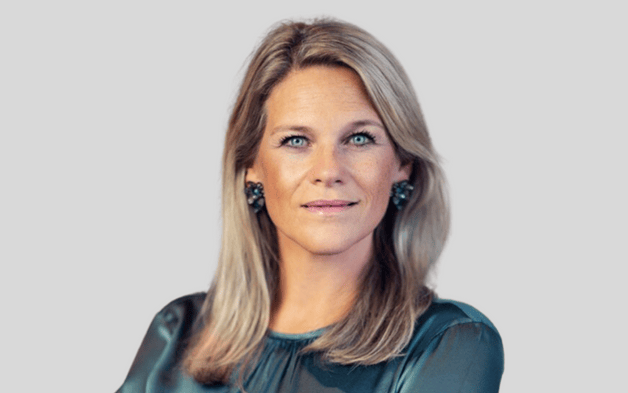

Robeco: Leadership, data, sustainability and talent key to year ahead

It’s said that the roads leading to Maastricht’s city centre are curved to help prevent any attack on the beautiful city, famous for hosting the beginning of Europe’s economic and monetary union in 1992. In these uncertain times, beating a path back to Europe’s shared centre has never felt more challenging, said Karin van Baardwijk, chief executive, Robeco, speaking in the opening session of the Fiduciary Investors Symposium at Maastricht University.

That uncertainty is reflected in Robeco’s recently published five-year outlook which cites a reversal in monetary policy, inflation, climate change and volatility as key risks ahead. “It’s become very tough to forecast the future,” van Baardwijk told attendees going on to highlight the key areas where Robeco sees change and will focus in the year ahead.

Sustainable investment

Sustainable investment will be accelerated by a wave of new ESG policy interventions that will increasingly override the wrong incentives. Sustainable investment is mainstream, and current discussions now focus on how portfolios can have a positive impact on society. “There is still a long road to travel, but change is encouraging,” she said. “Legislation and changing consumer demand means every company is impacted by sustainability.” Moreover, ESG investments are increasingly comparable, preventing greenwashing.

Pioneering initiatives to progress the integration of sustainability at the asset manager include developing a biodiversity investment framework with the support of WWF, stakeholders and regulators. “We are raising the bar on integrating sustainability in all investment decisions,” said van Baardwijk. “Inaction is the biggest threat to all.”

So far, Robeco has decarbonised its portfolio by analysing and picking stocks; finding companies that contribute to the climate transition and generate healthy profits. In another endeavour, Robeco is giving clients and academics free access to some of its proprietary SDG data. In response to what van Baardwijk called a moral imperative, the company is sharing its SDG scores to help others learn from Robeco’s data and integrate it into their decision making. Opening the process also invites more expertise into Robeco’s own processes. “We want to get wisdom and feedback from the crowd,” she said.

Data

Data will become another key focus for investors in the coming years, providing a source from which they can derive alpha. The amount of data available to inform investment decisions is increasing at high speed, but investors are at risk of falling behind if they don’t secure the talent needed to interpret these new data sets.

Sponsored Content

Talent

The digital revolution leaves investors hunting new skills, particularly around data analysis. The battle for talent won’t decrease even as growth slows, she warned. Investors must remain flexible and innovative in their hunt for and retaining of talent. “To build a talented team, we need to maintain a culture of excellence and integrity,” she said. “We need to stay the course, and make sure responsible investment is at the heart of everything we do.”

Leadership

Leadership is an essential pillar in talent management. van Baardwijk stressed the importance of leadership instilling a message of hope and the need to prioritise technology.

Successful leadership also involves instilling key principles around long-term investment and corporate engagement. As stakeholders’ expectations grow, so investors need a clear vision. Investors should show flexibility and transparency around reporting and their investment outcomes. For Robeco, today’s challenging investment environment reinforces the need to remain true to the asset manager’s fundamental vision and commitment to promoting economic stability and ensuring returns flow back into society. It is also committed to a low carbon world and protecting biodiversity, allocating capital to companies that are leading the transition. Robeco recently set out interim carbon footprint targets for its investments and operations for 2025 and 2030, on its way to net zero by 2050.

Leaders also have a key role in building partnerships. She urged asset owners to lean into asset managers expertise and predicated asset owners will begin to have fewer, deeper relationships with their asset managers. “Asset owners will interact with fewer asset managers but in deeper relationships.” She predicted that pension funds will also become a leading voice around societal change, arguing that pension funds have a unique voice when it comes to influencing governments given their assets under management and a representation of society as a whole.

Active management

A final trend comprises a switch from passive to active investment. In today’s volatile environment, active investors are best positioned to deliver results. Moreover, an active approach is the most effective way to factor in sustainability needs and objectives. Opportunities exist amid the challenges too and active investment is a chance for skilled investors to tap alpha. She concluded that the combination of encouragement, active management and evolving regulation would make generating sustainable returns possible.

Leave a Comment

The twin forces rewriting the rules of investing

The twin forces rewriting the rules of investing

Portfolios built for the old world will be severely tested as emerging forces rewrite the rules of investing. The Fiduciary Investors Symposium heard that geopolitical and macroeconomic upheaval, together with the disruption wrought by AI, should force asset owners to rethink the structure and composition of portfolios.

Sort content by

Why China thinks it will lead the next industrial revolution

While China was mainly a beneficiary rather than a participant of previous industrial revolutions, it now believes it can lead the next one, and the US will have to work hard to catch up to its extraordinary capacity and speed for development.

Lessons from the middle: Leadership, resilience and the courage of conviction

The principles of high-performance leadership – whether in business or sport – remain remarkably consistent and include the ability to maintain clarity, integrity, and conviction under immense pressure. Former Australian test cricketer Usman Khawaja told the Fiduciary Investors Symposium that the only time you really lose is when you stop trying.

Steering portfolios through a fragmented world

As stagflationary shocks flip stock-bond correlations and the illiquidity premium in private markets proves elusive, the investors best placed to navigate a fragmented world are those with the governance infrastructure to deploy capital when others are forced to sell.

Private markets enter era of ‘true alpha’

Allocators are interrogating their private markets investments more rigorously as institutional investors question whether unlisted asset classes are entering an era of “true alpha” where managers skills are put to test. This trend is especially salient in private equity, and at FIS Singapore, asset owners and managers weighed the thesis around the asset class.

‘Math wins’: Why investors should push harder on fiscal discipline

Investors need to start demanding that governments act with more fiscal discipline as ballooning debts on sovereign balance sheets around the world approach a breaking point, MFS Investments, one of the world’s oldest asset managers, said at FIS Singapore.

Why allocators need a ‘continuous exploration’ mindset for AI adoption

Asset owners are seeing a major shift in data management and analytics as AI enables more efficient investment processes. CPP Investments and OPTrust outline how the technology is being progressively integrated into their funds.

Previous



