
SDGs remain the roadmap out of crisis

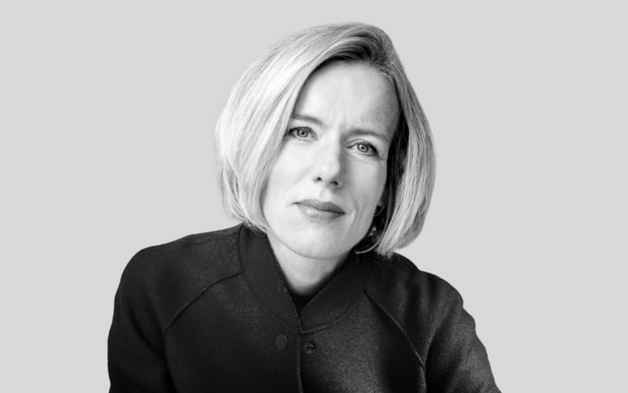
APG’s Claudia Kruse reflects that the climate emergency, COVID and conflict has put SDG delivery at risk. But the SDGs remain the best roadmap out of crisis and the investor’s Asset Owner Platform has become an important tool supporting its quest to invest with impact.

At APG sustainability and digitisation are overarching themes shaping strategy. Recently, the giant Dutch asset manager combined these twin pillars in a Sustainable Development Investment (SDI) Asset Owner Platform, driven by AI technology.

Developed together with PGGM, the platform sifts through reams of structured and unstructured data to gauge the extent to which companies’ products and activities meet the SDGs. “The platform combines the core themes running through APG of sustainability and digitisation,” said Claudia Kruse, managing director, global sustainability and governance, APG, speaking at FIS Maastricht “These are the skills sets for the future.”

SDGs under threat

The UN says the SDGs are the world’s roadmap out of the crisis and remain the most compelling global and all-encompassing blueprint for those seeking to achieve real world sustainable outcomes.  Meanwhile investors are increasingly incorporating risk, return and impact in a three dimensional model. But Kruse countered that the climate emergency, COVID and conflict has put SDG delivery at risk.

APG began integrating the SDGs in 2015 following requests from its major client pension fund ABP whose beneficiaries work in the government and education sectors. The platform, launched in 2020, is designed to deliver on the SDGs and support positive outcomes. It has been created by investors for investors, and is shaped around innovation and cooperation. It has also become a crucial tool in APG’s target to invest 20 per cent of its AUM in the SDGs.

The platform is used for monitoring achievement, risk management and accountability and includes progress reviews and a forward looking lens, she said. SDG analysis on the platform initially began with equities but now covers fixed income.

Sponsored Content

The platform scores companies’ products and services rather than corporate conduct, the traditional ESG lens. Enthusiasts argue that SDG scores are better at integrating impact. For example, research shows that some companies with poor SDG scores can secure good ESG scores and ESG ratings can struggle to reflect positive impacts.

Human judgement

Data is a crucial part of SDG analysis, but so is human judgement. The platform’s AI component uses natural language processing and algorithms modelled to specific topics to score and rank companies. But human judgement is important to assess platform insights on allocations with a negative contribution to the SDGs but important support for the climate transition, like transition minerals.

Analysis is focused on companies making a positive or negative contribution to the SDGs. But she noted every investor looks at the process from their own perspective and asset owners use the platform in different ways. For example, APG’s own internal portfolio managers have integrated the technology but other investors use the platform to monitor their external managers, using it to set them targets. Others use it for risk assessment and reporting.

The platform also provides key insights for investor engagement. She noted that investors have clear exclusion policies. However, the case for divestment is usually the consequence of unsuccessful engagement over time.


Leave a Comment

The twin forces rewriting the rules of investing

The twin forces rewriting the rules of investing

Portfolios built for the old world will be severely tested as emerging forces rewrite the rules of investing. The Fiduciary Investors Symposium heard that geopolitical and macroeconomic upheaval, together with the disruption wrought by AI, should force asset owners to rethink the structure and composition of portfolios.

Sort content by

China tech rivalry is ‘existential’ for the US – and diversification

Decades of US economic and financial supremacy have made diversification away from it a drag on returns for many investors, but the forces that have underpinned that supremacy may now be coming to an end.

Rethinking portfolio construction at the human-AI nexus

As artificial intelligence models become more sophisticated, asset owners and managers are rethinking portfolio construction as an activity sitting at the nexus of human and machine, which means gaining an edge over the market increasingly needs investors to tap into the wisdom from both sources.

Investors boost inflation-hedging amid geopolitical conflicts; eye tactical shifts

Inflation hedging is back on top of the agenda for investors as conflict in the Middle East drives up energy prices globally, but the FIS Singapore heard that many portfolios are not well-prepared for the broad ways through which inflation can creep through. The new era of significant trade and capital flow shifts driven by modern mercantilism is also throwing out TAA opportunities.  

The China-plus-one ‘reality check’ investors need

While the dominant economic narrative has been that supply chains are shifting out of China amidst rising geopolitical competition and that the ASEAN countries are obvious beneficiaries, the truth is more nuanced.

‘Decay’ and renewal: Stephen Kotkin on the two sides of today’s geopolitics

While war weighs heavily on the world’s mind and its portfolio impacts are acutely felt by investors, celebrated geopolitical expert Stephen Kotkin said there is another thing that troubles him even more in today’s society: the "decay" of government performance.

AI will revolutionise investing, but machines won’t carry the can

Tokenisation of traditional assets will lead to a boom in on-chain trading, and that in turn opens the door to AI-agentic trading. But there are risks that AI agents may behave in unpredictable ways and, despite the hype surrounding the technology, still produce unexpected investment losses. In these cases, it will typically still be the CIO who bears responsibility – so they’d better understand what their AI agents are up to.



