Damian Graham, the CIO of First State Super, considers his position unique. He is responsible for the management of A$70 billion ($49.4 billion) in accumulation assets but he also has dual oversight of A$25 billion ($17.6 billion) in retirement assets.

That second number is only set to grow as more Baby Boomers finish their working lives and prepare to enjoy the fruits of their labours. By some estimates, Boomers make up about 25 per cent of Australia’s population but own more than 50 per cent of the country’s private wealth.

The assertion that the nation is on the verge of the biggest intergenerational wealth transfer in history is almost ubiquitous, with more than $3 trillion expected to move between Baby Boomers and those to whom they choose to pass their money within the next 20 or so years.

Graham, who joined First State Super in 2012 from banking behemoth Macquarie Group, admits the level of retirement assets makes his portfolio “a little bit unusual”.

“Even among very large funds in the marketplace, very few have anywhere approaching that sort of size of retirement assets,” he says.

“It really does create, for us, a unique opportunity and responsibility to continue to evolve in the way we’re investing for the retirement phase.”

When Graham joined First State Super, which was established in 1992 as a profit to-member fund open only to NSW public sector employees and their families, he was responsible for its accumulation and pension assets and also for the investment assets, as a result of the acquisition of StatePlus in June 2016.

In August 2017, the investment teams of First State Super and StatePlus were combined to leverage greater size and expertise at managing assets in accumulation and pension phase, for both advised and self-directed members.

Graham says Sydney-based First State is a business that is now built around “retirement investing”.

In the accumulation phase, its default-style products are three-quarters growth assets such as equities. The fund also defines its property and infrastructure assets as “growth”. Graham says there is also a “good component” of hedge fund-style investments, plus traditional defensive assets such as fixed income and cash.

Critical mass

For the pension-style strategies, Graham says, the total assets end up being “broadly half defensive, and half growth”, and he is keenly aware of the sequencing risks associated with retiree cohorts. “The great opportunity we have as an investment function is that we feel like we have real scale in both accumulation and pension. Whilst that’s the way the industry is heading, most funds don’t have critical mass in their pension assets,” he says.

“That makes us a little bit…different. Historically, the First State portfolio itself has come from being…a little bit more of a vanilla-type portfolio, so quite a lot of assets in listed securities, to one [where] we’ve progressively been building up more unlisted securities over the last five years.”

First State has a 75-strong investment team, which Graham plans to expand, and uses Willis Towers Watson as its asset consultant. He adds that the fund also makes use of esteemed global consultants who specialise in pensions.

Ashby Monk, research director of the Stanford Global Projects Center is one such specialist with whom First State Super has consulted. Another is Gordon Clark now director of the Smith School of Enterprise and Environment at the University of Oxford, where he is an adviser to companies on issues such as long-term environmental performance.

“These gentlemen have consulted to our fund over time to help us consider some of the challenges that face larger asset owners,” Graham says. “We feel like the system’s going to keep growing. We’re well placed to continue to grow as well.”

First State Super’s investment team is similarly academic.

“We’ve drawn our team from all sorts of backgrounds, certainly investment banks, fund managers, consultants, specialist advisers, academia,” he says. “We have some people who have come to us directly from finishing PhDs. We’ve built up a quant team in the last few years, we have certainly leveraged people coming out of academia.”

First State Super also uses the services of between 40 and 50 investment managers, a situation Graham says will remains stable, despite the fund’s increasing interest in investing in a range of unlisted assets.

“We have had a change of a few managers…but our expectation is we won’t get to a position of having all the money internally managed or externally managed,” he says.

Graham says when he joined from Macquarie he felt that the fund, and other funds, were “at arm’s-length” from investments, meaning there was less transparency around costs, which could “lead to less-positive outcomes”.

“I felt because super funds aren’t dealing directly with the market, they don’t get access to the information,” he says. “They don’t get access to the opportunities. They don’t really understand where all the costs are occurring through the value chain.

“Most super funds have traditionally been outsourcing in their investment management. With that process, you don’t have the day-to-day visibility of what’s happening in the investment markets. You’re not having conversations with market participants the way you do if you’re dealing directly in securities.”

Vanilla no more

“We’ve certainly been building up strategies in equities, in the credit markets, in direct property, direct infrastructure, that have really availed us of much deeper information,” he says. “Also [this gives us] a much greater set of opportunities to be able to drive what we think are better portfolio opportunities, outcomes and scale benefits, through lower fees over the long term”.

After its inception in 1992, First State Super opened its doors to all Australian retirement savers. Its 2011 merger with Health Super made it one of the country’s largest super funds. It now manages money on behalf of 800,000 Australians.

Since 2012, a range of new investments have allowed the fund to move from what Graham terms more “vanilla assets” to unlisted or alternative assets in both its First State Super and StatePlus portfolios.

It has expanded its definition of real assets, which have traditionally been toll road or CBD office building exposures, as those types of assets have become more expensive.

“We’re trying to be quite flexible in our thinking around what we’re seeing and how we define real assets,” he says.

This has led to a range of newsworthy investments. A recent example was the fund’s successful bid to operate Victoria’s land titles and registry functions, in which First State paid A$2.86 billion ($2 billion) for a 40-year concession to operate parts of the state’s registry business.

First State made its first move into this burgeoning asset class in April 2017 as part of the Australian Registry Investments (ARI) consortium, which was the winning bidder for a 30-year concession to run New South Wales’ land registry business – the country’s largest.

“When you think about those, they’re not a traditional infrastructure asset like a toll road or a port; they really are somewhat unusual,” Graham says.

Other recent transactions First State Super has been involved in include backing the potential of the build-to-rent sector, partnering with property giant Lendlease to set up a $1 billion  investment platform to fund developments across the US.

Last year, First State Super also became one of the first pension funds in the country to secure a Qualified Foreign Institutional Investor (QFII) licence, allowing it to invest in Chinese stocks listed on mainland markets.

“Certainly, in the last 12 months or so of investing there, we feel it has proven so far, in the short term, to be a market with greater alpha opportunities than average, because of lower levels of efficiency,” Graham said earlier this year. “We’ve seen very significant alpha for our listed A-shares exposure.”

Graham is also supportive of comments made recently by IFM Investors’ Garry Weaven, who said industry super funds could potentially partner with banks, which are facing pressure from looming lending restrictions emanating from regulatory change.

It is something he says could become a “prospective marketplace”.

“The changing global bank regime and the way that’s affecting the big four banks in Australia is something that we’re benefiting from…We’ve made six direct loans to date and we expect to continue,” he says.

And what of the possibility of a super fund owning 100 per cent of a business? Graham says, “There certainly is the potential over the longer term. We think it’s a great virtuous circle around us being able to invest in areas of the economy, communities where our workers live and retire.”
For the first time since 2010, the €36 billion ($41 billion) Fonds de Réserve pour les Retraites, France’s pension reserve fund, will not take on more risk in its asset allocation.

Since its asset/liability modelling in 2010, the fund has added risk every year, resulting in the return-seeking portion of the portfolio shifting from an allocation of 38 per cent in 2011 to 55 per cent this year.

Now, FRR executive director Olivier Rousseau says the fund will not increase the return-seeking proportion of the portfolio, instead keeping the split static at 55/45 (return-seeking and hedging).

“Each year, we have been able to put more risk on the table, and that’s been a constant approach,” Rousseau says. “But this year, when we revised the strategic asset allocation, we recommended not taking any more risk. We think the state of the global markets doesn’t warrant taking more risk.”

Rousseau and the team at FRR say “good quality credit is massively overvalued”, especially in Europe.

“We have a real fear that inflation will show up in the numbers more than it already has,” he says. “And there are odds interest rates will be higher. We hated and still dislike rates but, at the same time, equities are expensive.”

He says the US equities market, in particular, is expensive, and while there is some value in Japan, emerging markets and the eurozone, there are also risks.

“On balance, we don’t want more equity risk,” he says. “We are emphasising more diversification and that could mean more illiquid assets.”

The fund’s allocations are built around its requirement to pay out €2.1 billion ($2.4 billion) to French public debt manager Caisse D’Amortissement de la Dette Sociale (CADES) each year between 2011 and 2024. This was a result of the French pension reform in 2010. At that time, FRR created a hedging portfolio and a return-seeking portfolio, which includes equities, venture capital and diversifying assets, including real estate, commodities and emerging debt.

Within the hedging component, the allocation is 15 per cent Treasury bonds and 30 per cent investment-grade credit, mostly in the eurozone. The fund has reduced duration by shorting US Treasuries and German Bunds, and has “significant shorts on US investment-grade bonds”.

Within equities, the fund looks to diversify beta and has a significant factor exposure that makes up roughly half the allocation to passive, or about 15-20 per cent of the return-seeking portfolio overall.

All investment management is outsourced, with a strict request-for-proposal process required by law. The fund has an internal investment management committee.

FRR is very low cost, with total expenses, including manager fees, of about 20 basis points.

Rousseau says the portfolio may be affected by pension reform again soon, as more is due in France next year.

“This might change dramatically in a year, when pension reform is finalised, and we could be less asset/liability driven and more assets only,” he explains. “Our net present value of liabilities is 50 per cent of assets, so there is no issue of solvency now.”

Out front on ESG

FRR is a leading player in ESG integration and was one of the first funds in Europe to incorporate climate change into its portfolio, initially as a risk-management exercise.

“We decarbonised the portfolio because our conviction was the endgame can’t be anything else but governments waking up and putting a price on carbon,” Rousseau says.

The pension fund has developed a low-carbon leaders index with MSCI, Swedish pension fund AP4 and asset manager Amundi. It is addressing the decarbonisation of its smart-beta mandates.

In addition, FRR has small- and mid-cap mandates focusing on ESG momentum, a small mandate for thematic funds in the environment, infrastructure funds targeting energy transition and, in the second quarter of next year, will launch an impact-investing mandate in global equities, excluding emerging markets, that will target the environmental and social aspects of ESG.


Pension plans are not designed for innovation, they are designed to be efficient. Yet Canada’s C$20 billion ($15.3 billion) OPTrust, the pension fund for Ontario’s blue-collar civil servants, is challenging that idea.

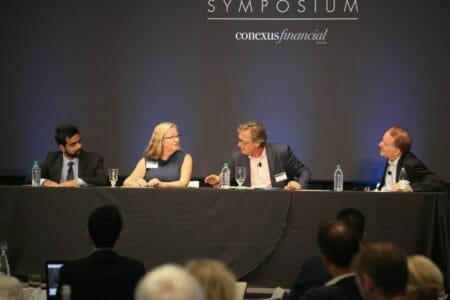
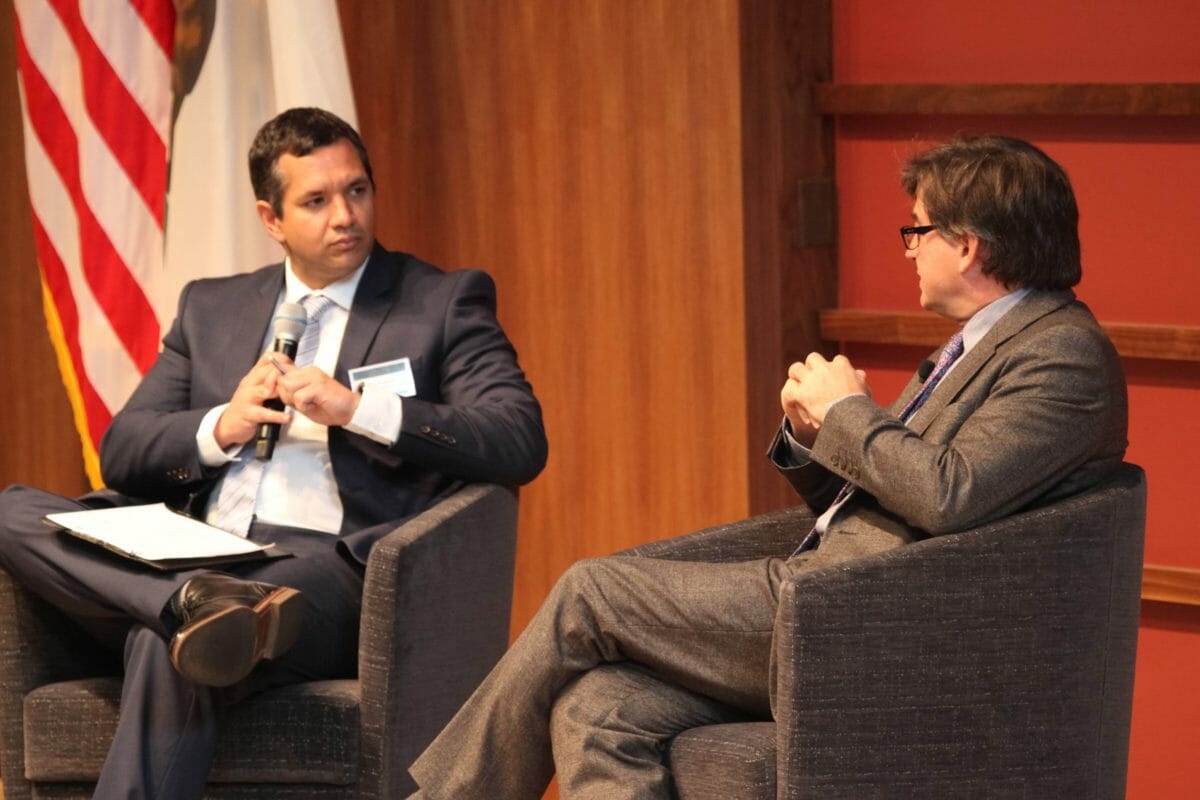
OPTrust president and chief executive Hugh O’Reilly told delegates at the Fiduciary Investors Symposium at Stanford University about the pension fund’s new entity, OPTrust Labs, where an internal research and development team will nurture and integrate innovation across administration and investment processes.

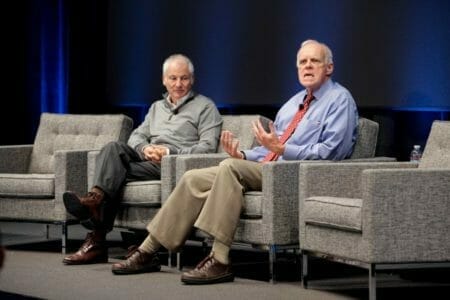
In a panel discussion with Ashby Monk, executive director of the Stanford Global Projects Center, O’Reilly said the inspiration for the idea came from an observation that OPTrust needed to be part of the innovation economy. He observed that many pension funds’ administrative processes were still rooted in the mid-1980s. The fund’s beneficiaries needed an experience like what they had with other service providers, he said, adding that innovation was about “unleashing human activity” and allowing people to take risks. It also demands a culture in which leadership listens to ideas.

For OPTrust Labs to succeed, the pension fund will have to be ambidextrous – adding innovation to ongoing efficiency. O’Reilly said OPTrust would still celebrate its “main jobs”, related to ensuring a well-funded plan and a strong investment record, but also would have a new organisation prepared to make mistakes and fail.

You can’t ask people engaged in efficiency to be innovators as well, he said. Hence OPTrust Labs comprises a separate staff of six, whose main job is innovation. They are tasked with seeking out start-ups and innovative companies developing technological solutions that could help the pension fund’s “pain points”. These technologies could include innovative ways to measure climate risk across the portfolio or help with data gathering.

OPTrust Labs will oversee the testing of new software. Money for investment will be unlocked if a software pilot transitions to a fully deployed contract. O’Reilly expects failures and aims to share OPTrust’s experience publicly via documents and case studies.

The entity will be governed by an investment committee; however, the governance will be more nimble and agile than that surrounding the fund’s wider investment decision-making process. O’Reilly also noted that OPTrust was well positioned to fund innovation because of its ability to write smaller cheques. He added that investment in innovation would help start-ups scale, something that’s a challenge for Canada’s innovative companies. Start-ups would also be able to tap into OPTrust’s network and apply their technologies across the portfolio, he said, citing how a portfolio company in Canadian general partner Yaletown Partners’ Innovation Growth Fund, in which OPTrust is a limited partner, has been able to do just that.

O’Reilly said introducing innovation at the pension fund required a change in culture. He explained that some parts of the organisation could feel threatened by the new entity and an important part of his role has been assuring people of the positive sides to greater automation.

The Netherlands ended Denmark’s six-year winning streak by clinching first place in the 10th-annual Melbourne Mercer Global Pension Index (MMGPI), released on Monday. Finland’s system ranked third, followed by Australia’s.

The index measures 34 pension systems, revealing both the Netherlands and Denmark to have A-grade, world class retirement income systems with scores of 80.3 and 80.2 respectively.

Common across all results was the growing tension between adequacy and sustainability, author of the study and a senior partner at Mercer, David Knox said.

Australia has dropped from third to fourth place in the world, weighed down by declines in household savings and the tougher age pension assets test.

In 2018, Australia’s overall index value was 72.6, down from 77.1 last year. Australia’s peak score was 79.9, in 2014.

The index is based on an assessment of both the public and private pension systems using 40 indicators to gauge adequacy, sustainability and integrity.

Knox, said ensuring the right balance between adequacy and sustainability was the “natural starting place” for a world-class pension system.

“It’s a challenge policymakers are grappling with,” Knox said. “For example, a system providing very generous benefits in the short term is unlikely to be sustainable, whereas a system that is sustainable over many years could be providing very modest benefits. The question is, what’s an appropriate trade-off?”

Knox said it was not enough for a system just to be sustainable or adequate.

“An emerging dimension to the debate about what constitutes a world-class system is ‘coverage’ and the proportion of the adult population participating in the system,” he said. “With changes in the way people are working around the world, we need to ensure these schemes include everyone so that the whole workforce is saving for the future. This includes contractors, the self-employed and anyone on any income support, be that parental leave, disability income or unemployed benefits.”

In 2018, Hong Kong SAR, Peru, Saudi Arabia and Spain were included in the index for the first time.

In the last year, the $14.2 billion South Dakota Retirement System has increased its allocation to cash and Treasury bills to about 30 per cent of assets under management, in response to high valuations and hot markets. It’s a hedging strategy that has grown in line with the fund’s reduced risk appetite and the need to counter aggregated, equity-type risk embedded across the portfolio, CIO Matt Clark explains.

Although South Dakota has only a 26 per cent allocation to global equity, similar risk embedded in other allocations has pushed the total equity-like risk in the portfolio to about 51 per cent – just within the fund’s permitted range of 50 per cent to 85 per cent. It seeps in via the 8 per cent private equity allocation, which Clark treats as a leveraged form of stocks, and also enters through the corporate high yield and real-estate debt allocations. It needs to be off-set by either selling stocks or hedging, he explains.

South Dakota’s low risk appetite sits in the context of a gradual paring of risk ever since the financial crisis, when the pension fund was invested to its maximum risk exposures. Indeed, today’s risk exposure is notably less than a year ago, when it had about 57 per cent of its money invested in equity and other assets with embedded equity risk.

“We want [equity-like risk] to be around 50 per cent of the portfolio,” Clark explains. “Our valuation models tell us that markets have breached the level of expensiveness that requires us to go to our minimum risk exposures.”

Driven snow

The cash and T-bills allocation is primed for action, ready and waiting to snap up bargains in a crisis, in a strategy that has led to South Dakota’s celebrated, benchmark-beating returns over every timeframe. Clark forgoes the temptation to earn anything more from the allocation, lest backdoor risk creep in via unexpected ways.

“We prize safety and liquidity,” he says. “We like to say we want to keep our cash as pure as the driven snow.”

Risk becomes apparent only when valuations fall, he says, recalling how during the financial crisis, sub-prime risk appeared unexpectedly in short-term money market cash pools.

“We are not interested in earning a modestly higher yield on our cash if that involves embedded risk that may be hard to understand,” Clark says. “We seek higher returns from risky assets such as stocks, especially when we are able to purchase them at bargain prices in a crisis.”

High valuations across all asset classes pose a problem for an investor whose core philosophy is to invest only in assets it believes are undervalued from a long-term perspective. Today’s few bargains of note include distressed debt in Europe and the consequences of tightening monetary conditions feeding into credit markets and emerging-market economies. South Dakota now invests in exchange-traded funds to supplement exposure to emerging markets where it would otherwise be underweight.

“Emerging markets have underperformed enough,” he says. “We don’t want to be underweight anymore.”
Clark is also keenly watching opportunities in China, where the pension fund “grew negative” and withdrew money from allocations to Chinese equities, currency and fixed assets.

“We have concerns about governance in China, and also about still-elevated levels of fixed asset investment,” he says.

Large Chinese companies remain in the pension fund’s global equity universe, which is internally managed; the fund accesses smaller names via index fund exposures. If internal management of the allocation grows challenging, Clark will find alternatives, either buying index funds or working with an external partner, he says.

Energy assets

With dry powder at the ready, Clark will strike quickly when opportunities arrive that fit South Dakota’s long-term, contrarian ethos, as they did during the 2014-15 energy crisis. While some investors are only now arriving at the party for recovering energy prices, South Dakota is getting ready to leave. Noting “exceptional opportunities” during the energy crash, the pension fund increased its exposure via mid-cap equity and high-yield credit, moving to its maximum permitted overweight.

“High yield was very cheap in late 2014, especially energy high yield. We ramped up our high yield exposure from a floor of 1 per cent to 9 per cent,” says Clark, who now believes energy high yield names have come back to fair value. “We are still overweight energy in our equity portfolios but not as much as two to three years ago.”

Piling into energy assets reflects South Dakota’s enduring conservative approach to fossil-fuel investment, Clark says. Other asset owners are beginning to integrate low-carbon strategies but Clark believes the pros and cons of fossil fuel investment form a societal question that needs to be addressed with policy leadership from national governments. Only then will South Dakota respond.

“We do not have restrictions against investing in fossil fuels,” he says. “If fossil fuels stop being profitable because governments say they will ban their use, we will act. We believe our role is to maximise risk-adjusted returns on behalf of our beneficiaries.”

Compensation

A tenet central to the pension fund’s success is its ability to nurture and retain a strong investment team. This is down to a compensation structure benchmarked against the private sector.

“Most public-sector funds have difficulty retaining people, especially their best people,” he says. “We want to emulate successful compensation models not failing ones.”

In South Dakota’s model, compensation is compared with the private sector then adjusted down to reflect the cheaper cost of living in the state, relative to other financial centres. It is then discounted a further 30 per cent to reflect the public service and mission of the retirement fund.

“We are investing on behalf of South Dakota public servants, many of whom don’t make much money. We get to try to help these people and we want to employ people who care about our mission,” Clark says.

Candidates commit to this ethos before they come in the door and in return, they can invest long term and are not judged on short-term underperformance, he says.

Although compensation is structured around a base salary, the largest portion comes via incentives. The maximum incentive is 200 per cent of the base, but if employees don’t add value above the benchmark, they can also earn zero. Performance is also tied to four- and 10-year results to encourage employees to embark on long-term strategies and overcome the fear that arises from being contrarian – that if you buy something cheap it might then get even cheaper.

“The nature of being a long-term contrarian investor involves getting over the fear of doing badly in the short term and a willingness to keep doing more of what is causing pain as the level of pain increases,” Clark says.

Compensation is also structured to encourage staff to strike out aggressively for home-run opportunities when they see them.

“A third of our incentives are stretch incentives, which you can only get if you have extraordinary performance above the benchmark,” Clark explains. “This encourages trying to hit a home run if the opportunity is there.”

Clark reflects on the seismic shifts under way in the investment workplace. Human roles in short-term trading strategies are disappearing into AI and passive strategies, with low-cost index funds and exchange-traded funds wiping out managers that don’t add value, he notes. Now active managers are also under attack from value and growth funds. Long-term contrarian investment is still “safe” because of the absence of statistically significant data but he believes humans and machines will increasingly work together.
For now, the power of judgement, subjectivity and an ability to understand context gives humans the edge.