The $56.7 billion Pennsylvania Public School Employees’ Retirement System (PennPSERS) has revealed it paid its private equity general partners 19.41 per cent of investment profits as carry between the program’s inception in 1985 and 2017. The revelation, which came after a laborious process involving 500 staff hours, comes as the fund ends its longstanding practice of reporting only the base management fees it pays GPs and begins also disclosing the split of the investment profits – or the so-called carried interest.
In our report, General Partner Ownership Interest, we look at our record so far and define carried interest and other fees the fund pays.
PennPSERS is one of the most transparent pension funds in the US regarding disclosure of management fees. For example, certain pension funds report little to nothing in management fees for alternative investments because they are considered part of the cost of the investment and are netted against performance rather than shown separately. In contrast, PennPSERS gathers management fee information from each of its limited partnerships and collective trust fund investments, even if it is not specifically disclosed in the fund’s standard reports or specifically identified in capital call requests.
Such management fee information includes both base and performance fees obtained from the fund’s administrator statement, capital account statement or financial statements. This data is then used to report all relevant management fees in the fund’s financial statements.
While the debate in the US over what constitutes a fee continues, PennPSERS will endeavour to remain transparent and report fees in accordance with current Government Accounting Standards Board (GASB) guidelines and prevailing public pension industry practice, to keep PennPSERS’ financial statements both meaningful and easier to compare with its peers. In addition, PennPSERS reports all other investment expenses, including staff compensation and overhead, plus consultant, legal and bank costs.
Additionally, at the October board meeting, the fund created an ad hoc agency committee on fee transparency. It is made up of five board members and appropriate staff. They will be looking into ways to further improve fee transparency, including how to collect and report carried interest.

Carried interest
Carried interest is the amount a GP retains as an ownership or capital interest in the investment profits of a partnership. Generally, GPs retain 20 per cent of the investment profits in a limited liability partnership, while the limited partners receive the other 80 per cent. Carried interest is earned by the GP only after the limited partners receive 100 per cent of the capital they have contributed to the partnership – including the cost of investments, fees and partnership expenses –plus a preferred return, usually 8 per cent, on the contributed capital. This GP ownership interest may be based on each individual investment as it is realised or the partnership as a whole.
There are two views on the definition of carried interest. Either a GP’s profit share on the sale of a capital asset (capital gain) or a performance fee for the manager. No consensus exists.
Under the GASB, pension plans are not required to include in the reported amount of investment expense those investment-related costs that are not readily separable from investment income (where the income is reported net of related expenses). Common practice is not to disclose certain investment-related costs and offsets. One reason for this is that financial statements become less comparable with other plans. It is also costlier to break these fees out than just to report a net number.
The new transparency has no impact on the total investment income net of fee earnings but listing carry and operating expenses will show that a better performance incurs higher investment expenses and that could cause public confusion around this model.

Michael Benson is senior investment professional, James Grossman is chief investment officer and Evelyn Williams is press spokeswoman at PennPSERS.
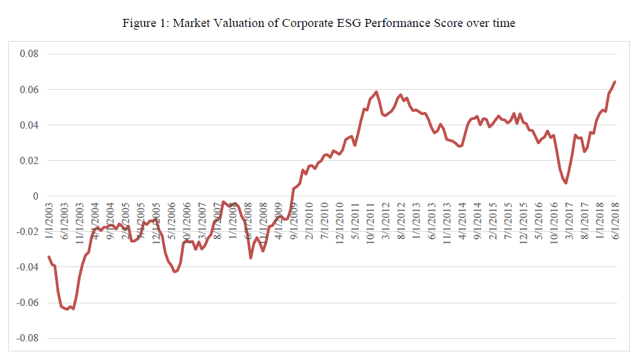
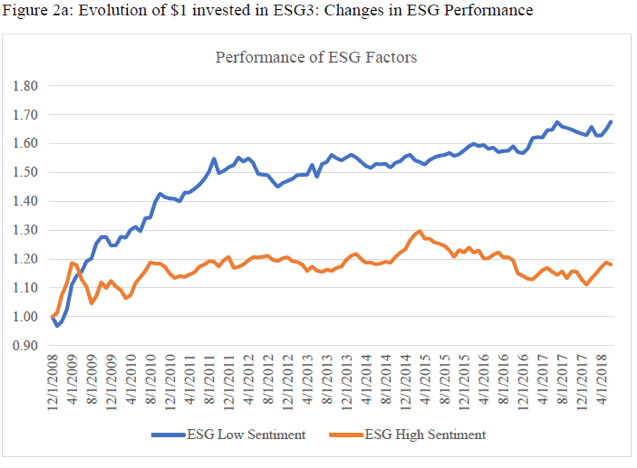
It is possible to unlock significant positive alpha using a combination of big data and traditional ESG ratings.
By combining big data and analyst-driven ESG information, investors can identify value opportunities in ESG and construct a strategy that delivers alpha while investing in companies with superior ESG performance scores. The combination yields significant positive alpha of about 4-5 per cent annually.
My paper “Public sentiment and the price of corporate sustainability” analyses data for the years 2009-18 provided by MSCI and TruValue Labs, the pioneer in artificial intelligence-driven ESG data. I use MSCI ratings for ESG performance due to their industry-wide prevalence and employ TruValue Labs’ data to find sentiment in semantic big data for ESG topics.
ESG ratings were paired with TruValue Labs’ sentiment data about a company’s sustainability performance. That data is drawn from sophisticated sources, including industry analysts, non-government organisations, media reports and think-tank analysis. The alpha came from a strategy of going long on firms with strong ESG performance and negative TruValue Labs’ ESG Momentum performance; there was also alpha found by going short on firms with the reverse.
The first main result of the research shows the price of companies that display sustainability performance has increased over time. This is the estimated premium (if positive) or discount (if negative) that firms with better sustainability performance trade at relative to peers after accounting for several factors such as current profitability, size, leverage, past returns and other firm characteristics. This is good news for companies that perform better on material sustainability dimensions (as defined by MSCI), as the market rewards them with a higher multiple.
This higher multiple is even greater in the presence of positive public sentiment about a company’s sustainability performance from these sophisticated sources, as captured by TruValue Labs. In the presence of negative sentiment, a firm’s sustainability performance is largely discounted.
This has fundamental implications for how chief sustainability officers and business leaders work with the broader ecosystem. The higher price of corporate sustainability poses a challenge for ESG investors: they need to ask if they are getting good value for money. It is not only a matter of the value of corporate sustainability anymore, it is also a function of the price you are paying for it. Value for price is key.
I believe this research highlights the next stage in the evolution of ESG data and shows the power of combining traditional ratings with new, innovative datasets to fully understand the contribution of intangible value to firm valuations.

George Serafeim is a professor of business administration at Harvard Business School.

Sovereign wealth funds have a reputation for secrecy but the $64.9 billion Alaska Permanent Fund Corporation breaks the mould. APF, the US’s largest sovereign endowment, has just hired a new CIO, Marcus Frampton, following a public interview process. Frampton’s board interview was open for the public to attend in person. People could also listen in via a live stream.
“Alaskans have a right to know how this process is conducted and hear from the board responsible for the state’s huge asset,” APF chief executive Angela Rodell says. “It is about making sure we can give as much insight into everything we do.”

Public interest has grown
It’s not a new process at APF. Rodell herself ran the gauntlet of an interview with a seven-member board while members of the public listened when she was hired at the Juneau-based fund in 2015. Indeed, many other public-sector pension funds now post live webcasts during open sessions of their board and committee meetings. The California Public Employees’ Retirement System’s September Board of Administration meetings have more than 300 views on YouTube.
Yet some of the world’s largest sovereign wealth funds, such as the $900 billion China Investment Corporation, Saudi Arabia’s $250 billion Public Investment Fund, and the $800 billion-plus Abu Dhabi Investment Authority – which doesn’t even reveal its amount of assets under management – have given the sector a reputation for secrecy that APF’s transparency and openness is trying to counter.
“What’s changed is that the attention on the fund is growing and people are paying more attention,” Rodell says.
Members of the public can’t ask questions – they’re confined to the public comment period before the meeting – and none of the questions are confidential or personally compromising for the candidate. That said, the public process holds a real challenge for candidates who haven’t cleared their application with their existing employer, but Rodell believes this is a good test.
“If you can’t interview in public and let your employer know that you’ve applied for the role, you are not the right candidate for us,” she says. “All candidates understand the need to do a public interview and the transparency that comes with it.”
She also believes the open forum makes for an excellent recruitment process in other ways. Public scrutiny removes potential for bias, says Rodell, one of the few female chief executives of a large public fund.
“The focus is on the job and what the candidate can bring to the role.”
The board members asked Frampton obvious questions, about the reason for his interest in the position, his prior experience and his commitment to Alaska. They asked him to list two things the fund wasn’t doing right; he cited enduring challenges in communications and operations, and in retention. He was for his thoughts on how APF would evolve over the next decade and where it would seek growth in an environment of declining returns. He was asked if he thought private equity returns could wane and what should replace them if they did. APF is aiming to increase its private equity allocation to 12-14 per cent by 2022 but Frampton told the board he “wouldn’t want to ramp up in this environment”. He was also asked his thoughts on the biggest challenge of the CIO role, to which he responded balancing the lack of budgetary control over resources with managing an investment team. He was also asked for his thoughts on the pros and cons of a co-CIO role.
APF is invested across seven asset classes: public equities (39 per cent); fixed income (22 per cent); private equity and special opportunities (11 per cent); real estate (11 per cent); infrastructure credit and income opportunities (11 per cent); asset allocation strategies (6 per cent); and absolute return (5 per cent).

Holding onto talent
Frampton has been promoted internally from his previous role as head of real assets and absolute return. He takes over from Russell Read, who left to become global head of client solutions at MSCI in London. Recruiting and holding onto talent in remote Alaska is a challenge; now the CIO position is occupied, APF will move to fill senior portfolio manager positions in private equity and real estate.
Rodell is enthused by the amount of interest she had in the CIO position, which she attributes to APF’s global footprint, growing size and sophistication.
“We were surprised and thrilled by the amount of interest in coming to work for the fund,” she says. “In the past, we’ve hired some fantastic external candidates but hiring internally is also great for the fund and sends a good message to our staff.”
Above all, it is important to keep APF’s 45-member investment team rooted in Alaska, she says.
“At the end of the day, this is a fund for the benefit of Alaska and we need to understand the culture and what it means to the state.”
It’s something Frampton well understands after six years on the investment team.
“This is my adoptive home and I hope to be here for the rest of my career,” he told the board.

Every day, fund selectors work hard to find managers that will deliver excess returns to benefit their stakeholders and meet their liabilities.

It used to be easier to beat the market. Companies were less covered and the markets were more inefficient; an asset manager could have an information advantage and add value through company meetings and their proprietary research.

Today, however, it is a different story. Markets are much more efficient and the amount of company information available is huge and instantly shared with everybody. In this environment, it becomes much more challenging to find asset managers delivering excess returns after fees. What exactly is the right approach to finding the best managers, ones that add value and compound the capital allocated to them?

At AP1, we use a framework for our manager selection that is grounded in our core philosophy. We search for “talented people, cultivated in the right structure with a sound philosophy and robust processes, who consider ESG factors to deliver superior performance”.

Against this guiding backdrop, we hire managers after evaluating them on three criteria, constructed to ensure they will deliver good performance over our investment horizon. These criteria are:

  • Qualitative factors
  • Integration of non-financial factors, including ESG
  • Fair price

Qualitative factors

As stated in our philosophy, manager selection is all about management, people, philosophy and process. Therefore, when we start our search process, we do not begin, as many other pension funds do, by screening the manager universe using quantitative factors. We have not found the right factors to screen for to suit our philosophy nor are the ones available robust enough.

Our belief is that by starting with the qualitative factors, we lower the risk of hiring managers simply because they have had a good, recent run. It means we get away from the temptation to hire yesterday’s winners. On the contrary, we always select managers that screen well from a qualitative perspective first, and then do a great deal of quant analysis to either support or dismiss those results.

The investment philosophy and processes of the asset manager lie at the heart of our qualitative assessment. We need to understand how their strategy works, how it fits with our own philosophy, in what way the manager will add value, and that its process is disciplined, documented and repeatable. We do not like surprises!

We also select asset managers according to their culture and alignment with our long-term investment horizon. We examine how they look at companies and how they treat their own employees, clients and other stakeholders. We also evaluate internal management and try to uncover what kind of inherent incentives there are. In partnership structures, there is more of a natural alignment of interests between the manager and the asset owner.

ESG and integrating non-financial information

We do not believe managers can claim to have an information advantage anymore, regarding standard financial information: today, information is instantly shared and analysed, often with the help of technology; however, we do believe an asset manager can still add value by incorporating non-financial information, particularly around ESG factors.  We stress that integrating ESG is all about considering non-financial factors and making a qualitative judgement about how these will affect the company. It is not about using off-the-shelf ratings by third-party providers, which in many cases are based on rather old data.

A fair price

Our third pillar is pricing. Pricing is a very important factor to consider because excess returns are so hard to achieve. Since the start of the asset management business, asset managers have had an advantage over asset owners in negotiating prices. But with the growth of passive strategies and the resulting fee pressure, the pendulum is now swinging in asset owners’ favour.

To align interests between asset owners and asset managers, we believe compensation should be structured in a way that accomplishes the following:

  1. Incentivise the manager properly and align the interests of the managers and the owners.
  2. The evaluation period should also be long-term and the performance should focus more on long-term results than short-term performance. This is especially important given our belief about the importance of sustainability factors, which are more long-term by nature.
  3. With fees on the passive side at almost zero, we no longer pay for beta exposure, only for excess returns.


Majdi Chammas is head of external asset management at AP1.

Australia’s Cbus Super is benchmarking its asset managers to determine how well they are factoring climate change into their decisions and is making this specific strand of responsible investment a consideration in awarding future mandates.

But the industry superannuation fund’s head of responsible investment, Nicole Bradford, said despite undertaking the ongoing benchmarking survey, the fund has to “keep in mind many of our members work in industries and live in communities that are likely to be impacted by the transition to a low-carbon future”.

“We want to make sure we don’t starve for capital the companies that are investing in the transition,” Bradford says. “We are also mindful that our portfolio needs to be heading towards a future where climate risks are increasingly central to investment strategy.

“From an active equity perspective, we have a high proportion of active managers, globally; therefore, manager engagement is critical. We have undertaken a fund manager review with detailed questions on their approach to managing transition and physical climate risk.”

Cbus is one of Australia’s older superannuation funds and represents construction and building workers. It has 778,000 members. The A$46 billion ($32.5 billion) fund has become the fifth signatory to the Australian Asset Owner Stewardship Code, joining HESTA, AustralianSuper, Christian Super and Vic Super.

Signatories to the code are required to disclose their approach and outcomes regarding key stewardship activities: voting, engagement, policy advocacy and the selection, appointment and monitoring of external asset managers.

“Responsible investment for Cbus means taking [ESG] risks and opportunities into account in the investment decision-making process and exercising positive influence through our investments and the way the fund operates,” Cbus CIO Kristian Fok said. “Our approach supports the delivery of strong returns to members.”

This comes as fellow industry fund REST stares down a claim that it breached its trustee duties by not taking into account climate change-related risks when making investment decisions on behalf of its members.

Legal advice co-authored in 2016 by Noel Hutley and Sebastian Hartford Davis, which was commissioned by the Centre for Policy Development and the Future Business Council, suggested directors not thinking about climate-change risks today could be found liable for breaching their duty of care in the future. Corporate regulator the Australian Prudential Regulation Authority has publicly said climate change should be viewed as a business risk and the Australian Securities and Investments Commission has also emphasised its importance.

The claim against REST was brought by 23-year-old member Mark McVeigh and lodged in Federal Court in September. It alleges that to satisfy the trustees’ duties, REST must seek information from its investment managers about climate risks and comply with the recommendations of the Task Force on Climate-related Financial Disclosures (TCFD).

The task force offers a voluntary framework that advises companies on how to disclose climate change-related risk and opportunities either due to legal obligation or voluntarily via a corporate sustainability report.

Bradford said Cbus was incorporating TCFD disclosure into the investment management agreements it has with active fund managers “where relevant”.

“We use engagement and voting with companies in which we invest as a tool to influence change,” she said. “We are also looking at how we manage downside risk where we hold passive investments.”

Cbus considers managing climate risk central to its capacity to deliver strong, sustainable returns to its members. Bradford said the fund had undertaken initiatives such as its climate change road map, which provides a framework for a systematic review and analysis of the portfolio over a two-year horizon.

In September, the fund announced it had set a target for all its property holdings to be net-zero emissions by 2030, when that portfolio is tipped to be worth $10 billion. The fund’s flagship Cbus Property subsidiary and property fund managers such as ISPT and AMP now manage about $5 billion of property.

Cbus has engaged its asset consultant to consider whether a similar arrangement could be used for the fund’s infrastructure investments.

“In our real assets, like property and infrastructure, there are potential physical impacts on assets from climate change that need to be incorporated into analysis,” Bradford explained. “This will involve engaging with our managers to help them set targets and deliver on this overarching target. The 2030 target is important from an investment lens, as it is being driven by the market.”

AI will transform the way Japan’s ¥158 trillion ($1.4 trillion) Government Pension Investment Fund (GPIF) to select and monitor its asset managers.

The world’s biggest pension fund, which outsources all its investment management, announced plans last year to use AI to better scrutinise its poorly performing active managers. Since then, AI specialists Sony Computer Science Laboratories and GPIF have developed a proof-of-concept prototype that uses deep learning to study manager styles and strategies.

The latest progress report on the project promises a big shakeup in what GPIF considers one of its most important tasks.

The pension fund has felt it hasn’t got its money’s worth from active management for a while. About 20 per cent of its portfolio is in active strategies yet adding alpha net of fees has proved almost impossible. GPIF’s 2016 annual report shows the 10-year active return is -0.12 per cent for domestic bonds, -0.29 per cent for domestic stocks, 0.64 per cent for foreign bonds and -0.70 per cent for foreign stocks

“Except for foreign bonds, it has not been possible to attain alpha,” the report states.
On the other hand, payments to asset managers over three cumulative years amounted to ¥9.9 billion ($88.3 million) for domestic bond managers, ¥13.7 billion for domestic equity managers, ¥12.8 billion for foreign bond mandates and ¥34.5 billion for foreign stock mandates.

Data-empowered analysis of managers’ trading behaviour will also allow GPIF to weed out those strategies that aren’t what the pension fund intended or are too close to the index to merit extra fees.

It will enable more constructive and in-depth dialogue between the asset owner and its managers. Some of GPIF’s current fund managers will fall away, the report asserts: “Some funds will fail to develop and maintain systems that efficiently generate excess returns and will be forced to either leave the market or move towards index trading.”

The technology will also change the selection process. AI will allow the fund to ditch its current approach of drawing on track records and qualitative explanations of manager strategies and behaviour. Instead, GPIF will be able to obtain detailed analysis of investment styles based on data from fund managers submitted in advance, allowing a “highly effective manager selection process”, along with a deep-dive analysis of those already under contract.

“When asset management companies recognise that GPIF has the ability to independently analyse their investment styles and intends to continue development of even more advanced technology, they will recognise that they cannot justify their results with only qualitative explanations,” the report explains. This will end a “lack of objectivity” that has hamstrung manager selection and open the pension fund up to other providers.

How it works

The prototype for GPIF’s system consisted of a series of “detector arrays”, which identify the specific investment style of different managers using deep-learning technology. The system, which was developed first using data generated by virtual managers and then with data from actual domestic equity funds, can detect the styles and drifts of each fund manager, along with the spontaneous convergence of trading behaviours when fund managers trade similar items. The tool was programmed to recognise eight different styles: high dividend, minimum volatility, momentum, value, growth, quality, fixed weight and technical.

“From the results of 10 domestic equity funds for which sufficient data was available, distinct “styles” from fund to fund were evident, and temporal changes of style even within a single fund [were] observed,” the report explains.

Conventional tools, such as the Barra model or Aladdin, evaluate investment styles by examining changes in return in terms of multiple factors and the sensitivity to each factor. GPIF’s system directly analyses the funds’ behaviour, which makes it possible to detect style drift earlier and more directly.

Diversity worries

The process has uncovered diversity concerns, revealing that supposedly different manager strategies behave similarly in certain economic circumstances. “These results suggest that if maintaining diversity is important, it is not sufficient to simply have fund managers that apply different investment styles,” the report explains.

Pay

Using AI to monitor managers will also encourage automation in asset management. It will force managers to beef up the efficiency of their investment processes, using technology including AI, to explain their behaviour and account for their practices, the report argues. This will eliminate the dependence on individuals for management strategies, and the associated costs of hiring expertise where “fair value is ambiguous at best. This sequence of developments will further promote the science and technology of asset management.”

The future

The eight trading styles used in the prototype can be expanded or reduced and new themes and asset classes can be introduced.

“The analysis can be customised flexibly according to the purpose,” the report notes.

The prototype was constructed for domestic equity funds because the data was easy to obtain and shape; however, the model could also apply to other traditional assets, including foreign equities and foreign and domestic bonds. The model could also be adapted to predict fund managers’ future trading behaviour under various scenarios. Going beyond “analysis of the past”, the developers would like to use the model to predict fund managers’ behaviour under external, arbitrary scenarios and predict performance and risk characteristics into the future.

“Doing so should make it possible to carry out genuine forward-looking risk/return evaluation and stress testing, which would lead to the construction of a more robust manager structure,” the report states.

CIO Hiro Mizuno spoke about the fund’s use of AI at the Fiduciary Investors Symposium at Stanford University.