Given the disruption and chaos currently facing the world, society and economies, this session looks at what an imagined future would look like and what the role of finance could be in a more informed and sustainable world.
Speakers

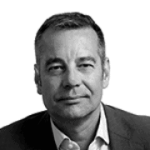
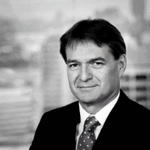
Stewart Brentnall joined TCorp as its first Chief Investment Officer in March 2017. The position was created following a merger between TCorp and two other NSW funds (State Super and iCare, formerly NSW WorkCover). He oversees TCorp’s end to end investment process. In this position, Mr Brentnall is responsible for running an aggregate portfolio of $110bn, representing defined benefit pension assets, insurance reserves, an infrastructure recycling fund and an intergenerational sovereign wealth fund. Mr Brentnall has led the evolution of TCorp’s investment model to a risk based Total Portfolio Approach.
From 2010-2017, Mr. Brentnall was Chief Investment Officer for ANZ, one of the large Australian banks. In 2009, ANZ bought out its joint venture with ING to strengthen its position in wealth management. He was brought in to oversee the transition, and to design and implement its asset management strategy.
Mr. Brentnall was previously Head of Investment Solutions at BT Financial Group, a newly created business unit to manage external funds. He also held various leadership roles in asset management at Queensland Investment Corporation (QIC), Goldman Sachs and Schroders. He began his career as an auditor with Deloitte.
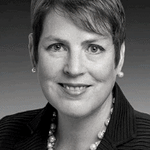
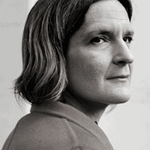
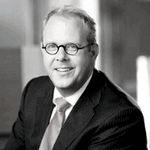
Angela M. Rodell serves as the chief executive / executive director of the Alaska Permanent Fund Corporation, having been selected in October of 2015 by the board of trustees. The APFC is a state-owned corporation, based in Juneau, Alaska, that manages and invests the assets of the $55 billion Alaska Permanent Fund and other funds designated by law. As the chief executive Rodell is leading the APFC at a pivotal time in history as it continues to emerge as a revenue generating center for the State of Alaska.
Rodell also served on the APFC’s board of trustees as a cabinet member, having been appointed commissioner of the department of revenue in August, 2013 by Governor Sean Parnell. In addition to serving as a trustee, Rodell enjoyed the oversight role in working with the divisions and 900 employees within revenue, and participated as a member of several boards, including the Alaska Retirement Management Board, the Alaska Housing Finance Corporation Board, the Alaska State Bond Committee and the Alaska Industrial Development and Export Authority, among others.
Rodell first joined the State of Alaska in September, 2011, as State Treasurer and deputy commissioner over Revenue's Treasury Division, Permanent Fund Dividend Division and the Child Support Services Division. Formerly, Rodell served as financial advisor to more than $30 billion of transactions for state and state authorities in more than nine states, including Alaska. Transactions included general obligation, pension obligation, public power, tobacco securitisation, affordable housing, and toll road and transportation financing. Prior to becoming a financial advisor, Rodell served as the finance officer to Kentucky Housing Corporation.
Rodell has a Bachelor of Arts degree from Marquette University in Milwaukee, Wisconsin and a Masters in Public Administration from the University of Kentucky in Lexington, Kentucky.
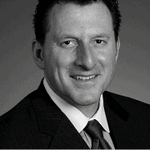
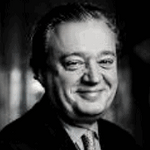
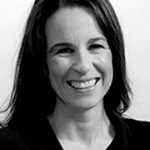
Geoff Rubin is responsible for overall fund-level investment strategy and heads the total portfolio management (TPM) department – the operational arm of CPP Investments’ investment planning committee, with overall management accountability for the oversight and management of the fund’s investment portfolio.
He joined CPP Investments in 2011, with the inception of TPM, and has helped shape its growth and evolution, and to define and execute CPP Investments’ total portfolio approach.
Previously, he held finance roles with Fannie Mae and Capital One Financial where he managed the global balance sheet. Rubin also ran a consulting practice and was Adjunct Professor at American University’s Kogod School of Business in Washington, DC.
He holds a BA in Economics from the University of Virginia and a PhD in Economics from Princeton University.
Moderator

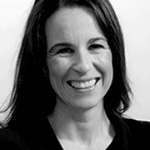
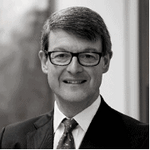
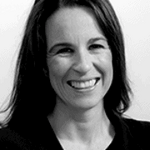
Amanda White is responsible for the content across all Conexus Financial’s institutional media and events. In addition to being the editor of Top1000funds.com, she is responsible for directing the global bi-annual Fiduciary Investors Symposium which challenges global investors on investment best practice and aims to place the responsibilities of investors in wider societal, and political contexts. She holds a Bachelor of Economics and a Masters of Art in Journalism and has been an investment journalist for more than 25 years. She is currently a fellow in the Finance Leaders Fellowship at the Aspen Institute. The two-year program seeks to develop the next generation of responsible, community-spirited leaders in the global finance industry.

Key takeaways

Stewart

  • The future is about risk allocation, not asset allocation. COVID-19 makes the distinction clearer between mature and less mature economies.
  • In the future we should approach benchmarks with caution as they will look very different.
  • Supply chains will be more spread across countries to reduce geographic concentration risk.
  • The future will see an acceleration of sustainability investing and a rising heat around the demand for social justice. Questions around mission and governance will arise with a greater resolve to implement greater horizon strategies.
  • A true long horizon portfolio may move away from 60/40 or 70/30 and move much closer to 100/0.

 Angela

  •  The future looks brighter if we invest in technological infrastructure such as broadband.
  • The future will see greater investment in the smaller cities.
  • Perhaps moving forward we will think very differently about investing in commodities or cryptocurrencies, or risk being left behind.

 Geoff

  • Reassuringly, in the long-term the future growth trajectory will look a lot like the past; the combination of labour, capital and technology has been an incredibly resilient and consistent engine of growth and has survived World Wars and pandemics.
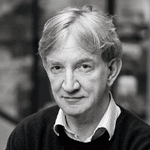
This session will look at the development of a vaccine for COVID-19 and what cooperation is needed to fight the virus. More broadly it will examine the way in which bio-medical engineering is meeting the needs of changing demographics and creating a better future.

Speakers

Professor Adrian Hill is director of the Jenner Institute, which focuses on designing and developing vaccines for infectious diseases prevalent in developing countries, such as HIV/AIDS, malaria and tuberculosis. He also heads a group at the Wellcome Trust Centre for Human Genetics which studies genetic susceptibility factors for common bacterial diseases. He is a passionate believer in the power of molecular medicine to design and deliver new health care interventions that will improve the lives of the poorest billion in sub-Saharan Africa and elsewhere. His own vaccine research programme has developed one of the most promising potential vaccines for malaria which is currently in large scale trials in infants in sub-Saharan Africa. In 2014 his group led the first clinical trial of an Ebola virus vaccine targeting the outbreak of Ebola in West Africa. The Jenner Institute has partnered with AstraZeneca on the global development and distribution of Oxford’s COVID-19 vaccine.

Geoffrey S. F. Ling, M.D., Ph.D., is a medical doctor who retired from the United States Army as a colonel. He served as the director of the Defense Advanced Research Projects Agency (DARPA) Biological Technologies Office and is an expert in traumatic brain injury (TBI).
Prominent in his research portfolio are neuroscience, specifically, preventing violent explosive neurologic trauma (PREVENT); prevention of traumatic brain injury; and development of responsive, brain-controlled, artificial arms. He also serves as the deputy director of the Defense Sciences Office. Ling is a recipient of the Humanitarian Award from the Brain Mapping Foundation.
Ling earned his bachelor's degree with honours from Washington University, and earned his doctorate in pharmacology from Cornell University School of Medicine. He completed postdoctoral training in neuropharmacology at the Sloan-Kettering Memorial Cancer Center. Ling earned an M.D. from Georgetown University School of Medicine. Both his neurology internship and later residency were completed at Walter Reed Army Medical Center. Ling also completed a fellowship at Johns Hopkins University, in the neurosciences critical care unit (NCCU).

Moderator

Colin Tate has been an investment industry media publisher and conference producer since 1996. In his media career, Tate has launched and overseen dozens of print and electronic publications. He is the chief executive and major shareholder of Conexus Financial, which was formed in 2005, and is headquartered in Sydney, Australia. The company stages more than 20 conferences and events each year – in London, New York, San Francisco, Los Angeles, Amsterdam, Beijing, Sydney and Melbourne – and publishes five media brands, including the global website and strategy newsletter for global institutional investors conexust1f.flywheelstaging.com. One of the company’s signature events is the bi-annual Fiduciary Investors Symposium. Conexus Financial’s events aim to place the responsibilities of investors in wider societal, and political contexts, as well as promote the long-term stability of markets and sustainable retirement incomes. Tate served for seven years on the board of Australia’s most high profile homeless charity, The Wayside Chapel; and he has underwritten the welfare of 60,000 people in 28 villages throughout Uganda via The Hunger Project.

Key takeaways

Adrian

  • In the last 48 hours, new vaccine trials have been started in Brazil and South Africa, supplementing the ongoing trial at Oxford.
  • The aim is to have a vaccine trial result in September time and a proven vaccine shortly thereafter.
  • 12 vaccines are currently in the clinic but the spirit is collaboration not competition given that up to 2 billion people may need to be vaccinated.
  • This looks like a really doable vaccine.
  • So far, no safety issues have been flagged with the current Oxford vaccine trials.
  • It would be very surprising if by the end of the year we didn’t have significant evidence to suggest that multiple vaccines work.
  • Never before have I seen so much money spent at risk in support of vaccine technology.

Geoffrey

  • COVID-19 overwhelmed the ICU system and exhausted health care professionals.
  • When patients are in an ICU, we are not discovering new care methods, we are applying known methods, however the cure is missing.
  • We are expecting more waves of infection.
  • The COVID-19 crisis is not at all unexpected amongst the medical community. COVID-19 has existed, somewhere, for 55 million years and comes after SARS, Ebola, and MERS.
  • There is opportunity to invest in diagnostic testing and the technologies that have worked in this period

Unanswered questions and answers

Q: Could you talk a bit about the use of monoclonal antibodies as a potential prophylactic or treatment for COVID-19 (or other coronaviruses)? Asked by Jeremy Heer, CAIA Association

A: Geoffrey Ling: Monoclonal antibodies (mAb) are very exciting and worthy of a dedicated FIS session. Yes, mAB can be used as both therapy and, if long lived in the body, as prophylaxis. The scientific community is working on this. In many ways, the mAB process is faster and cheaper than finding and then bringing to market a novel vaccine or small molecule drug, they have revolutionized the field of therapeutics. For example, Rituximab is remarkable in how effective it is with relatively low side effects. From an investment standpoint, mAB have been quite successful commercially.

In conversation with the current recipient of the Nobel Prize in Economics, Esther Duflo, this session will look at the phenomenon of inequality and the way in which economics and finance can help meet the challenge for a better, more equal, world.

Speaker

Esther Duflo is the Abdul Latif Jameel Professor of Poverty Alleviation and Development Economics in the Department of Economics at the Massachusetts Institute of Technology and a co-founder and co-director of the Abdul Latif Jameel Poverty Action Lab (J-PAL). In her research, she seeks to understand the economic lives of the poor, with the aim to help design and evaluate social policies. She has worked on health, education, financial inclusion, environment and governance.
Professor Esther Duflo’s first degrees were in history and economics from Ecole Normale Superieure, Paris. She subsequently received a Ph.D. in Economics from MIT in 1999.
Duflo has received numerous academic honours and prizes including 2019 Sveriges Riksbank Prize in Economic Sciences in Memory of Alfred Nobel (with co-Laureates Abhijit Banerjee and Michael Kremer), the Princess of Asturias Award for Social Sciences (2015), the A.SK Social Science Award (2015), Infosys Prize (2014), the David N. Kershaw Award (2011), a John Bates Clark Medal (2010), and a MacArthur “Genius Grant” Fellowship (2009). With Abhijit Banerjee, she wrote Poor Economics: A Radical Rethinking of the Way to Fight Global Poverty, which won the Financial Times and Goldman Sachs Business Book of the Year Award in 2011 and has been translated into more than 17 languages, and the recently released Good Economics for Hard Times.
Duflo is the editor of the American Economic Review, a member of the National Academy of Sciences and a Corresponding Fellow of the British Academy.

Moderator

Amanda White is responsible for the content across all Conexus Financial’s institutional media and events. In addition to being the editor of Top1000funds.com, she is responsible for directing the global bi-annual Fiduciary Investors Symposium which challenges global investors on investment best practice and aims to place the responsibilities of investors in wider societal, and political contexts. She holds a Bachelor of Economics and a Masters of Art in Journalism and has been an investment journalist for more than 25 years. She is currently a fellow in the Finance Leaders Fellowship at the Aspen Institute. The two-year program seeks to develop the next generation of responsible, community-spirited leaders in the global finance industry.

Key takeaways

  • COVID-19 is not the great leveller – there are huge differences between how the virus is impacting the rich and the poor within the US for example.
  • Developing countries are less well equipped to weather uncertainties in these times. However, even within the US inequality has been growing for decades and is now clearly unsustainable.
  • We need to trust developing countries enough to help them drag themselves out of poverty.
  • We need to spread out global supply chains to reduce geographic concentration risk and simultaneously provide income across the world. This will require collaboration and the deprioritisation of commercial self-interest.
  • We need to create wealth for the poor, not just take wealth from the rich. To reduce poverty incrementally, we need to focus on the simple things that work, for example providing cash incentives for sending children to school.
  • Let’s not forget, we have made huge progress in alleviating poverty, but that is not full credit to the World Bank, it is credit to the people of the developing nations.
  • If you invest responsibly as an institutional investor, you are by default helping to alleviate poverty.
  • ‘Impact washing’ is the new greenwashing and it’s very concerning. How do you really select the investments that truly drive social impact? We should apply the same rigour to impact assessment as investment assessment.

The COVID-19 global health and economic crisis has highlighted the need for leadership and capital to be urgently targeted towards the vulnerabilities in the global economy. So what does a sustainable recovery look like and how can institutional investors collaborate to make sure it happens?

Speaker

Gilbert Van Hassel has been chief executive and chair of the executive committee of Robeco since September 2016. Van Hassel has over 30 years’ experience in the financial services industry, mainly in asset and wealth management, with broad experience in Europe, Asia and the US. Until 2013 he was Global CEO ING Investment Management and member of the board insurance and asset management of ING. Before joining ING in 2007, he worked for JP Morgan where he held various executive positions in Europe, Asia and the US. Van Hassel has a Bachelor;s degree in Applied Economics from the University of Antwerp St Ignatius (Belgium), an MBA, with a major in International Finance from the Catholic University of Louvain (Belgium) and a Master of Science in Finance from Purdue University (US).

Moderator

Colin Tate has been an investment industry media publisher and conference producer since 1996. In his media career, Tate has launched and overseen dozens of print and electronic publications. He is the chief executive and major shareholder of Conexus Financial, which was formed in 2005, and is headquartered in Sydney, Australia. The company stages more than 20 conferences and events each year – in London, New York, San Francisco, Los Angeles, Amsterdam, Beijing, Sydney and Melbourne – and publishes five media brands, including the global website and strategy newsletter for global institutional investors conexust1f.flywheelstaging.com. One of the company’s signature events is the bi-annual Fiduciary Investors Symposium. Conexus Financial’s events aim to place the responsibilities of investors in wider societal, and political contexts, as well as promote the long-term stability of markets and sustainable retirement incomes. Tate served for seven years on the board of Australia’s most high profile homeless charity, The Wayside Chapel; and he has underwritten the welfare of 60,000 people in 28 villages throughout Uganda via The Hunger Project.

Key takeaways

  • Social spirit needs to be nurtured for those that are working at home alone.
  • A sustainable recovery has the same three requirements as a sustainable economy:
    • We need a healthy planet – 1 million animal species are threatened with extinction
    • Wealth and wellbeing need to be fairly shared
    • Good governance across government and corporates
  • One silver lining is how willing people are to think differently and endure sacrifice during the pandemic.
  • Will the world finally wake up to the climate crisis? Hopefully, but we should not be complacent. After all, ‘This time it’s going to be different’ is a dangerous line because human behaviour is very slow to change.
  • Government will have to play a role to ensure the definition of fiduciary duty includes greater appreciation of sustainability considerations.
  • If we collaborate and persist in actively voting and engaging we can achieve great change that will impact the world far for generations to come.

Poll results

Do you align your investment objectives with the SDGs?

The pandemic has shed the spotlight on supply chain issues across all industries, so what does that look like in financial services? This session will highlight the need for resilience and robust continuity planning.

Speakers

Geoff Hodge has more than 20 years of experience in investment and banking industries, with a specific focus on innovation and business enablement in operations and technology encompassing the Asia-Pacific region, Europe and North America. He was previously a board member and director of Rothschild Australia Asset Management and has held senior roles in treasury and capital markets, funds management, custody, payments, and investment banking operations.

Arjen Pasma is a board member of PGGM Investment Management and PGGM Treasury and a member of the investment committee. He has more than 20 years of investment experience. From 2008-12, he was the investment management and pensions practice leader of Deloitte in the Netherlands and director in the financial risk management team. He has worked with investment managers, private banks and pension funds in assignments on risk management, investment consulting, risk governance, quantitative analyses and model validation. From 1997-2008, he fulfilled several roles within ABN AMRO Asset Management as senior portfolio manager and head of quantitative equity management, risk manager and part of the management team equity management. Pasma studied econometrics at the Rijksuniversiteit Groningen, specialising in investment management and behavioural finance. He is a CFA charterholder.

April Wilcox is the director of investment operations for California State Teachers’ Retirement System (CalSTRS), the largest educator-only pension fund in the world with an investment portfolio valued at $228 billion. Wilcox has over 15 years of professional front, middle, and back office experience in the investment industry. She joined CalSTRS in 2004 from California Housing Finance Agency. Prior to managing investment operations, she spent five years in fixed income, overseeing the fixed income opportunistic portfolio. Wilcox obtained a B.S. in Finance from California State University, Sacramento; awarded the Investment Foundations certificate by CFA Institute; and holds the Chartered Alternative Investment Analyst (CAIA) designation.

Moderator

Amanda White is responsible for the content across all Conexus Financial’s institutional media and events. In addition to being the editor of Top1000funds.com, she is responsible for directing the global bi-annual Fiduciary Investors Symposium which challenges global investors on investment best practice and aims to place the responsibilities of investors in wider societal, and political contexts. She holds a Bachelor of Economics and a Masters of Art in Journalism and has been an investment journalist for more than 25 years. She is currently a fellow in the Finance Leaders Fellowship at the Aspen Institute. The two-year program seeks to develop the next generation of responsible, community-spirited leaders in the global finance industry.

Key takeaways

Geoff

  • We were ‘lucky’ to have had a fire in the London office three years ago which helped us prepare for the COVID-19 pandemic and WFH scenario.
  • Backup planning has flaws, as illustrated by disaster recovery sites not being able to be used due to social distancing requirements.
  • Cyber attacks have gone up significantly. The use of personal laptops is a point of vulnerability in the ecosystem.
  • Resilience is expanding as a topic, shifting from making processes robust to challenging outsourced functions to mitigate interruptions to supply chains and business operations.
  • Cyber threat is racing ahead of where the industry is at, however there are some cyber security quick wins e.g. keeping patching up to date and legitimate laptop identification.
  • COVID-19 has shifted the mindset from ROI and headcount reduction to refining operating models and implementing technology and people initiatives to achieve that goal.

 Arjen

  •  Due diligence on new service providers has taken on increased significance.
  • Working is a social thing and people miss the physical interaction. Offices of the future will be where people meet, not where people work.

 April

  •  Leveraged relationship with existing service providers during the pandemic peak to brainstorm how to continue business operations.
  • COVID-19 has forced a seismic shift in due diligence innovation.
  • Technology is critical but from an operational perspective people are enormously important, hence the need to focus on cultural and wellbeing initiatives.

Poll results

Do you think your own organisation, and your service providers’ organisations are resilient enough to manage a significant cyber attack?

This session will examine the impact of the crisis on China, the likely projection of its recovery and the role for the private sector.

Speaker

Michael Pettis is a nonresident senior fellow in the Carnegie–Tsinghua Center for Global Policy. An expert on China’s economy, Pettis is professor of finance at Peking University’s Guanghua School of Management, where he specializes in Chinese financial markets.
From 2002 to 2004, he also taught at Tsinghua University’s School of Economics and Management and, from 1992 to 2001, at Columbia University’s Graduate School of Business. He is a member of the Institute of Latin American Studies Advisory Board at Columbia University as well as the Dean’s Advisory Board at the School of Public and International Affairs.
Pettis worked on Wall Street in trading, capital markets, and corporate finance since 1987, when he joined the sovereign debt trading team at Manufacturers Hanover (now JPMorgan). Most recently, from 1996 to 2001, Pettis worked at Bear Stearns, where he was managing director principal heading the Latin American capital markets and the liability management groups. He has also worked as a partner in a merchant-banking boutique that specialized in securitizing Latin American assets and at Credit Suisse First Boston, where he headed the emerging markets trading team.
In addition to trading and capital markets, Pettis has been involved in sovereign advisory work, including for the Mexican government on the privatization of its banking system, the Republic of Macedonia on the restructuring of its international bank debt, and the South Korean Ministry of Finance on the restructuring of the country’s commercial bank debt.
He formerly served as a member of the Board of Directors of ABC-CA Fund Management Company, a Sino–French joint venture based in Shanghai. He is the author of several books, including The Great Rebalancing: Trade, Conflict, and the Perilous Road Ahead for the World Economy (Princeton University Press, 2013).

Moderator

Colin Tate has been an investment industry media publisher and conference producer since 1996. In his media career, Tate has launched and overseen dozens of print and electronic publications. He is the chief executive and major shareholder of Conexus Financial, which was formed in 2005, and is headquartered in Sydney, Australia. The company stages more than 20 conferences and events each year – in London, New York, San Francisco, Los Angeles, Amsterdam, Beijing, Sydney and Melbourne – and publishes five media brands, including the global website and strategy newsletter for global institutional investors conexust1f.flywheelstaging.com. One of the company’s signature events is the bi-annual Fiduciary Investors Symposium. Conexus Financial’s events aim to place the responsibilities of investors in wider societal, and political contexts, as well as promote the long-term stability of markets and sustainable retirement incomes. Tate served for seven years on the board of Australia’s most high profile homeless charity, The Wayside Chapel; and he has underwritten the welfare of 60,000 people in 28 villages throughout Uganda via The Hunger Project.

Key takeaways

  • COVID-19 has accelerated issues that already existed in China.
  • Some fear China’s significantly rising debt levels. Other worry more about the political implications of a rapid slowdown in growth. The latter group won the debate and settled on 6 per cent GDP growth for 2020. However, COVID-19 has derailed this.
  • Western economists don’t understand what GDP means in the Chinese context because China has a different accounting treatment of GDP. China’s publicly released numbers don’t include a GDP write down for bad investments.
  • Chinese growth is challenged because of high unemployment (around 20 per cent), a shift from consumption to saving and a lack of business investment.
  • If monetary policy can’t accommodate a significant increase in debt, enormous disruptions will impact the Chinese economy.

Poll results

In 10 years time will your geographic investment allocation to China be: