This session looks at how sustainability policies under President Biden combined with the ongoing EU policies means 2021 marks a new frontier for the progression of sustainability. This discussion examines what that means for investors in terms of both opportunities and risk.
Speakers

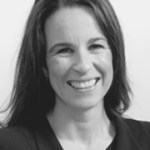
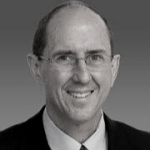
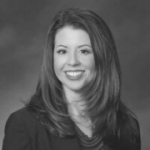
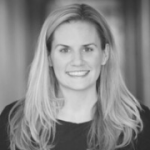
Sarah Bratton Hughes is the head of sustainability, North America. Her responsibilities include leading the sustainability strategy and ESG integration in North America. She joined Schroders in 2011 and is based in New York.
Previously, she was an investment director at Schroders which involved supporting and representing the Schroders’ sustainability team as well as the Schroders US small cap and US small and mid cap investment capabilities to clients and prospective clients. She was also responsible for ESG integration in North America. Prior to joining Schroders, she was with JP Morgan from 2007-2011. Bratton-Hughs has a BA in Economics and a BSc in Business Management both from St. Francis College.

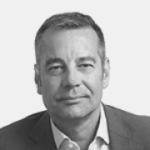
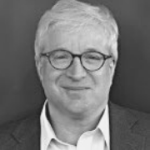
Matt Patsky is chief executive of Trillium Asset Management, an investment firm devoted exclusively to social and responsible investing. There, he serves as a portfolio manager on Trillium’s sustainable opportunities strategy and the Trillium ESG global equity strategy. He has three decades of experience in investment research and investment management. He began his career at Lehman Brothers in 1984 as a technology analyst. In 1989, while covering emerging growth companies for Lehman, he began to incorporate environmental, social, and governance factors into his research, becoming the first sell side analyst in the United States to publish on the topic of socially responsible investing in 1994. As director of equity research for Adams, Harkness & Hill, he built the firm’s powerful research capabilities in socially and environmentally responsible areas such as renewable energy, resource optimisation, and organic and natural products. Before joining Trillium, he worked at Winslow Management Company in Boston, where he served as director of research, chair of the investment committee, and portfolio manager for the green solutions strategy and the Winslow green solutions fund.
Matt has served on the boards of Environmental League of Massachusetts, Shared Interest, Pro Mujer, US SIF, and Root Capital. He is also a member of the Social Venture Circle (SVC) and is a member of the CFA Society Boston and is a Chartered Financial Analyst charterholder.
Patsky lives with his husband Jun Untalan in Boston. He holds a Bachelor of Science in Economics from Rensselaer Polytechnic Institute.
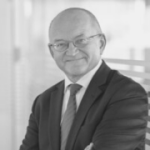
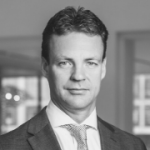
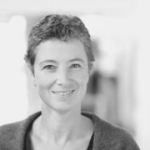
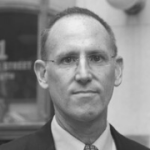
Torben Möger Pedersen is chair of the board at Copenhagen Business School (CBS), Danish Society for Education and Business (DSEB) as well as Gefion Gymnasium and vice chair at Institutional Investors Group on Climate Change (IIGCC). He holds a number of other board and investment committee memberships including Arbejdernes Landsbank, Insurance & Pension Denmark, Copenhagen Infrastructure Fund III K/S, Copenhagen Infrastructure Fund IV K/S, Copenhagen Infrastructure New Markets Fund I K/S, Danish Agribusiness Fund, Danish Climate Investment Fund, Danish SDG Investment Fund, SDG High Level Advisory Board, and Board Leadership Society in Denmark. In November 2019, the Danish Government appointed Moger Pedersen chair of the climate partnership for the financial sector and in 2020 he was appointed chair of Danmarks Genopretningsfond.
Möger Pedersen is a B-Team leader and member of the Steering Committee of Net Zero Asset Owner Alliance. In addition, Torben Möger Pedersen is a member of OECDs Working Group on Long-Term Investments, the Private Sector Advisory Group within the UN’s Green Climate Fund, the Global Agenda Council on Investments and The Alliance of CEO Climate Leaders under the auspices of World Economic Forum and member of the advisory board in OECD’s Centre on Green Finance and Investment.
Möger Pedersen holds a Master of Science in Economics from Copenhagen University and has completed executive management programs from Babson College, INSEAD Fontainebleau, INSEAD Singapore and Wharton Business School.
He was in 2018 appointed adjunct professor at Copenhagen Business School Department of Finance and Department of Economics.

Moderator

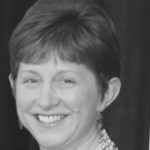
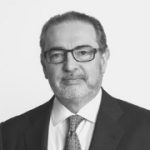
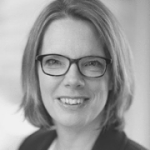
Fiona Reynolds is the chief executive of the Principles for Responsible Investment (PRI), the UN supported organisation, with more than 3,500 signatories which collectively represent over $100 trillion in assets under management. She is responsible for the PRI’s global operations.
Appointed at the beginning of 2013, Reynolds has 25 years' experience in the financial services and pension sector. She joined the PRI from the Australian Institute of Superannuation Trustees (AIST), where she spent seven years as the chief executive.
She serves on the board of the UN Global Compact, she chaired of the Financial Services Commission into Modern Slavery and Human Trafficking (The Liechtenstein initiative) and is now a member of the Finance Against Slavery and Trafficking (FAST) Global Steering Committee. Reynolds is also a member of the International Integrated Reporting Council (IIRC), the Global Advisory Council on Stranded Assets at Oxford University, the advisory board for the Green Investment Principles for the Belt and Road, the global steering committee for the Investor Agenda on Climate Action and the steering committee for Climate Action 100+. She is also on the investment committee for Laudes foundation and the advisory board for BASF and the advisory council of Bloomberg Green.
She was named by Barron’s magazine of one of the 20 most influential people in sustainability globally and has twice been named by the Australian Financial Review (AFR) as of one of Australia’s 100 women of influence for her work in financial services and responsible investment.

This session looks at the expected sustainability policies in 2021 and the important role of a price on carbon as part of that. The winner of the Nobel Prize for his work on integrating climate change into long-run macroeconomic analysis outlines the best approaches from a policy perspective and how the private and public sector need to work together. Importantly he outlines how carbon footprints can actually be reduced at very low or no cost.

View William’s presentation slides here

Speakers

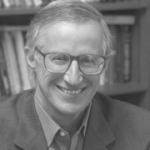
William Nordhaus was born in Albuquerque, New Mexico and completed his undergraduate work at Yale University in 1963 and received his Ph.D. in Economics in 1967 from the Massachusetts Institute of Technology, Cambridge, USA. He has been on the faculty of Yale University since 1967 and has been Full Professor of Economics since 1973 and also is Professor in Yale’s School of Forestry and Environmental Studies. Professor Nordhaus lives in downtown New Haven with his wife Barbara, who works at the Yale Child Study Center. He won the Sveriges Riksbank Prize in Economic Sciences in Memory of Alfred Nobel 2018 for integrating climate change into long-run macroeconomic analysis.
He is a member of the National Academy of Sciences and a Fellow of the American Academy of Arts and Sciences. He is on the research staff of the National Bureau of Economic Research and has been a member and senior advisor of the Brookings Panel on Economic Activity, Washington, D.C. since 1972. Professor Nordhaus is current or past editor of several scientific journals and has served on the executive committees of the American Economic Association and the Eastern Economic Association. He serves on the Congressional Budget Office Panel of Economic Experts and was the first chair of the advisory committee for the Bureau of Economic Analysis. He was the first chair of the newly formed American Economic Association Committee on Federal Statistics. In 2004, he was awarded the prize of “Distinguished Fellow” by the American Economic Association.
From 1977 to 1979, he was a Member of the President’s Council of Economic Advisers. From 1986 to 1988, he served as the Provost of Yale University. He has served on several committees of the National Academy of Sciences including the committee on Nuclear and Alternative Energy Systems, the panel on Policy Implications of Greenhouse Warming, the committee on National Statistics, the committee on Data and Research on Illegal Drugs, and the committee on the Implications for Science and Society of Abrupt Climate Change. He recently chaired a panel of the National Academy of Sciences which produced a report, Nature’s Numbers, that recommended approaches to integrate environmental and other non-market activity into the national economic accounts. More recently, he has directed the Yale Project on Non-Market Accounting, supported by the Glaser Foundation.
He is the author of many books, among them Invention, Growth And Welfare, Is Growth Obsolete?, The Efficient Use Of Energy Resources, Reforming Federal Regulation, Managing The Global Commons, Warming The World, and (joint with Paul Samuelson) the classic textbook, Economics, whose nineteenth edition was published in 2009. His research has focused on economic growth and natural resources, the economics of climate change, as well as the resource constraints on economic growth. Since the 1970s, he has developed economic approaches to global warming, including the construction of integrated economic and scientific models (the DICE and RICE models) to determine the efficient path for coping with climate change, with the latest vintage, DICE-2007, published in A Question Of Balance (Yale University Press, 2008). Professor Nordhaus has also studied wage and price behaviour, health economics, augmented national accounting, the political business cycle, productivity, and the “new economy.” His 1996 study of the economic history of lighting back to Babylonian times found that the measurement of long-term economic growth has been significantly underestimated. He returned to Mesopotamian economics with a study, published in 2002 before the war, of the costs of the U.S. war in Iraq, projecting a cost as high as $2 trillion. Recently, he has undertaken the “G-Econ project,” which provides the first comprehensive measures of economic activity at a geophysical scale.

Moderator

White is responsible for the content across all Conexus Financial’s institutional media and events. She is responsible for directing the bi-annual Fiduciary Investors Symposium which challenges global investors on investment best practice and aims to place the responsibilities of investors in wider societal, and political contexts, as well as promote the long-term stability of markets and sustainable retirement incomes. She is the editor of conexust1f.flywheelstaging.com, the online news and analysis site for the world’s largest institutional investors. White has been an investment journalist for more than 20 years and has edited industry journals including Investment & Technology, Investor Weekly and MasterFunds Quarterly. She was previously editorial director of InvestorInfo and has worked as a freelance journalist for the Australian Financial Review, CFO, Asset and Asia Asset Management. She has a Bachelor of Economics from Sydney University and a Master of Arts in Journalism from the University of Technology, Sydney. She was previously a columnist for the Canadian publication, Corporate Knights, which is distributed by the Globe and Mail and The Washington Post. White is currently a fellow in the Finance Leaders Fellowship at the Aspen Institute. The two-year program consists of 22 fellows and seeks to develop the next generation of responsible, community-spirited leaders in the global finance industry.

This session looks at the actions of both asset owners and asset managers in reaching net-zero 2050 goals including the short-term plans needed to get there.

Speakers

Victor Verberk is CIO Fixed Income and Sustainability, Co- Head of the Global Credit team and Lead Portfolio Manager Investment Grade Credits.
Prior to joining Robeco in 2008, Victor was CIO at Holland Capital Management. Before that, he was Head of Fixed Income at MN Services and Portfolio Manager Credits at AXA Investment Managers. He has been active in the industry since 1997.
Victor holds a Master’s in Business Economics from Erasmus University Rotterdam and he is a Certified European Financial Analyst.

Faith Ward’s career has been dedicated to integrating and reporting on environmental, social and governance risks in finance and investment. She leads engagement with the fund management industry and is involved in industry-wide initiatives to improve standards in responsible investment, corporate engagement, and fund governance and reporting.

Her current roles include chair of the Institutional Investors Group on Climate Change; member of the Ethics Investment Advisory Group for the C of E National Investing Bodies; vice-chair of the Investment Innovation Benchmark Assessment Committee, SASB’s Investor Advisory Group; co-chair of the SASB European and UK Working Group; and member of the Financial Reporting Council Investment Advisory Group. She is a Transition Pathway Initiative founder and its former co-chair. She was also chair of the Reporting & Assessment Advisory Committee for the United Nations Principles for Responsible Investment (UNPRI).

Dave Zellner is the chief investment officer for Wespath Benefits and Investments, an agency of The United Methodist Church (UMC), and Wespath Institutional Investments. Wespath manages $28 billion on behalf of 100,000 active and retired clergy and lay employees of the UMC and over 120 UMC-affiliated institutions. Prior to joining Wespath in 1997, he was senior vice president and director of operations with Investment Research Company, then an investment management affiliate of United Asset Management. Previously, he was Director of Equities for the Shell Oil Company Retirement Funds where he managed two internal investment portfolios.

Zellner helped co-author and was one of the original signatories to the United Nations Principles for Responsible Investment in 2006. He presently is the board chair for FaithInvest, a UK based charity. He received his B.S. in Finance from Louisiana State University and MBA from the University of Houston.

Moderator

Tate has been an investment industry media publisher and conference producer since 1996. In his media career, Tate has launched and overseen dozens of print and
electronic publications. He is the chief executive and major shareholder of Conexus Financial, which was formed in 2005, and is headquartered in Sydney, Australia.
The company stages more than 20 conferences and events each year –
in cities which have included London, New York, San Francisco, Los Angeles, Amsterdam, Beijing, Sydney and Melbourne – and publishes three media brands,
including the global website and strategy newsletter for global
institutional investors conexust1f.flywheelstaging.com. One of the company’s signature events is the bi-annual Fiduciary Investors Symposium. Conexus Financial’s
events aim to place the responsibilities of investors in wider societal, and political contexts, as well as promote the long-term stability of markets and sustainable
retirement incomes. Tate served for seven years on the board of Australia’s most high profile homeless charity, The Wayside Chapel; and he has underwritten the
welfare of 60,000 people in 28 villages throughout Uganda via The Hunger Project.

This session looks at various asset owner case studies and how they are tackling diversity and inclusion, through their own organisational processes and practices, through manager due diligence and by aligning their investments with the SDGs.

Speakers

Ulrika Danielson has been head of communications and corporate governance at Andra AP-fonden (AP2) since 2009. AP2 is one of five buffer funds within the Swedish pension system, tasked with maximising long-term return – and at low risk to pension disbursements. With about SEK 390 billion ($40 billion) under management in virtually every asset class and all parts of the world, AP2 is one of northern Europe’s largest pension funds.

Danielson has several times been the chair of the AP-funds Council on Ethics. She also represents the fund on several nomination committees in Swedish listed companies.

Prior to joining AP2 she was director of corporate communications at the Swedish fashion chain, Lindex, one of Europe’s largest. She was also the coordinator of the companies work with CSR. Danielson was born in 1965 and holds a degree of Bachelor of Science in Social at the University of Gothenburg.

Kevin Uebelein is the chief executive of the Alberta Investment Management Corporation (AIMCo). AIMCo is responsible for managing approximately $120 billion of public sector pension, endowment, and government fund assets.
Prior to joining AIMCo, Uebelein was president and chief executive of Pyramis Global Advisors, the institutionally-focused asset management unit of Fidelity Investments, holding assets in excess of $200 billion, and was also the global head of investment solutions at Fidelity Investments. Previously, Uebelein held a variety of positions with Prudential Financial Inc., including head of alternative investments, and culminating as chief investment officer for international operations.
He holds a Bachelor of Accounting degree from Harding University, and an MBA from Rice University. He is a Chartered Financial Analyst (CFA) charterholder, and holds the ICD director designation. Uebelein is on the board of the Canadian Coalition for Good Governance (“CCGG”) and is the chair of The AIMCo Foundation, which supports financial education.

Moderator

Tate has been an investment industry media publisher and conference producer since 1996. In his media career, Tate has launched and overseen dozens of print and
electronic publications. He is the chief executive and major shareholder of Conexus Financial, which was formed in 2005, and is headquartered in Sydney, Australia.
The company stages more than 20 conferences and events each year –
in cities which have included London, New York, San Francisco, Los Angeles, Amsterdam, Beijing, Sydney and Melbourne – and publishes three media brands,
including the global website and strategy newsletter for global
institutional investors conexust1f.flywheelstaging.com. One of the company’s signature events is the bi-annual Fiduciary Investors Symposium. Conexus Financial’s
events aim to place the responsibilities of investors in wider societal, and political contexts, as well as promote the long-term stability of markets and sustainable
retirement incomes. Tate served for seven years on the board of Australia’s most high profile homeless charity, The Wayside Chapel; and he has underwritten the
welfare of 60,000 people in 28 villages throughout Uganda via The Hunger Project.

Poll results

What percentage of your investment team are women

Do you hold fund managers to account on diversity equity inclusion (DEI) issues?

What are the next generation strategies and tools for investor engagement and what frontier topics should investors be considering? This session looks at two case studies activist stewardship (with Exxon) and whether investors are funding treason (the case of the US congress riots).

Speakers

Scott Kalb is the founder and director of the Responsible Asset Allocator Initiative at New America, dedicated to mobilising capital toward responsible investing and supporting the United Nations Sustainable Development Goals. The RAAI publishes the “Leader’s List: The 25 Most Responsible Asset Allocators” in the world. Kalb is the founder and CEO of KLTI Advisors, a firm dedicated to working with the sovereign and government fund community on long-term investment solutions. In addition, he serves as the chair of the Sovereign Investor Institute, a membership organisation of Institutional Investor and leading forum for sovereign and government funds around the world.

Kalb served as the chief investment officer and deputy chief executive of the Korea Investment Corporation (KIC), Korea’s $130 billion Sovereign Wealth Fund, during 2009-2012, and is one of the few foreigners appointed to manage another country’s SWF portfolio. During his time at KIC, assets under management grew from $19 billion to $60 billion. Prior to KIC, he worked in the financial industry for more than 25 years. Most recently, he was a senior portfolio manager at Balyasny Asset Management (2006-2008), CEO and senior portfolio manager at Black Arrow Capital Management (2002-2006), and senior equity portfolio manager at Tudor Investment Corp (1999-2002). Prior to this Kalb, worked at Citigroup for 10 years (1990 – 1999), serving as managing director of international asset management (1995-1999) and of international equity research (1990-1995).

Since 2009, Kalb has been a member of the World Economic Forum Council on the Future of Long-term Investing, and a member of the advisory board of the Private Capital Research Institute, a Harvard-based initiative. Kalb has published numerous articles regarding long-term investing and the sovereign fund community. He lived in Asia for over 15 years, speaks Korean and has an MA Degree from Harvard and a BA degree from Oberlin College.

Aeisha Mastagni is a portfolio manager within the corporate governance unit of the California State Teachers’ Retirement System (CalSTRS), the nation’s largest teacher retirement fund. She is responsible for working with a governance team to further CalSTRS’ mission to secure the financial future and sustain the trust of California’s educators. Mastagni’s main areas of focus are the corporate engagement program, executive compensation, selecting and monitoring managers in the activist manager portfolio, and working with regulatory authorities on market-wide issues.

In 2012, she joined the board of directors at the Golden 1 Credit Union, the seventh largest credit union in the US with more than $8 billion in assets and over 600,000 members. Most recently, she joined the board of the Council of Institutional Investors, an association of pension funds whose mission is to educate its members and the public about effective corporate governance and related investment issues.

Mastagni has a Bachelor of Science degree in Economics from the California State University, Sacramento and has successfully completed level I of the CFA Program.

Moderator

White is responsible for the content across all Conexus Financial’s institutional media and events. She is responsible for directing the bi-annual Fiduciary Investors Symposium which challenges global investors on investment best practice and aims to place the responsibilities of investors in wider societal, and political contexts, as well as promote the long-term stability of markets and sustainable retirement incomes. She is the editor of conexust1f.flywheelstaging.com, the online news and analysis site for the world’s largest institutional investors. White has been an investment journalist for more than 20 years and has edited industry journals including Investment & Technology, Investor Weekly and MasterFunds Quarterly. She was previously editorial director of InvestorInfo and has worked as a freelance journalist for the Australian Financial Review, CFO, Asset and Asia Asset Management. She has a Bachelor of Economics from Sydney University and a Master of Arts in Journalism from the University of Technology, Sydney. She was previously a columnist for the Canadian publication, Corporate Knights, which is distributed by the Globe and Mail and The Washington Post. White is currently a fellow in the Finance Leaders Fellowship at the Aspen Institute. The two-year program consists of 22 fellows and seeks to develop the next generation of responsible, community-spirited leaders in the global finance industry.

This session looks at how investors can influence investee companies to change their focus and put people before profits to create a more sustainable economy. It looks specifically at the actions of corporations during the COVID health crisis and the rights of workers.

Speakers

Michael Garland is Assistant Comptroller for Corporate Governance and Responsible Investment for New York City Comptroller Scott M. Stringer. The Comptroller serves as investment advisor, custodian and a trustee to the New York City Pension Funds, which have more than $190 billion in assets under management and a long history of active ownership on issues of corporate governance and sustainability.

Garland and his team are responsible for developing and implementing the funds’ active ownership programs for public equities, including voting proxies at approximately 11,000 portfolio companies around the world; engaging portfolio companies on their environmental, social and governance policies and practices; and advocating for regulatory reforms to protect investors and promote sustainable capital markets. Recent initiatives include spearheading the Boardroom Accountability Project launched in fall 2014, which has helped to establish proxy access as a fundamental right at hundreds of US companies.

Garland serves on the Council of Institutional Investors’ board of directors, where he is public fund co-chair; the Broadridge independent steering committee; and the Grant & Eisenhofer ESG Institute oversight board. He also serves as Comptroller Stringer’s designated representative to the board of directors of CERES, a non-profit that works with investors, companies and capital market influencers to take stronger action on the world’s biggest sustainability challenges.

Pot started at APG in 2008 and currently works in the New York office with the capital markets teams on engaging US companies and further integrating environmental, social and corporate governance considerations in the investment process. She is responsible for sustainability dialogues with companies and for APG’s inclusion/exclusion policy. Before joining APG, she coordinated the human rights and business sector program of Amnesty International Netherlands, and managed a sustainable investment fund at ING. She has a Masters of Political Science, International Relations, Human Rights and International Law from the University of Amsterdam.

Moderator

Tate has been an investment industry media publisher and conference producer since 1996. In his media career, Tate has launched and overseen dozens of print and
electronic publications. He is the chief executive and major shareholder of Conexus Financial, which was formed in 2005, and is headquartered in Sydney, Australia.
The company stages more than 20 conferences and events each year –
in cities which have included London, New York, San Francisco, Los Angeles, Amsterdam, Beijing, Sydney and Melbourne – and publishes three media brands,
including the global website and strategy newsletter for global
institutional investors conexust1f.flywheelstaging.com. One of the company’s signature events is the bi-annual Fiduciary Investors Symposium. Conexus Financial’s
events aim to place the responsibilities of investors in wider societal, and political contexts, as well as promote the long-term stability of markets and sustainable
retirement incomes. Tate served for seven years on the board of Australia’s most high profile homeless charity, The Wayside Chapel; and he has underwritten the
welfare of 60,000 people in 28 villages throughout Uganda via The Hunger Project.