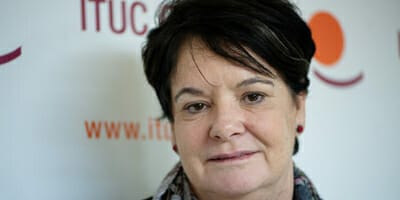
In this engaging Edmond J Safra Research Lab Working Paper, Investment consultants and institutional corruption, lawyer Jay Youngdahl looks candidly at investment consultants in the United States. Describing them as gatekeepers between institutional investors and the peddlers of financial products, the author identifies ethically dodgy and widespread practices, and suggests they are at the heart of failure in the financial system. While he points to “a reimagined investment consulting industry”, Youngdahl declines to sell readers a solution, sticking instead to a highly personable litany of consultants’ avarice and the widely held warped perceptions that allow it to continue.

Read it here.

The offices of Nigeria’s biggest pension fund manager sit at the end of a quiet side street on Victoria Island, Lagos’s bustling financial capital.

Inside Stanbic IBTC’s aptly named Wealth House, indicative of Nigeria’s growing savings culture, a throng of customers jostle to query staff on pension matters. Four flights up, 48-year-old chief executive Demola Sogunle is just back from a whistle-stop tour to southern Nigeria, where he is cajoling state governments to introduce a new defined contribution pension scheme for their public sector employees.

It’s easy to see why Nigeria’s pension sector could become one of the fastest growing in the world. In 2004 root-and-branch reform modeled on the pension systems of Mexico and Chile introduced a compulsory defined contribution scheme for all public and private sector employees.

Twenty-odd pension fund administrators (PFAs) where set up to manage the windfall as employees began to save 15 per cent of their monthly salaries, including employer contributions. Nigeria’s defined contribution assets have steadily grown to $20 billion, but are still only a fraction of what the working population saves. As more people come on board, forecasts predict total pension assets will grow by 30 per cent a year, making Nigeria’s savings pot worth $75 billion by 2020.

Like other PFAs, investment strategy at Stanbic IBTC, managed in house by a team of 14, is deliberately cautious to preserve capital and keep Nigerians, with a reputation for eagle-eyed scrutiny of their pension assets, saving.

“Every contributor has their own personal account and we find they check the value of their pension fund on a daily basis. They don’t mind making money but they’ll ring you if you lose any,” says Sogunle. Strategy is also guided by strict rules in a country where pension funds can’t invest outside Nigeria without presidential approval.

Mitigating inflation

As it is, Stanbic IBTC has one of the largest equity exposures among its peers with 16 per cent of its $6 billion assets under management invested in listed Nigerian equities.

Other than this, it has a 65-per-cent allocation to government bonds and a 10-per-cent allocation to money markets with the balance in corporate bonds.

The pension manager saw annual returns of 15 per cent last year but Nigeria’s raging inflation left an adjusted return of just 2 per cent.

“The single biggest problem for us is high inflation and how to mitigate it,” says Sogunle. Still “uncomfortable with derivatives,” regulators prohibit any kind of hedging, although he expects plain vanilla instruments will begin to emerge as Nigeria’s regulator, the National Pensions Commission (PenCom), increasingly sees the market “from the saver’s perspective.”

The battle with inflation is one of the reasons Sogunle is enthused by new opportunities emerging in Nigerian infrastructure, outlined in reforms in 2010.

The government wants pension funds to help finance roads, ports and power plants and is now pushing an asset class that could be key to getting around the inflation hitch. Matching long-term liabilities (60 per cent of IBTC’s contributors are below the age of 40) with long-term assets without the punitive inflation hit from Nigeria’s federal government bonds, yielding 16 per cent and effectively wiping out long-term gains, is Sogunle’s biggest bugbear.

He is looking at Macquarie’s Africa Infrastructure Investment Fund, which has a sub-fund customised for Nigeria PFAs. There is still no local infrastructure fund or infrastructure bond for investors to buy into and, under the new rules, infrastructure investment is limited to 20 per cent of a manager’s assets.

National boundaries

Stanbic IBTC is also exploring other alternative asset classes including private equity, asset-backed securities and real-estate investment trusts. It plans a 5-per-cent allocation to private equity and is exploring opportunities with funds run by African Capital Alliance and Aureos Capital.

“They both have sub-funds that are compliant with what Nigerian pension funds can do,” he says.

Rules guiding private equity investment stipulate that managers must invest in funds that have at least 75 per cent of their assets in Nigeria. It leaves a 25-per-cent window of exposure to assets outside Nigeria in what could be pension funds’ first chance to tap foreign markets.

Far from being frustrated by the limited investment universe, Sogunle says it’s right that Nigeria’s pension funds invest at home for now.

“Every part of the Nigerian economy needs massive investment. We get good returns and our liabilities are all in naira anyway.”

He also believes local investors are best positioned to benefit once Nigeria’s equity market “takes off” – at the moment many of the biggest corporate names in Nigeria aren’t listed on the exchange. He does acknowledge the buffeting of foreign flows hitting the portfolio however, like when Nigeria was included in JP Morgan’s benchmark emerging market debt index last year.

“We see these flows and we have to anticipate their impact.” It is why Stanbic IBTC run a mainly passive strategy but swing into active mode during periods of volatility.

Untapped opportunity

Defined contribution take-up in Nigeria is still fraught with challenges. Under the constitution, the 36 states that make up Nigeria’s federation are now responsible for introducing the new scheme.

The government reformed the system in 2004 but only six states have signed up although 10 “are in the process” of doing so.

Nor does the new pension scheme tap Nigeria’s vast informal work force. Regulator PenCom estimates that 60 per cent of Nigeria’s 80 million-strong working population is actually in the informal sector; it is planning how best to draw these potential savers into the scheme through attaching benefits to paying into schemes and using technology such as mobile phones.

But for Sogunle all this just represents opportunity. Pointing out that since reform in Mexico 15 years ago, 65 per cent of that population now save and pension assets have swollen to $140 billion, he believes Nigeria with its population of 162 million has only just begun. “The savings culture is there – look at our banking deposits – what we’ve achieved so far is just a drop in the ocean.”

Protecting the pension system is one of six key themes at the centre of the CFA Institute’s Future of Finance initiative as it aims to empower the investment industry to take leadership in restoring trust.

Speaking at the sixty-sixth annual CFA Institute conference in Singapore this week, president and chief executive of the CFA Institute, John Rogers, said the industry has a responsibility to lead out of the crisis, and it is a challenge that involves everyone to get involved.

“We want to look at ways to protect pension systems so people everywhere can improve their retirement,” he says. “We need to champion standards for sustainable pension systems.”

The $30-trillion global pension industry provides the investment management industry with fees of more than $87 billion a year, Rogers says.

At last year’s event he spoke of the “serious trust issue” the industry has with the people it is supposed to serve, and that more leadership was required.

“If we don’t act, the industry will lose credibility and it will be regulated into a state of irrelevance,” he says. “The crisis in trust is not behind us. We believe we have a role to play by mobilising the industry.”

To better serve society

The aim of the Future of Finance project is to shape a trustworthy financial industry that better serves society, and it is advised by an impressive board, led by John Kay.

The project has six themes of reform to focus on:

One of those is putting investors first, which should be a defining fiduciary principle of the industry.

“The industry’s oxygen is trust,” Rogers says. “When the industry breaches trust, it invites regulation.”

The first step in the project, which fits under this theme, is the launch of the statement of investor rights, which is a list of principles outlining what the consumers of financial products are entitled to expect in return for their business.

It includes rights such as objective advice, disclosure of conflicts of interest, and fair and reasonable fees.

The project also aims to raise the level of financial knowledge across the industry.

“The industry is still very young, compared to, say, law and medicine. It is very profitable and there are low barriers to entry,” Rogers says.

It also champions transparency and fairness, and has launched the principles for investment reporting; and will focus on regulation and enforcement to identify the key areas of regulation.

The sixth area of focus will be contributing ways to reduce systemic risk.

“The GFC showed the connectivity of the system, and it cost society $12 trillion,” Rogers says. “We need to drive change in these critical areas.”

Rogers called on the industry to use these critical building blocks to improve the system, and ensure the survival of the investment industry.

“These building blocks will come to life when you put them into motion.”

The CFA Institute has 110,000 members across 140 countries.


Q1 2013 Public Engagement Report from Hermes Equity Ownership Services (EOS). This report contains a summary of the responsible ownership activities undertaken by EOS on behalf of its clients. It covers significant themes that have informed some of our intensive engagements with companies in Q1 2013.

The report also provides information on our voting decisions and the steps we have taken to promote global best practice, improvements in public policy and collaborative work with other shareholders.

For someone whose ideas have revolutionised the Dutch pension industry and carried significant international clout, Anton van Nunen strikes a humble tone.

Widely credited with pioneering fiduciary management from its infancy, Van Nunen confesses with a chuckle that it is “quite a surprise” that the concept has grown to win over a significant proportion of the Netherland’s mid-sized funds and take root in the UK and Germany.

“If I had any idea, then I would have changed that lousy term” says Van Nunen, who is weary of explaining the irony that just about the only thing a fiduciary manager can’t do for a pension fund is assume its fiduciary responsibilities.

The benefits of diversification

For his current employer, Syntrus Achmea, Van Nunen stresses the benefits of diversification for its customers – the 34 pension funds and €64 billion ($83 billion) in assets the group guides under its fiduciary management arm. As government bonds are “far too expensive” due to lax monetary policy and spreads have narrowed on corporate credit, Van Nunen says “we have to advise funds to look at other asset classes and gain risk and illiquidity premiums.”

That sounds straightforward enough, but with the average Dutch fund having 67 per cent of assets in bonds (according to a 2012 Mercer survey), it entails a clear break with tradition.

Equities “are not that cheap any more, especially in relation to the economic circumstances,” says Van Nunen, who indicates the focus of Syntrus Achmea’s fiduciary asset strategy is making funds embrace alternatives.

“A lot of people thought that 2008 was the end of diversification, but it wasn’t. It’s one of our most important investment beliefs that it is still there and we like to use it with alternatives, among others,” Van Nunen adds.

He aims to make smaller funds catch up on giant Dutch pension funds PFZW and ABP in the alternatives space.

A targeted pooling of assets allows Syntrus Achmea to help the smaller funds under its fiduciary management to access illiquid alternatives, even though it primarily runs funds on a segregated basis. Van Nunen believes Syntrus Achmea’s expertise in manager selection can also help funds access the famously exotic and challenging asset class.

Fittingly for a proponent of continued diversification, a variety of alternative investment options enthuse Van Nunen. Real estate remains “one of the best” he says, expressing optimism of a market turnaround in the next couple of years.

Infrastructure on the other hand combines risk and illiquidity premiums, as well as highly coveted index-related returns with the potential for partly replacing debt-handicapped governments. Private equity and hedge funds also both “fulfill a role, but require excellent selection capabilities”.

He regrets the opposition from NGOs that are making investments into agricultural land scarce. Only in commodities do you find alternative assets that Van Nunen is “not that fond of” as he argues “there is not an underlying source of income, nor a strong relation between general inflation and commodity prices”.

Defining risk budgets

Van Nunen’s passion for alternatives operates within a strict framework for managing interest rate risk that Syntrus Achmea tries to implement for the funds under its fiduciary management.

“We don’t hedge interest rate risk by definition, we manage it – if you hedge risk you are acting as an insurance company,” he says, emphasising his view that a balance needs to be struck to keep attention on returns. To put this philosophy into practice, most of the funds Syntrus Achmea manages are divided between hedge and return portfolios.

The former combines government bonds, credit and overlays, and defines the level of hedging a fund is comfortable with.

Making this hedge a priority is a consequence of the “profoundly” changing attitudes Van Nunen has seen in his time promoting the fiduciary management concept.

“Ten years ago you could say as a pension fund we would like an average yield at 6 per cent and structure the risk around the return,” he says. “Now it is the other way around and we first advise our clients to define their risk budget – while we will devise the best strategy around that, they have to accept the return that results.”

Maximising the lone asset

Nonetheless Van Nunen argues that “the one asset pension funds have is their risk budget” and indicates a desire for Syntrus Achmea to deploy that as efficiently as possible. Risk budgets, and therefore strategic allocations, vary greatly along with funding status, risk appetite and the sizes of the funds under their fiduciary management – the smallest currently being $645 million and largest $19 billion.

Van Nunen says that the overall risk level remains muted though, pointing out that funds under a 105-per-cent coverage ratio are forbidden by Dutch regulation to increase their risk budgets.

According to Van Nunen, bonds remain the first asset class that Syntrus Achmea examines as part of funds’ return-seeking portfolios. High yield and emerging market debt are both “attractive asset classes” that Syntrus Achmea tries to introduce to the funds under its management.

Risk premium assets, usually equities, are the next component to the return portfolios followed by risk and illiquidity premium assets, namely private equity and other alternatives. Absolute return options such as hedge funds are the final building block to Van Nunen’s ideal “diversified portfolio that uses the risk budget to the optimum sense”.

Syntrus Achmea’s penchant for diversification naturally makes it favor wide geographic spreads in equity and bond investments. Van Nunen explains that it has also been able to diversify within the asset class of hedge funds by using different styles.

Another way in which Syntrus Achmea tries to crowbar return potential into the restricted risk budgets of the funds it manages is to take active tactical management decisions.

Varying asset allocations from their strategic weightings can help, Van Nunen says as “changing the weighting between return and hedge portfolios gives you leeway to take advantage of temporary disequilibria in markets and good returns.”

As the world’s fifth largest fiduciary manager, Syntrus Achmea’s formula clearly has many fans and Van Nunen is confident that sticking to its diversification mantra will enable it to flourish further.

Just when you thought you were safe, the next reiteration of risk parity has arrived. AllianceBernstein’s tail risk parity takes the concept of risk parity, reallocating assets uniformly according to risk, but it uses tail risk, not volatility, as the core measure.

The concept of risk parity is a portfolio diversified according to risk, rather than capital allocations. Traditionally, risk parity has used sources of volatility as the risk measure, but now it is being argued that this is not very helpful in times of stress. The newest iteration of the risk management technology is tail risk parity, which enables diversification of the sources of tail risk.

“If you believe that all markets are normal and there are no risk tails in any asset classes, then risk parity will work. But by their nature asset classes do exhibit fat tails, so because of that volatility doesn’t work,” says Michael DePalma, New York-based chief investment officer of quantitative investment strategies at AllianceBernstein.

“With risk parity you are ‘smooshing’ the tails in. It gives you a smoother ride, but it reduces the left and right tail. The cost of risk parity is you give up the upside,” he says. “In tail risk parity, by focusing on the left tail risk as a measure of risk, you can retain proportionally more of the upside.”

In this way, he says, tail risk parity is a positive skew, as it is reducing the skew to the left tail risk.

Natural evolution

Alliance Bernstein is saying, while this is a unique approach to a problem, it is also the natural evolution of thinking around diversification benefits and protection.

DePalma says the popularity in risk parity strategies is due to the ability to solve a number of the shortcomings of a static rebalanced portfolio such as concentrated risk exposures and they maintain a constant risk target over time.

“Maintaining a risk target over time means you can harvest returns when you’re best getting paid for it,” he says. “But there are problems that risk parity hasn’t solved such as diversification failing when normal correlations are used to structure portfolios.”

Conventional risk parity strategies use volatility as the measure of risk, this works when markets are “normal”, DePalma says, but when markets are under stress then volatility doesn’t help you at all.

“When equity markets are exhibiting left tail risk, then 80 to 90 per cent of the time commodities are in their tail and credits and infrastructure will also have a bad return,” he says. “But in the middle 80 per cent, or normal times, it is 50:50 whether other asset classes do well or not.”

The collective wisdom of the options market

The AllianceBernstein strategy, which was developed with contributions by Myron Scholes, Nobel Laureate and co-creator of the Black-Scholes option-pricing model and currently the Frank E Buck professor of finance, emeritus at Stanford University, computes the tail risk for each asset class, which is implied from the options market.

“Using the collective wisdom of the options market, rather than building a measure, we come up with the market-implied level of tail risk,” DePalma says.

The strategy takes the universe of assets to include in the portfolio and assigns each asset class to one of three risk buckets – growth, safety and inflation – to ensure macro diversification. It then imputes the expected tail loss or the computed tail risk from the options market, and forms parity across the buckets with each contributing one third of the tail risk of the portfolio.

The tail risk level that is set is maintained using leverage in the form of futures and swaps.

The process, including the options market-imputed expected tail losses and tail risk allocations, is reviewed daily, but the manager doesn’t necessarily trade every day.

While most investors have looked at risk parity allocations as part of their alternatives allocations, DePalma says there is also an option to include the tail risk parity strategy as an overlay.

“At its core, this is a risk measurement and management technology. We can use futures and swaps across the portfolio and re-allocate the tail risk from the existing assets to create a balance,” he says.

Point of difference

The idea of downside protection is not new, but the strategy combines it with the existing advancements in asset allocation strategy that risk parity provides.

In addition, it claims to be more cost effective than buying protection directly in the options market. (This is laid out in the paper by Scholes, DePalma and AllianceBerntsein’s Ashwin Alankar, An introduction to tail risk parity: balancing risk to achieve downside protection).

But while DePalma says tail risk parity is a unique approach to solving a problem, it doesn’t solve all the problems of risk parity.

For one, the approach takes a certain measure of tail risk, namely the options market. So it won’t protect a portfolio against a flash crash or an earthquake.

However, DePalma says the largest risk is it may make the portfolio overly conservative.

“The biggest risk is the opportunity cost. I’d love to find a way to reduce that,” he says.

“This is a unique approach to solving a problem, and it may get the competitive juices stimulated and investors can expect more innovation,” he says. “In risk-managed solutions everyone is taking a slightly different approach and it behoves investors to look at a suite of offerings.”