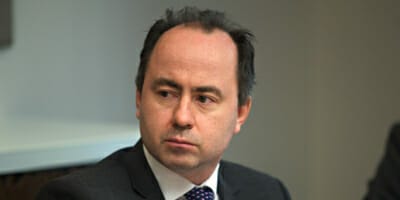
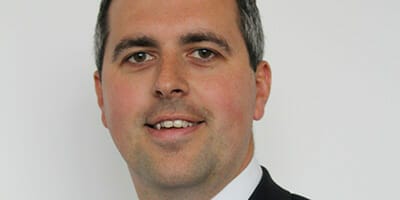
Speaking at the Fiduciary Investors Symposium at Oxford University’s Rhodes House Fiona Trafford-Walker, director of consulting at Frontier Advisors argues that Australian investors are operating in a changed environment and need to “get used to slower economic growth.”

Speaking as part of an expert panel on how the continued environment of slow growth and low interest rates will affect global institutional investors, and the best asset allocations to protect their portfolios, Trafford-Walker puts forward the Australian view.

She argues that Australian funds are entering a “brave new world” where returns will be much lower.

The slowdown in China has hit demand for key Australian resource exports with iron ore prices down 60 per cent from their recent highs. Australia’s funds face demographic challenges with a growing elderly population which will also hit GDP growth, she warns.

“By 2025 this demographic wave will cost 0.4 per cent of GDP.” Australia’s mining boom “hid structural problems in our economy which now needs to diversify and become more services led,” she says.

Strategies for Australian funds include reducing target returns and changing asset allocations, she suggests.

Funds could also take on more risk and pursue more active management strategies to “take them over the line.” She notes an appetite amongst funds to “creep up the risk curve to get returns” and a “huge amount of interest in infrastructure,” plus a continued appetite for equity investments but also “equity substitutes” in the hedge fund space. She expects “much greater use of derivatives to offer diversification and to protect downside risk.

Roger Gray, chief executive of USS Investment Management is similarly circumspect.

“We live in period of wealth elusion,” he warns, saying that perceived wealth is greatly exaggerated and funds need to tailor their asset allocation to “make a better job of navigating through a low return future.” Gray says investors are looking at a world where bond yields are significantly lower, “below nominal GDP growth,” and that funds need to diversify better, and more widely, developing alternative beta strategies. USS is pursuing more active strategies and structured positions, he says.

Over investment themes suggested by panel speaker Toby Nangle from Columbia Threadneedle Investments included Japanese equities which are currently “cheaper than they have been” where he suggested “investing tacticly round the edges.”

Short dated sterling debt which he described as “anchored, not volatile” is another investment theme.


“Do hedge funds make sense?” asks Jean-Marc Stenger, chief investment officer for alternative investments at Lyxor Asset Management speaking at the Fiduciary Investors Symposium at Oxford University’s Rhodes House.

Hedge fund assets may have reached a record $3 trillion in 2014 but the decision by a number of high profile pension funds to drop hedge funds from their allocation has sparked questions around the role of these funds going forward.

Although Stenger lists recent criticisms around the industry, including underperformed compared to all other asset classes since 2009, a risk perception, light regulation and, perhaps most importantly of all, the high fees still associated with hedge funds, he argues that over a long time frame hedge funds returns are “outstanding” and that structural and cyclical factors explain the problem.

Hedge funds are struggling in a low volatility environment where Central Banks have distorted asset prices with QE, he argues. Hedge funds have an important role around diversification including offering different investment styles and flexibility for investors. The regulatory framework is now robust enough for hedge funds to invest public money and transparency has increased. The industry is maturing; fees are falling, he argues.

High fees is one of the biggest bugbears at the BBC Pensions Trust, which manages £12.5 billion ($18.5 billion) of assets for the UK’s state broadcaster.

“Any alpha created is taken out with high fees,” argues Ajay Ahuja, pensions investment manager at the fund. “

We look at what skills they are delivering, and what our take should be on that given we are putting up risk capital,” he says. “It’s difficult but worthwhile. We look for sensible fees, high hurdle rates and an alignment of interest. We are seeing fees come down but it is still sticky.”

Fees are also an issue at USS Investment Management, argues speaker Kathryn Graham, head of strategy co-ordination at the at Universities Superannuation Scheme, USS, which operates one of the largest pension schemes in the UK, with total fund assets of more than £40 billion ($60 billion). “Returns have come down astronomically but fees haven’t. Hedge funds are never going to be a big allocation because we do quite a bit in house,” she says.

Nor do hedge funds always offer the kind of diversification investors seek, argues the BBC’s Ahuja. “Hedge funds can have high correlations,” he says, adding: “There are other, non-hedge fund ways to protect with more certainty like equity options or moving to cash. We use options in our schemes.”

Managing hedge funds also requires resources, he says. “Hedge funds make sense but don’t just diversify for sake of it. Hedge fund investing requires lots of governance, even if outsourced.”

For Magnus Eriksson, chief investment officer of the Fourth Swedish National Pension Fund, AP4, the main conflict within the fund’s hedge fund allocation is balancing hedge fund strategies with AP4’s commitment to long term investment.

“AP4 don’t invest in hedge funds unless they are completely transparent offering real-time access to their portfolios,” he says. The fund is also “fee sensitive” with investment costs for the entire fund kept to 10 basis points. Hedge funds work to a fixed fee based around this budget with “no leakage,” says Eriksson.


“Geopolitics does matter and how to navigate geopolitical events on a portfolio is challenging,” argues Tom Clarke, partner and portfolio manager at William Blair speaking at the Fiduciary Investors Symposium at Rhodes House, Oxford University.

In a session dedicated to macro strategies for investors to best navigate today’s complex investment universe and diversify risk, Clarke argues that “hiding” from geopolitical events “isn’t diversifying: what we want is insight.”

Clarke’s advice is for investors to see geopolitical risk as “strategic players” trying to produce their own outcomes in a series of bargaining exercises.

“Who are the players that matter, what do they want and will they achieve it?” he asks. “What matters is whether geopolitical risk prices will be pushed, or pulled away from valuation,” he says.

Applying this analysis to the crisis in the Eurozone, he believes diversified Eurozone equities “are attractive.” However the Euro – and it is always important to consider a jurisdiction’s currency and asset differently since “currencies go in different direction to assets” – is unattractive. “When it comes to the Euro my view is that it is unattractive and overvalued,” he says.

Staffan Sevon, head of tactical asset allocation and hedge fund investments at Finland’s €29-billion ($39-billion) Ilmarinen fund has a similar drill down approach to macro risk.

“Understanding the drivers of the market is so important. You can’t just have an opinion on US equities – you have to look at how that asset class should return relative to others,” he says.

But diversifying geopolitical and macro risk is difficult. “How do markets react during war?” he asks, pointing out that equities don’t necessarily fall during a conflict. Similarly, he argues that if Greece leaves the Euro it could be seen as strengthening Europe on one hand but also very damaging if investors flee the continent.

Studying correlations between asset classes can offer insight, although he warns “when you look at correlations be careful how you measure them and select a time frame that is relevant to you.” Sevon believes that global equity is by far the strongest connecting point, adding: “If you don’t have an idea about equities, you don’t have an idea about other assets. Equities tend to control others – there is a strong, positive correlation.”

But the breakdown in correlations and their usefulness in flagging macro risk was an issue raised by Peter Wallach, head of the United Kingdom’s Merseyside Pension Fund, a £5.75 billion open, defined-benefit local authority scheme.

“It worries me that correlations between bonds and equities has broken down in the recent past,” he says. “We need a better way to diversify and manage risk going forward,” he says.

The University of Oxford’s distinguished Professor of Economics David Vines predicted the ongoing crisis in Europe will turn into a “train wreck with implications for investors” unless governments undertake significant reforms.

He urges for large write downs of the sovereign debt of southern European countries, a loosening of austerity in those countries and a significant increase in inflation in Germany and fiscal expansion in northern Europe. “Europe has a choice,” he says speaking at the Fiduciary Investors Symposium at Rhodes House, Oxford University.

Vines argues that essential reforms are still strongly resisted in Germany which is “not coming to terms” with the scale of the problem. However he is hopeful that, ultimately, Europe’s indebted countries will have their debt written down. “In 15 years time debt will have been forgiven but how this will happen is difficult to see,” he says.

In policy failures that are easy to see in retrospect, Vines traces Europe’s problems to wildly divergent labour costs.

Southern European economies became uncompetitive and over-borrowed with “undisciplined lending”, leaving banks exposed in “a system not fit for pursose.” Since then European countries have been unable to devalue their currencies and embark on export led growth. “EU banks won’t be fixed by growth,” he says in the same way that Asian banks were able to recover after the economic crisis in that region.

Vines argues that unless policy steps are taken there is a real possibility of “Grexident,” whereby Greece accidentally exits the European Union without a fresh injection of bail out cash. Contagion will spread to other vulnerable economies including Spain, Italy and Ireland, he predicts.

“It will go beyond Greece. I am not persuaded by stress tests,” he says, in response to efforts to make Europe’s banking sector more robust. Northern banks are just as exposed since they are holding southern European debt, he says. Vines also references the growing risk to “the political economy of this project” in light of more vocal criticism Germany is facing from member states.

For signs of hope Vines casts his mind back to the Latin American crisis which, “in the end involved forgiveness.” He urges Europe to do as Latin America did, writing down sovereign debt in a process that took “four years of hard work.”

Adding: “Banks earned their way out of difficulty and write downs were possible when they had strong enough balance sheets.” A new regime is urgently needed in Europe in the face of today’s difficulties, he concludes.


In 2014 Robeco went live with its Factor Investing Solutions: tailored solutions based on multiple factors. “Robeco is not the founder of factor investing, but we are among the first to translate the theory into practical investment solutions,” says Robeco’s Head of Factor Investing Research Joop Huij with pride.

Read more about Robeco’s approach.

A new study of active and indexed-based mutual funds shows the impact of different countries’ regulatory and financial market environments.

The study finds that the average alpha generated by active management is higher in countries with more explicit indexing and lower in countries with more closet indexing. The evidence suggests that explicit indexing improves competition in the mutual fund industry.

The study find that actively managed funds are more active and charge lower fees when they face more competitive pressure from low-cost explicitly indexed funds.

A quasi-natural experiment using the exogenous variation in indexed funds generated by the passage of pension laws supports a causal interpretation of the results.

Read the full article