On September 22, 2016 CECP, ‘The CEO Force for Good,’ will launch its Strategic Investor Initiative (SII). The purpose of the SII is to shift the conversation between companies and their investors from one about quarterly earnings to one about long-term value creation. The SII is funded by grants from the Ford Foundation and the Heron Foundation, in addition to robust support from CECP staff, CECP’s 217 member corporations (more than half in the S&P 500), and the Newman’s Own Foundation.

Based on the initial feedback received from the five-month listening tour, the SII’s initial focus areas will include:

  • CEO long-term plans that include stakeholders beyond shareholders

In order to move stakeholders, as building blocks to long term value, into the ‘CEO quarterly call’ discussion, chief executive officers  must first articulate how multi-stakeholder governance drives long-term value creation. In the afternoon following CECP’s 2017 Board of Boards, a three hour, closed-door networking discussion and Forbes-named top three “power player” event for CEOs, the SII will convene its first Strategic Investor Conference. This will be a ‘many-to-many’ engagement opportunity between CEOs presenting their long term value plans and a group of long term investment analysts. These conversations will be made public and archived and will provide insight and information needed by long-term investors.

  • Investor segmentation

Chief executive officers routinely segment customers, vendors, and other markets in order to allocate scarce resources to those segments which most efficiently contribute to long term value. However, segmenting investors is rarely done. If CEOs can promote and encourage a greater proportion of their investor base to be longer-term holders, and a smaller proportion to be shorter-term holders, it follows that the long term investor-CEO dialogue should have greater resonance. By leveraging well-established segmentation schemes such as Wharton Professor Brian Bushee’s Institutional Investor Classification system, the SII will arm CEOs with new measures of the holding term behavior not only of their own company’s investors.

  • Stakeholder mapping and disclosure

To our knowledge, no organisation has attempted to map industry-specific significant stakeholders across all industries. CECP has a multi-decade history of robust measurement and assessment in the corporate responsibility domain that can be leveraged in mapping these stakeholders. This mapping will help companies determine their ‘significant audiences’ so that their board can issue an annual Statement of Significant Audiences and Materiality (The Statement). One of the objectives of the SII is to encourage widespread adoption of ‘The Statement’ which will support a longer-term oriented quarterly call, long-term multi-stakeholder plans, and a higher promotion of long-term shareholders.

  • Cultural KPIs

In the SII listening tour, institutional investors expressed great interest in new metrics that can quantify qualitative factors such as corporate culture, so that these predominantly social factors can eventually make their way into valuation models, and as a potential antidote to greenwashing. Incorporating qualitative environmental, social and governance (ESG) factors into analysts’ models is a key focus of High Meadows Institute’s Future of Capital Markets effort. Using new ESG big data technologies such as TruValue Labs, the SII will bring to investors quantitative evidence of how corporations are working with their most significant stakeholders to create long term value.

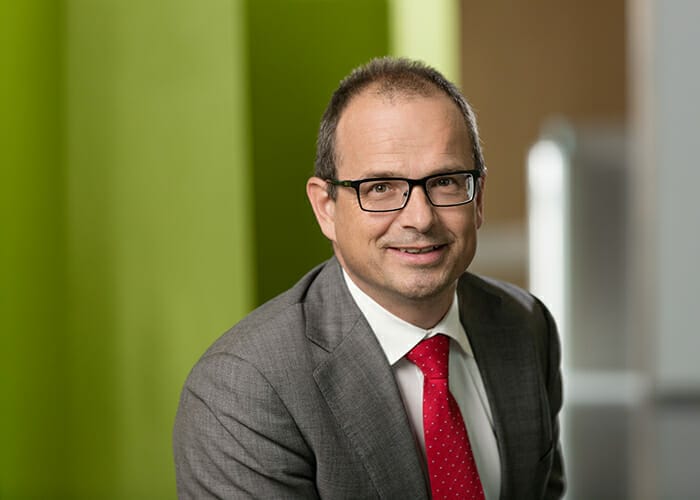
According to Mark Tulay, director of the SII: “SII envisions a new platform for leading CEOs to develop, convey, and deliver their long-term plan to long-term investors – including specific commitments on financially material ESG factors and articulating their non-shareholder stakeholders. SII hopes to spark the movement of trillions of dollars of capital to companies demonstrating performance excellence over the long-term and will help build trust in capitalism as an engine of global prosperity,” and thus help evolve the role of the sustainable corporation in a sustainable society.

Robert G. Eccles is chairman of Arabesque Partners and Tim Youmans is research director for the Strategic Investor Initiative at CECP. They are research collaborators and global experts on materiality and integrated reporting. To learn more about CECP’s Strategic Investor Initiative, please contact Tim at tyoumans@cecp.co

One year into his chief investment officer role at Baltimore-based Maryland State Retirement and Pension System, Andrew Palmer is steering the $45 billion portfolio in new directions.

He’s overseen a doubling in the fund’s exposure to emerging markets and a move to a long duration benchmark in the fixed income portfolio.

“Fixed income gained from switching from an intermediate benchmark to a long duration benchmark with average maturities of 25 years. The Barclays Aggregate index wasn’t doing much for us. We broke it apart and took what attributes we wanted.”

Now he promises to apply a similar “thought process” across the entire portfolio.

One area Palmer is particularly focused on is the absolute return portfolio, accounting for around 10 per cent of fund assets, which returned 0.7 per cent in fiscal 2015 compared to a benchmark of 2.7 per cent.

“We still want part of our portfolio to have a low correlation to stocks and the absolute return allocation is dedicated to that for us. However, the allocation hasn’t provided strong returns or diversification recently,” he says.

He believes Maryland’s hedge fund allocation performs more like the stock market in down markets than up markets, and may not be diversified enough.

“I want to make sure we have the right mix of managers. We have multiple managers and many of them are doing the same thing. We are seeing different returns but they are correlated; we want uncorrelated returns.”

The portfolio consists of four global macro funds, one risk parity strategy, two fund-of-funds, five relative value multi-strategy funds, and one insurance fund.

“The insurance fund is the one that gives the best uncorrelated returns,” he observes.

Poised to reduce manager numbers

Other areas of the manager roster are also poised for change. The fund currently uses around 350 external managers in a strategy that is entirely outsourced: Maryland only employs 15 investment professionals of its own, most of who are involved in sourcing and monitoring external managers.

The fund has committed around 6 per cent of assets to an emerging manager program that includes 100 managers favoured for their independent, original and diversifying strategies. Now Palmer plans to reduce the number of managers, although the size of the portfolio will stay the same.

“We work through consultants, but consultants tend to stick with tried and tested managers. We like these aggressive, bright minds but we are working to reduce the number of managers here – not because they are doing poorly but because we have so many that together they perform like an index.”

Emerging managers are particularly focused on the fund’s active allocations around stock and bond picking, as well as quants. He would also like to build internal expertise.

“Where we can have confidence, and build the skills set, we will start to do more ourselves.” The first area is likely to be around tactical asset allocation, including in-house beta allocations and using exchange traded funds or futures to change the asset mix. He also believes Maryland is well positioned to manage currency risk and fixed income allocations itself.

“I worked in fixed income for 30 years. I think this would be a natural place to start building success.”

One hundred managers sit on the private equity side, monitored by an internal staff of four.

“Our staff are managing the relationships and deciding whether to subscribe to the next fund; in private equity we are in partnerships and have no control of the investment.”

Although he says external management in private markets drives fees higher, he attributes the fund’s strongest returns in private equity and private real estate to “good managers” – as well as improving valuations.

Maryland has some 35 per cent of assets in a public equity allocation, balanced between dollar and non-dollar stocks that use a currency overlay program to hedge risk.

“It’s expensive to hedge currencies back all the time and our currency exposure is also an important source of diversification, however the overlay protects the portfolio against any sustained currency trends.”

The dynamic strategy adjusts according to currency market conditions, with managers tending to use low hedge ratios when the dollar is weak, and high hedge ratios when the dollar is strong. Maryland doesn’t hedge emerging market currencies.

“We like these currencies long-term; they are growth drivers across the globe.”


Blockchain technology

Going forward, Palmer believes emerging markets will offer better value than they have and he is also looking at new asset classes that have appeared since the banking crisis like mortgages, and commercial real estate mortgages.

“We can start to invest in areas where traditional owners can no longer invest as much,” he says.

He also believes it won’t be long until blockchain technology, the shared database technology that allows consumers and suppliers to connect directly removing the need for middlemen, will broaden the potential investment universe to include more easily accessible opportunities in assets like leveraged loans, securitised loans and asset-backed loans.

“These assets don’t tend to trade as well as others and block chain technology could make it easier,” he says. They would also offer the kind of diversification he views as paramount.

“We like the fact that returns vary across the portfolio; the balance gives us a smoother ride. When everything moves in the same direction at once it may put pressure on the system in falling markets,” he says.


David Blood, who co-founded Generation Investment Management with former vice president of the US, Al Gore, has outlined five priorities to focus the sustainable investment effort on over the next five years.

“We need to step up our efforts in the next three to five years no matter who gets into power in the US,” he says.

“We don’t have nearly enough capital in the transition to [a] low carbon economy. It’s not just renewable energy, everything will change.”

Speaking at the PRI in Person conference in Singapore last week, Blood said that the framework around sustainable investing rests on two things:

  1. The macro environment and the drivers of change – such as the environment, climate change, poverty, health, and demographics – are becoming more intense, and interlinked and so more relevant to business and investors
  2. From a business point of view, the issues of reputation, brand and resource management are becoming more relevant.

Generation, which was formed 12 years ago, is anchored in the philosophy that sustainability is best practice and makes the group better investors.

“Categorically we believe that the integration of sustainability makes us better investors,” Blood says.

“The more we prove the business case, the more it says it’s a fiduciary duty to do so, it will become mainstream.”

“Over the past 12 years the macro backdrop is increasingly important, and the integration of sustainability into investment practices and philosophy is best practice. Dumping a lot of oil into the Gulf of Mexico is bad for your stock price; reputation clearly matters,” he says.

“Companies that minimise the use of resources and maximise the resources they have will do better.”

In his keynote speech at the PRI conference Blood listed priorities for the next five years in order to progress sustainability integration.

  1. Win the battle, or debate, on fiduciary duty.

“Many investors say that fiduciary duty precludes them from looking at sustainability or ESG [environmental, social and governance], that is wrong,” he says.

Change the debate from why integrate, to how you integrate sustainability into investment practices. This includes looking at reporting, fiduciary duty, increasing the number of firms actively integrating sustainability, and looking across asset classes, not just equities.

  1. Recruit the other 50 per cent of managers to integrate sustainability, not just the people attending, or signed up to, the PRI.

“We’re good at convening those that agree,” he says. “Asset owners are key to bringing the other investment managers along the journey.”

  1. The transition to a low carbon economy is a big deal, and it has to happen now.

“If we are still talking about this in 10 years then we’ve missed it. Must make it critical, we need consistency of data.”

  1. The industry needs to recognise that finance and capitalism is not working for everyone. There is significant inequality and people are upset about it.

“Most people in the world have no idea we are integrating sustainability in finance. The finance industry is close to losing its licence to operate.”

“Most people outside of finance don’t differentiate between hedge funds, asset managers, asset owners, pension funds – they are all lumped in one bucket,” he says.

“We need to put the ‘social’ in the front of our agendas, impact investing as an extension and encourage companies to think about social issues. We have done a pretty good job on the ‘environmental’ and ‘governance’ but not great on the social.”

“It concerns me that of the top 25 asset managers in the world, about 50 per cent are here, but those that are not here are mostly American,” he told the PRI in Person audience.

“In the US, sustainable and responsible investing is seen as a political agenda and not really investing. We need to make the business case for it to win the argument,” he says.


Investment strategy at Chile’s second largest pension fund, the $45 billion AFP Habitat, is characterised by both a large exposure to emerging markets and a growing global alternatives portfolio.

“We are an emerging market ourselves and feel comfortable assessing the risk return profile of those markets,” explains chief investment officer Alejandro Bezanilla Mena, speaking from the fund’s Santiago headquarters in Chile’s capital.

It’s where protestors recently took to the streets to voice their discontent with the country’s private pension system. Set up under the dictatorship of Augusto Pinochet, Chile requires workers to contribute 10 per cent of their salaries to funds known as Administradoras de Fondos de Pensiones, (AFPs).

It has nurtured a $170 billion pension pool that has encouraged other countries to copy the Chilean model, yet people living longer, saving less, and poor returns from financial markets has fanned today’s demand for reform.

Bezanilla also notes that the Chilean system doesn’t cater for those either without a pension, or who have been unable to regularly contribute during their working life, leaving too many without retirement provision.

“We are in the middle of a reform process that should address a new scenario of expected returns and higher longevity. In the last 35 years we haven’t changed the main parameters of the system, so the level of contributions and the retirement age are the same as they’ve always been,” he says.

As the government tries to settle on a new system, AFP Habitat remains set on its own, adventurous course.

Emerging market equities account for almost 60 per cent of the fund’s total equity allocation, while emerging market bonds account for 45 per cent of the international fixed income allocation.

Japanese equities ‘disappointing’

“At the beginning of the year we started to rotate from developed markets into emerging markets, on the back of less perceived risk and very low valuations. It proved to be good timing,” says Bezanilla, detailing that investments in international fixed income include credit, mainly US and European high yield, hard currency emerging market corporate bonds and local currency emerging market government bonds.

He says he has been “disappointed” with Japanese equities where he hoped changes in corporate governance and the renewed focus on profitability in Japanese companies would pay off.

Asset allocation at the fund depends on its two million contributors’ own risk appetite. Since 2002, AFP Habitat, like the other five AFP funds, was required to run five different funds with different levels of exposure to equities and risk, ranging from the conservative to the very risky.

“This multi-fund system was created to allow contributors to choose amongst any of the funds while taking into account their age and risk preferences,” says Bezanilla who joined the fund as a domestic equity portfolio manager in 2005.

Contributors can invest in two funds at any given time. The most aggressive fund, Fund A, can have up to 80 per cent in equities and has seen real term returns since inception of 6.4 per cent, while the most conservative fund, Fund E, has an equity allocation capped at 5 per cent and has posted returns since inception of 4.1 per cent in real terms.

“Our asset allocation depends primarily on the decisions our contributors make regarding their risk appetite. Currently, they are very active and opt towards changing from aggressive funds to conservative funds back and forth often,” he says.

AFP Habitat has posted an 8.4 per cent return in real terms since inception 35 years ago.

Stiff competition

Stiff competition for returns within Chile’s borders has encouraged a diversified, global strategy.

“The Chilean pension system manages about $170 billion, which represents more than half of Chile’s GDP. This means we don’t have any other option but to diversify our investments outside of Chile,” he says.

A growing global alternatives allocation is one consequence. The fund used to have local investments in private equity, infrastructure and real estate, but the allocations were too small to make much of a difference to the portfolio, mainly because of the lack of local managers with the experience and track record, he says. After the financial crisis, global

alternative managers seeking new opportunities began to appear in Chile.

“It allowed us to enter an asset class that was interesting and diversifying for our portfolio. Since then, the alternative portfolios have been growing slowly but steadily,” he says.

The fund favours passive management in US equities and “some passive” in Japanese and European equities, but actively manages its emerging markets and high yielding debt allocations.

“The decision to invest in active management is based on quantitative analysis to assess the ability of the manager to generate alpha consistently, and on the conviction that, in certain markets, it is easier to produce that alpha due to information asymmetries and indices that are too concentrated in a few companies,” he says.

“We only invest passive when we can prove that there is no alpha generation or when we need more liquidity for our decisions.”

The fund tends to use its own in-house team to invest in local assets, but favours external managers in international markets.

However, it recently began to invest directly in international government bonds to better hedge and manage liquidity, and is also beginning to invest directly in Latin-American equities and bonds for the first time.

“This was a natural step, since we already invest directly in Chilean companies, many of which are already competing within the same markets as Latin-American companies, and that we have therefore already studied to have a better understanding of the competitive environment.

“We believe we can produce alpha with our knowledge of the markets and savings from the external managers’ fees.”

External managers’ costs are down 40 per cent in comparable terms since 2002, accomplished by “several rounds of negotiations with our counterparts,” he concludes.

Sustainability is defined as the capacity to endure. Sustainability is not just the consideration of environmental or social and governance considerations.

It is not a negative screen. It is so much more than climate change, so much more than corporate engagement. Sustainability is the system and the ability to continue.

Princeton University professor and sociologist, Robert Gutman, said: “Every profession bears the responsibility to understand the circumstances that enable its existence.”

This should be a call to action for the finance industry, which has rested on its laurels; it’s rested on its low barriers to entry, high fees and complex language that has created enduring principal/agent problems that restrict transparency and accountability.

All participants in the finance industry should take heed. Simply, if you want to endure then you should consider your role, the industry and its purpose, through a sustainability lens.

After nearly 10 years of reporting on sustainability, the finance industry is finally waking up.

conexust1f.flywheelstaging.com is an investment publication. It covers broad issues relating to institutional investment including investment strategy and implementation, macro-economic conditions and asset class specific solutions.

We have been writing about sustainability since the publication’s inception in 2008, because we see environmental, social and governance issues as a central theme for the world in which we live, both now and, importantly, in the future – and that’s true if you’re a pension fund member, a pension fund executive, a provider of service to that industry, or a company in which the industry invests.

This is not about tree-hugging, but a sensible and robust investment strategy and a logical, thematic, holistic world view. The finance industry is inward looking, it’s time to look out.

In this regard, I consider my job will be done when there is no ESG alpha but it is priced into markets and embedded in the process of managers and asset owners.

We are very proud to be partnering with the PRI on a special publication to celebrate the PRI’s 10th anniversary and look at the achievements of the past 10 years, and challenge the industry to move forward.

The magazine looks at big picture issues such as the purpose of finance – which is not to make money, but to serve the real economy – the achievements of the PRI, and the role institutional investors can play in financing solutions to global challenges such as climate change, social injustice, poverty and inequality.

In this issue we also highlight through case studies the asset owners that are leading the way in ESG integration – and how they hold managers to account on ESG will be a key development in the next 10 years.

We celebrate asset owners, and believe that building strong buy-side organisations is the key to much-needed change in the finance industry, change that will allow investors to focus investments on the long term, and better align decisions with the needs of their members and stakeholders.

In order to do this, asset owners need to take stock of their internal organisations, pay attention to governance and decision making, hire good internal teams, invest directly, reduce the number of external providers, integrate ESG into investments and be conscious of costs. All are issues of sustainability.


An e-mag of this special print edition will be made available on conexust1f.flywheelstaging.com following the PRI in Person conference next week.