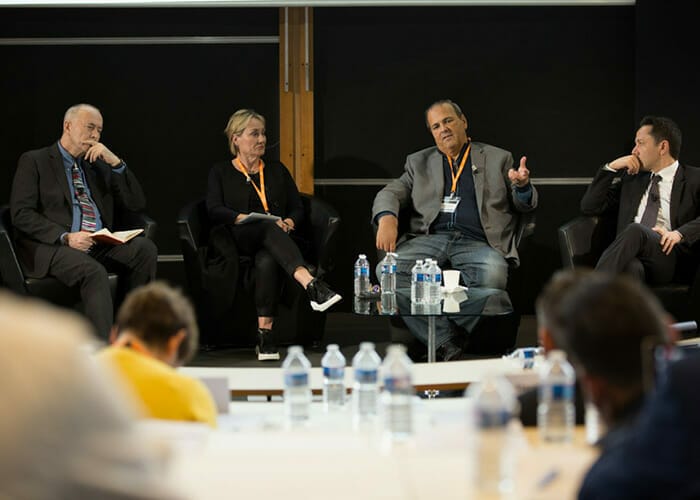
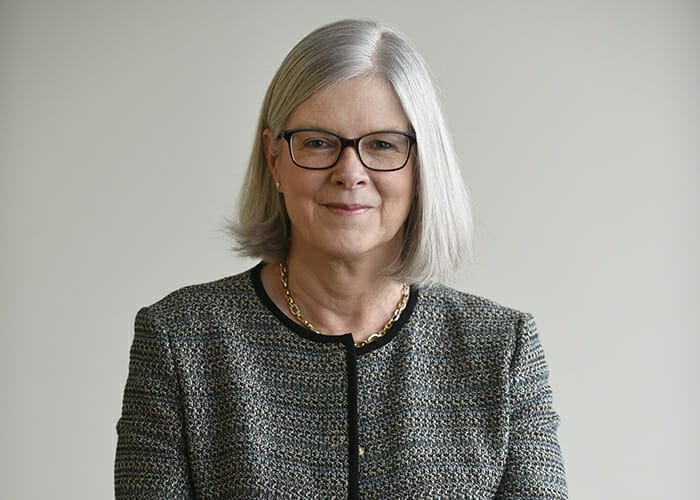
At the Fiduciary Investors Symposium at the Yale School of Management, Professor Robert Shiller reminded delegates that “finance is not just about making money”. The Sterling Professor of Economics at Yale University, Shiller warned of the tech bubble and and the housing bubble, and is the author of Irrational Exuberance. He won the 2013 Nobel Prize in Economics, alongside Eugene Fama and Lars Pete Hansen of the University of Chicago. This is an excerpt of his speech where he discusses financial innovation and the role of finance in society.


In the epilogue to my book [Finance and the Good Society] I say, finance, financial theory is a thing of beauty. When you read about a general equilibrium in financial markets where prices reflect scarcity, they sum up the demand of everybody and they put a number on it so that the scarce resource can be suitably distributed among its various uses and not squandered. And how it takes into account all of the demands and desires of people – you don’t even know them, you’ve never met them; it is a thing of beauty.

This leads some people however to worship the structure a little bit too much, because the financial theory, which I love and admire, is only a half-truth anyway. So this reminds me of your speaker from a year ago, Eugene Fama, who I think he and I agree on just about all of the facts but we differ on the interpretation. And he wants to give efficient markets a benefit of the doubt. Okay well let him do that but I doubt that markets are efficient so it’s not perfect. And there’s a bigger human element than you might imagine. So I’ve been involved with behavioural finance now for 30 years with a growing group of finance theorists.

I’m married to a psychologist as well. I think the field of neuroscience is just as revolutionary as the field of artificial intelligence because it’s changing our view of ourselves, and so we don’t fit the theoretical model of finance.

Paul Glimcher, who’s a Professor of Neural Science at New York University, wrote a book called Neuroeconomics, and he said anything that people are presumed to be doing must have a brain structure that supports it. So he wants to find out. And he says that economic theory supposes that people consistently maximise a utility function – expected utility function. That’s a pretty complicated thing to deal with. Maximise an expected utility function, subject to a budget constraint. So he says, “I want to know where in the brain that happens”. So to make a long story short, he hasn’t found it yet.

I mentioned that in my book I talk about financial professions. And I mentioned some that are not uniformly loved. But again I’m not an apologist for these people. But I also feel that they do have a position in our civil society. So let me talk, first of all, about the least loved financial profession. That’s the financial lobbyist.

In our book Phishing for Fools George [Akerlof] and I talk about lobbyists as actually having an important part of our rule making. Because congressmen are really public people that have very little time to think about policy. And lobbyists come in. They like lobbyists that are not totally dishonest; that’s why a lobbyist has to say no to some requests. He actually has a moral purpose. So maybe I didn’t convince you, but I think that there are good lobbyists. And that they are part of what makes the system work. Because the only problem with our system is if there’s an imbalance – if certain social groups have more lobbyists or more expensive lobbyists than others. But if every group has a lobbyist representing and these lobbyists have some sense of praiseworthiness as I think they do, then I think they’re a positive.

I wanted to talk about some innovations. In order to make civil society work, it’s like an engine. It has to be tuned right and managed right. And so in history there are various people with a civil society mode of thinking who propose innovations.

In Amsterdam in 1602 they set up the first stock market that really had daily trading. And they had shares held in a street name so that you didn’t have to go through all the reporting every day when shares are traded. And then the newspapers of the day, actually they weren’t newspapers yet in 1602, they were coming soon though; by the 1610s Holland had the world’s first real newspaper, so they would tell you the price of the Dutch East India Company in their newspaper. Now that is an innovation, which I think was very public spirited and it involved legal changes that allowed this to happen. But what it meant is that organisations could be valued in a marketplace, the value would be known by everybody and it provided incentives to take part in a risky venture that you couldn’t have taken part of in such a flexible way until then. It’s an interesting story because they had a short sale crisis in, I think it was 1609, and they temporarily outlawed short sales. So the invention had its problems.

Then in 1811 New York securities law was the first to really establish limited liability as a clear principle for all stock contracts, which was an adventuresome innovation. It brought us on the edge though because if you have limited liability that means you can’t put corporate executives in jail for their mistakes. And it looked like a bad idea because they thought it would lead to too many disruptive and dishonest businesses. But somehow it didn’t.

Another example is index debt; inflation index debt was first invented, as far as I can tell, in 1780 in the state of Massachusetts for a revolutionary war. And they invented a consumer price index to underlie the debt.

Other adventures are more recent. Ethical investing – I’m not sure that’s an invention. The benefit corporation is an invention of the last decade; we have non-profits and we have for-profits and it involves something slightly between that.

Another invention that I think is coming out of civil society again, which hasn’t happened yet on any scale, is GDP-linked debt – something I’ve been advocating. But I’m discovering that other people are advocating it too. It’s because it’s a risk-sharing device between countries and between investors and governments. So these are innovations that, they don’t seem to happen by the profit motive alone. They happen when there is someone in civil society advocating them.

I think that this is a particularly risky time in history. Where our risk of inequality is great because people’s sources of incomes are rapidly being challenged. But at the same time I think we’re more understanding of the role of psychology and the functioning of our institutions, and we have to think through how we can be part of civil society; how we can make financial institutions that function better with real people, but don’t get too cynical about their manipulative-ness but are also not unmindful of the deep desire people have to be praiseworthy.

We have a celebrity society, where people are admired who are not really doing much. So we’re living in a social media age where certain things go viral. So, how to engineer around that? I mentioned the benefit corporation, which is a new thing that is in the United States primarily. I don’t know what other country has it yet; it’s only a few years old. But a benefit corporation has in its charter a profit motive, but also some other stated motive like the environment or alleviating poverty or creating opportunity. But the company writes that in itself and then it becomes part of company culture hopefully.

Now, how they weigh the conflicting objectives is not defined in the law, but you just have to pay attention to both of them. But the idea that your company has a moral purpose may change their whole environment. Now, making money might be described as a moral purpose but it’s kind of tainted in some people’s eyes. There should be some other moral purpose. A lot of the states have a requirement that the company issue every year a benefit report – what they’ve done to fulfil their social or environmental goal. The question is, would you rather work for a company like that or one that was strictly for money?

To the extent that their clients allow them to, asset managers and asset owners should incorporate ESG. I would. I think in the long run, the question is, ‘how big a hit does it take on your profits?’ You might not want to invest in certain companies that are morally challenged. And I can live with that. I’d expect maybe a somewhat lower return. On the other hand I’m not even sure it will have a lower return. Because it puts you in a different space and it puts you into a different mode of thought. You attract a different kind of people in your enterprise.

The main thing that I’m working on right now, because I’m President of the American Economic Association for one year – it’s an honorary rotating thing – is my presidential address, which I have to give in January. I have a tentative title for it of narrative economics. And what I’m talking about is how social science economics, and also finance, differs from other social sciences in that we almost never use the word ‘narrative’. The people who use it the most are actually journalists. You know, you read the newspaper and they’ll say, ‘the narrative from Donald Trump is this’, or ‘the narrative about Hilary Clinton is this’. But economists don’t do that.

So what is the idea? The idea is that the human mind is very impressed by stories and they tend to be human-interest stories. And these stories inform people’s feelings and emotions. So if we’re trying to understand business fluctuations, we have to try to understand their animal spirits. And why sometimes they’re excited and willing to work very hard, and other times they’re despairing and thinking, ‘I’m out of here you know. I’m going to just try to hoard my cash and not do anything’. So what determines those things? And it is, I think, a story. What I’m looking at for my presidential address is stories behind big economic events.

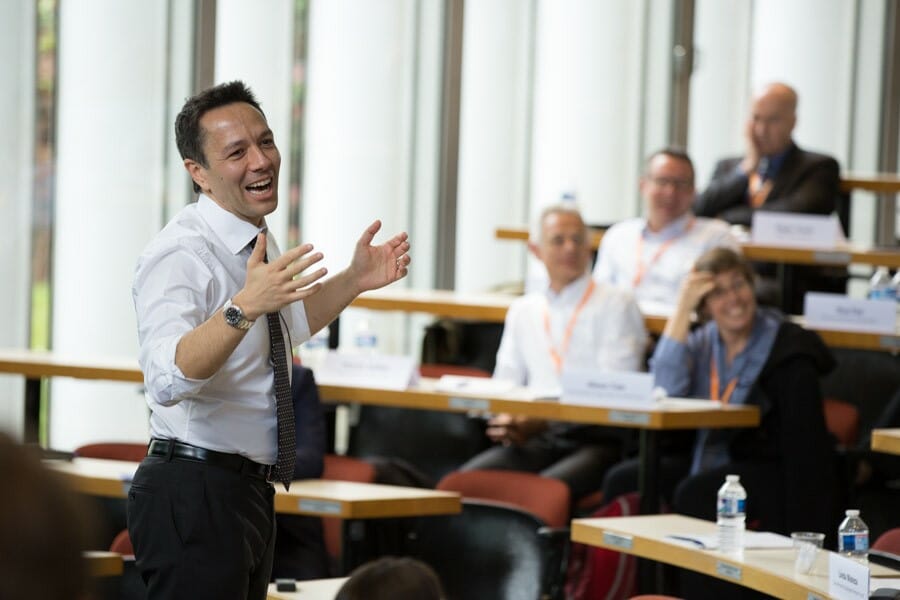
Photos of Professor Robert Shiller at the Fiduciary Investors Symposium, Yale School of Management

Investors always have to face uncertainty and risk, but for the next couple of years, political factors will play an important role in markets, creating more random change and making it more difficult to predict market movements, according to Li Keping, senior adviser to China Investment Corporation (CIC), and former chief investment officer, who was speaking at the International Forum for Sovereign Wealth Funds in Auckland.

In the past year CIC has made a number of organisational and investment changes due to the current investment environment, including improving its asset allocation framework.

Keping says CIC has delegated more decision-making power to lower level, single portfolio managers both in-house and externally.

“We have given them more room if they have the ability,” he says.

It has built out its capability in private equity, both internally and in its network to co-invest and go direct.

“We ask ourselves, ‘what we can do?’ We are very focused on what our competitive advantages and potential advantages are,” he says. “We think cross-border ability is one of our potential advantages.

“In this investment environment we have relatively high equity beta risk; how do we deal with potential drawdown risk? We have to think about correlation as a whole portfolio.”

Gordon Fyfe, chief executive and chief investment officer of bcIMC, who was on the panel alongside Keping, says having patient, long-term capital is an advantage.

“In public equities, why would any of us own equities? We don’t need the liquidity; why aren’t we looking for opportunities to invest higher up the capital stack and take advantage of that? So even in low return environment there are ways to get returns,” Fyfe says.

He also says there are more exciting opportunities in distressed.

“You can get some good assets by acquiring the debt. This is not easy, and there is a lot of work understanding the sectors and assets. But if your organisation is geared to look for these opportunities, they do sum up and make a difference.

He also says investors should be paying more attention to private markets fees.

“Paying 3-5 per cent per year might be okay when returns are 25 per cent, but when they are 9-12 per cent it makes a big difference. Look at ways not to pay these fees,” he says.

“For example, start a new fund with experienced people who you can back and negotiate better terms. Or you can co-invest.”

New Zealand Super and PSP, the fund Fyfe used to head, co-invested in a forest in New Zealand, and bcIMC has co-invested with GIC on infrastructure and real estate.

“One of the reasons I like coming to these forums is meeting people we can potentially co-invest with. We don’t need GPs. One of the competitive advantages we have is we have a large balance sheet, and economies of scale allow us to build big internal teams. We also have very long-term time periods; we never have to sell an asset unless it’s at our choosing.

“For any of us here – because we don’t have to sell in a shock – bad is good, because we don’t have to sell, it’s just an accounting adjustment. We need to take advantage of distress and hopefully find some good assets. We should start looking at debt and leverage; your liability is an asset. When rates move up you’ll be well positioned.”

Also speaking on a panel discussing investment risks and returns in the current environment was Massimiliano Castelli, managing director and head of strategy, global sovereign markets, UBS Asset Management.

“I spend most of his time advising clients on asset allocation. So what’s the strategic approach for sovereign wealth funds to respond to the current environment?”

There are four possibilities: increase risk; increase illiquid asset classes and more direct investing (seeing a long of that); become more tactical; and implement alternative portfolio construction techniques.

The third and fourth on the list require broader change, and a move away from asset allocation and to something completely new.

“Becoming more tactical sounds easy, but it is difficult to implement, but there are excellent opportunities,” he says. “Implementing alternative portfolio construction techniques, you become more like a hedge fund and use what’s available to you, not just asset allocation. This will require organisational change.”

According to Chiew Kit Tham, managing director of total portfolio strategy at GIC, the risk/reward of buy and hold has deteriorated over time.

“We are worried about the long term. Most globally diversified investors will experience a decline in returns compared to what they are used to. So what can we do about that?

“Most long-term investors might be tempted to pare down risk; they could also dial up risk, but more interesting is to rotate, shift risks around, and expand risks.”

He also says other options for investors in this environment would be to expand bottom-up alphas and keep dry powder.

“We like the characteristics of bottom-up alphas; we want to take advantage of alphas that take advantage of market stress and access to deals,” he says, noting there are two types of bottom up alphas – volatility and market timing.

“If you do alpha properly, and choose the right managers, it will give you a lift,” he says. “Investors should make use of the strengths they have that others may not be able to access.”


The 8th annual International Forum of Sovereign Wealth Funds kicked off in New Zealand today. This is an excerpt of the welcome speech by the chief executive of New Zealand Super, and the event host, Adrian Orr.


At the last meeting in Milan, I set out the roadmap for the way ahead – the navigation chart set out in the new strategic plan. The checklist was to:

  • Promote the Santiago Principles through case studies and improved levels of self-reporting;
  • Have more frequent opportunities to share knowledge, both face-to-face and through on-line platforms;
  • Encourage collaborative research with academic institutions;
  • Engage governments and international institutions where we can make a meaningful contribution.

We have made progress on all of these. Case studies are being launched at this meeting. Self-assessments on implementation of the Santiago Principles are more robust.

Knowledge exchange has ramped up this year, with excellent workshops hosted in Azerbaijan in March and another set of workshops held before the start of this meeting. These workshops are substantial and will become the core benefit that IFSWF can deliver to its members.

In research, we have established partnerships with the Bocconi University’s Sovereign Investment Lab, Milan, the Fletcher School at Tufts University, Boston, and the London School of Economics. A joint workshop with Bocconi was held in Milan in June.

We have established relations with the Commonwealth Secretariat and the Hedge Funds Standards Board in the past few months, as well as the relationships we already in place with the International Monetary Fund, World Bank and the OECD.

If this organisation is able to fulfil its potential, just think of what we will be able to achieve:

  • Collaboration on investment opportunities;
  • Increased investment in infrastructure and emerging markets;
  • Deeper knowledge about the characteristics of long-term investment opportunities; and
  • Better understanding of good investment practice – including environmental, social and governance practices.

The single, most fundamental commitment that IFSWF membership entails is commitment to transparency, accountability and good governance, as expressed through the Santiago Principles.

As I said last year, we told the world that the Santiago Principles are a benchmark against which we can be measured. We cannot be surprised if the world measures us against them.

Transparency isn’t easy. Accountability isn’t easy. People ask questions. People criticise what you do, even when you’re trying to do the right thing. Good governance isn’t easy. It’s time-consuming, inconvenient. It requires a lot of thought about what you should be doing and how.

None of it is easy, but it is right. It is the right thing to do because the result will be better understanding of our activities and stronger support for them through both good times and bad. The results will also include more efficient access to opportunities, better performance by each member fund and a stronger financial system overall.

The theme of this year’s Annual Meeting is Investing in a Climate of Uncertainty: The Sovereign Wealth Fund Response

The global economy is in unchartered territory, with negative interest rates becoming a reality and the traditional central bank target and levers being sorely tested.

These uncertainties create some strong head winds: low growth, low yields, and an eroding capital base.

There will be an inevitable shift towards a less carbon-intense economy.

The financial sector is now caught in this tide. Our investment strategies must necessarily address this, either actively – looking at opportunities in carbon-friendly energy – or reactively, in terms of dealing with the consequences, such as failed investments and stranded assets. Relative prices throughout the economic value chain will change.

There are very practical questions around this issue for long-term investors. How do you accurately measure the carbon exposure in a portfolio? Does divestment really work as a strategy? Is it better to engage as a business owner? And what investment opportunities will be the winners in a rapidly changing energy sector?

We will discuss the investment implications of climate policy over the next couple of days.

I remind you all that the spirit of this meeting is to share ideas and knowledge, to encourage the free and open exchange of ideas, and to respect all views.


The International Forum of Sovereign Wealth Funds is a voluntary organisation of sovereign wealth funds. It is committed to working together and strengthening its activities through dialogue, research and self assessment.

IFSWF was formed in 2009 by a group of state-owned international investors from around the world. The forum’s aim is to maintain an open and stable investment climate by setting and following a set of principles and practices, known as the Santiago Principles, which address issues around institutional governance and risk management.

There are three issues investors should be addressing in the current investment environment according to Greg Jensen, co-chief investment officer of Bridgewater Associates told delegates at the Fiduciary Investors Symposium at Yale School of Management in October.

Firstly low returns on assets have been postponed by the quantitative easing.

“But they are in there and they are coming, and coming relatively soon. Are you prepared, have you thought through the implications of that?”

Secondly there is a wide range of potential outcomes.

“Two huge pressures have collided and created low volatility in markets and a calm. These huge pressures are this secular deleveraging debt problem that’s deflationary in pushing down assets and inflation. And second the massive liquidity push by the central banks through quantitative easing, too huge forces, leading to low volatility, but that won’t continue, one way or the other, significant volatility will return. And the nature of that volatility could be pretty bad for your portfolios, so recognising this wide range of outcomes, the possibility we move down something like a Japan path, what would that be like? Or potentially that money shifts out of the massively produced, cash, low real yields assets, into alternatives and central banks have an inflation that’s not tied to growth. Are you prepared for the wide range of possibilities?”

And thirdly, with interest rates at zero, the only free market mechanism largely left is currency.

“So look at this picture of where currencies lie in your portfolio, and whether they are well managed. We expect a secular environment of currency volatility. The lesson of Brexit is a good one in terms of what the future can be like in terms of currency volatility, those that managed their currency well going into Brexit had very different outcome,” he told delegates.

Jensen says given this environment, and the fact all assets have been really overbought relative to their fundamental returns, there are three choices for investors in how they get the best out of their portfolios.

“Investors can accept lower returns. Accept your portfolio will get 3-3.5 per cent and deal with the consequences of that,” he said.

Secondly investors can take more risk, a scenario he says Bridgewater is “nervous about”.

“We see people moving into assets they will think will get their return targets even though those assets are flooded with liquidity and are dangerous. They are moving up the risk curve and into more growth and equity sensitive assets. This makes us nervous given the environment, and the fact we are at something like peak liquidity.”

And thirdly, the most preferred option is to take risk more efficiently. Jensen recommended that investors do a strategic review of how they’re taking risk, and think through whether it is as efficient as possible given the secular environment and range of potential outcomes.

“People have extremely biased beta, they are invested in assets that will do well if growth is better than expectations and inflation is low but not negative,” he says.

“All assets have cash in them, and cash is zero for all assets. Historically assets that gave you 8 per cent had an excess return on cash of 2-3 per cent. Now we have zero on cash and those assets that used to give 8 per cent now give 2-3 per cent. The excess return relative to cash now is at best normal, so 2-3 per cent, but probably worse than normal. So beta is difficult,” he says.

“For us in terms of taking risk more efficiently, the most important part of that is to balance your beta to deal with the wide range of outcomes, to deal with the outcome that US and Europe might look like Japan, which has had negative equity returns since the 1990s and bonds going to zero. Or there is an environment where inflation is priced very low, and money leaves cash as a store of wealth, creates an inflation with re-growth. Both of those environments would be devastating for most portfolios in this room.”

Jensen also acknowledged that alpha is very difficult to find, but if you can find true alpha managers which don’t get returns from beta it can be very additive in a low beta world.

“There will be people who understand markets better than it is priced in. And thinking through alpha that will do well in the case that beta does poorly. What ways can you improve that outcome with alpha managers? And find managers that are uncorrelated to beta or even better structurally negatively because they are taking advantages of opportunities that will do well if beta does poorly.”

At the end of 2015 ATP, Denmark’s statutory DKK 806 billion ($120.2 billion) pension fund, announced plans to switch to a new risk-based investment approach. One year on, and new chief investment officer, Kasper Ahrndt Lorenzen, one of the architects of the strategy in his previous role as head of portfolio construction, explains how the factor approach offers real diversification and flexibility.

“Factor investing allows us to look at all assets through the same lens and compare all types of investments; it is easier to make decisions based on a comparable characteristics. It feels good to now be implementing so much of what we previously worked on,” he enthuses, speaking from the fund’s Hillerød headquarters.

ATP divides its assets into two portfolios: a hedging portfolio composed of long-dated fixed income instruments, which insulates the fund’s liabilities against interest rate risk, and a return-seeking investment portfolio based on the risk parity approach put into action at the beginning of 2016.

The factor strategy is only applied to the return-seeking part of ATP’s overall assets which consist of its bonus reserves worth approximately DKK100bn ($14 billion). The bulk of the pension fund’s assets are held in the hedging portfolio, designed to meet the fund’s pension guarantees.

At the end of last year the fund swapped its allocation to the conventional risk classes it invested in over the preceding decade, to focus instead on four specific risk factors.

The return-seeking portfolio is now split between an ‘equity factor’ (49 per cent of assets) ‘interest rate factor’ (22 per cent) ‘inflation factor’ (12 per cent) and ‘other factors’ (18 per cent and comprising alternative liquid factors – alternative risk premiums – and alternative illiquid factors.)

Given the number of different factors to choose from, choosing the right ones was challenging. ATP’s answer was to keep it simple.

“We built on academic insight on what constitutes high level risk sectors; equity and interest rates were always going to be the two big factors. Rather than squeeze in 10 different risks we went for four distinct risk dimensions which capture real diversification at the top level.”

Now assets are chosen according to the extent to which they “load to the right factors” and meet the return hurdle based on the fund’s understanding of risk.

The clear sight of the risk factors at play behind investments has led the fund to reject some deals through the year.

“If the investment doesn’t meet the hurdle it’s easier to say ‘no’. We walk away from investments all the time because they don’t meet our required hurdle rate,” he says.

Lorenzen also believes the approach has been most helpful in scrutinising the underlying risk in alternative, illiquid assets where there is less data available compared to bonds or listed equities.

Real estate, and often infrastructure too, can contain all four risk factors with a single asset holding inherent interest rate and inflation risk on rental income, equity risk and illiquidity risk.

The approach allows the fund to compare the expected return on a real estate investment with the return on other assets with the same underlying risks.

“It makes it easier to compare the compensation for locking up capital long-term,” he says.

Beneath the four main factors lie sub factors within each allocation.

“We have our four main factors at the top and then sub factors below that add onto them as you drill down. It is like an iceberg.”

For example, within the equity factor lie a host of factors, including regional beta and credit spreads that are benchmarked against various indices.

“As we drill further down, indices give us our reference benchmark.”

It’s much cheaper than active management, although slightly more complex.

“The complexity is justified but it is hard work, and the work is ongoing. It takes up human and IT resources.”

A key element in the process has been the adjustment of ATP’s risk modelling and return reporting to the new investing principles. ATP has around 60 people in its internal investment team, and the new approach has engendered a cultural shift at the fund.

“We are no longer divided by asset class. Our teams still work within their own asset classes but they produce the factor loadings for the whole fund. It is a common framework that is both motivating and uniting.”

His advice for other funds: “What works for one institution may not work for another. What may be justified complexity for one, may not be for another.”

He is also aware that the approach doesn’t wholly solve diversification and performance issues.

“The fact that several risk factors have performed well is nice, but it is also disturbing.”

His solution is to regularly review the current factors.

This is an ongoing learning process, where one can always refine and deepen the level of understanding. We will still have to think about whether we’ve got it right and make sure for the next quarter, over the next year and into the future, that we have the right set of factor exposures.”

The Minnesota State Board of Investment, the state agency responsible for managing Minnesota’s $82.3 billion retirement assets, plans to increase both its allocation to public equity and passive management within the equity portfolio.

Public equity exposure will increase from 60 per cent of assets under management to almost 65 per cent, explains Mansco Perry III, executive director and chief investment officer at the SBI. Around 30 per cent of the current equity allocation is passively managed; going forward, this will increase to around 65 per cent, he explains.

“We’ve been prettily heavily weighted to active management in public equities. We are going through a process to significantly increase our passive exposure. Active management has not met our expectations. It is very resource-, time- and energy-intensive; it’s expensive, and we haven’t been rewarded for it. In fact it’s not just us, others are going in the same direction too.”

Current asset allocation at the fund is divided between domestic equity (45 per cent) international equity (15 per cent) bonds (18 per cent) and alternatives (20 per cent) with 2 per cent of the fund in cash.

“We are strategic investors so we follow our asset allocation pretty religiously, always rebalancing back to it,” says Perry in an interview from the fund’s St Paul’s headquarters.

The US passive allocation will track the Russell 3000 index and the international allocation will track the MSCI ACWI ex US. The passive allocation will increase in domestic US first, followed by international. He still believes active management pays in small cap US and emerging markets.

“We haven’t given up on active management in every area, but over time we will have significantly less active exposure to US large cap.”

It will mean a smaller roster of public equity managers in the next couple of years at the fund that outsources all asset management.

“We are also going to review managers relative to our expectations, not just their expectations of value-add relative to the benchmark. Managers say they can add between 200-300 basis points gross over the market cycle. We haven’t experienced that very much. If I can get between 50-75 net, why would I spend so much time and effort on active management?”

The increased equity focus will also be characterised by greater diversification outside US stocks. Public equity currently has a 75/25 bias in favour of the US, explains Perry. Now that will change to favour the US two-thirds to one third international.

“We will still have a large home country bias but less so than historically.”

He is also planning more geographical diversity in the alternative allocation.

“We are increasing our European exposure and building a toehold in Asia. Our liabilities are in dollars but we are trying to be more globally diversified.”

Minnesota’s State Retirement System comprises numerous pension funds, trust funds and cash accounts commingled in pooled investments.

The lion’s share of the portfolio lies in the so-called combined funds, representing the assets of both active and retired public employees who participate in the defined benefit plans of 10 state-wide retirement systems. The combined funds, which have a market value of $60.1 billion, returned 4.4 per cent last year.

The fund is 85.7 per cent funded, putting it in the top quartile compared to other US public pension plans.

“We’ve been pretty fortunate. We were able to benefit from the tail winds of the 1980s as interest rates declined and equity markets had a strong, sustainable bull market. Going forward we face low returns and low interest rates. The tailwind has turned into a headwind,” says Perry, who has spent much of his professional life at the fund.

Aside from a five-year stint running the investment portfolio of Maryland State Retirement Agency and St Paul’s Macalester College, he has been at the SBI in various senior roles since 1990.

Balanced alongside plans to increase the allocation to public equity, the fund is equally committed to being a “long-term private market investor”.

Up to 20 per cent of the value of the combined fund is targeted to alternatives, although the allocation is underweight with only 13 per cent currently invested.

“Over the last five years we have received back more money from managers than what we’ve invested,” says Perry. “It’s a good thing; we’ve got our money back. But we could invest more.”

Statutory rules guide Minnesota’s investments in alternatives: each investment must involve at least four other investors and participation in an investment may not exceed 20 per cent of the total investment. The allocation is divided between real estate, yield-orientated strategies and private equity, and provided a 7.6 per cent return last year versus a 13.6 per cent return annualized over the past 10 years. Minnesota has no allocation to hedge funds.

“We’ve stayed away from hedge funds; it’s not an area we’re really excited about.”

Going forward, Perry aims to increase the allocation to real estate, which was reduced four years ago. “We are looking at adding a bit more back here. There is fierce competition in private markets. Certain groups of managers see our size as a plus but we can’t access small managers so easily”.

The main components of the real estate portfolio consist of investments in closed end, commingled funds.

Private equity disappointed last year, primarily because of the allocation’s exposure to oil and gas markets. “We have a large amount of private equity in resource investments,” says Perry.

Last year’s poor performance came despite it being one of Minnesota’s strongest performers in a portfolio that aims to bring an inflation hedge and diversification. Going forward he is also determined to build up the fund’s ESG investment.

“We are in the process of determining how ESG factors should be viewed. We have begun the process. It includes education and looking at what other funds are doing.”