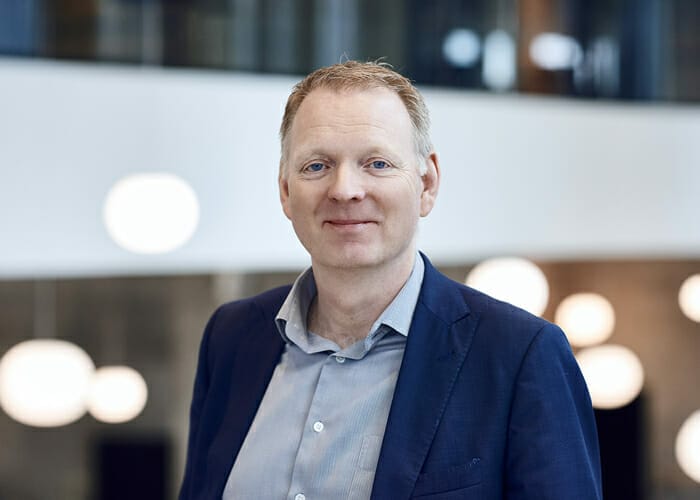
How leaders are defined and identified needs upgrading in a world that has shifted from a mono-culture to nomadic leadership, says Gianpiero Petriglieri, an associate professor of organisational behaviour at INSEAD.

“We are still using an idea of leadership developed in the mono-culture, but we have a different world; now leaders struggle most with connections,” he told delegates at the Fiduciary Investors Symposium at INSEAD. “As a leader, you have to show you’re more than devoted; however, now we live in an age of nomadic professions, so leadership is not about how you stand out but how you have enough connections. People are more devoted to their work than to the organisation.”

Petriglieri, who is the academic director of the INSEAD Initiative for Learning Innovation and Teaching Excellence, suggested a different definition of leadership in an enterprise that reflects many cultures.

“[Leadership is] the courage, capacity, curiosity and commitment to work with, learn from and give voice to the other,” he said. “It’s a lot harder to have that type of skill. The commitment to a counterculture always puts you on the edge. It’s difficult.”

Petriglieri said we exist in the context of a leadership bubble.

“Leadership has become the single explanatory factor for everything that happens in the world. When things go well, we say there’s a good leader, it is a synonym for causality. Either there was good or bad leadership or no leadership.”

He also said Fortune 500 companies spend $145 billion a year on leadership development.

“They invest so much in something and we spend so much time on it. How can we be so attentive and get a result like 86 per cent of people at the World Economic Forum saying they don’t have the leadership they need? This is not just a theoretical problem, it’s a practical problem. There is a great disconnect, lack of meaning, lack of trust.”

While some explanations for this include incompetence or malevolence, Petriglieri’s work suggests a scenario in which neither of those are true, rather the outcome of what we understand and practise as leadership is no longer a good fit for the world in which we live.

“Good leadership is hard to define,” he explained. “There is no empirical evidence of leadership – just as there is no empirical evidence of love. They manifest themselves when you see some kind of behaviour.”

Leaders, he said, have such a sense of ownership over a community to improve or change it; they have a committed vision. Leadership, then, can be explained as an exchange of meaning for trust.

“If you observe a leader, look at whether they get stuff done, and whether people trust them,” he said.

Transformational change among asset owners is a rare beast, said Roger Urwin, head of investment content at Willis Towers Watson, because funds prefer incremental change.

Speaking on a panel at the Fiduciary Investors Symposium at INSEAD, Urwin said investors needed to differentiate between the operating model – which involves culture, leadership, talent, reward and technology – and the investment model, which is how and where assets are allocated.

He identified five funds worldwide as exemplars of transformational change – the Future Fund, RPMI Railpen, PSP Investments, the Canada Pension Plan Investment Board and the California Public Employees’ Retirement System.

Panellist Daniel Garant, chief investment officer of PSP Investments, said the fund made changes after looking at allocation in the context of the total portfolio.

“We realised the silos you end up with are a collection of different assets that aren’t optimised at the total portfolio [level], so we changed that a couple of years ago. We were faced with great investment opportunities but they didn’t fit anywhere. The principal I came up with is if it’s good for the fund then we’ll find a way to make it fit. We still do strategic asset allocation and asset liability modelling but if we come across a strategy that is good, we make it fit,” he said.

One example of that is a private debt investment to which the fund allocated $1 billion.

“For the private debt asset class, it didn’t make sense,” Garant explained. “It was too big for one deal. But we decided to do it because on a total fund basis it made sense. You need to look at what moves the dial for the total fund.”

He said the investment teams see the good transactions in their asset class, but they need to keep the total fund in mind.

Urwin said he thinks there is a sweet spot of between 50 and 70 professionals in an investment team where they are able to practise the one portfolio approach.

Also speaking on the panel was Gianpiero Petriglieri, associate professor of organisational behaviour at INSEAD, who discussed the concept of leadership in transformational change. He said true leadership transcends the difference between personal and organisational change.

“Leadership erases that distinction,” he argued. “Personal change for leaders will result in the organisation adjusting, and vice versa. The most significant quality the leader can have is to deal with ambivalence. Most of us like the idea of change but not the practice of change.”

Garant said a change in leadership a few years ago at the chief executive level was an impetus for transformation at PSP.

“We felt that, compared with our peers who were trading in private equity, we didn’t have a global presence or portfolio, and we didn’t have private debt. A few months after the new chief executive joined, we opened a New York office dedicated to private debt. This was a big plus, as you hire experts who have been doing it for decades. But you also have the complexity of adding people who have never worked at PSP before; that’s much tougher than people believe to bring together. We also opened a London office focused on private equity and it was all done within a year, because people wanted results quickly and wanted change to be permanent and dramatic.”

Susan Doyle who is chair of the investment committee at the New South Wales Treasury Corporation and was one of the founding board members of the Future Fund, said culture and the organisation have to be in sync.

“The strategic side of investments was straightforward,” Doyle said. “But the culture side of it was not as straightforward. How you assess and seek [good culture] is not straightforward and is a challenge for our industry. Very costly for organisations to figure out culture.”

But Petriglieri said culture doesn’t exist.

“Look at the people – they are the culture. Look at how you allocate resources and what you reward positively and negatively. If you change those things, then you are changing the culture. Everything else is rhetoric,” he argued.

Urwin pointed out that asset owners have the distinction of having a strong purpose, but that it is a motivation that probably hasn’t been marshalled enough in organisations.

Garant said PSP is using that sense of purpose as a tool to distinguish the fund from different actors in the financial markets.

“Adding a local presence in London has increased our access and talent pool,” he said. “But…it’s expensive, and you get a sub-culture. So you need a mix of local talent and people from head office, so you have one culture, not many cultures.”


The Toronto-based Colleges of Applied Arts and Technology Pension Fund, (CAAT), a scheme for employees in colleges across Canada’s Ontario province, celebrates its 50th anniversary this year. Yet much of the defined benefit fund’s most important milestones have occurred in more recent years.

In 1995, the plan spun out from the Ontario Municipal Employees Retirement System, which acted as trustee, to assume a jointly-sponsored pension plan governance structure and invest on its own. Back then, CAAT had only $3 billion in assets under management but now manages $C8.1 billion ($6.1 billion) and boasts an enviably healthy funded status, recently up from 110 per cent in 2016 to 113 per cent today.

“I think you can read from this it’s been a good year,” says chief investment officer Julie Cays, who joined CAAT 11 years ago from the Healthcare of Ontario Pension Plan, where she looked after the external manager program, now run in-house.

“We have had strong returns from public equity as well as private equity and infrastructure. Commodities and real-return bonds haven’t done so well, but these assets are an inflation hedge, and there hasn’t been much inflation,” Cays says.

Under her leadership, CAAT is continuing to evolve as it prepares for another significant shift in strategy. Fifty seven per cent of the portfolio is invested in return-seeking allocations to public and private equity, and 43 per cent is in liability hedging assets, comprising nominal and real-return bonds, infrastructure, commodities and real estate.

“These categories are not perfect. Real estate and infrastructure blur the lines between return enhancing and liability hedging,” Cays says of the asset classes that have characteristics and risk factors that fit into both parts of the portfolio.

Following the completion of a long-term asset liability study last year, which Cays says, “updated our return assumptions for the next 20 years”, CAAT plans to take 15 per cent of its assets out of public equity. Ten per cent will be invested in private equity, and the remaining 5 per cent will go into the real assets of infrastructure and real estate, increasing the real asset allocation from 15 to 20 per cent.

It’s a change of tack born in part from public markets’ focus on results, rather than on the long-term value creation CAAT favours, Cays explains.

“Public markets are increasingly short term and we have a long-term strategy,” she says. “It’s one of the reasons we like illiquid assets. We have a long-term investment horizon and a funding reserve and yes, I would say, our appetite for short-term volatility is fairly high.” CAAT has no tactical risk-allocation program.

Three-quarters of CAAT’s assets are actively managed.

“The active program has outperformed over the past 10 years, so it has been successful,” she says. Passive management “helps with the fees” but is also an important component of the fund’s portable alpha strategy. Passive investment is confined to part of the Canadian bond portfolio and a US S&P 500 equity exposure, with the beta from the US allocation underlying a portable alpha strategy.

“We use passive strategies structured within asset classes to manage the level of active risk exposure. We target beta like US equity, and then put hedge fund alpha on top.”


Small in-house team

Cays, who has an internal team of only six, outsources all the public allocations to external managers, counting about 15 mandates. The fund has a low turnover of managers and tends towards “larger mandates to help bring down fees”.

Some managers on the public side have been on CAAT’s books for the last 10-15 years and the fund shares a “broader relationship and ongoing dialogue” with a select few. The scheme has also employed an advisory firm to specifically help access the best GPs in private markets, a crucial part of reducing manager selection risk in building the allocations to private markets, she says.‎ Here, CAAT invests either via funds or, increasingly and particularly in infrastructure, via co-investments.

“We like co-investment because of the cost benefits and not having to pay the fees we have to pay with fund investment. It also allows for more targeted investment. For example, we can look for inflation protection in our infrastructure portfolio,” she explains.‎

The real-estate allocation is largely Canadian, accessed through funds, although Cays says CAAT is branching out into real-estate funds in Europe and the US now, too.


Sharing ideas and governance

CAAT’s governance structure is shaped by its status as jointly governed and is, Cays says, another pillar of its success. It means employers and employees share responsibility for the stability and security of the scheme, in a model that fosters co-operation and flexibility, and encourages prudent and responsible decision-making.

“Our board of trustees is appointed from the employer and employee side and some of them do have an investment background and are a huge help,” Cays explains. “They ask excellent questions and allow us to be nimble in terms of approvals.”

Cays also says sharing ideas with other Canadian pension funds, facilitated particularly by the active role of the Pension Investment Association of Canada, for which she is a past chair, is a contributor to CAAT’s investment success.

“We all know one another; we share ideas and collaborate. The difference between CAAT and other plans, I suppose, is that many Canadian corporate plans are worrying more about solvency and are more liability driven than we are. We have funding reserves, and can do more in the long term.”

What do the next 50 years hold? As the fund grows, Cays says, it will start to build internal expertise, rather than use external managers. But rather than be drawn on what global investment hazards lie in wait, her focus is on the risk of changes in contribution levels – such as beneficiaries living longer, trends towards part-time work and the shift towards defined contribution plans – affecting the plan.

“This is what we have our eye on going forward,” she says.


Success in investment management should be measured by holistic returns; it’s not enough to think about investments as just a bet on markets, said Saker Nusseibeh, chief executive of Hermes, who reminded delegates at the Fiduciary Investors Symposium that the financial world has become completely isolated from the real world.

“We collectively have a responsibility; we control the world economy,” Nusseibeh said. “The financial system sits in a bubble separate to the rest of the world. Why do we invest? Do we invest purely to accumulate wealth? Investing in the economy is a stupid way to invest if the only motivation is to make money for your clients. You should go to Las Vegas and hire a top-rated poker manager. They have better hit rates than any top-rated funds manager, even high-alpha managers.

“Skilled fund managers are rare. So now we are betting on factors in the economy, like a bet on the uptick of the European economy. That’s not the language of investment.

We have to think about what we are trying to achieve with this money. There is a disconnect between the amount of money we have invested and the world we live in.”

He made the case for measuring success by holistic returns.

“There are two reasons you invest in companies,” Nusseibeh said. “The first is to participate in economic growth, the second is [the need to engage about wanting] the businesses to be sustainable. And for that to happen, they have to be long term, more than just the next year or three years.

“We can prove that bad governance leads to bad returns. We have absorbed the idea that finance is a science, which is wrong, and built models, which is wrong. But part of what we are doing is betting on the economy. The other part is to encourage the economy we are building to be sustainable, environmentally friendly and friendly for the people who work in it. We have a duty of care to use the money to benefit the people whose money it is. Good [environmental, social and governance practice], good stewardship, is actually good business.”


Traditional asset managers are in a serious crisis of relevance, William Blair portfolio manager Ken McAtamney said during a panel discussion on digital disruption at the Fiduciary Investors Symposium at INSEAD, in France.

“Managers who are stock pickers are at risk of being disrupted,” McAtamney warned. “The move from active to passive has picked up pace, and as an industry we may have been guilty of under-delivering on performance net of fees. There is more on that but we can also focus on improving those things if we are more forward thinking on how we employ technologies in our industry.”

In his presentation, he said the asset-management industry spends about 8-9 per cent of revenue and about 14-15 per cent of total operating costs on IT. This in an industry that generates 40 per cent net operating margins.

The breakdown of IT spending shows the majority is on the back office and operations (50-70 per cent), investment process (10-30 per cent), and client engagement (10-30 per cent).

“IT spending has been focused more on reducing risks and costs than on enhancing alpha,” McAtamney said. “We think there is no replacement for judgement and decision-making, but, at the same time, we need to begrudgingly adopt technology in the front of the house. We’ve invested a lot in the back office, in trading and settlement, because we have to – that’s more defensive spending. Now can we move to using IT to [enhance] fundamental investing and decision-making?

“The focus is on how to process information and how we can come to investment conclusions more efficiently or quickly. That’s where the value add is.”

Ultimately, technology can add more science to the art of investing, but not replace art completely, the panel stated.

Speaking alongside McAtamney was Accenture head of digital strategy Bruno Berthon, who said no matter what’s happening in your market, there’s a lot of ‘digital inside’ that needs to happen.

“It seems the investment industry is investing that 70 per cent into non-discretionary [costs], to keep things running and respond to regulation,” Berthon said. “The big challenge is to find space for discretionary investing, to be innovative. I think the industry needs to be more efficient in the non-discretionary space to make way for that. What is new today will be legacy tomorrow. There is such speed at which technology is changing, you have to be present in the now.”

Keep internal technology in sync

Panellist David Long, senior vice-president and co-chief investment officer at the Healthcare of Ontario Pension Plan (HOOPP), said the biggest lesson the fund has learned in building its internal technology has been to manage the value chain of analytics, execution and workflow in sync.

“We want to make sure idea generation and the ability to execute and manage the workflow from transactions can operate at the same speed,” Long said. “What we want to do with technology is not treat each new investment challenge as a new problem and have to build everything from scratch again.

“We have a 600-person organisation and about half work on investment-related stuff, so we are trying to build platforms everyone can use and synchronise our activity across the organisation. In practice, this is difficult, because there are a lot of different users with different demands and priorities.”

HOOPP has built a number of internal platforms, including an exchange-trading app called octopus, and a repo collateral app called Flash.

Deputy dean of INSEAD Peter Zemsky, a professor of digital transformation who is also responsible for INSEAD’s digital transformation, called digital strategy a big issue for executives.

“Why now? Why is digital shooting up the CEO agenda? It’s absurdly cheap, but also the infrastructure is in place, such as the cloud, and companies that have packaged up data, storage and communication so you can scale it up. A start-up doesn’t need an IT department,” he said.

Zemsky argued that investors need to look at picking the players to take advantage of the digital revolution.

McAtamney added that managers are constantly analysing who the future winners are, but he said “we also feel like we are being disrupted as value adders”.

There is a European risk premium that investors can access, executive director of the Fonds de Réserve pour les Retraites, Olivier Rousseau, told delegates at the opening of the Fiduciary Investors Symposium, at INSEAD in France.

In a session during which he explored whether there was a European risk premium, whether one could be justified and how big it could be, Rousseau said there was a 5-10 per cent premium in the eurozone and a 10-15 per cent premium for the French market.

“The European risk premium is very much there and is connected with the political landscape we have been through over the past few years, [which has] taken a more dramatic turn recently,” Rousseau said. “What has happened elsewhere is of great significance for the eurozone. Markets don’t like the eurozone very much; the euro is weak and equity markets have been underperforming.

“There are not bad policies but we have inflicted a lot of problems on our markets with Basel III and Solvency II. And you have first-class companies in Europe.

“Profits have not been doing well in the eurozone, which is why markets have not been doing well.

Conditions for a recovery in the sharemarket are there, but we have the geopolitical risk overhanging.”

Also speaking at the Fiduciary Investors Symposium, Philippe Tibi, professor of finance at École Polytechnique, said venture capital could help transform the European market the way it has transformed US capitalism. The US enjoys 60 per cent of venture-capital flows, he said, followed by China, which already receives 20 per cent of flows. Europe represents 10-12 per cent of the funds allocated to venture capital.

“Why is it such a small allocation, given the size of the economy? It’s not because of lack of talent or size. The problem for Europe is more about institutions and agents,” Tibi said.

In Europe, wealthy individuals tend to invest outside of the continent, he explained, and institutions are restricted by legislation. He called France one of the few hubs of Europe.

“We have a vast pool of talent; there are 60,000 French people in Silicon Valley. We have 13 Noble Prize winners and are strong in science and mathematics,” Tibi said.