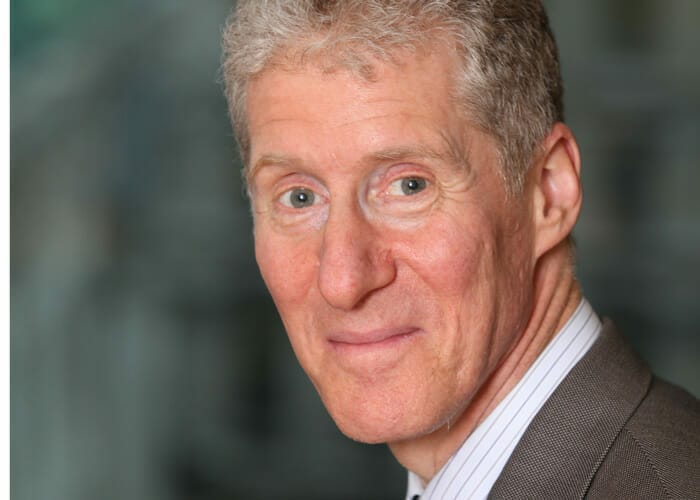
After 25 years as CIO of Idaho PERS, Robert Maynard, has seen it all. He’s convinced a simple, transparent and focused investment strategy prevails in all terrain. The philosophy is reflected in the fund’s asset allocation focused on cheap, passive strategies in public markets.

Robert Maynard became chief investment officer of the Public Employee Retirement System of Idaho (PERSI) in 1992. His 25 years at the helm of the $16 billion pension fund for Idaho’s public sector employees has thrown every kind of financial weather his way from the collapse in emerging markets to the tech wreck of the early 2000s and the global financial crisis of 2008-9.

It’s all conspired to convince him of the merits of what he calls “conventional investment strategy” that relies on simple, transparent and focused investment vehicles.

It lies behind PERSI’s asset allocation, divided between a 70 per cent allocation to equity and a 30 per cent allocation to fixed income, and explains Maynard’s other key preferences. Namely for public markets over private, cheaper passive strategies that depend on market movements for success rather than active management, and capping diversity at between 7-10 asset types. He likes long-term postures rather than short-term efforts to fight market volatility, and his internal team comprises just two investment professionals. Strong returns, he says, are proof that it works. PERSI’s five-year return is 8.8 per cent and the 20-year return is 7 per cent.

But Maynard is also quick to articulate the key reason PERSI can afford this no frills approach. The fund’s robust financial health means it only targets a real return – above inflation – of between 3.75 per cent and 5.0 per cent.

“The way that we are set up means that we don’t have to get above market returns and this makes all the difference in the world. We can accept normal, or sub normal returns. Looking at our liabilities, we are fine as long as we get returns somewhere between 3.5 and 4 per cent above inflation. And if inflation is lower we don’t’ have to make as much.”

It is a backdrop to his investment strategy that contrasts with the many endowments forced to reach for returns of 7 per cent above inflation, or other US public funds struggling, and failing, to introduce new contribution levels, he says.

His preference for simplicity is born from a belief that picking winners, or trying to beat the market, is inherently risky.

“It involves entering a game where the odds are stacked against you. I can pick the good from the bad and the pro from the amateur, but I can’t pick the great from the good.”

He believes the demand for high returns for many funds is pushing them towards riskier strategies that extend beyond straight forward risks.

“It’s about more than simply finding a large cap growth manager who can beat the S&P 500 growth Index. The out-performance may be there, but it is not going to be at the level that is going to save your fund.”

Instead these pension funds need to “find places” where if they “hit it big” it actually makes a difference. Private equity, hedge funds and internal management are the most common strategies. All involve manager fees and competing against the market, but also against other investors trying to work with the best managers too.

Sticking with a conventional strategy is most difficult when market conditions turn challenging. “The worse time to make a decision is in the middle of a crisis. You’ve just got to stick with it and keep the discipline when the automatic view is that you think you need to do something,” he said. “Switching in and out of select asset types in a time of crisis means getting three investment decisions right. When to get out, how to get back in and where to put the money in the meantime.”


Robust manager relationships

Maynard has a deliberately low turnover of managers with relationships typically stretching for 10-15 year periods, and only ending if a manager merges or their investment style changes.

“We did a manager search in the early 2000s, and finished another one last year,” he says, illustrating the point of how rarely the portfolio opens up. When PERSI leaves a manager relationship the money usually goes into an index fund, or is reallocated to existing managers, he says.

“We don’t fire for performance,” he adds.

Indeed, he is quick to defend managers that do underperform. He asks for separate accounts so securities that can be independently priced on a daily baisis. It means at the end of each day he knows “within 10 basis points” what that manager should have done.

“We know exactly what type of stocks they have, what their style is, and what their turnover is and it’s clear if they are doing anything different. Given this, if they are underperforming a benchmark like large cap growth or international value it says more about what the market is doing than it says about the manager. They are still doing the same thing we hired them for.”

He favours managers with a clear style and concentrated portfolios and avoids “black box” managers that aren’t easily explainable. This excludes hedge funds, quantitative strategies and other short-term strategies like tail risk insurance or covered call option writing – strategies he likens to “cutting up the same pie and putting on new labels.”

Half of the fund is in passive strategies; active strategies are split between public markets (35 per cent of assets under management) and private markets (15 per cent). PERSI has 18 relationships with public market managers and 22 relationships with private managers, mostly private equity GPs. It has two mandates with real estate managers.

PERSI investments comprise US equities, international developed market equities, international emerging market equities, REITs, private equity, private real estate, government and sovereign debt, TIPS, credit debt instruments, private debt (the Idaho Commercial Mortgage program), and cash. He favours a home bias because PERSI liabilities are in dollars; he also likes assets that are sensitive to US inflation.

The fund doesn’t hedge its currency exposure, avoids emerging market debt and high yield bonds, although the fund allows active bond managers to venture there if they want to. A typical scenario could see a bond manager invest in dollar emerging market debt to try and outperform the general fixed income benchmark, he says. The fund’s two biggest overweight positions are emerging market equity (accounting for between 8-10 per cent of the total fund) and an allocation to TIPS.

PERSI’s board comprises five members, none of whom are required to have a deep investment experience. Something that Maynard is convinced is an attribute since the board tests his ability to explain strategy in commonly understood terms.

“One of the most valuable resources we have is board time. If we can explain it to our board we can explain it easily to the legislature and our constituents.


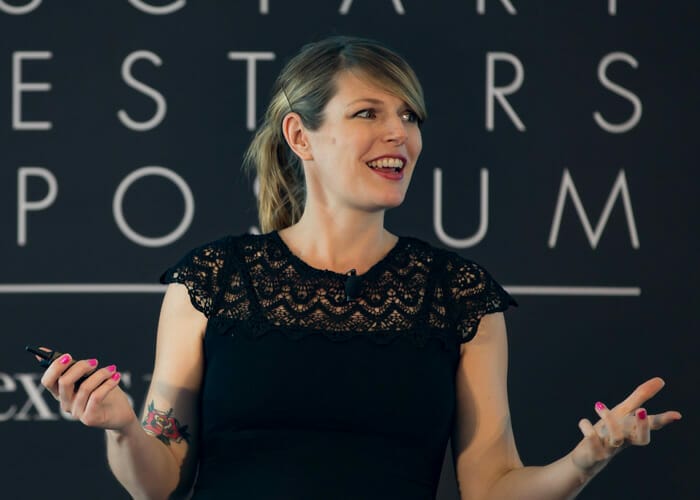
A large photograph stands apart on the corridor wall of the private capital division on the 8th floor of Ontario Teachers’ Pension Plan’s (OTPP) Toronto offices. It shows a crowd of 70-odd employees gathered in front of a sign celebrating the pension fund’s quarter century of investing in private equity and the 20 per cent returns, net of all costs, the asset class has brought in. Taken in February 2016, it captures what Jane Rowe, senior vice-president of private capital at OTPP calls an “awesome, awesome” achievement.

Since its inception in 1990, the C$175.6 billion ($138 billion) fund for more than 300,000 of Ontario’s teachers has achieved an average, annualised return of 10.1 per cent; fully funded four years on the trot, it now boasts an $9 billion surplus. It’s a track record achieved by a revolutionary investment approach that prioritises active, internal management and buying chunky direct stakes in companies, infrastructure and property, and has made OTPP the benchmark for endowments and pension funds the world over.

Much of that investment alchemy takes place on the 8th floor where Rowe nurtures a culture balanced between honouring all her department has achieved in the past, with encouraging innovation.

A 75-strong team oversees a $20 billion global portfolio that spans funeral parlours, crisp manufacturers and childcare providers, and complex relationships with some 40 core private equity funds.

Rowe joined OTPP in 2010 from a distinguished career at Scotiabank Group. Back then Ontario Teachers’ had $9.5 billion in private equity representing 11 per cent of the assets under management. Today this has grown to around 15 per cent — although it shifts in line with realisations of which 2016 saw a lot — and will grow, she says, to at least 19 per cent of assets under management in the future.

OTPP invests in private equity funds where managers serve as general partners, but it also invests directly into portfolio companies. Here OTPP co-underwrites deals with GP fund partners in a relationship Rowe likens to having “a smart friend at the table”; it also allows more control over issues like capital deployment and risk, and cuts costs.

In 2010 about 60 per cent of the private equity portfolio was in funds versus 40 per cent directly into portfolio companies. Now this has shifted in favour of direct investing with around 30 per cent of the allocation in funds and the remainder directly into portfolio companies, the vast majority in developed markets. Until now.

Looking for opportunities

Last April OTPP co-sponsored its first deal with India’s Kedaara Capital, co-founded in 2011 by Manish Kejriwal, the former India head of Singapore’s state investment fund Temasek, to back micro-finance provider Spandana. The small deal has given OTPP a taste of the opportunity to be found in India; it also provides a window into how Rowe moulds new fund relationships as it pushes into emerging Asian markets, adding to its relationships with names like South Korea’s MKB Partners and Hong Kong-based Boyu Capital.

“Whenever you work with a fund partner in a first co-investment opportunity, you are both learning how the other thinks,” Rowe say. “You have to make sure you are thinking about the risks in a similar way; how you want to incentivise the managers that work in that business and the key metrics to measure that. These are the growing pains of an evolving partnership. It is about ensuring how everyone gets everything they need and strengthening the relationship with our GPs so that when the next opportunity comes along in that market, it is even smoother.”

Fast forward a couple of years and OTPP is in a position to swoop on the highest quality deals. None more so than when managers, with their typical three to four year investment horizon, need to realise their investor’s returns.

In 2012 OTPP was a minority investor alongside Wind Point Partners in snack industry group Shearer’s Snacks, best known for manufacturing Kettle potato chips, a brand she admits, with the humour that peppers her speech, is a summer weekend favourite. A couple of years later, when Wind Point sought to share its realisations with investors, OTPP bought out Wind Point.

“We already knew the company, we knew the management team, the sector and key customers,” she says. “We like this company and like where it’s going.”

She used a similar strategy to snap up a stake in OGF, France’s funeral services group, buying out some of private equity group Pamplona’s position. Proven market share and the demographics of the business, she says in another flash of humour, made it stable and lower risk.

“We are not an investor in their fund but we were intrigued by the ownership they had in OGF. We went in there as a minority shareholder under their stewardship and have since bought out a lot of their ownership position and become the controlling owner in OGF in France.”

Long-term advantage

It’s this ability to invest longer-term that distinguishes OTPP from conventional private equity, and is something Rowe is making much more of in another innovation.

A relatively new allocation to long-term equities now sits within private capital and accounts for at least 25 per cent of the direct portfolio. It is distinct because here OTPP typically invests alone.

“It’s one of the things we’ve done since I joined; I would love to say that I was the mastermind but I wasn’t,” she says with disarming self-deprecation.

It’s a strategy other pension funds are desperately trying to copy. The $323 billion California Public Employees’ Retirement System, CalPERS, is the latest to shift its strategy and consider direct investments in private companies.

“We identify companies where the management teams, and maybe the founder, don’t want to be in a typical private equity structure where someone will be looking to sell them after three or four years,” she says. “We go in with the desire to hold onto the company for a long time and this differentiates us from private equity. It is an ability for us to work on some unique opportunities outside the typical private equity structure. OGF is an example.”

Her team targets lower risk companies able to generate cash dividends that sit between the two spots on the risk spectrum of infrastructure and the typical private equity LBO-like exposure. Seniors housing, storage, and the lottery space are typical examples.

Long-term investment and expert advice may sound like corporate nirvana, but Rowe is quick to clarify it isn’t.

“When we do all our due diligence and figure out the price we need to pay, often as not, people walk away from that discussion disappointed. We have to be very careful, particularly that our risk colleagues are aligned with us. They have to agree that it is a lower risk and potentially higher cash yielding type of business.”

Engaged ownership

Selection is the beginning of a rigorous corporate journey. All direct and long-term equity investments come with hands-on management in the investee company and proportionate governance rights including a voice on the board.

“As good fiduciaries for the teachers of Ontario we have to make sure they are growing their business well, and not just taking our capital for granted. The easy part in our business is buying a company. The really hard work is growing a company and we make it clear that the hard work begins after we become the owner.”

In recognition of this she has beefed up her portfolio management team, the in-house experts behind the value creation that in turn becomes the blueprint when OTPP becomes an owner in the business. Called “engaged ownership” it lays out how the business will grow over the next five to 10 years and includes key performance indicators “to make sure that folks have scorecards”, she says, to track progress.

She says that jointly owning businesses with “the best private equity funds around the world” has allowed OTPP to learn to craft these blueprints in an ongoing learning process. It does little to deflect from the fact that OTPP’s own expertise and reach must now be equal to all of them.

All direct deals are reviewed by an internal committee twice a year in check-ins with deal teams. And all investments are viewed through an ESG lens. She makes sure funds are aligned on ESG; with co- and direct investment, she says “creating change and raising consciousness” depends on how much of the company OTPP owns. But the questions she asks are penetrating.

“Are our companies honouring diversity in management teams? How is a company sourcing from Asia honouring strong labour practices in its suppliers? We own a wine company in Canada; how is it honouring responsible drinking and anti-drink drive campaigns.”

Pushing fee barriers

At OTPP private equity is one the asset classes most likely to use external managers and the direct and co-investment program has helped reduce fees. In 2016 management fees for all asset classes were $358 million, down from $421 million in 2015 due to a reduction in external assets under management and related management and performance fees.

Investing in funds, where a 2 per cent management fee is the norm, Rowe takes advantage of opportunities for lower fees where possible. She likes the benefits of being an early investor “as long as we’ve had the opportunity to do all of the work.” She also welcomes the benefits from committing more than the next LP.

“We know what those discounts are and we’re able to decide if we want to take advantage of them or not,” she says. And she likes the fee advantage that comes with backing newer funds.

“We take comfort from the fact that other pension funds have endorsed young GPs and my guess is that the industry takes comfort if we’ve endorsed a young team too.”

She insists on hurdle rates before GPs can take carry, which is usually charged at 20 per cent.

“We like to see a typical 8 per cent hurdle rate and see recovery of this before the really big profit share takes place through the carry,” she says. She doesn’t see any need to grind down on the carry. “Twenty per cent is fine as long as the hurdle rate has been reached. Let’s just make sure we’ve had some good returns before they earn their 20 per cent carry on the profit.”

Her unwavering commitment to this comes as a handful of high-performing GPs have taken advantage of stellar market conditions to raise large funds without hurdle rates. But rather than target the GPs which have seen more than $500 billion pour into their private equity funds every year since 2013, her criticism is aimed at the LPs who sign up without hurdles rates in place.

“I think anybody who is a fiduciary for a pension plan ought to be putting a discipline in place that says mega profits to you shouldn’t happen until after we’ve had at least modest returns for our illiquid capital that we’re putting at risk to back you.”

CVC Capital Partners reportedly plans a hurdle rate of 6 per cent for its Fund VII, compared with the industry standard of 8 per cent. Advent International removed the hurdle rate outright from its latest fund, which closed at $13 billion.

Greater fee transparency, backed by industry body the Institutional Limited Partners Association, ILPA, would help.

“We don’t think you should have to have people in a back office spending days trying to figure out how much is going into the pockets of GPs versus recovery by the LP.”

Private equity engrained at OTPP

Private equity at OTPP had an inauspicious start all those years ago when its first ever investment turned sour. Yet despite losing money, the board and chief investment officer at the time, Robert Bertram, remained steadfast, setting a precedent that Rowe believes is fundamental to today’s success.

“Private equity was seen as an asset class that would be important for the pension plan,” she says. “This was honoured from the very beginning.”

Success, she believes, is also rooted in the engrained belief in delegated authority, passed from the board to the CIO, and then down to the people running the asset classes. It is something she practices today, spending little time working on the nitty gritty of the deals she loves.

“I typically have to restrict myself to enjoying it to our weekly underwriting and portfolio meetings. With a focus on our broader strategy, I rarely get involved in negotiating the specific details of a transaction. If something comes up that is an outlier from the norm, the team judges when they have to get me involved.”

And perhaps the most important pillar of success is found in the expert team she leads, divided between a funds team, portfolio management and value creation, and direct investment teams, organised by the sector where the great majority now work.

Most of the team have been encouraged and nurtured to rise up through the ranks so that her department fills most positions from within. The fact that Jim Leech, OTPP president and chief executive who retired in 2013, was head of private capital before he became chief executive isn’t lost on Rowe’s many admirers.

When Xi Jinping was settling in as China’s new president in 2013, an animated cartoon went viral that presented his path to power as much more challenging than that of newly re-elected US President Barack Obama.

The message for Chinese viewers was clear: Xi had worked his way through 16 grinding jobs over a 40-year political career, while Obama had somehow emerged as a shooting star from a pugilistic system built on glib speeches and money politics.

Later this year, Xi is set to join an elite group of Chinese Communist leaders who have had the chance to exercise paramount power for at least a decade, while the US is embroiled in speculation about the possible impeachment of President Donald Trump. How Xi’s rise is presented will say much about how he sees his place in the world.

China’s five-yearly transfer of power within the Communist Party – which flows down through the central and provincial government ranks – is due to begin by the middle of October, although it could happen earlier if the opaque power brokers can reach a consensus.

With Xi certain to retain his jobs as party general secretary, state president and head of the military, the main interest will be in which new people in the seven-member Politburo Standing Committee look best qualified – in terms of age, experience and factional ties – to take over as leader in 2022. The transition in the leadership has already been reverberating around the country over the last year, with a major turnover in senior financial regulators and shuffling of political jobs to pave the way for renewal of the roughly 200-member Communist Party Central Committee.

A truly global China

Once Xi has been formally elevated to the status of two-term party leader, he will be able to start comparing his achievements to those of Mao Zedong and Deng Xiaoping. There will be intense interest in how he faces up to mounting economic, demographic and environmental challenges that have at least partly been sidelined as he has been working on strengthening his political base.

“This is the first party congress of a truly globalised China,” says British academic Kerry Brown, who is Professor of Chinese Politics at King’s College London and director of the Lau China Institute. He argues that, for the first time, Xi and the other power brokers have to take account of how an uncertain world will view the regime’s new look.

A year ago, Brown says, Xi might have been inclined to throw his weight around and ignore convention on matters such as retirement age or the need for a succession plan. But now, amid rising global economic and political uncertainty, he will see a need and value in projecting a more calm and conventional approach.

Linda Jakobson, chief executive of the Sydney-based public policy initiative China Matters, predicts this 19th Congress will be relatively smooth, compared with the delayed 2012 Congress, from which Xi emerged as leader after an unusually bitter public brawl with a populist regional rival, Chongqing party chief Bo Xilai.

“There’s nothing that big on the horizon,” she says, but warns that, below the veneer of calm, even seemingly all-powerful modern Chinese leaders like Xi are consumed by a sense of existential anxiety. Despite their success over the past 35 years, she says, China’s top leaders are “incredibly insecure” about how best to ensure the Communist Party stays in power. This insecurity may well become even more all-consuming during Xi’s next five-year term, as the Communist Party contemplates its 100th anniversary in 2021.

Regardless of the new top leadership’s makeup, it will inherit a wide-ranging and sophisticated economic and public-sector reform program that was set out in 2013 but has been only modestly implemented, as Xi has concentrated on reinforcing his power, cracking down on corruption and pursuing a more assertive foreign policy.

How the new leadership takes up the 2013 Third Plenum recommendations on issues such as state enterprise privatisation and the role of markets has become more critical for the funds management industry with the recent decision to include Chinese shares in the Morgan Stanley Capital Index benchmark for emerging markets.

Most managers have, until now, tended to focus more on assets with exposure to China or the impact of Chinese actions on global markets, rather than on direct investment in Chinese assets. However, in June, MSCI decided to add the shares of 222 Chinese companies to its emerging markets index gradually, after rejecting them three times before because of limitations on capital movement and opaque regulation.

Australia’s largest industry fund, AustralianSuper, has played a pioneering role in focusing on the rise of China. The fund opened a small Beijing office and appointed Stephen Joske as a China-based senior manager in 2012. That job is more about analysing China’s role in global markets than direct investment. But the long-mooted MSCI change will force funds to take a more formal position on whether and how much to seek direct exposure to Chinese assets.

Potential debt bomb

In May, ratings agency Moody’s Investors Service bluntly defined the long-term economic challenge facing the incoming new leadership by cutting China’s sovereign debt rating to A1, due to concerns about the country’s rising debt burden.

“While ongoing progress on reform is likely to transform the economy and financial system over time, it is not likely to prevent a further material rise in economy-wide debt,” Moody’s said at the time, warning about the economy’s dependence on stimulus measures.

Many Western economists based in China say that while Xi came to office amid expectations he would be an economic reformer, he has now locked himself into unrealistically high growth rates and maintenance of a large state-owned enterprise sector, which means debt levels will continue to rise. This is one of the biggest challenges facing the regime. In June 2017, China’s debt surpassed 300 per cent of GDP, certain analysts say.

Some economists interviewed for this article believe the current rate of credit creation can be sustained for only about three to five years, which means a severe credit crunch will probably be one of the biggest challenges for the new leadership.

Business advisory firm IMA-Asia noted in a recent outlook: “Since China’s massive debt-fuelled investment binge in 2008-09, it has become clear that the gains from its old growth model, which favoured investment and exports over household consumption, are diminishing. The rising credit intensity of growth and rapid build-up of debt are significant threats to the economy, should Beijing continue to resist slower growth.”

Those expecting some form of credit crunch within a few years tend to think that after enforcing a more authoritarian political environment in his first term, Xi is unlikely to be able to shift back to more liberal economic policies in his second term.

Other, more optimistic, observers say Xi’s flagship anti-corruption campaign, which has both rooted out enemies and restored some moral authority for the Communist Party, may now become less intense, allowing more focus on economic reform. UBS economist Tao Wang expects “improved policy implementation and co-ordination but not drastic changes in policy priority or direction”.

National School of Development economist Yiping Huang wrote after the Moody’s decision that it highlighted past problems, rather than future risks, because the government was taking decisive steps to deal with debt.

China Matters’ Jakobson says: “If Xi gets his own people appointed, he could well start genuinely reforming because he understands that is what is needed to keep the economy going. He wants to go down in history as a transformative leader.”

Experienced hands

Close observers of Chinese politics say up to 10 members of the current 25-member Politburo could win one of the four to five spots likely to be vacant on the Standing Committee and be seen as future leaders.

Jakobson says Xi may not show his hand on a succession strategy but if he does, there will probably be two competing candidates.

“A lot can happen in five years,” she says, recalling the way former President Jiang Zemin emerged suddenly, from relative obscurity, after the 1989 Tiananmen crisis, to become China’s senior leader.

Professor of International Relations and Political Science at the Boston University Pardee School, Joseph Fewsmith, says a key thing to watch at this Congress will be how Xi somehow paves a pathway to continuing to exercise power after his two five-year presidential terms end in 2022. Fewsmith predicts that Xi will try to write himself and his philosophy into the party constitution, to give himself a status similar to Mao’s and Deng’s.

“He could continue to be the central force for 10-15 years without any problem,” Fewsmith says.

But Brown says the most interesting thing to watch at this Congress will be how the Communist Party demonstrates it is responsive to public concerns despite the increasing centralisation of power around Xi.

“The Communist Party wants people to participate at all levels of government, just not through voting,” says Brown. “The leadership is … responding to the people without multi-party democracy. That’s the story of the Congress that probably won’t be recognised outside China.”

That 2013 animated ode to Xi made a big deal about how his long training in city and provincial posts contrasted with Obama’s lack of previous executive administration experience. This is one of the little-appreciated strengths of the Chinese political system; while leaders go through an opaque selection process, they can be better prepared for government administration than many new Western leaders.

Case in point, one of the youngest, most widely touted potential appointees to the Politburo’s Standing Committee, and a potential future leader, is Hu Chunhua. At the age of 54, he has worked as an administrator in Tibet, was China’s youngest ever governor in Hebei province 10 years ago, was then party secretary in Inner Mongolia and is now party secretary in Guangdong province, one of the country’s richest areas. This is the sort of administrative track record that will now be examined intensely around the world when the first Communist Party Congress of global China ends.

It’s been a busy year for the reporting and assessment team at the Principles for Responsible Investment, as we’ve looked to build on the services we provide to signatories.

Last year, at our annual conference, PRI in Person, the PRI made a public commitment to strengthening accountability measures.

Through our reporting and assessment process, we are able to see the progress – or lack thereof – that signatories are making towards implementing the PRI’s Six Principles.

Next, we will seek feedback on a basic set of criteria that have been developed with input from the reporting and assessment advisory committee, the signatory stakeholder engagement committee and the board. The finalised criteria will be made public at the end of 2017 and signatories that fail to meet this basic standard, based on 2018 reporting data, will be placed on a private watchlist. Our intention is not to punish signatories but to help them meet the criteria through collaboration. For those placed on the watchlist, our engagement and support will be key. However, those that fail to demonstrate progress over two years will be delisted.

At the other end of the spectrum, the PRI will also recognise responsible investment leaders by developing a leadership board. This will highlight and share good practices being carried out across our diverse signatory base.

New data portal

As part of our accountability measures and commitment to empower asset owners, we have also recently introduced a web-based platform, the Data Portal. For the first time, asset owners and investment managers will have access to a wealth of data on responsible investment across regions, types of asset owners, size of signatories and many other characteristics – all in one place. The portal will enable asset owners to collect and easily review information on investment managers. Our hope is that by giving signatories easy access to one another’s data, we will support the sharing of best practices and also encourage signatories to work together more closely.

Climate prominent on the agenda

In the last year, PRI’s data from 1200 reporting investors has shown that climate is firmly on the radar of our members. Asset owners identified climate change as the most important long-term risk, with 74 per cent of those reporting citing this issue as a long-term trend that could affect their investments. A majority of investment managers also identified the risks around climate change as a material concern.

Looking across the globe, investors in Australia and New Zealand were most likely to see climate change as a material risk, followed by those in Europe. Investors in emerging markets were less forthcoming on this issue, clearly demonstrating how not only climate change but also ESG issues in general need to gain more traction with these investors. 

Beginning next year, the PRI will be aligning its reporting framework to the Financial Stability Board Task Force on Climate-Related Financial Disclosures’ (TCFD) recommendations, providing an easy way for signatories to comply voluntarily. We think the TCFD recommendations form a valuable framework for investors to disclose information on how they plan to transition to a 2-degree world.

For PRI signatories, the TCFD brings a sharp focus to the financial impacts of climate-related risks and opportunities, providing asset owners and managers with a lens for assessing the material financial impacts of climate change in their investment processes. In addition to providing guidelines for companies, the recommendations also offer guidance for asset owners and managers on their own disclosures. This supports further evolution in good practice investor disclosure to beneficiaries, clients and other stakeholders on climate change and builds on existing good practice investor reporting, such as through the PRI Reporting Framework and the PRI’s Montreal Carbon Pledge. 

Voting and stewardship activity will continue to be essential for the stability of the financial services sector. By continuing to enhance and improve our reporting framework, the PRI believes it can play a valuable role in improving the dialogue between companies and investors about the real drivers of long-term performance, risk and return.

Mandy Kirby is director, reporting and assessment, at the Principles for Responsible Investment (PRI).

Joel Posters, the head of ESG at Australia’s A$150 billion ($120 billion) Future Fund, is set to have his remit expanded as the sovereign wealth fund turns its attention to insulating the portfolio from technological risks.

This month marks three years since Posters was recruited from his previous role as global head of sustainability for the Rabobank Group, based in the Netherlands, to move to Melbourne and join the Future Fund as its head of ESG.

Over the past three years Posters has led a program to embed responsibility for managing environmental, social, and governance (ESG) risks with every single member of the Future Fund’s 50-person in-house investment team.

Future Fund chief investment officer Raphael Arndt told conexust1f.flywheelstaging.com that he is now looking at how to expand Poster’s role to include responsibility for helping the fund navigate emerging technological risks.

“Joel’s current job is to look at how the Future Fund is managing ESG risks,” Arndt said, “and that is not a world away from looking at the possible disruptions coming from technological change, which we get to see a lot of through our venture capital portfolio.”

He believes the lessons learned from embedding ESG risk management processes into the Future Fund’s portfolio can be readily applied to helping the fund improve its risk management for technological change.

“And there is no shortage of technological disruption on the horizon,” Arndt said.

The Future Fund needs to ensure its investment portfolio is resilient to big technology trends such as the rising influence of robotics and artificial intelligence.

“When you think about something like driverless cars,” he said, “that’s a technological trend that’s going to have an impact not just on car manufacturers but also delivery businesses, taxis, ride-sharing, parking stations and shopping centres.

“We need to ensure our managers are all thinking about these sorts of issues and investing appropriately.”

ESG embedded through the chain

The Future Fund manages roughly $150 billion across five separate funds, including Australia’s $130 billion sovereign wealth fund. This money is managed by a combination of internal teams and external managers.

The Future Fund describes its approach to ESG risk management as commercially driven and in line with its mandate to maximise returns over the long term without taking excessive risk. The mandate does not provide specific direction on how to approach these ESG issues. However, it does require the fund to show regard to international best practice for institutional investment in determining its approach to corporate governance principles.

“The wealth disparity which has widened since the global financial crisis, and the corresponding rise in support for populist policies around the world, mean investors must be concerned that companies they invest in maintain their social licence to operate,” Arndt said.

“Companies must be mindful of the operating environment and society’s expectations – and where they aren’t, governments are increasingly prepared to step in and regulate or impose other sanctions.”

He said that as a long-term investor the Future Fund incorporates ESG issues into consideration of all new investment proposals and investment manager appointments.

Rather than this being siloed in a separate department, Posters and his team act as “knowledge champions” or coaches to help asset class heads, their portfolio manager and analysts improve their ESG monitoring skills.

“This integrated approach is, in our view, fundamental to being an effective long-term investor,” Arndt said.

“For us, ESG issues don’t sit separately from our investment function but are integrated into it.

“Considering these issues is a key risk mitigation tool in an era where volatility is on the rise and regulatory and policy risks are elevated.”

Arndt said that as long-term investors ESG was like any other risk the Future Fund seeks to understand when assessing what price it should pay when making new investments or allocating capital.

“Where there is uncertainty over future cash flow – whether due to ESG risk or any other risk – or where there is risk that future cash flow might be impaired, we are inclined to pay less,” Arndt said.

Engagement over exclusion

As a general rule, the Future Fund favours engagement over exclusion, with a couple of notable exceptions.

“Our approach is commercially focused, and as a general rule we don’t believe in exclusions,” Arndt said.

“We believe limiting our investment universe is inconsistent with the mandate given to us by government to maximise risk-adjusted returns.

“Having said this, a small number of exclusions apply to activities that contravene an international treaty that Australia is party to – in practice this means companies involved in cluster munitions and landmines.

“Furthermore, the board has made a decision to exclude companies directly involved in the manufacture of complete tobacco products.”

Beyond those exceptions, where an ESG issue is identified, the Future Fund prefers to work with its managers and the end companies they invest in to help them improve their performance.

“The decision to appoint new managers includes consideration of environmental, social and governance issues,” Arndt said.

“Inputs from our ESG team help define the due diligence to be undertaken for each opportunity – and we have rejected investment opportunities on ESG and reputational grounds.

“All of this activity occurs to provide the most rigorous and complete assessment of the risk/reward equation for these investments over the long run.”

Over the past two years the Future Fund has assessed 38 of its investment managers on their ESG approach, has reviewed new managers and done refreshing work on existing managers.

“This process involves face-to-face meetings or phone contact, and is not just an exercise in filling in questionnaires,” Arndt said.

“For instance, in the case of an infrastructure manager, it might involve discussing with them how they incorporate thinking around carbon risk and the future path of energy prices into their assessment of investments.

“Or in the case of a distressed debt investment manager, it might involve a discussion on how they’d behave if a mining company they lent to went into administration and the approach they would take to voting our interests to ensure that the company meets any environmental clean-up and site remediation obligations.”

He said this work is delivering results and that he had been particularly pleased to see improvements made by one emerging market manager that had previously been lagging.

“We worked with them and following proactive engagement from us they now more fully incorporate ESG considerations into their investment process,” he said.

“Indeed, they’re proudly highlighting their new skills in their market with other investors.”

The whales were out in numbers off the California coast when the board of administration of the $330 billion California Public Employees’ Retirement System (CalPERS) met to discuss a range of emerging investment and governance issues.

“We couldn’t ask for much better weather,” board president Rob Feckner said from the meeting, inside the Monterey Tides, a beachfront boutique hotel on Monterey Bay.

“I know you need to focus on the panels and the people but we’ll be looking for those wandering eyes out there. Lots of whales were out there playing yesterday so hopefully at break-time they’ll come back and play again.”

It was a light-hearted opening but this summer offsite covered some heavy topics, ranging from the use of leverage in strategic asset allocation to private equity business models and a new enterprise reporting process.

As usual, the CalPERS offsite was open to members of the public and their comments were actively canvassed.

“We appreciate your active involvement,” Feckner said. “You’re important partners to us and we welcome your feedback.”

The sessions were recorded (or “videotaped” as Feckner somewhat quaintly put it) and available to view online within hours of ending. The full discussions, questions and answers, and the interrogation of CalPERS staff by the board are now out there for the world to see. Anyone who wants to know how CalPERS arrives at its decision on, for example, whether leverage should or should not be used (and if so, how) can watch and find out.

At the time of writing, the online version of the leverage session had been viewed just more than 150 times. It’s insignificant in the context of CalPERS’ more than 1.8 million members, but is indicative of a commitment to transparency and public accountability.

“As we advocate for those board qualities in the companies we invest in, I’m proud that we can serve as a best-practice leader in the way we conduct our own business,” Feckner said.

New in-house reporting system

The nature of the meetings and the interaction among directors, staff and the public “give us the chance to learn and strategise, and also encourage open and candid dialogue, which helps broaden our perspectives”, Feckner said.

Diverse perspectives help enrich the quality of information gathering and decision-making, and “diversity of thought leads to creative and innovative collaboration and, even better, it’s good for our bottom line”, he explained.

A commitment to transparency and accountability extended into a two-and-a-half hour discussion of a new business reporting system that CalPERS is rolling out across the organisation.

The chief executive of CalPERS, Marcie Frost, said key performance indicators already in the fund’s customer-facing programs would be extended across the entire organisation. The aim, she said, is to provide complete transparency on how the fund is tracking relative to those measurements, and to identify quickly any issues that need to be taken to the board.

“This board delegates work to the team at CalPERS, so with this management system, you’ll have transparency on how that delegation is functioning, and I think that’s very important,” Frost said. “It also gives you an overall view of the organisation’s performance, whether that’s [in relation to] a strategic initiative or in operational work that [affects] our customers or our team members…It also provides great visibility to our stakeholders, who have a great interest in what we do, and [creates] a level of accountability within CalPERS.”

Red – or yellow – alert

Frost said that to ensure full transparency and accountability – and that problems are identified quickly – a reporting system must focus on “ ‘what’, not ‘who’ ”.

“That’s something within the culture we’ll be working on,” she said. “What we’ll be proposing to you today, as a part of our ongoing review of performance, is this: We come to you each quarter and review with you any performance indicator or strategic measure that is in yellow or red status. [Indicators will be marked] yellow or red, depending on severity, to tell you when performance is off the targets we’ve established.”

This discussion with the board would identify the performance issue, assign a cause, and put forward concrete, specific actions to address it.

That could lead to some awkward questions being put to staff by the board. Knowing that the conversation could also be immortalised on YouTube might be an additional incentive to make sure things don’t go wrong in the first place.