Welcome drinks | Anti:Dote, Fairmont Singapore
Registration
Welcome
Investors are operating in an era of more volatile inflation, widening fiscal imbalances and less predictable policy interventions. This session will explore the structural fault lines building beneath the surface of markets — from the deteriorating US fiscal position and the surge in China's current account surplus to the unprecedented concentration of global capital in US assets — and assess how these imbalances are most likely to be resolved. With higher inflation and a weaker dollar emerging as common threads, investors need to ask whether their portfolios are positioned for this, or still anchored to a world that no longer exists?
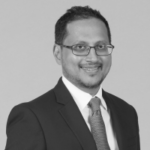

For decades, institutional portfolios have been anchored by a set of capital market assumptions that have served investors well. But as the global economy grapples with deep structural shifts, this traditional playbook is being tested like never before. This provocative keynote will argue that the greatest risk to asset owners today is not market volatility, but the comfort of the consensus. This session will explore a contrarian approach to portfolio construction that embeds resilience while delivering alpha in an environment of rapidly shifting correlations.
Includes table discussion


Morning tea
China stands at a pivotal economic juncture, navigating a structural deceleration and demographic headwinds while simultaneously aiming to dominate critical future industries, from green energy to AI. This keynote presentation will break down China’s strategy against a backdrop of intensifying US-China competition and the recalibration of global supply chains. It will provide a critical framework for asset owners to navigate these geopolitical and economic shifts in a world where China remains a systemic force.
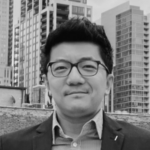

Stephen Kotkin
As the global economy fragments, the narrative around ASEAN is often one of unbridled opportunity – a beneficiary of "China Plus One" strategies and a hub for green growth. This session will present data-driven research on the quality of investment flows, questioning whether they represent deep industrial capacity building or tariff circumvention.
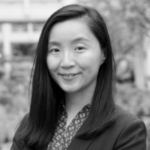
The global narrative on Asia has shifted from potential to performance. This session examines the rotation of capital towards the region and the structural growth drivers spanning Korea, Japan, India and Southeast Asia, as well as China. It will also explore how leading asset owners are recalibrating portfolios to capture durable sources of alpha across the region — from Japan's corporate governance renaissance to emerging market dynamism — in an increasingly bifurcated world.
Includes table discussion
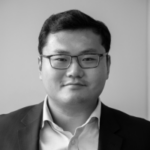
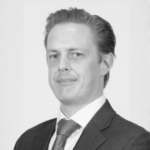
Zhe Shen
Seated lunch
Long-term expectations for higher interest rates and de-globalisation are changing many core portfolio assumptions across private and public market assets. As the easy beta of the past decade fades, asset owners are exploring new ways to bake in greater diversification and strategies that can simultaneously withstand geopolitical shocks. This session will explore how investors are reassessing private markets, including across Asia, to access uncorrelated alpha and build better risk-adjusted portfolios in a fragmented world.
Includes table discussion

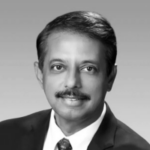

John Wilson
Private credit across Asia is fundamentally different from the more standardised, sponsor-driven markets of Europe and the United States. Yet the opportunity is increasingly viewed as a growth area, with the Australian government recently providing support to encourage greater capital flows into the region. This panel will explore the region’s fragmented credit landscapes and how a sophisticated approach to risk assessment, deal sourcing, and structural protection can deliver for institutional investors in this growing market.

Afternoon tea
From AI-driven equity concentration and higher-for-longer rates to worsening US–China tensions, asset owners are operating in a structurally more uncertain regime. This panel explores how fiscal dominance, rising debt and shifting geopolitics are shaping CIOs’ scenario planning and strategic asset allocation. Panellists will also reveal how they are expressing their macro and geopolitical views into concrete portfolio positions including regional and asset-class tilts, liquidity positions, protecting against tail risks and deploying alpha strategies to keep portfolios resilient when shocks hit.
Includes table discussion

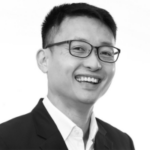
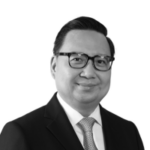
The principles of high-performance leadership - whether in business or sport - remain remarkably consistent and the ability to maintain clarity, integrity, and conviction under immense pressure is paramount. In this candid conversation, Usman Khawaja, one of cricket’s most resilient figures, will discuss the mental fortitude required to lead through uncertainty, and how to maintain focus when the stakes are highest.

Usman Khawaja
Transport to conference dinner | Pick up from Swissôtel The Stamford, Singapore
Conference dinner | Claudine Restaurant
Transport from conference dinner | Pick up from Claudine Restaurant to Swissôtel The Stamford, Singapore
Arrival refreshments
Welcome
Tokenisation is moving beyond crypto markets and into the core infrastructure of finance, transforming assets into programmable components of an increasingly on-chain economy. In parallel, advances in generative AI are reshaping how portfolios are designed, executed, and monitored—shifting investment decision-making from static optimisation to adaptive, agent-driven systems.
This keynote explores how the convergence of tokenised markets and AI-enabled investing is creating the need for new institutional infrastructure. In particular, it argues for simulation-based platforms that allow strategies, agents, and market dynamics to be stress-tested before capital is deployed. Framed around design principles rather than constraints, the talk outlines how institutional portfolios can become more adaptive, transparent, and resilient in an AI-native financial system.
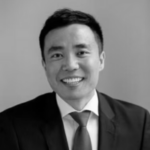
Will Cong
Stephen Kotkin
Morning tea
AI has moved from experiment to essential tool, becoming a cornerstone of quant investing. But how far can it really go? This panel will ask whether AI poses an existential threat to fundamental investing or whether it will simply shift today’s competitive advantage. It will examine which parts of the investment value chain can be automated, where human judgement remains decisive, and whether AI improves outcomes or just speeds up the same calls.
Includes table discussion
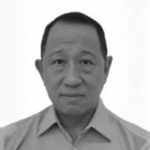
Kevin Chang

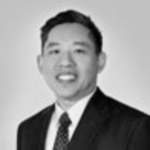
While the macro conversation focuses on the US-China AI race, a quieter revolution is occurring in market microstructure. We are moving beyond simple predictive models to the era of autonomous agents and multi-agent reinforcement learning. This case study will give an overview of the pace of AI advances and reveal the next step of how automated agents can manage portfolios.
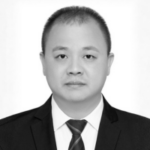
Stephen Kotkin
Seated lunch
The world is undergoing a rapid and disorienting transformation as entrenched historical narratives and diplomatic structures are reshaped. In this session, renowned geopolitical expert Professor Stephen Kotkin will offer a robust decision-making framework to help navigate this uncertainty, moving beyond the simple observation of daily noise to identify the useful parameters that will define the coming era.
Stephen Kotkin
Afternoon tea
As macro volatility becomes more structural, CIOs are increasingly reframing risk and opportunity at the total-portfolio level to embed resilience and nimbleness. This session will examine the governance and decision-making architecture that makes that possible, including how portfolio construction and risk management operate from the front to back office in support of robust long-term decision-making.
INCLUDES TABLE DISCUSSION

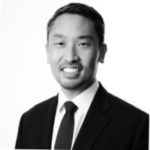
Investors are facing a new world, shaped by the secular dynamics of modern mercantilism and artificial intelligence, and most portfolios are unprepared, having shifted over the last 15 years towards being more growth centric, more US exposure, and more private assets. This investor-led panel will guide investors towards the frameworks that investors can use, and the new practical shifts they can take, to build a more resilient portfolio amidst a world with a wider range of outcomes and greater volatility along the way.
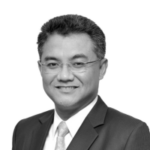
Hisham Hamdan

Conference close
DELEGATE PROFILE
The Fiduciary Investors Symposium is a quarterly event for the senior investment professionals at large institutional investors around the globe. The audience comprises chief investment officers and other senior investment professionals from pension funds, endowments and sovereign wealth funds from more than 20 countries.
VENUE DETAILS
Welcome drinks and canapes | Monday March 23, 2026
ANTI:DOTE
Level 1, 80 Bras Basah Rd, Fairmont, Singapore 189560
Conference proceedings | Tuesday March 24 - Wednesday March 25, 2026
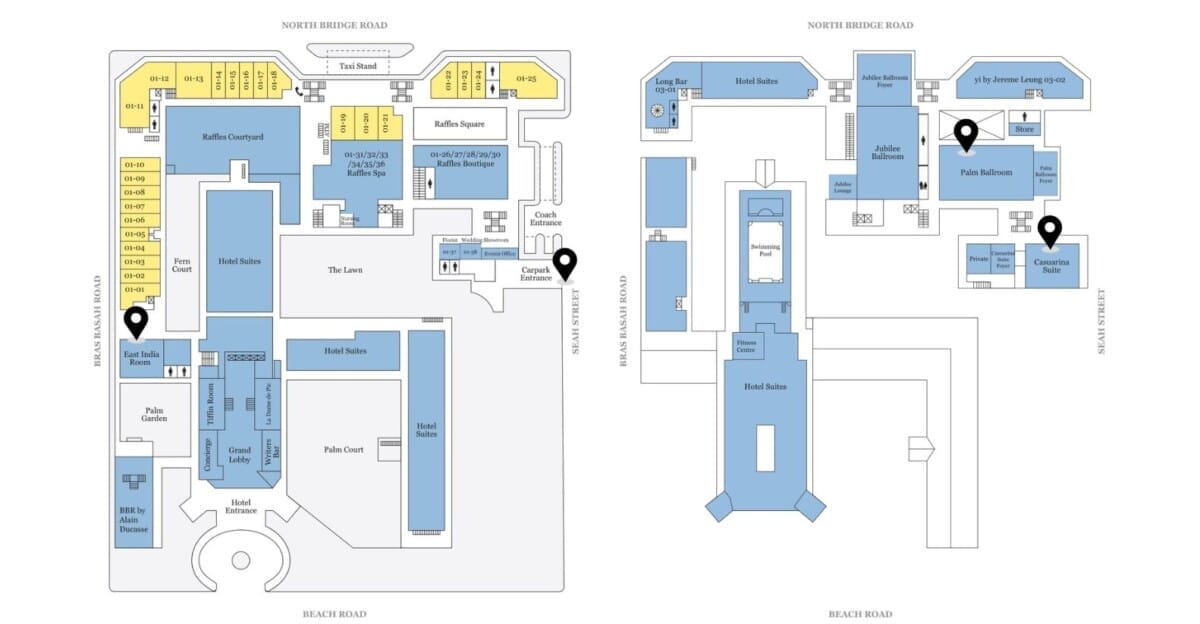
Casuarina Suite, Raffles Singapore
Entrance via Seah Street is recommended
1 Beach Rd, Singapore 189673
Conference dinner | Tuesday March 24, 2026
Claudine Restaurant
39C Harding Rd, Singapore 249541
Entry point to the conference space via Seah Street. Please see map below.
VENUE MAP
Accommodation details
We have secured preferred rates at the nearby Swissôtel The Stamford, Singapore.
Please find the booking details below:
Swissôtel The Stamford, Singapore: Booking link here
Should you have any questions regarding the accommodation, please contact our events team, via the details below.
DRESS CODE
The dress code for all conference proceedings and social functions is business attire.
CONTACTS
For enquiries related to registration and event logistics, please contact the Conexus Financial events team:
Bree Murray: bree.murray@conexusfinancial.com.au
Juliana He: juliana.he@conexusfinancial.com.au
Fund managers wishing to attend must sponsor the event. To discuss sponsorship opportunities, please email sales@conexusfinancial.com.au
CODE OF CONDUCT
Conexus Financial is committed to creating a professional environment that steadfastly supports the free flow and exchange of ideas, as well as the personal safety, wellbeing, respect for, and full self-expression of all our employees, guests and partners.
We have a zero-tolerance policy for behaviour that is detrimental to any of the above, including but not limited to bullying, harassment, and discrimination of any kind.
Please confide any incidents of concern to a member of the Conexus Financial team.









Kevin Chang
Will Cong
Hisham Hamdan
Usman Khawaja
Stephen Kotkin
Zhe Shen
John Wilson