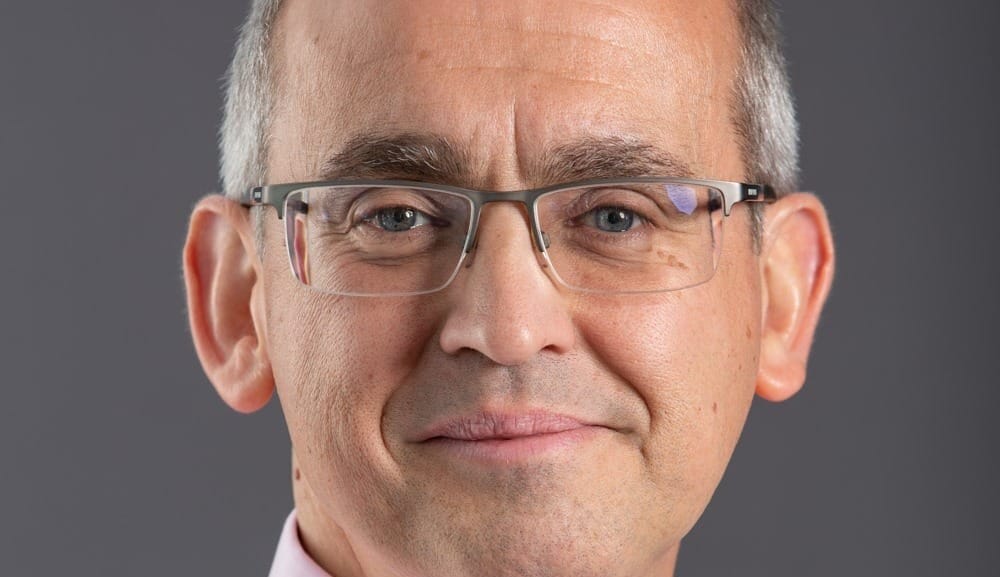
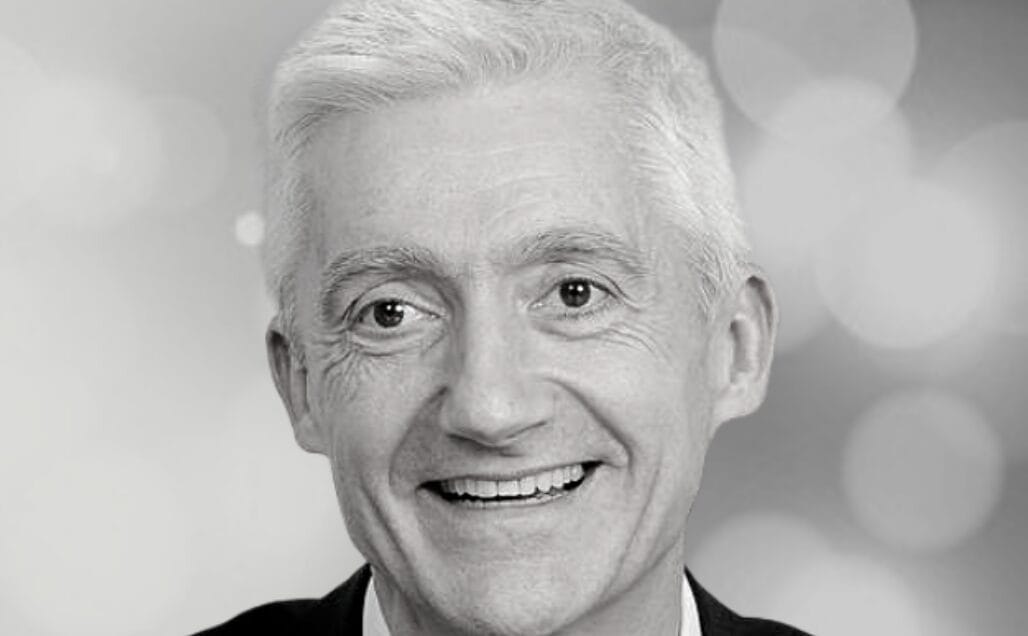
The key to constructing investment portfolios with resilience to rapid and unexpected changes is to remain humble, interrogate the data, and not be fooled into thinking the future can be predicted perfectly, according to head of multi-asset strategy APAC for Wellington, Nick Samouilhan.

In the midst of the COVID-19 pandemic, Singapore-based Wellington Management managing director and head of multi-asset strategy APAC Nick Samouilhan says “his team decided to take a step back and think about what was going on”.

Samouilhan told the 2024 Fiduciary Investors Symposium in Singapore last week that their aim was to analyse whether it could take what was happening in the moment and “try and work out the next five to 10 years – not trying to be too prescriptive, but can we directionally try and understand some of the big changes, which we think will really matter over the next, say, five to 10 years”.

Samouilhan said the multi-asset strategy team have identified four key themes that continue to hold true today.

“It was clear three years ago, [and] it is absolutely clear today, that governments all over the world are potentially going to be far more activist in determining winners and losers and directing capital,” he said.

“And it means that when we invest in a company, that company’s outcome may not be about shareholder maximisation, it may be something else, we need to realise that and address that.”

Samouilhan said it was “clear back then [and] it’s clear now that climate is an increasingly important consideration in driving risk and return in capital allocation.

“We need to address that in our portfolios,” he said.

“What we were seeing back then and, again, we’re also seeing that now, [is] governments all over the world focus on their own economies, their own objectives.

“Because of that, we’re starting to see policy cycles, interest rate cycles, economic cycles, regulatory cycles start to diverge. And that has an increasingly important impact on say, regional allocations, and currencies, and so on.”

This analysis prompted a discussion between Samouilhan’s  multi-asset team and the macro team because it led them to believe that “something’s going on, beneath the surface on the macro economy” – and it might be that the principles of investing and portfolio construction that have served investors well in the recent past might not be appropriate in future.

Building portfolios with resilience requires that possibility to be taken into account, and Samouilhan said investors should bear in mind three things when considering how to build resiliency into portfolios.

“First, you should expand the number of asset classes in your portfolio,” he said.

 “For instance, there was long discussion yesterday about commodities and how the allocations have generally disappointed over the last decade.  But that is because we haven’t spent time in regimes when commodities are helpful.”

Samouilhan explains the second point: if we are in this world where beta is challenged, we need to really look at how are we going to meet return expectations, if beta doesn’t get us there,” he said.

“That might mean alternative ways of getting different returns – hedge funds, and so on. It may mean more skill-based approaches; it may mean more privates. If we can’t rely purely on beta, because the world is slightly different, we need another engine to drive the returns.”

Samouilhan said the final point is that “once you’ve allocated to different asset classes, perhaps we can be a bit more thoughtful on how these asset classes are expressed”.

“For instance, in hedge funds, if we are in this world that’s tougher, maybe ’leaning towards long-short strategies that can potentially discriminate between good and bad companies, where that difference will start to matter.

Can we be better at the expression on the equity side? Do we lean to things like quality, because that tends to do much better in certain regimes?”

Samouilhan said that all of that means that “if we are going into a slightly different world – and perhaps we’re leaving an anomalous world, maybe the world we’ve just lived in is the weirdness and we’re going back to a more normal world – we do need to look at some important things in the portfolio: correlations; the construction of the portfolio, reliance on beta and perhaps the expression; and how we do risk management.”

Samouilhan said the key to success for investors for the coming year was to “be humble”.

“It’s to interrogate the data, to think long and hard, but not to think we can guess the future correctly,” he said.

“Say we’re five years from now, and our expectations on the macro economy proved incorrect. It would not be the first time; I would not be embarrassed by that.  If it is completely wrong, I think looking back what we would have missed was this: perhaps most of the inflation we’ve seen recently was entirely cyclical, and COVID-related, and that will wash out of the system; and that all this talk about regionalisation of supply chains is only marginal, and countries continue to trade with each other.”

Samouilhan said it’s also possible that developments in AI could “offset many of the issues around constrained supply”.

“So perhaps inflation goes back to being a non-issue,” he said.

“And, if and if that’s the case, most of what I’ve just said goes away, because central banks then don’t need to worry about re-inflating the economy, because they just can’t, because there’s no inflation.

“We do need to question whether that’s right. This is just a nice, helpful thing to say – well, maybe the last few decades were the anomalous period, and we’re going back to a more normal period. What does that more normal period look like?”

Bridgewater Associates has a house view that the world is moving into a period of macro-volatility and global conflict, following a half-century period of relative harmony and pro-growth market conditions. But despite the myriad geopolitical and environmental risks facing investors, Bridgewater senior portfolio strategist Atul Lele says it is investors’ unwillingness to break with the model portfolios of the past that presents the greatest threat to institutional portfolios.  

Opening the Fiduciary Investors Symposium in Singapore earlier this month, Bridgewater Associates senior portfolio strategist Atul Lele argued investors had entered an “environment of great secular change”.

Echoing sentiments made by Bridgewater co-CIO Greg Jensen late last year, Lele argued that many of the pro-growth and disinflationary forces that had been advantageous to investment returns over the past half century were starting to subside, as deglobalisation is replaced by regionalisation and governments and labour unions regain strength after decades of deregulation.

Then, there are the additional and emerging challenges presented by climate change and artificial intelligence, he said.

“For the better part of 40 years you’ve seen secular disinflation as globalisation led to a decline in cost structures,” Lele said.

“As we fast forward to today, almost all of these secular disinflationary pressures are now fading – globalisation is turning to regionalisation, de-unionisation is returning to re-unionisation and income tax rates are rising across the OECD.”

But while these shifting macro conditions present financial – and in some cases, physical – risks to institutional portfolios, the greatest threat is posed by investors’ own unwillingness to respond to them, Lele argued.

He described the continued adherence to traditional 70:30 portfolios, in spite of the shifting macroeconomic reality, as the “biggest risk we see around the world”.

“When we look at the performance of most traditional 70:30 portfolios, they’ve just had their best decade ever. And most investors we see are still anchored to this portfolio or some variant of it. Yet today, the pro-corporate , pro-liquidity, pro-global harmony disinflationary winds that have been around for the past 50 years are now fading,” he said.

“When we look at all the drivers of portfolio outcomes – growth, inflation, policy, geopolitics, globalisation, the corporate environment, the energy backdrop, technology – all of these are shifting very, very rapidly.

“And so the question for investors is how to deal with it and that turns to the idea of portfolio resiliency. The answer isn’t just to dump equities, the answer is to think very seriously about how to make portfolios more resilient.”

Pulling the right lever

He urged the audience – which included 65 institutional asset owners from 15 countries – to determine their own definition of what portfolio resiliency meant to them. But he also offered Bridgewater’s definition that resilience refers to the ability to achieve target returns across the wide range of risky and shifting scenarios investors face.

Lele posited four specific elements of resiliency: narrowing the range of possible outcomes by mitigating risk; reducing the severity of tail-risk outcomes; reducing the likelihood of sustained periods of under-performance and raising the average return across different economic environments.

Given Bridgewater’s thesis that investors are facing an increasingly complex and fraught environment, Lele made the point that not all tail-risks can be mitigated. Institutional investors will therefore need to prioritise between vulnerabilities based on their objectives, values and those of their stakeholders.

“Then they need to pull levers,” he said. “Such as big portfolio shifts – moving out of equities to bonds for example, or shifting into infrastructure for inflation protection — or more tactical such as following trend-following strategies and tail risk hedging strategies and so on. It’s important investors think about the full range of levers available to them.”

Another key risk identified was benchmark allocations to Asian markets, which dramatically under-value the growing independence and importance of Asia in the global economy. He said investors should consider an “intentional shift” to Asian markets, revealing that Bridgewater’s portfolio allocation was in the realm of 15 to 20 per cent.

“Geographic diversification is absolutely top of mind for us,” Lele said. “Most investors are disproportionately invested in US and Europe.

“[Asian exposure is] hugely diversifying to portfolios …[and] hugely supportive of sharp ratios.”

A market-weighted index isn’t necessarily the best indicator of where growth in Asia will come from in future. Bernard Wee, group head of markets and investment at the Monetary Authority of Singapore told the Fiduciary Investors Symposium in Singapore that to maximise returns, investors must take a much closer look at the region and understand the nuances of trade and investment.

Investors need to take a granular look at emerging markets, according to Bernard Wee, group head of markets and investment at the Monetary Authority of Singapore (pictured), who says mean variance optimisation based on real variables like growth will result in a very different outcome.

“This type of granular work is something asset owners have to be very rigorous about when they enter emerging markets,” Wee said, adding MAS has been investing in emerging markets for more than 20 years.

“In Singapore we sit in this crossroads of emerging markets and developed markets. Being in Asia we are more conformable with emerging markets, but it also helps that Asia is the largest allocation in most emerging markets per region,” he said.

“There is no one emerging market, I think that is that is something you have to know.”

As an example he said the level of rates in LatAm is much higher than Asia with the latter having a different composition of inflation and a much lower peak policy rate.

“Asia is tied more to China’s fortunes than other regions in emerging markets. You need to look at emerging markets more granularly,” he said.

“The consequence of that also means the other challenge for emerging market investors is you need to think about what the market-weighted index looks like and whether that fits with where the growth opportunities are going to be.”

He said unlike developed market indices where market development and liquidity is comparable across markets, emerging market indices by market cap are slightly lagged because those that enter the index earlier grow bigger faster, and benefit from liquidity for a much longer time.

“But they are also the slightly more maturing individual countries, and it’s the new entrants to emerging markets that are faster growing but have a smaller allocation,” Wee said.

“You have to think about whether the market weight reflects the opportunities,” he said. “There are issues, GDP weighted is probably not practicable. I don’t have an answer, it’s something we are struggling with as well.”

The nuances of trade and investment

Expanding on the granularity theme, Wee said it was important to understand the nuances of trade and investment.

“You have to look at where the investment is coming from and where it is going to – not all FDI is the same,” he said, as an example.

“If you are building a plant in Vietnam as part of a globally integrated supply chain, that sort of FDI uplifts productivity a lot more than horizontal FDI where you set up a plant just to sell to the local market because of the large demand. You have to look at what type of FDI.”

MAS manages about $300 billion and is the most conservative of the three entities managing sovereign wealth in Singapore, the others being GIC and Temasek. MAS holds mostly liquid assets with investment-grade bonds in advanced economies taking up the largest share.

Wee, who oversees the investment of Singapore’s official foreign reserves, implementation of Singapore’s exchange rate-centred monetary policy, stability of Singapore dollar money markets as well as issuance of Singapore government securities, said he had been reviewing the market outlook through both a short-term and long-term lens.

“From these different lenses we have a slightly opposite view,” he said.

“In the short term, the market is pricing in tail risks receding and upside risks increasing, whereas in the long term, we think that tailwinds are receding and headwinds are increasing.”

Tailwinds of prosperity receding

Wee said the view at MAS is that the tailwinds of prosperity are receding. He said global population growth, a huge tailwind historically, is slowing quickly, alongside more geopolitical conflicts and trade tensions.

“The question facing all investors is: what do we do with all the cash?” he said.

“And that depends on what sort of environment there will be going forward.”

Continuing with the theme of granularity, Wee said understanding the drivers of growth required a more nuanced look at the trends. For example, the volume of global trade had flatlined since 2012 but what was more important was the composition and granularity, with the nature of trade changing.

He said historically there had been problems along the path of global growth, including an oil crisis in the 1970s, high inflation, savings and loans crisis, dot com crash, and the GFC which all had drawdowns, but didn’t derail the long-term trend of prosperity.

The issue today is the problems are everywhere all at once.

“If we think the headwinds are changing do we need to tilt the portfolio to build more resilience?” he said.

Looking at economic fundamentals, rather than market cap, means investors should have up to 50 per cent of their portfolios in Asia, according to chief executive of Asia for APG, Thijs Aaten, speaking on a panel of investors at the Fiduciary Investors Symposium.

“I am a fundamentals guy, so fundamentally what is going on? I think the centre of gravity in the global economy is shifting towards Asia,” Aaten said.

“I think next year or the year after, more than half of global GDP will be coming out of the region; and 70 to 80 per cent of global growth is in Asia, whereas 70 per cent of market cap is based in the US. We invest for the long term; we think in quarters of centuries.

“The US has 4 per cent of the global population and 40 per cent of the global budgetary deficit, to fund that requires 60 per cent of global savings. I’m not so sure that is sustainable on our horizons.”

Aaten, who has been based in Hong Kong for six years, told delegates that the optimal allocation to fundamentally align a portfolio with the level of economic activity globally would require increasing the allocation to Asia.

“You should increase your allocation maybe to up to 50 per cent [to Asia], being slightly provocative on that idea,” he said.

“Ultimately pensions are paid on returns.

“In Asia we will see two billion people rising to middle-income level and that will need infrastructure, housing, logistics etc.”

Aaten pointed to investments in Indonesia, which has the world’s fourth-largest population, as a great example.

“We invested in toll roads in Indonesia that connects people in remote areas and brings economic prosperity,” he said. “One of the obstacles is not enough market cap in Asia but that’s why we like privates. If you only look at market cap in Asia, then in my view that [allocation] is far too low.”

Alpha in private markets

APG established an office in Asia in 2007 and has invested in infrastructure, private equity and some fixed income in the region since then.

“We have done close to 10 per cent over that time on an annual basis which is decent returns for the pensions we have to pay,” he said.

“Investing is about looking forward and I am quite optimistic about Asia and the opportunities that are out here in the region.

“For sure, the market is less efficient here so you should apply active management – and active management is not just about picking winners but making sure you are not buying the losers – and get out of risky assets in time because that usually helps a lot in achieving your return goals.”

Aaten and fellow panellists, Albourne Asia chair Richard Johnston and Lexington Partners partner Tim Huang, both based in Hong Kong, agreed Asia was an alpha play.

One of the lessons in my time here is I feel like I’ve been in more bear markets than bull markets,” Johnston, who has been based in Asia for 34 years, said.

“Asia is a beta story of perpetual disappointment but has actually been an exciting alpha story. In some ways Asia deserves to be a beta story because there is still not enough discipline around the allocation of capital. You have to look at each market. In some, the government decides what margin I make there; or it’s a family, crony capitalism, not the market.”

Johnston said investors have to “dig down and look”.

“The headline indices are to be avoided, that’s what I think from my time in Asia,” he said.

“There are huge amounts of alpha at the moment. I have seen good stock pickers generate 10 per cent a year, so it doesn’t matter what beta is if alpha is so good. I am a great believer in the alpha.”

Huang, who returned to Asia in 2005 after spending his adolescent years in the US, said there is dislocation with public markets but there are certain pockets of the private markets that can generate good alpha.

“My predominant disposition is that you should be in privates because alpha can be achieved there,” he said.

Boots on the ground

All panellists agreed that having people on the ground in Asia was an important part of the story.

“We have 10 investment committee members and I’m one of the 10, so the Asian view isn’t very strong. Most sit in NYC,” Huang said.

“Being here allows for the ability to dive into the next level and have people on the ground who can peel the different levels of the onion. If we can buy risk we understand, then we can have a more intelligent conversation whether it is worth taking on that risk.”

Johnson pointed out that having people on the ground allows investors to understand the nuances of jurisdictions and structures.

“In private credit for example there are a lot of interesting solutions. There are phenomenal niches in this region, but you do need a lot of local knowledge,” he said.

He said investors are “suffering from peak American exceptionalism” and that is crowding out opportunities in other jurisdictions.

“I feel it in private credit and hedge funds,” he said.

“Investors saying I can get this in America, why would I come to anyone else in the world? But America is not without its risks going forward.”

APG has offices in both Hong Kong and Singapore and Aaten said there were many benefits in having investors on the ground.

“Half of what we are doing is private investing in infrastructure, real estate and real assets, and those are based on relationships and the network you need to build,” he said.

“We employ 90 people in Hong Kong, and 20 different nationalities. That shows [us] being tuned to the local structures of different countries. Emerging Asia is very heterogenous, not something where you can use the same model in each market.”

Aaten spoke of deals that had been negotiated in Cantonese with the documentation in English – deals that couldn’t have been negotiated and closed from APG’s Dutch headquarters.

“Being on the ground gives you a different view, seeing what is really there,” he said.

“One of the challenges in the job, is that the views and perceptions I hold are very different from what those in Amsterdam or New York might think because they are reading the papers which doesn’t always reflect what is the reality on the ground.

“That is a tough job because sometimes our views are different from the average trustee in the Netherlands who reads the newspaper and thinks that’s what is really going on.”

Aaten also argued for investing in Asia with regards to ESG considerations.

“If you want to have impact in the energy transition or climate change then think about where to have the most impact,” he said.

“Do you want to clean something that is already relatively clean like the Netherlands, or help a country leapfrog coal and go to renewables? Sixty per cent of global emissions are coming out of Asia. We are exercising our influence to help make changes.”

The strength of China’s national leadership has been and will remain a central topic for avid China watchers around the world. As the nation heads into a structural reshuffle of its economy, investors, researchers and political scientists have different views on Chinese policymakers’ ability to work with the financial market from this point on. 

At the Top1000funds.com Fiduciary Investors Symposium earlier this month, Logan Wright, China markets research partner at Rhodium Group, said Beijing’s lack of policymaking actions so far on several fiscal and economic issues is a worrying sign.  

“Some believe there’s an awareness of the problem,” he told the delegates in Singapore. “There’s a belief that the [Chinese] leadership can basically counter some of these structural challenges when push comes to shove.” 

“I’m a little more skeptical of that argument at this point, given what we’re seeing at this stage in Chinese economic policymaking.” 

A case in point is the local government debt, which is at an historical level right now in China, Wright said. Reuters reported that the debt has reached 92 trillion yuan ($12.58 trillion) in 2022 – 76 per cent of the country’s economic output in 2022, up from 62.2 per cent in 2019. 

China held its Central Financial Work Conference in November 2023 (which itself was delayed for over a year) and was supposed to discuss measures to put the debt on a more sustainable path. However, there were no concrete announcements apart from fleeting media reports on potential refinancing plans for local government financing vehicles. 

“You can’t do nothing, and you can’t keep doing exactly what you have been doing in the past to fund local government investment. This is the conundrum that Beijing is facing,” Wright said. 

“But the answer we’re getting is silence. 

“We should now be questioning the capacity of policymakers and whether they really are aware of the challenges that are being faced, and if they do, why these solutions keep getting punted down the road.” 

Confidence issue 

However, think tank scholar Cheng Li disagreed and argued that despite various critical opinions, the Chinese leadership is “in relatively good shape”. Li is the Professor of Political Science at University of Hong Kong (HKU) and the founding director of its interdisciplinary think tank, the Centre on Contemporary China and the World.  

That is because first and foremost – different from what the Western media tends to portray – there is no major conflict within Chinese leadership, Li said.  

“Of course, factions of parties existed in China, but it’s not out of control at the moment. Otherwise, the so-called Xi Jinping’s monopoly power is just a contradiction,” he said.  

“I emphasize that we cannot understand Chinese leadership’s mindset without putting China in the global perspective. 

“In that regard, some would say the problems mentioned about China is also global to a certain extent. We talk about China’s local debts – what about debts in the US? In Japan? Different nature of debt, but even higher [levels].” 

Addressing the World Economic Forum in Davos earlier this year, Chinese Premier Li Qiang portrayed the nation’s ability to deliver strong GDP growth without resorting to “massive stimulus” as a point of pride. Despite the mounting deflationary pressure, he said China “did not seek short-term growth while accumulating long-term risks”.  

But HKU’s Li said this is not an indication that the government is unwilling to act or that a stimulus package is completely off the table, but that the nation’s leadership needs time to first determine whether it’s the right thing to do.  

Looking into the next three to five years, Wright said the slowing economic growth prospect is very real in China. The lack of fiscal revenue is one key reason. 

“[China’s] 17 per cent of GDP in fiscal revenue is the low end of the OECD, which has an average of 34 per cent. The US has 27 per cent,” he said. “Those are real constraints in terms of how China will meet its ambitions.” 

“I think it’s very difficult to think about growth much above 3.5 per cent in the medium term.” 

Li agreed that the environment is not ideal in China but emphasized that apart from pure economic factors, investors are also concerned with security and stability.  

“China is among the very few countries that can claim it can maintain stability, even though that stability is because of Chinese authoritarianism,” he said.  

Li said his personal observation interestingly revealed that while there is a general pessimism among Chinese elites, the wider public tends to be more optimistic about the nation’s economic status. Around the world, the recent Chinese equity rout probably lowered confidence towards the nation further for some, but Li remained steadfast.  

“If confidence or policy are the real problem, don’t you think it’s relatively easy to fix compared to serious structural problems like environment or security? 

“That’s the reason I’m optimistic of China. I know that I’m a minority overseas and a minority in China, but I want to make sure that side of story is heard.” 


Investing in Asia poses an ESG dilemma that investment in other regions throws up less frequently, namely, that most manufacturing companies there derive the energy needed to run their operations from high carbon-emitting sources, principally coal.

This inconvenient truth was just one of the challenges posed for investors in the region, outlined during the Fiduciary Investors Symposium in Singapore last week.

Khazanah Nasional head of strategy and asset allocation Wai Seng Wong said the $27 billion Malaysian sovereign wealth fund has always had a home bias, “and home, in this case, is not just Malaysia, but a preference and a comfort with China and India and everything else around us”.

But this home bias presents challenges for the fund’s ESG and sustainable investment aspirations.

“When we speak of the…manufacturing sector, the biggest elephant in the room is a source of energy, actually, in this region. It’s mainly coal,” Wong said.

“And no matter what you do, the moment you allocate to southeast Asia, or Asia, your ESG scores will pretty much go sideways.

“That’s the reality of the region.”

“Our challenge in the portfolio is we are very heavy emitters. We have an energy utility company. We have airlines, we have airports, we have construction. And all of that is really the focus for us, in terms of decarbonisation, and transitioning away.

Wong said fund applies a two-prong strategy to managing the issues.

“One, you go ahead of the curve, take a look at reducing your portfolio emission through investing in green energy, investing in anything that reduces your emission,” he said.

“Or, the other approach is go with the flow, the world will decarbonize on its own, chill, relax, let’s just go with it, because the West is doing that so we just buy those stocks,” he said.

“It really depends on your ambition, but also depends on your targets, and also what’s inherent in our portfolio.”

Wong said the find doesn’t take an either-or approach to its portfolio, it does both.

“On infrastructure, and renewable energy and all of that, we take the more proactive approach to decarbonize the portfolio,” he said.

“But on the other side – where we perhaps have less control and perhaps the market’s more mature, and [where] I say we can relax a bit more – will be out PE funds, will be our developed markets portfolio where, just by virtue of the fact that we go for quality, we will decarbonise and we don’t really have to focus so much.

“So really, it’s about choosing our battles.”

Temasek director of macro strategy MK Tang said Temasek works closely with its portfolio companies to understand their aspirations and actions on sustainability; and internally, it factors in a carbon price of $50 a tonne when assessing potential investments.

“We expect that to go up to $US100 [a tonne] by 2030,” Tang said.

“And then one other thing, very important that we do is essentially try to think about sustainability in a holistic kind of way,” Tang said.

“What that means is that we do not just invest in green companies. There are a lot of non-green companies out there. We also evaluate companies in terms of the vision, in terms of their plans, in terms of the clarity of being a less significant emitter of carbon going forward. We evaluate those companies in those terms as well.”

Tang also said that while demographic trends are well established, the impact of those trends has shifted over time. Two decades ago, the Baby boomers were ageing from youngsters to 56 years old.

“But now, going forward, the aging that we’re talking about is slightly different, because those people are aging into retirement,” he said.

“In that case, they have to dip a little bit in the nest egg; they have to dis-save. What that means at the macro level is really that potentially we can see an inflection, pretty significant changes in the consumption and savings dynamics going forward.

“And that could potentially add to a lot of other structural factors that…actually could push up structural inflationary pressure going forward. What that means, and what that brings is higher structural real interest rates.”

Tang said that as an asset owner “high real interest rates are really great”.

“The challenge, obviously, is that for companies that are less proven, they have less cash flow. The valuations and also the financing opportunities could face a lot of headwinds when real interest rates are high.”

Tang said that for long-term investors “that’s really a key”.

“What we try to do, of course, [is] manage technical risks, but we also try to ride out short-term storms,” he said.

“It’s exactly in things like this where a lot of green companies that actually are not proven to be successful companies yet in terms of commercial returns, we stay very focused on the longer-term prospect, on the longer-term returns, as well as impact.”

Brunei Investment Agency acting chief investment officer Su Tengah said the home bias issue the agency faced was quite different – it has invested since inception without a home bias because there wasn’t a home market to be biased towards.

But expanding its portfolio to cover other markets and widening its asset allocation has presented some other challenges.

“Our reserves were mostly invested in developed countries,” Tengah said. Initially investing mostly in public markets, it has since expanded to encompass other asset classes.

“Ten years into the establishment of BIA, our predecessors then started amassing a big real estate portfolio all around the world,” Tengah said.

“The big push for alternatives in BIA really didn’t happen until recently, not until the post-QE era.”

Tengah said the agency is now expanding into other geographies and asset classes but its size – while its assets are not publicly disclosed, BIA has a relatively small investment team – means it must be selective about how it grows.

“Everyone has a different context,” Tengah said.

“Upon reflecting, I realized ours was more a structure issue. We had a very small team. People didn’t really specialise, so we could only at any one point in time focus our efforts on one thing.

“And so actually in building out Asia, or in building out VC, we were always cognisant that we had to be sequential, because we couldn’t be in all places all at once.”

“We just had to be sequential and start where we thought we could first be more effective and evolve the exposure towards our asset allocation.”

Tengah said BIA looked at “things that we didn’t have a lot of in the portfolio, and these were technology investments so we also started building out our venture program”.

“And then, as an extension to that, we also pivoted to growth and growth infrastructure,” she said.

“We would funnel pipelines for our growth investments through our venture managers, and then also growth as a thematic, growth and growth infrastructure. There’s just a huge need for it, especially in this region, whether that’s digital or for decarbonisation efforts, so more investments going into that.”

Tengah said BIA also started down the ESG path.

“We didn’t really have proper frameworks, but we just wanted to start,” she said.

“And I think bottom-up that theme is clearly coming out of each and every one of our portfolio managers’ ideas and investment books.”

Tengah said that even though investing in China can be challenging in, “the preface of investing in China for us has changed”.

“Now, opportunities have opened up and investors do need to embrace Asia, in its diversity and its entirety,” she said.

Tengah said there are opportunities emerging in Japan, even if it remains relatively expensive; and in southeast Asia and Korea “maybe opportunistically”.