Guardians of the Future: The evolution of New Zealand Super
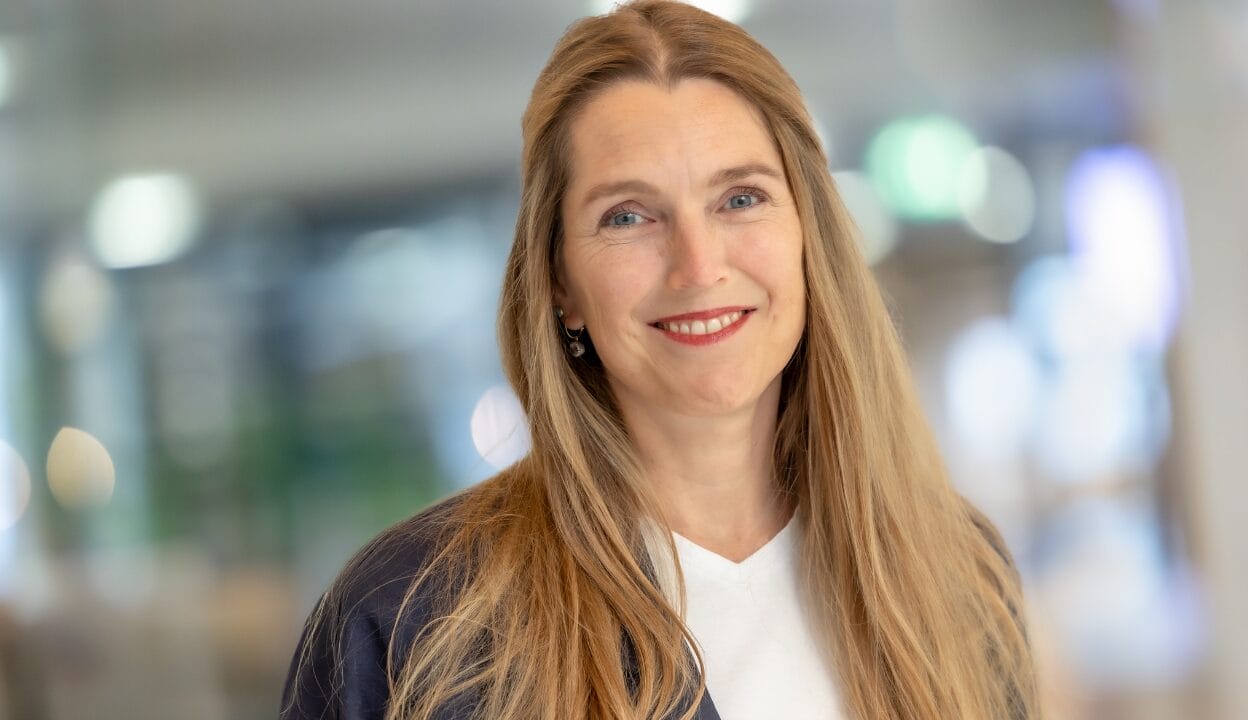
New Zealand Superâs new chief executive Jo Townsend inherits an organisation with a strong culture but facing some challenges posed by rapid growth. An internal project aims to reduce complexity and focus on simplicity for a fund already rated by WTW as operating at global best practice levels.
New chief executive of New Zealand Super, Jo Townsend, is aware of the fine balancing act her role requires: managing organisational change, as an aftermath of growth, in an organisation that has grown up with an embedded and very particular culture.
With a great legacy to work with, including record five-year returns, Townsend inherits an organisation of 200+ staff (with 55 appointments made in 2023 alone) and assets of $79 billion with all the complexity of fast-paced growth and capital market headwinds.
âAs a new CEO one observation of the organisation is it has grown quickly in the last five years in headcount, and complexity can be a function of rapid growth in an organisation,â she says in an interview with Top1000funds.com.
âI understand the importance of culture and it is a key area of focus in the organisation. As a new CEO top of mind is how to maintain that through a period of change.â
Townsend, who started as CEO in April this year, is taking a considered approach to understanding the organisation, involving staff in the evolution but also bringing a new perspective.
âI am looking at processes with a fresh set of eyes. Iâm asking everyone âwhy do we do it that way?â And having good chats about what the change challenge is in the organisation, and getting people to think about âhow and whyâ, not âwhat we need to…â.â
While she says it is still early days there is a common realisation and acceptance there needs to be change to be successful.
An internal project, with the grand Oscars-like name of Guardians of the Future, focuses on key initiatives for continuous improvement.
âIt is internal language we use when talk about continuous improvement and what we need to do to be able to be successful over the next 20 as we have for last 20 years,â Townsend says.
Key areas of focus include reducing complexity and focusing on simplicity; strengthening the investment approach through evolving the total portfolio approach and sustainability; and maximising the organisation and focusing on culture and a learning mindset.
The successful evolution of these three key elements of the organisation â culture, technology and the total portfolio approach â were also reflected as areas of improvement in the fundâs recent independent review, as required by law, with the fund receiving a WTW Global Best Practice rating.
The review was very complimentary in its report, including an acknowledgment that New Zealand Super is operating at global best practice in its activities, a state it has maintained for the past five years, and that WTW has the view the âinvestment process is completely exceptional among the asset owner communityâ.
But it also said a focus on new leadership, improving system design, maintaining a strong culture in a more complex organisation, and undergoing a technology transition, were all factors that can make the organisation more resilient.
CIO hire
One of the principal challenges for the organisation is filling the vacant CIO position, following Stephen Gilmoreâs defection to CalPERS. Chair of the fund, John Williamson, has only been in the role since February this year, so how the three key individuals, all new to their roles, interact will be crucial to the future of the culture.
Townsend says there has been a huge amount of interest both internally and externally in the CIO position, but she is taking her time with the process.
âI want to make sure we are doing the most thorough process we can,â she says. âWe are trying to conclude as soon as possible but we wonât rush.â
One of the consequences of the CIO vacancy is a 12-month delay in the usual five-year review of the reference portfolio.
âWe will do a full review of how we do that strategic setting of our risk appetite and objectives and how to achieve that through our total portfolio approach,â she says.
Townsend says one of the WTW recommendations was to incorporate more horizon-scanning of systemic risks in the lead up to the review of the reference portfolio.
âWe have a long lead time in that reference portfolio review, and will start with some of that scenario planning,â she says.
âWe take that on board and are working with the asset allocation team and economics team to work out the best way to produce that information for board.â
Technology transition
For a couple of years the fund has been conducting a strategic project, dually supported by the technology and investment teams, to build and strengthen investment data.
âWe are migrating away from legacy systems and putting a Snowflake database in,â Townsend says.
âThis is a big investment data program, that will be foundational and extremely important to deliver. We are hoping to move out of project phase into BAU in mid next year.â
Click to enlarge
As part of this, staff are being upskilled in certain areas of technological ability, including Python.
Overall Townsend says the WTW reviews have been beneficial to the fund as a guidepost or health check that it is heading in the right direction.
The last review in 2019 also provided recommendations including a review of beliefs; a review of the compensation structure; making greater use of a risk factor framework and allocating more resources to focus on responsible investment; and greater use of stress testing. All of these have been addressed by NZ Super in the time between reviews, with various responses by the fund. A review of investment beliefs and a remuneration review were both completed in 2020.
Townsend says she entered the CEO role knowing this process, which is a co-creation with WTW and sharing of views and drafts going back and forth, was underway.
âItâs been a very useful process. WTW could get a full picture with the co-creation, and it was helpful for me in getting up to speed as new CEO,â she says.
âThe process overall was extremely valuable, and there have been strong levels of involvement from Treasury which was fantastic. Overall, the process has added benefit to the Guardians, giving assurance to the government that the path we are on is solid and robust.â
More innovation originates from the US than in Europe, says Timo LĂśyttyniemi CEO of the âŹ21.6 billion Finnish State Pension Fund (VER), and while Europe has made several attempts to respond to the dominance of US tech giants, the US venture capital market is stronger, and most IPOs take place in the US.
But although European innovation has not been as attractive an investments as US tech LĂśyttyniemi argues in a recent post on the fund’s website, that could change.
In the US most patents are registered by start-up companies, and fostering a European growth market for start-ups is one way of promoting innovation he says, suggesting a five-point plan to boost European innovation.
Information and communications
For innovation and venture capital investments to be attractive, they must be profitable. According to the latest statistics from Invest Europe, European venture capital funds have outperformed US funds over the past 10 years, returning over 20 per cent per annum.
In the preceding period, it was the other way round.
âSound profits attract investors. Information about healthy profits should be actively distributed and made readily available. The 2021 and 2022 venture funds are likely to prove disappointing, but if interest rates fall, the investment environment will offer improved opportunities for innovation and its financing.â
Investment products readily available
LÜyttyniemi  says that investing in venture capital funds is often a difficult decision for European investors.
âNewly established funds are initially small. For an institutional investor, analysing these funds is an arduous and time-consuming task.â
For this reason he advises creating fund of funds, allowing investors to be collectively involved in the start-up sector.
âIn Finland, such a solution is offered by the Finnish Industry Investment’s fund of growth funds. Its counterpart at a European level is the European Investment Fund.â
He says that BlackRockâs purchase of Preqin could offer investors new opportunities. BlackRock has typically operated as an asset manager focused on the public equity and fixed income markets. Now it is making a foray into the illiquid markets where Preqin has been a leading information provider.
“Hopefully, the acquisition will generate easy and cost-efficient investment products for the unlisted market.”
A single strong technology exchange
LĂśyttyniemi argues that Europe needs a strong European âNasdaqâ where growth companies can list. In a report published in June, McKinsey highlighted the wide gap that exists between US and European exchanges. The stock exchanges differ both in terms of the number of technology companies going public and valuation levels.
âWe could create a perception of a single exchange even if it were a combination of many,â he says. âThe important thing is to establish a highly visible and prominent marketplace whose star companies become the talk of the town.â
The challenge Europe faces is where to set up this exchange. Pre-Brexit, London would have been the obvious choice but the location is not obvious today.
A single strong technology index
A strong stock exchange creates a strong, easy-to-follow index that allows investors to make investment decisions based on that benchmark index.
âIf there are too many indices, there will be no sufficiently strong benchmark that would generate sound investment products. A strong stock exchange equals a strong index. It is also possible to create a robust virtual index based on several technology exchanges and local âNasdaqâ exchanges. This would be the second-best option if a single strong exchange fails to materialise.â
âNasdaq is a household concept. So is Silicon Valley. Where are Europeâs innovations?â he asks.
Information marketing
The efforts to create a European Capital Markets Union (CMU) is a long-standing project. The problem is that the proposed solutions are limited and isolated without an overriding idea of how the European capital market should be created.
One solution, he says, is the âinnovation market.â Innovation market infrastructure is a chain of layers which consist of stock exchange, market, benchmark indices and investment products by which investors are attracted to invest.
Europe possesses huge potential in terms of knowledge and skills, he concludes.
âThis fact can be used to create a roadmap for the kind of progress outlined above to increase the attractiveness of European growth companies from an institutional investor perspective at the various stages of development.
“When there is a good and functioning market for innovations, it will drive workers and researchers to innovate. A pre-condition for a sound market is a multi-tiered, highly functional capital market infrastructure.â
Douglas Rivers, chief scientist at pollster YouGov, said data coming out of the current US presidential election confirms significant cultural and demographic shifts that are reshaping the political map. Rivers told the Fiduciary Investors Symposium that the once-popular âdemographics is destinyâ mantra predicting permanent centre-left majorities has lost meaning in the Trump era.Â
Douglas Rivers, chief scientist at pollster YouGov, said data coming out of the current US presidential election confirms significant cultural and demographic shifts that are reshaping the political map.
Rivers, who is also a Professor of Political Science at Stanford University and senior fellow at the Hoover Institution, told the Fiduciary Investors Symposium that the general election underway in the US between former president Donald Trump and current vice-president Kamala Harris is the âmost momentousâ in living memory.
âIt’s been scripted to generate more surprises than anything I can remember, but it is serious business,â Rivers told the symposium, hosted by Top1000funds.com and held on the Stanford campus in Palo Alto, California, last month. âItâs been amazingly devoid of discussion of issues, but a feast for anyone that likes following elections.â
Rivers presented insights from a historic data set called âSay 24â, compiled via a major survey of 130,000 voters jointly administered by teams at Yale, Arizona State and Stanford universities.
He described the poll results for much of the past year as a âsnoozeâ as Trump and previous Democratic frontrunner President Joe Biden seemed to enjoy peculiarly entrenched support and preconceived perceptions, both unable to shift deeply held opinions about them in the electorate or persuade new voters to join their respective coalitions.
But Rivers said the race was thrown on its head by the presidential debate in June, after which President Biden suffered sustained negative press commentary about his performance and age, and high-profile defections of allies and donors, leading to his withdrawal and endorsement of Harris as Democratic nominee, which she clinched at the partyâs convention in August.
âHarris started down about four points relative to Trump, and then quickly overcame him, and then now leads, typically by two, three, sometimes four or five points in the polls,â Rivers said. âWhat Harris has done – and they’ve run an amazingly good campaign over the last six weeks – is to improve her positives. The views of Harris were pretty negative as being a âlightweight, inarticulate, unpreparedâ and so forth. Since then, she really has done extraordinarily well.â
Demographics is destiny (or is it?)
However, he added that the data suggested Harris, who is perceived as more left-leaning than Biden, still faced a âproblem on her ideological positioningâ given that the US electorate has an inherent Republican advantage.
âThe US is a centre-right country – that is, about a third of American voters describe themselves as being âconservativeâ [and] about a quarter is âliberalâ. So, there’s about an eight-point gap there,â Rivers said.
While the traditional right-wing/left-wing schism that has dominated electoral politics in liberal democracies throughout the 20th and early 21st centuries still holds sway in the US, Rivers said the data suggested there have been profound shifts in allegiance and sentiment since Trump entered, and disrupted, public life.
â20 years ago, you heard about âdemographics as destinyâ, which was that if Democrats maintain the majorities among these two minority groups [Blacks and hispanics] and were able to just do reasonably well among whites, they would have a permanent majority,â Rivers said. âWhat happened is completely different since then.â
Following an âautopsyâ of the 2012 election – at which Barack Obama won a second term and former Massachusetts Governor Mitt Romney was defeated – Rivers said Republicans embarked on a new strategy to woo latino voters, with some success.
Trump has also gained support from Black males, and has a near 80 per cent stranglehold on rural voters, Rivers said, both of which are new developments that overturn historical allegiances. Similarly, under Trump, Republicans are now seen as broadly isolationist on foreign policy, while Democrats are more globalist, also overturning traditional norms.
The growing support for Trump and Republicans among working class and minority voters reflects similar dynamics emerging other Anglosphere democracies. In the UK, for example, the right-leaning Conservative and Reform parties have attracted more support from working-class and non-tertiary educated voters, as has the conservative Liberal party in Australia.
On the flipside, these declines in support for Democrats among traditional bases have been offset by increases in support from university-educated and suburban middle-class voters, especially women, he said.
Notwithstanding the dynamics signalled by the data, Rivers added the caveat that polling can be an inexact science.
âIt’s beyond our ability to make precise predictions,â he admitted. âThe dirty little secret of counting votes is only accurate to about a 10th of a point. If you recount a state, you can expect movements of about a 10th of a point on a recount. So, whenever an election is that close – itâs anyone’s guess who actually won.â
Finding ways to accommodate neurodiverse individuals within investment teams could be the key to unlocking better investment performance, as well as bringing the benefits of better collaboration and creativity, the Fiduciary Investors Symposium at Stanford University has heard.
Stanford Research Initiative on Long-Term Investing executive research director Ashby Monk said exploring the benefits of neurodiversity is an avenue of research that builds on the work already done to help asset owners become better at what they do.
He said the asset owner community controls about $140 trillion of capital and they are âquietly becoming the most important organisations in the worldâ.
The core of the research Monk oversees at Stanford is about âhow do I help you make more money?â.
âWe focus on your governance,â Monk said. âWe focus on your culture, your technology and your ability to innovate.
âSome people think of my work as sitting in the category of behavioural finance. At times, it feels that way. But [while] behavioural finance academics do a fabulous job of diagnosing your biases, cognitive and behavioural, they may not have the solutions ready made to de-bias your organisations, to tune your decision makings, to make smarter, more efficient decisions, to generate higher performance.â
Monk said neurodivergence is the latest topic of research.
âNeurodivergence is not â letâs get it out there â a disorder,â he said. âIt’s like biodiversity. [It is] the normal range and variation of human brains. We see it as a superpower.â
Monk said that although he doesnât love the idea of putting a label on neurodivergence, sometimes thatâs what must be done to enable organisations to recognise, harness and value it in their ranks.
âYou do need to accommodate different things in your organisation in order to get the most out of these talented individuals,â Monk said.
Fremont Group managing director of quantitative analytics and risk Joseph SaĂŠnz told the symposium that it is typical for neurodivergent individuals to learn about their own neurodivergence through their children.
âThe reason that neurodivergence is so important to me is through my son, as is the method for many that I started to meet, I started to find out that I myself was neurodivergent, and then eventually I also found out that the specific type of neurodivergence that I had was I’m actually autistic,â SaĂŠnz said, courageously revealing that for the first time in public.
Working in collaboration with Monk, SaĂŠnz said that âwhat I’m hoping to do is by identifying how neurodivergent individuals can assist in the in the investment arena, we can identify how we can accommodate so that they can better find that alphaâ.
Monk said the objective of the research is to work out how organisations can find and bring in neurodivergent individuals and âgive them safe spaces to innovate and createâ. In the case of pension funds, that goal is to âmeet target returns and pay pensions; it is about performanceâ.
SaĂŠnz said a key lesson is that âbuilt different builds differentâ.
âAt the heart of this is, new perspectives can come up with innovative stuff,â he said.
âI hire differently, and I have, as a result, a bunch of people that come up with fresh ideas all the time, and they bring them to me, and we try to put them in an arena that’s well hemmed in so that these ideas can create a strong portfolio that can withstand drawdowns but can also produce alpha.
âFolks can build their portfolios individually from the bottoms up, but as I said, it’s hemmed in from around the sides. It’s innovation, but with control. It’s a new approach, but with all the same people in the room allowing to say, âWell, have you thought of this? Have you thought of that?â It’s new perspectives.â
SaĂŠnz said organisations must develop specific capabilities to recruit and retain neurodiverse professionals.
âI hire based on intellectual horsepower,â he said, but the exact metrics are âdifferent with each and every candidateâ. In one case a candidate claimed to have achieved a 1000 per cent return trading PokĂŠmon cards.
âHe buys rare PokĂŠmon cards, holds onto them for a little while, and then flips them in Japan,â SaĂŠnz said.
âI told him that a 1000 per cent return is a terrible metric, and to come back to me with an IRR. So, he came back to me with an IRR, and then I hired him.â
SaĂŠnz described this sort of criteria as ânon-standard informationâ.
âI used to say they’re going to at least need a graduate degree, to get into the quantitative group, because everybody else in the organization needs one less degree, and the quantitative group needs more math than everybody else,â he said. âEvery time that a new person comes on, all of the problems that the last person came on to solve have been solved, so the newer problems are harder than the previous problems. The math is going to be harder.
âI need people with strong math skills, but they were too expensive. I recognised that I had to teach everybody that was coming, no matter what. I had to look at the cheaper end of the spectrum, which means I had to get more creative with the data that I was looking at.â
Only two months into the job and presenting to the board for only the second time, CalPERS new chief investment officer Stephen Gilmore has outlined his plans to overhaul talent and culture in the investment office, putting people and their development at the heart of his leadership.
Gilmore, who has taken the reins of the $502 billion portfolio following Nicole Musiccoâs abrupt decision to leave this time last year after less than 18 months, said his focus on talent development is rooted in his belief that getting âthe people, processes and portfolio right,â will ultimately support a strong performance.
Signs of change are manifest in an internal initiative called the Culture Club, set up seven months ago but enthusiastically embraced by Gilmore. It is focused on nurturing fresh values in the investment team around engagement, developing talent and sharing ideas across the office to create an atmosphere that allows innovation to flourish and breaks down silos to share skills and knowledge.
New talent has already arrived into the investment team witnessed in the presence of Stanford fellows linked to a partnership created by Ashby Monk, senior research engineer in the School of Engineering at Stanford University and executive and research director of the Stanford Research Initiative on Long-Term Investing set up three months ago. Elsewhere, the investment office now hosts a rebooted internship program and formalised mentoring program.
New arrivals joining the investment office can look forward to a more formal and improved onboarding process; their suggestions being welcomed, and everyone being given the education, development and opportunity to further their careers. Above all, Gilmore seeks to oversee an investment team where everyone knows what each other is working on – and an office that is known and celebrated throughout the wider organisation.
Gilmore said that talent didnât only manifest in formal qualifications among the investment staff. He aims to build a team that has a breadth of skills and perspectives, better equipped to solve today’s complex problems. Yes, gaps in the team would be filled by external training, but on-the-job learning and recognising the aspirations of team members to fill those gaps will also come to the fore.
And talent development will go beyond a focus in finance and economics to value other skills too.
As well as cutting the number of weekly investment team meetings, Gilmore has slashed the number of strategic initiatives from nine to four. The smaller number of initiatives â still based on innovation and resiliency themes – are now run by a tag team of individuals who will be able to work together to get results.
The four initiatives that have dropped away, including private market innovation and private debt strategies, have been integrated into the standard operating processes of the investment office.
Drawing on his vast experience at the Future Fund and New Zealand Super. Gilmore said the investment office will be run in accordance with four key themes: people, process, portfolio and performance. Overhauling talent and culture (people) will be followed by new processes around how CalPERS integrates data and technology to support efficiency and reduce risk; portfolio resilience and sustainability, and how to better measure performance of the dollar value add of the portfolio and any improvement in the funded status.
Over the next 18 months, Gilmore will spend much of his time coming to understand the liabilities and assets in a deep dive ALM study.
âWe have to have to design portfolio that [can] reduce the unfunded gap as we go forward,â he said.
He added that CalPERS has invested less in data and technology compared to peers, and new IT systems will enable the team to conduct more analysis, increase efficiency, reduce risk and innovate. His priority will be taking user-focused technology off the shelf rather than introducing bespoke processes.
Gilmore wants to enable CalPERSâ investment team to draw more on their vast internal knowledge.
âWe touch so many parts of the economy and market, we should be able to collect that information to help us invest,” he said.
He also wants to improve stakeholder engagement. A unit within the investment office is now charged with engaging with stakeholders in a new formalised process. When a member of the public comes before the board with a big issue, the investment team have a process to engage and track stakeholder reactions.
This article was edited on October 4 to correct the date of CalPERSâ partnership with the Stanford Research Initiative on Long-Term Investing, the establishment of the Culture Club internal initiative and the fact Stephen Gilmoreâs comments were made in a presentation to the board.
Published in partnership with Pictet Asset Management
Only a fraction of all the water on earth can be used by humans. Not only is water both scarce and finite, but the United Nations (UN) also describes it as âvital to the functioning of the global economyâ.
How water resources are managed and conserved as populations and economies continue to grow is a critical issue facing every nation on earth â developed, as well as developing.
Environmental reporting not-for-profit organisation CDP says less than 1.2 per cent of all the water on earth is useful to humans. Its very scarcity, and the need to manage it carefully, presents opportunities to invest in businesses or industries whose supply chain includes water â this includes agriculture, perhaps most obviously; in businesses that can reshape their processes to use less; in companies developing new ways to conserve fresh water and recycle used water; and in projects to clean up waterways and oceans.
There are reasons beyond simple risk and return issues and maximising pensions for beneficiaries as to why investing in water is such an important issue. Critically, investing in the better stewardship of water resources is also seen as fundamental to addressing climate change and ensuring the long-term health of the environment.
Fresh water is one of the nine so-called Planetary Boundaries (PB) framework (below) that the Stockholm Resilience Centre says are âprocesses that regulate the stability and resilience of the Earthâs system, and âwithin which humanity can continue to develop and thrive for generations to comeâ.
Planetary Boundaries Framework. Source: Azote for Stockholm Resilience Centre, based on analysis in Richardson et al 2023. Click on the image to enlarge.
However, the centre notes that six of those nine boundaries have already been crossed â including freshwater use â which âincreases the risk of generating large-scale abrupt or irreversible environmental changesâ.
âDrastic changes will not necessarily happen overnight, but together the boundaries mark a critical threshold for increasing risks to people and the ecosystems we are part of,â it says.
In addition, the United Nations addresses access to clean water and sanitation in its Sustainable Development Goals (SDGs). The UN says that by 2030 there will be a global water availability shortfall approaching 40 per cent â so using what there is much better than itâs being used now isnât optional.
Pictet Asset Managementâs (Pictet AM) investment manager of active thematic equities, Charlie Carnegie says an investment strategy focused on water is âvery much tied up in SDG 6 â this is access to clean drinking water and sanitationâ.
âWater is now defined by the UN as a human right, and quite amazingly, over 40 per cent of the world still lacks access to this basic infrastructure,â he says.
âThat’s something that we have no reason not to be able to provide going forward.
Investing in solutions
Carnegie says Pictet AMâs approach to water as an investment thematic is âreally about investing in the solution providers to the water challenges that we face. We believe this represents around $1.4 trillion in annual revenues and is growing above GDPâ.
Pictet AM has worked with strategic consultancies, academics and business leaders to devise a framework that tracks both the evolution and industry effects of 21 megatrends, which form six clusters: technology and science; environment; global governance; demography; economy; and society. Where megatrends intersect, Pictet AM believes investment themes emerge. The investment theme behind the water strategy comes from the intersection of the economic megatrends of commercialisation and economic growth; the demographic megatrend of urbanisation; the society megatrend of a focus on health; and the environment megatrends of environmental quality, climate change and resource scarcity.
â[Water] touches us all the way from human health, through to industrial activity and through to agriculture and our food systems,” Carnegie says. “Within that we have various constraints and human impairments on the water cycle that require intervention and investment to resolve.
Charlie Carnegie.
âOur water strategy is playing at that intersection between the challenges and the solutions.â
Carnegie says a critical but sometimes overlooked aspect of investing in water is ânot investing in certain parts of itâ.
âWe don’t, for example, invest in bottled water,â he says.
âThat’s water, but it’s not a solution provider to a problem or a challenge that the water cycle faces. Ultimately, it’s a convenience product, that tends to come with significant environmental costs associated with it. So, we don’t consider bottled water a thematic growth opportunity.
âWe also don’t focus on water users, the customers of the water cycle. We’re looking at the people who are providing solutions to them. You have big industrial users of water, whether it’s textiles, chemicals, the oil and gas industry; they need a lot of advanced capital goods to support their processes. We’re looking for companies that are providing that. Not stewards of water, so to speak, but more the ultimate solution providers.â
Some investors view opportunities to invest in better use and management of water as part-and-parcel of an approach to tackling climate change. Peter Cashion, managing director of sustainable investments at the $500 billion CalPERS told the Top1000funds.com Fiduciary Investors Symposium at Stanford University there are two elements addressing climate change.
The first is the sheer scale of the required energy transition, Cashion said.
âIn 2023, $1.7 trillion was spent on transition, up from $900 billion in 2019, so thereâs really been a considerable increase, and thatâs only going to grow,â he said.
Peter Cashion
âThe second element is the importance of resource efficiencyâŚso whether thatâs water, power, energy efficiency â just inputs in general â thatâs going to translate into lower costs, higher profitability and higher valuations.
âWeâve really seen, particularly in public equity, those strategies have really outperformed over the last years that are resource-specific measures.â
Not without risks
But despite the apparently compelling big picture, in practice investing in water isnât without risks. Some pension funds have learned the hard way that they must pay as much attention to how utilities are regulated ans trsuctered as they pay to the fundamentals of water as an investment theme.
For example, the $100 billion University Superannuation Scheme (USS), the largest private pension scheme in the UK, revealed in its latest annual report that losses on an investment in the troubled UK utility Thames Water had led it to a âserious reflectionâ on investment in regulated assets in the future.
âEconomically regulated assets should be a good fit for long-term patient investors like USS, particularly where, as with infrastructure, they require long-term investment to address historical challenges,â said Simon Pilcher, chief executive of USS Investment Management.
Pilcher noted that success is dependent on similarly long-term, consistent regulation that recognises the need for that investment and strikes a fair balance between risk and returns over the long term.
Pension fund investors have stepped-up investment in water-related assets and infrastructure, albeit from a very low base half a dozen or so years ago. A White Paper published by the World Water Council estimated that in 2018 that just 1 per cent of pension funds globally were invested in infrastructure overall, most of that was in transport and renewable energy, and hardly any in water-related opportunities.
But increasingly, funds are now recognising that the better use of water is a key plank in the sustainability of the businesses and industries they invest in, and is integral to the environmental health of the planet.
Norges Bank Investment Management, manager of the $1.78 trillion Norwegian Government Pension Fund Global sets out clear expectations of the companies and industries it invests in, including those with âoperations or value chains in sectors with high water dependency and in regions exposed to water scarcity, water pollution and other water-associated risksâ.
âCompanies can seek guidance from relevant international principles, guidelines or industry initiatives, and UN Sustainable Development Goal 6 â Clean Water and Sanitation,â it says.
âUnilateral water management has limitations and may present companies with dilemmas. Collective impact assessments and action from multiple water users in a basin may play an important role in reducing risks.
âAs an investor, we expect companies to be transparent about the topics raised in this document. For selected companies, we use such information to assess their water risk exposure, management and performance.â
While infrastructure and industrial companies tend to be at the core of Pictet AMâs strategy, Carnegie says a focus on impairments to the water cycle means the breadth of investment opportunities can be quite wide, and includes consumer-product companies, such as manufacturers of water-efficient home appliances and filtration systems; healthcare, where you find manufacturers of advanced analytical instruments for analysing water pollution; and even IT, âwhere we are finding a growing range of software providers building tools to help model and manage complex water infrastructureâ.
Carnegie says investors in water solutions can choose between unlisted or private assets, and publicly listed assets. The route taken depends on the investorâs return requirements and risk appetite. Carnegie says Pictet AMâs water strategy invests solely in listed equity.
âPublicly listed equity gives us the necessary liquidity, transparency, disclosure and scale to tackle the sizeable opportunities ahead,â Carnegie says.
âWe think it gives us a very good, clean route to the market. We’re not saying it’s the only one, to be clear; but it’s certainly the one that’s delivered very interesting, solid, compounding returns since inception in 2000.â
A lower-risk alternative
Itâs also possible to participate as a fixed income investor with the intention of improving water quality while generating comparable investment returns to alternative opportunities that donât share the same environmental objectives.
Ulrika Linden, senior portfolio manager, fixed income and green bonds, at the $84 billion Swedish AP7, says the fund invests in programs aimed at cleaning up oceans, which it participates in by buying blue bonds â these are bonds that comply with green bond principles, but which have a specific focus on water-related issues.
The World Bank defines a blue bond as âa debt instrument issued by governments, development banks or others to raise capital from impact investors to finance marine and ocean-based projects that have positive environmental, economic and climate benefitsâ.
âWhat the blue bonds does is actually not only sanitation water, or what you would say would go to SDG 6, giving clean water to households, but it’s more like saving oceans programs,â Linden says.
âWe’re not able to do things for charity, because we are managing pensionersâ money, so we’re not allowed to give money away. We need to get an investment return that equals what we would have been given otherwise.â
Ulrika Linden
Linden says a âbig advantage with green bonds from the startâ is that the risk for investors is considerably lower than for equity investors. For a fund like AP7 that is restricted in the credit rating of the bonds it can buy, investing only in the highest-rated securities, it might otherwise be precluded from taking part in such projects because of the associated risks.
âWe have big development banks that come in and take the risk that we would not be able to bear in cleaning up an ocean in a [location outside Sweden], because we only have to be very low risk,â she says.
âWe have this development bank, like the Asian Development Bank or World Bank, to go in and take the risk.â
Linden says the motivation for investing in blue green bonds is as much environmental as it is financial â but with the important caveat that the returns must be competitive.
âThat’s a purpose with it, when it’s from the fixed income part, that you actually have some environmental benefit from it, because otherwise you can get that investment return elsewhere,â Linden says.
âSo when you’re a fixed income investor, it’s kind of that you get to do these good things, but not lose money on the way, and then you’re very happy if you get to do this project, but still have the same return as if you were investing in something that didn’t do anything for the ocean or for the sea.â
One of the major issues faced by fixed income investors is the credit risk of the bond issuer, but Linden says this is mitigated to a significant degree by the involvement of the World Bank or the ADB. Provided the bond is held to maturity, the capital risk is minimised.
Private infrastructure
For investors such as pension funds with very long-time investment horizons and risk appetites to match, âthere are interesting private infrastructure assets, for example, that are out thereâ, Carnegie says.
âWhen you get down into infrastructure assets, a lot of them are unlisted, but they tend to be lower growth, low volatility, lower returns,” he saus.
“Itâs just a slightly different profile.â
Investing in clean water distribution and sanitation might seem like it would be a bigger issue in developing economies than in developed economies, but Carnegie says investment in water management is required right around the world.
âEven in the developed world we still see a lot of interesting opportunities, in particular where you’re seeing significant urbanisation,â he says.
âEven in an advanced economy, weâre seeing urban population growth at almost 2 per cent annually, and obviously that creates a lot of pressure on the urban drinking water and wastewater systems. There, we see the need to invest incrementally.â
Carnegie says substantial investment is also needed to upgrade existing infrastructure, because in places such as the east coast of the US and in Europe a lot of the water network was built a century or longer ago, âwhich will provide a lot of opportunity to the water utility supply chain, and also the utilities themselves, as they make that investment with a guaranteed return through their water ratesâ.
Thereâs also the issue of polluted waterways and complying with growing regulatory demands to clean them up and maintain safe drinking water.
âThe EU in 2020 dialled-up its requirements on water quality through the Drinking Water Directive, and they set a requirement on member states to comply by 2026,â Carnegie says.
âIn the US, we’ve recently seen a pretty seismic ruling by the Environmental Protection Agency, setting an incredibly strict minimum contaminant limit on what’s called âforever chemicalsâ, and that’s going to drive tens of billions of dollars of investment over the coming five or six years, as water utility companies are forced to comply with this.â
Share This Article
Login
Create an account for a more personalised experience. You'll be able to save content to a reading list for later, update your interests so we understand what content and events you'll love, and update your preferences and contact information.
Login via LinkedIn
Use your LinkedIn account to accelerate the process. We'll source your details from your LinkedIn profile.